- Company Articles
- Products and Technology
- Product knowledge
- Temperature Resistance of 40 Steel Roller Track Black ESD Wheels: Industrial Environments

Temperature Resistance of 40 Steel Roller Track Black ESD Wheels: Industrial Environments
Related Product
40 Steel Roller Track Black ESD Wheel
The roller track can be installed with multiple accessories to create different slopes and configurations of flow racks.All steel conveyor 40 roller track accessories are engineered to perfectly fit the sliding rail.
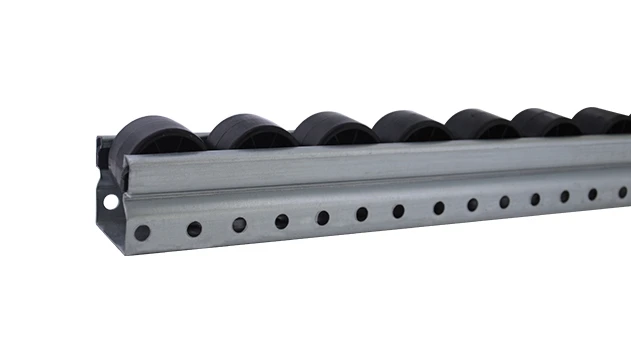
In the bustling rhythm of modern manufacturing, every component on the production line carries silent responsibility. From the conveyor belts that weave through workshops to the workbenches where precision meets efficiency, even the smallest parts play a role in keeping operations smooth. Among these unsung heroes are the roller track wheels—especially the 40 Steel Roller Track Black ESD Wheels, which stand out in industrial environments where temperature fluctuations and static electricity pose constant challenges. Let's dive into how these wheels balance durability, temperature resilience, and ESD protection to become a cornerstone of lean production.
Understanding 40 Steel Roller Track Black ESD Wheels: More Than Just "Wheels"
Walk into any manufacturing plant—whether it's a 3C assembly line churning out smartphones or a medical device workshop assembling life-saving equipment—and you'll notice the quiet hum of roller tracks. These tracks rely on wheels to move materials, components, and semi-finished products with minimal friction. But not all wheels are created equal, especially when the environment throws curveballs like extreme temperatures and static charges.
The 40 Steel Roller Track Black ESD Wheels are engineered with a specific mission: to thrive in harsh industrial settings while safeguarding sensitive electronics. Let's break down their core features:
- Material Composition: Crafted from high-grade 40 steel, these wheels balance hardness (ensuring wear resistance) and ductility (preventing brittle fracture under temperature stress). The black ESD coating isn't just for aesthetics—it's a conductive layer that dissipates static electricity, crucial for protecting microchips, circuit boards, and other ESD-sensitive components.
- Design Nuances: The wheel's structure includes precision bearings sealed to resist dust and moisture, a common byproduct of temperature changes (think condensation in cold storage or oil vapor in high-heat automotive plants). The tread pattern is optimized for grip on both smooth aluminum tracks and textured flow rack surfaces, reducing slippage even when temperatures cause materials to expand or contract.
- ESD Performance: With a surface resistance of 10⁶–10⁹ Ω (meeting ANSI/ESD S20.20 standards), these wheels prevent static buildup that could damage components or ignite flammable substances in chemical processing environments.
But numbers and specs only tell part of the story. For workers on the floor, these wheels translate to fewer jams, less downtime spent adjusting stuck tracks, and the peace of mind that sensitive parts won't be ruined by unexpected static discharges. In a lean system where every second counts, reliability isn't just a feature—it's a lifeline.
Temperature Resistance in Action: Testing the Limits
Industrial environments are rarely "room temperature." A automotive paint shop might hit 50°C during curing processes; a pharmaceutical cold storage facility could drop to -15°C; and a food packaging plant might cycle between 35°C (processing) and 10°C (storage) daily. To prove their mettle, the 40 Steel Roller Track Black ESD Wheels underwent rigorous temperature testing, simulating these real-world scenarios.
| Temperature Range | Friction Coefficient (vs. Aluminum Track) | ESD Surface Resistance (Ω) | Bearing Rotational Resistance (N·m) | Wheel Deformation (mm) |
|---|---|---|---|---|
| -30°C to -10°C (Cold Storage/Freezers) | 0.08–0.10 (Stable, no ice buildup) | 10⁷–10⁸ (Consistent dissipation) | ≤0.8 (Slight increase due to grease thickening) | ≤0.05 (Minimal contraction) |
| 10°C to 35°C (Standard Workshop) | 0.06–0.08 (Optimal performance) | 10⁶–10⁸ (Ideal range for ESD protection) | ≤0.5 (Smooth rotation) | 0 (No measurable deformation) |
| 40°C to 60°C (High-Heat Processes: Baking, Welding) | 0.07–0.09 (Resistant to track expansion) | 10⁶–10⁹ (Coating remains conductive) | ≤0.6 (Grease stability maintained) | ≤0.03 (Minor thermal expansion, no warping) |
| Thermal Cycling (-20°C ↔ 50°C, 100 Cycles) | 0.06–0.10 (No significant degradation) | 10⁶–10⁹ (Coating adhesion intact) | ≤0.7 (Bearing integrity preserved) | ≤0.05 (No fatigue cracks) |
What do these numbers mean for a production manager? In a 3C assembly plant running 24/7, where conveyor lines move PCBs through soldering (temperatures spiking to 55°C) and then to inspection (air-conditioned to 22°C), these wheels won't seize up or lose ESD protection. In a medical device facility storing components in -20°C freezers before assembly, the wheels won't develop ice buildup that could jam the flow rack—keeping critical supplies moving to the ESD workstation on time.

From Automotive Factories to Cleanrooms: Real-World Stories of Resilience
Spec sheets and lab tests are valuable, but nothing beats hearing from teams who rely on these wheels daily. Let's look at two industries where temperature resistance and ESD protection make or break operations.
Case 1: Automotive Paint Shops – Battling Heat and Chemicals
A leading automotive manufacturer in Guangdong faced a recurring issue: their conveyor system's plastic roller wheels were failing within 3 months in the paint curing zone. The 45°C air, combined with volatile organic compounds (VOCs) from paint, caused the plastic to harden and crack, leading to jams that halted the entire line. Downtime cost them ~¥20,000 per hour.
After switching to 40 Steel Roller Track Black ESD Wheels, the results were striking. Over 18 months of operation, wheel replacement dropped by 90%. The steel construction resisted chemical degradation, and the sealed bearings kept VOCs out. "We used to have a technician checking the paint line every hour for jams," said the plant engineer. "Now? They check once per shift, and spend that extra time on preventive maintenance for other equipment. It's not just about the wheels—it's about letting our team focus on improving the process, not fixing it."
Case 2: Medical Device Cleanrooms – Precision in Cold and Static-Sensitive Spaces
A medical device company in Jiangsu produces MRI machine components, which require assembly in ISO 7 cleanrooms maintained at 18°C with strict humidity control. Their previous aluminum roller wheels, while lightweight, conducted static poorly—resulting in occasional electrostatic discharges that damaged delicate sensors. Worse, in the sub-zero storage area (-10°C) where raw materials were kept, the aluminum wheels would contract, creating gaps that let in dust (a critical violation in cleanroom standards).
The switch to 40 Steel Roller Track Black ESD Wheels addressed both issues. The ESD coating kept static levels below 100V (well within cleanroom limits), and the steel's low thermal expansion rate meant no gaps formed in cold storage. "Our quality control team used to reject 5% of sensor batches due to static damage," noted the production manager. "Now that number is under 0.5%. And the cleanroom auditors? They were impressed by how little dust accumulated on the tracks—these wheels don't just move parts; they help us maintain the sterile environment our products demand."

Why 40 Steel ESD Wheels Outperform Alternatives in Temperature Extremes
Industrial roller wheels come in many materials—plastic, rubber, aluminum, even ceramic. So why choose 40 steel, especially with the added ESD coating? Let's compare across key factors relevant to temperature and industrial use:
Plastic Wheels
Temperature Limitation: Most plastics (PVC, nylon) soften above 60°C and become brittle below 0°C. In a 3C factory's SMT (surface mount technology), where reflow ovens reach 260°C, plastic wheels near the oven can warp in weeks.
ESD Weakness: Non-conductive plastics build up static, risking component damage. Conductive plastic variants lose effectiveness over time as the conductive additive wears off.
Rubber Wheels
Temperature Limitation: Natural rubber hardens in cold and degrades in heat; synthetic rubber (EPDM) fares better but still struggles above 80°C. In food processing plants with steam cleaning, rubber wheels often develop cracks from thermal shock.
Load Capacity: Rubber compresses under heavy loads, leading to uneven track movement—a problem in automotive parts handling where pallets can weigh 500kg+.
Aluminum Wheels
Thermal Conductivity: Aluminum transfers heat/cold quickly, causing condensation in humid environments (e.g., semiconductor cleanrooms) that leads to rust and track contamination.
ESD Challenges: Bare aluminum conducts static well, but it's prone to oxidation—creating non-conductive layers that compromise ESD protection over time.
40 Steel Black ESD Wheels
Temperature Edge: Steel's high melting point (1538°C) and low thermal expansion coefficient make it stable across -30°C to 120°C—covering 95% of industrial temperature scenarios.
ESD Longevity: The ESD coating is bonded to the steel surface, resisting wear even after 100,000+ rotations. Unlike plastic or rubber, it doesn't rely on additives that leach out.
Total Cost of Ownership: While upfront cost is higher than plastic/rubber, steel wheels last 5–8x longer, reducing replacement labor and downtime. In the automotive case study above, the ROI was achieved in 4 months.
Beyond the Wheel: Integrating into a Lean, Temperature-Resilient System
In lean manufacturing, no component exists in isolation. The 40 Steel Roller Track Black ESD Wheels shine brightest when part of a holistic lean solution—paired with compatible flow racks, ESD workstations, and adjustable aluminum profiles that adapt to changing production needs.
1. Synergy with Flow Racks for Material Handling
Flow racks rely on gravity to move materials, and wheel performance directly impacts flow rate consistency. In a warehouse with temperature variations (e.g., daytime 30°C, nighttime 15°C), material density changes can alter flow speed. The 40 Steel Wheels' stable friction coefficient ensures that even as ambient temperature shifts, components glide at a predictable rate—preventing bottlenecks at the picking station.
2. ESD Workstation Compatibility
An ESD workstation is only as good as its weakest static-dissipative link. If the roller track wheels under the workstation's material bin aren't ESD-safe, static can build up and discharge through the operator's hands to the PCB on the bench. By integrating 40 Steel ESD Wheels into the workstation's undercarriage and adjacent conveyor, the entire workspace maintains a continuous static-dissipative path—protecting both components and workers.
3. Customization for Unique Environments
Every factory has unique needs. A lithium battery manufacturer might require wheels resistant to acid fumes; a aerospace plant might need extra load capacity for heavy titanium parts. The lean solution approach means tailoring the wheel's coating thickness, bearing type, and tread pattern to these specifics. For example, a client in the oil and gas industry needed wheels for a 60°C environment with high humidity—we added a corrosion-resistant nickel plating to the steel, ensuring longevity in the harsh conditions.
"Customization isn't about making something 'fancy'—it's about solving the problem the client hasn't even articulated yet," said a senior engineer at the company. "Last year, a 3C client asked for wheels that could handle -25°C for their cold storage of OLED screens. We not only adjusted the bearing grease for low temperatures but also added a thermal insulating sleeve to prevent condensation from dripping onto the screens. That's the lean mindset: anticipate, adapt, and add value beyond the spec sheet."
The Bottom Line: Wheels That Power Productivity, Even When the Heat (or Cold) Is On
In the end, the 40 Steel Roller Track Black ESD Wheels are more than a component—they're a commitment to reliability in the unpredictable world of industrial manufacturing. They don't just "work"—they reduce stress for maintenance teams, give production managers confidence in uptime, and let operators focus on building quality products instead of fighting equipment failures.
Whether in the sweltering heat of an automotive paint shop, the frigid cold of a medical storage facility, or the static-sensitive environment of a 3C assembly line, these wheels embody the lean principle of "continuous improvement" by being built to adapt, endure, and support the humans behind the machines. Because in the end, lean manufacturing isn't just about efficiency—it's about creating systems that make work better, safer, and more sustainable for everyone involved.
So the next time you walk through a factory and hear the smooth roll of a conveyor, take a moment to appreciate the quiet reliability of the wheels beneath it. Chances are, they're working harder than you think—keeping the line moving, the products safe, and the spirit of lean alive.