- Company Articles
- Products and Technology
- Product knowledge
- Temperature Resistance of Three Way Aluminum Pipe Joints: Operating Limits

Temperature Resistance of Three Way Aluminum Pipe Joints: Operating Limits
Related Product
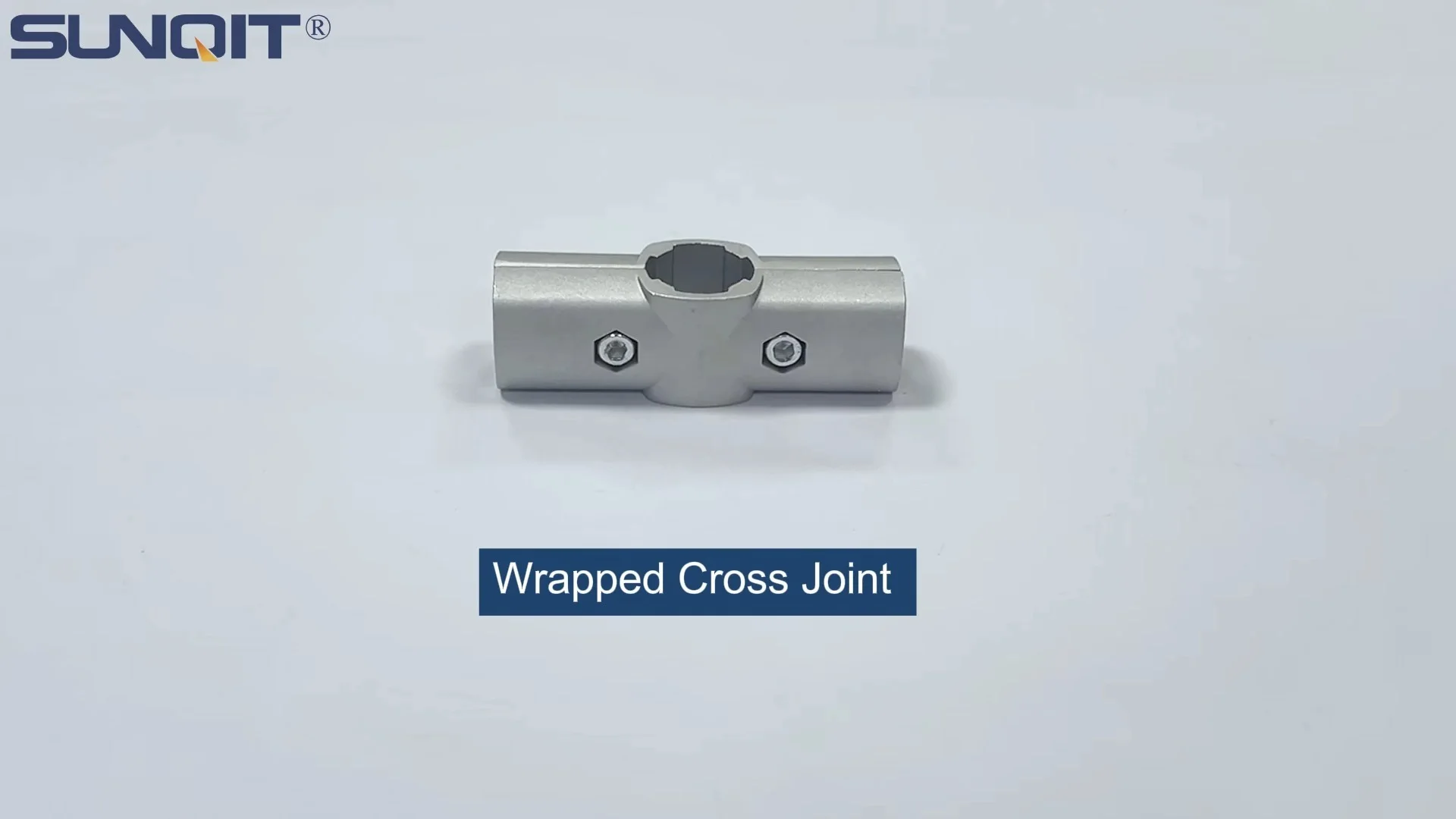
Three Way Aluminum Pipe Joint
Aluminum 3 way pipe joint for 28mm aluminum pipe connection in 3 direction.
Walk into any modern manufacturing facility, and you'll likely see a symphony of moving parts: conveyor belts gliding, workbenches holding precision tools, and flow racks organizing components with military precision. Behind this orchestration lies an unsung hero: the three way aluminum pipe joint. These unassuming connectors are the backbone of lean systems, quietly holding together aluminum profiles, workbenches, and material racks. But what happens when the temperature spikes on the factory floor or plummets in a cold storage warehouse? How do these joints stand up to the stress of thermal extremes? Understanding the temperature resistance of three way aluminum pipe joints isn't just a technical detail—it's a critical factor in keeping production lines running smoothly, preventing costly downtime, and ensuring workplace safety.
In this article, we'll dive deep into the world of three way aluminum pipe joints, exploring why temperature matters, how these components are tested, and what operating limits you need to consider for your specific application. Whether you're a plant manager sourcing equipment from a lean system supplier or a maintenance technician troubleshooting a wobbly workbench, this guide will equip you with the knowledge to make informed decisions about one of the most essential aluminum pipe accessories in your facility.
What Are Three Way Aluminum Pipe Joints, and Why Do They Matter?
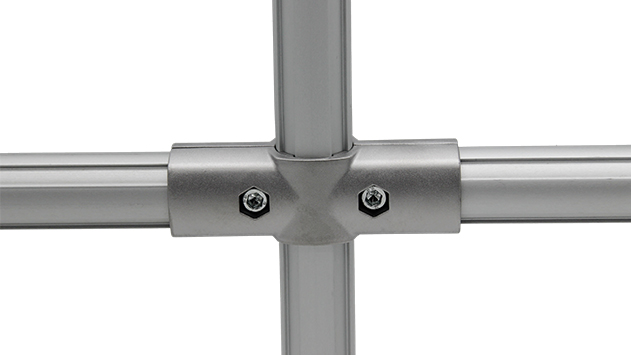
First, let's clarify what we're talking about. A three way aluminum pipe joint is a specialized connector designed to join three aluminum pipes or profiles at a single point, typically forming a T-shape or Y-shape. Unlike rigid welding, these joints allow for modular assembly—meaning you can reconfigure workbenches, flow racks, or turnover trolleys as production needs change. This flexibility is why they're a cornerstone of lean manufacturing, where adaptability and efficiency are paramount.
But their role goes beyond just holding pipes together. Three way aluminum pipe joints must maintain structural integrity under load, resist vibration from machinery, and yes, withstand temperature fluctuations. Imagine a workbench in an automotive plant, where nearby ovens bake paint at 180°C (356°F). The aluminum profile of the bench expands in the heat; the joint must expand with it without cracking or loosening. Now picture the same joint in a cold storage facility, where temperatures hover at -15°C (5°F). Here, the metal contracts, and the joint must stay tight to prevent the workbench from wobbling as workers load and unload frozen goods. In both scenarios, the joint's ability to handle temperature extremes directly impacts performance.
Why Temperature Resistance Isn't Just About "Staying Cool"
Temperature affects three way aluminum pipe joints in two primary ways: thermal expansion and material degradation. Aluminum, like all metals, expands when heated and contracts when cooled—a phenomenon known as thermal expansion. The rate at which it does this is measured by its coefficient of thermal expansion (CTE). For most aluminum alloys used in these joints, the CTE is around 23.1 x 10^-6 per °C, meaning a 1-meter pipe will expand by roughly 0.23 mm for every 10°C increase in temperature. While that might sound negligible, over time and across a large structure (like a 10-meter flow rack), these small changes add up. If the joint can't accommodate this movement, stress builds up, leading to loosening, warping, or even structural failure.
Then there's material degradation. High temperatures can cause the plastic or rubber components in aluminum pipe accessories—like gaskets or friction pads—to soften, crack, or lose elasticity. Low temperatures, on the other hand, can make these materials brittle, reducing their ability to absorb shock or maintain a tight seal. Even the aluminum alloy itself can be affected: prolonged exposure to extreme heat can weaken the metal's grain structure, while extreme cold can make it more prone to impact damage. For a lean system that relies on precision and reliability, these changes aren't just inconvenient—they're potential safety hazards.
Testing the Limits: How Suppliers Evaluate Temperature Resistance
Reputable lean system suppliers don't just guess at temperature limits—they test them rigorously. The goal is to simulate real-world conditions to ensure joints perform as expected, even under the harshest thermal stress. One common method is thermal cycling, where joints are exposed to repeated cycles of high and low temperatures to mimic seasonal changes or daily fluctuations in a factory. For example, a joint might be placed in a chamber that cycles from -20°C to 80°C over 24 hours, repeated 100 times. After each cycle, engineers check for signs of failure: Do the threads still grip tightly? Has the joint developed cracks? Are the aluminum pipe accessories, like washers or locking mechanisms, still functional?
Another key test is static thermal exposure, where joints are held at a constant extreme temperature for an extended period—say, 100°C for 1,000 hours—to simulate long-term exposure to high heat (common in industries like automotive manufacturing, where paint curing ovens emit residual warmth). For cold environments, joints might be frozen at -30°C for a week to test brittleness and structural integrity. These tests aren't just about breaking points; they're about identifying the "safe zone" where joints maintain their load-bearing capacity and flexibility.

Typical Operating Limits: What's the Safe Range?
So, what temperature range can you expect from a standard three way aluminum pipe joint? While exact limits vary by manufacturer and alloy type, most suppliers specify a range of -20°C to 80°C (-4°F to 176°F) as the "safe operating window." This range covers the majority of industrial environments, from heated warehouses in temperate climates to air-conditioned assembly lines. But let's break this down further to understand what influences these numbers.
High Temperature Limits: When Heat Becomes a Foe
At the upper end, 80°C (176°F) is a common threshold, but it's not arbitrary. Beyond this point, several issues arise: First, the aluminum alloy may start to lose tensile strength. While pure aluminum melts at 660°C (1220°F), the alloys used in pipe joints (often 6063 or 6061) begin to soften at around 150°C (302°F). However, even before reaching this point, the joint's mechanical properties—like its ability to withstand torque or vibration—can degrade. Second, any plastic components in the joint (such as locking collars or gaskets) may start to melt or deform. For example, nylon accessories, a common choice in aluminum pipe accessories, typically have a melting point around 220°C (428°F), but they can become pliable and lose grip at temperatures above 80°C (176°F).
In practice, this means environments with sustained temperatures above 80°C—like near industrial ovens, foundries, or tropical factories without climate control—require specialized joints. Some suppliers offer high-temperature variants with heat-resistant plastics or all-metal construction, which can extend the upper limit to 120°C (248°F) or higher. Always check with your lean system supplier about these options if your facility regularly exceeds standard temperature ranges.
Low Temperature Limits: The Cold Hard Truth
On the cold end, -20°C (-4°F) is the typical lower bound. Why? At extremely low temperatures, aluminum becomes more brittle. While aluminum alloys are generally ductile, repeated exposure to sub-zero temperatures can cause microcracks to form, especially under cyclic loading (like a workbench that's constantly loaded and unloaded). Additionally, rubber or elastomeric components in the joint—used to dampen vibration or create a tighter seal—can harden and crack in the cold. For example, a standard rubber washer might become rigid at -10°C (14°F), losing its ability to absorb shock and increasing the risk of the joint loosening over time.
Cold storage facilities, where temperatures can drop to -30°C (-22°F) or lower, pose a unique challenge. In these cases, look for joints designed for cryogenic use, often made with specialized alloys (like 5083 aluminum, known for cold resistance) and without plastic components. These joints may have operating limits as low as -50°C (-58°F), ensuring they stay strong even in freezer warehouses storing food or pharmaceuticals.
| Environment Type | Typical Temperature Range | Suitable Joint Type | Key Considerations |
|---|---|---|---|
| Standard Factory Floor | 15°C – 35°C (59°F – 95°F) | Standard Three Way Aluminum Joint | Monitor for heat from nearby machinery |
| Automotive Paint Shop | 40°C – 60°C (104°F – 140°F) | Heat-Resistant Joint (All-Metal) | Avoid plastic accessories; check for warping |
| Cold Storage Warehouse | -15°C – -25°C (5°F – -13°F) | Cryogenic-Grade Joint | Use rubber-free components; inspect for brittleness |
| Outdoor Storage (Desert Climate) | 0°C – 50°C (32°F – 122°F) | UV-Resistant + Heat-Resistant Joint | Add thermal insulation for extreme spikes |

Real-World Applications: When Temperature Resistance Makes or Breaks Performance
To put these limits into context, let's look at two scenarios where temperature resistance directly impacts operations: an automotive assembly plant and a cold storage distribution center.
Case 1: Automotive Assembly Plant
An automotive manufacturer in the southern U.S. uses workbenches made from aluminum profiles and three way aluminum pipe joints to assemble engine components. The plant floor, located near welding stations and paint curing ovens, regularly sees temperatures climb to 45°C (113°F) in the summer. Initially, the facility used standard joints with plastic locking collars. Within six months, maintenance teams noticed that the collars were softening, causing the workbenches to wobble. After switching to all-metal heat-resistant joints (rated to 100°C/212°F), the problem vanished. The new joints withstood the ambient heat and occasional proximity to ovens, reducing workbench repairs by 70%.
Case 2: Cold Storage Distribution Center
A food distribution center in Canada relies on flow racks built with aluminum profiles and three way joints to store frozen goods at -20°C (-4°F). After a particularly harsh winter, workers reported that some racks were leaning, with joints showing signs of cracking. An investigation revealed that the original joints contained rubber gaskets, which had hardened and cracked in the cold, allowing the joints to loosen. The facility switched to cryogenic-grade joints without rubber components, and the racks stabilized. The key takeaway? Matching the joint to the environment isn't just about specs—it's about understanding the unique challenges of your workspace.
Beyond the Joint: How Accessories Impact Temperature Resistance
Three way aluminum pipe joints don't work alone—they're part of a system that includes aluminum pipe accessories like casters, end caps, and connectors. These accessories can significantly influence the overall temperature resistance of the structure. For example, a workbench with plastic caster wheels might perform well at room temperature, but those wheels could melt if placed near a heat source, causing the entire bench to tip. Similarly, rubber end caps on aluminum profiles can degrade in UV-exposed outdoor environments, leading to water ingress and corrosion—compounding the effects of temperature stress.
When selecting accessories, look for materials that complement your joint's temperature rating. For high-heat areas, choose stainless steel or aluminum casters instead of plastic. In cold environments, opt for metal end caps instead of rubber. A reputable lean system supplier will help you pair joints with compatible accessories, ensuring the entire structure—from the three way joint to the caster wheel—can handle your temperature extremes.
Maintenance Tips: Extending the Life of Your Joints in Extreme Temperatures
Even the most temperature-resistant joints need regular care to perform at their best. Here are some practical tips to extend their lifespan:
- Inspect Regularly: In high-heat areas, check for signs of warping or softening (e.g., joints that twist easily by hand). In cold environments, look for cracks or brittleness (e.g., a joint that snaps when gently bent). Aim for monthly inspections in extreme conditions.
- Tighten as Needed: Thermal expansion and contraction can cause joints to loosen over time. Use a torque wrench to retighten connections according to the manufacturer's specs—over-tightening can strip threads, while under-tightening leaves the joint vulnerable to movement.
- Clean and Lubricate: Dust and debris can act as insulators, trapping heat in joints. Wipe down aluminum profiles and joints with a dry cloth regularly. For moving parts (like swivel joints), use a high-temperature lubricant (in hot areas) or a low-temperature grease (in cold areas) to prevent seizing.
- Shield from Extremes: When possible, shield joints from direct heat sources (e.g., ovens, furnaces) with heat-resistant barriers. In cold storage, insulate aluminum profiles to reduce thermal contraction. Even simple fixes like adding a heat shield or foam insulation can extend joint life by 30% or more.
Choosing the Right Supplier: Why Expertise Matters
Not all three way aluminum pipe joints are created equal. The difference between a joint that fails after six months and one that lasts for years often comes down to the supplier. When sourcing joints, look for a lean system supplier with a track record of testing and certifying their products for temperature resistance. Ask for test reports, case studies, and warranty information—reputable suppliers will be happy to share this data. Avoid generic, unbranded joints, which may not undergo rigorous thermal testing and could put your facility at risk.
Additionally, work with suppliers who offer customization. If your facility has unique temperature challenges (like a foundry with intermittent heat spikes or a research lab with cryogenic freezers), a good supplier can engineer a joint tailored to your needs, using specialized alloys or modified designs to meet your exact operating limits.
Conclusion: Temperature Resistance as a Foundation of Lean Manufacturing
Three way aluminum pipe joints may be small, but their impact on your lean system is enormous. By understanding their temperature resistance limits, you're not just protecting equipment—you're safeguarding your production schedule, your team's productivity, and your bottom line. From the sweltering heat of an automotive plant to the freezing cold of a food warehouse, these joints are the silent sentinels that keep your operations on track.
So the next time you walk past a workbench or a flow rack, take a moment to appreciate the three way aluminum pipe joint. It's a reminder that in lean manufacturing, success lies in the details—and temperature resistance is one detail you can't afford to overlook. Whether you're upgrading your current setup or building a new system from scratch, make sure to prioritize joints that can handle your environment's unique thermal challenges. Your production line (and your maintenance team) will thank you.