- Company Articles
- Products and Technology
- Solution
- Temporary Workstation Setup: Fast Assembly with T-Groove Aluminum Pipe

Temporary Workstation Setup: Fast Assembly with T-Groove Aluminum Pipe
Related Product
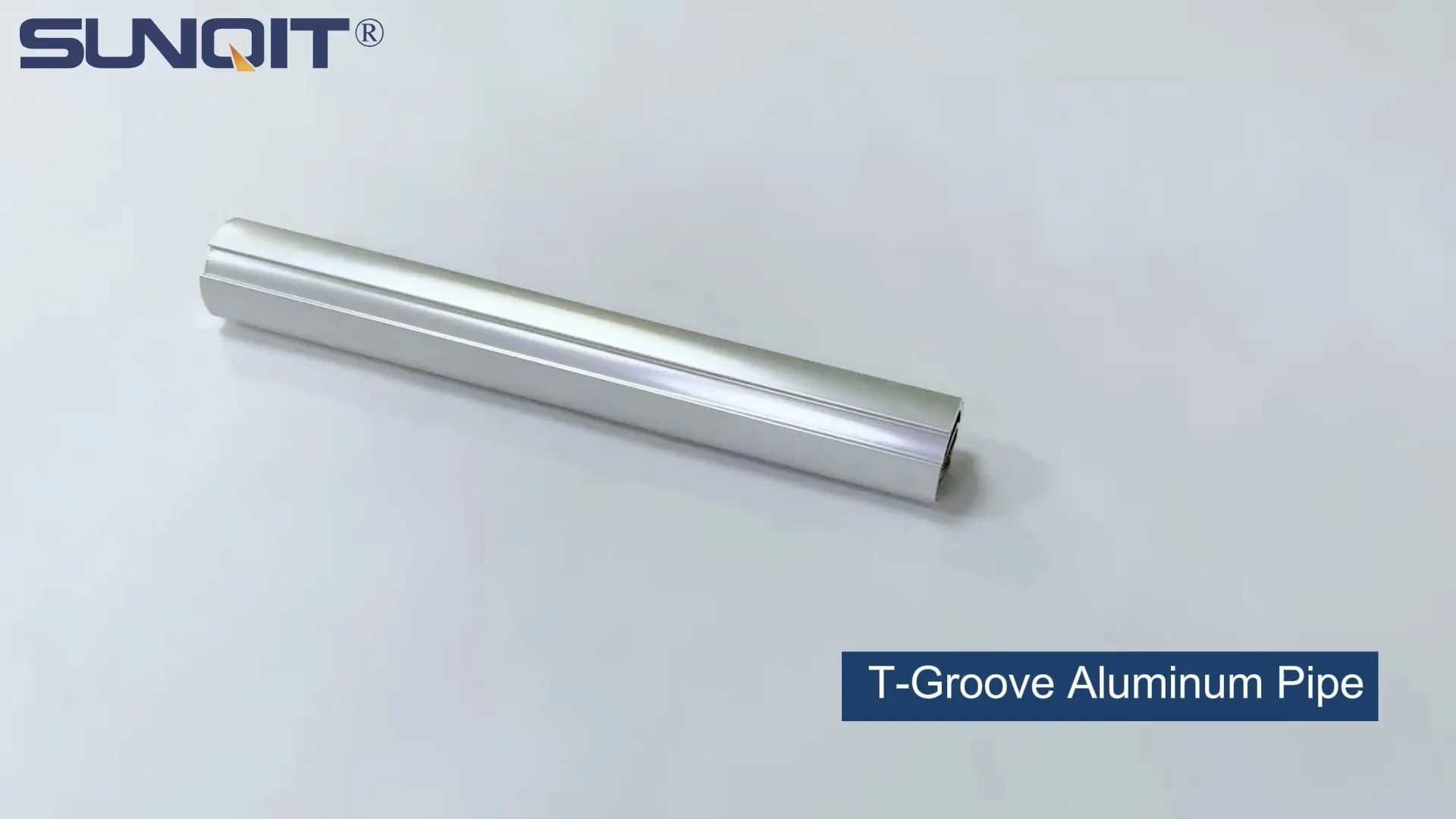
T-Groove Aluminum Pipe
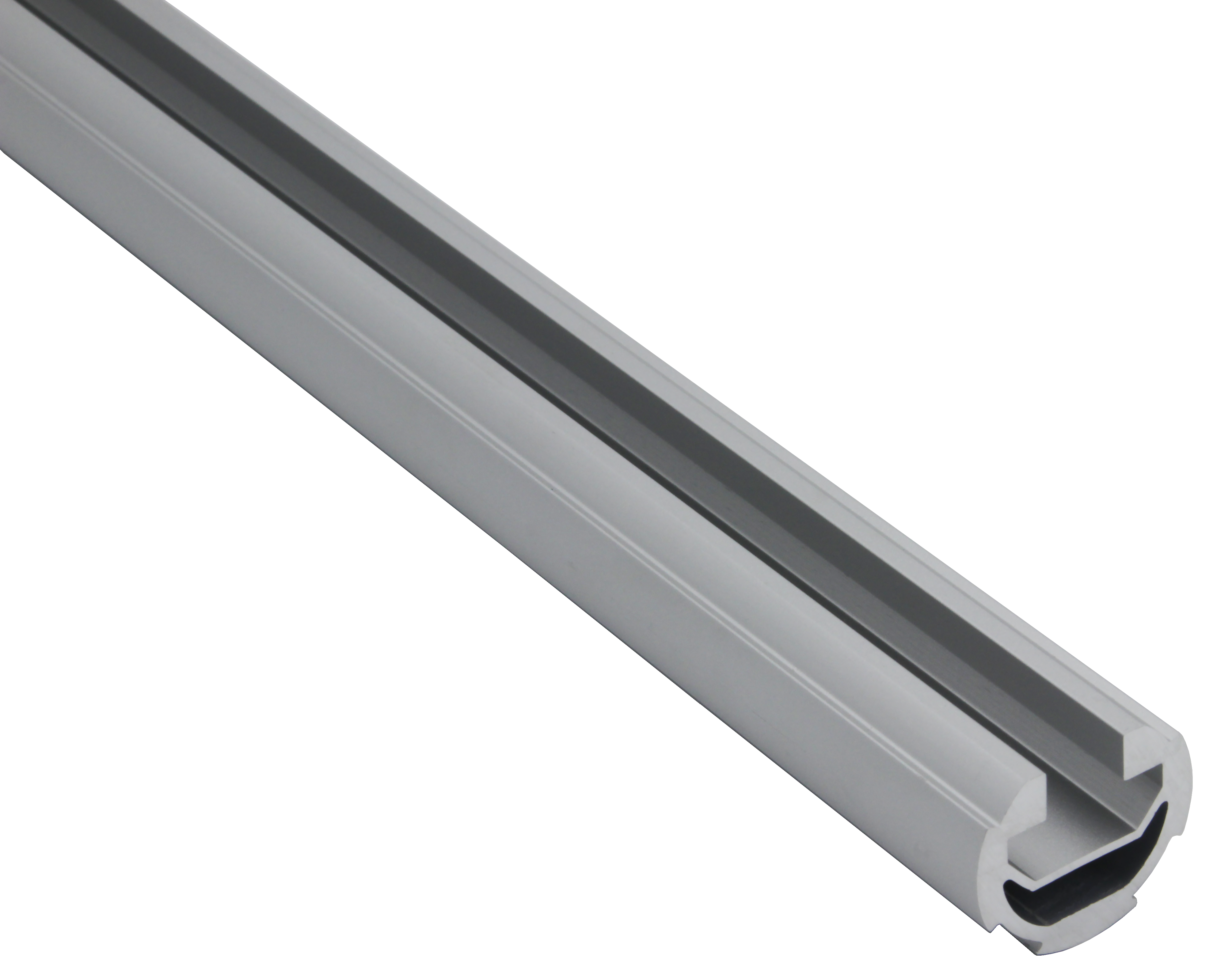
The aluminum pipe opening 10mm is installed into the T-shaped slider, which can be installed with casters or other matching functional parts. The groove can be used for positioning and is used for the track of the roller.
When you're in the thick of a project—whether it's a sudden manufacturing rush, a seasonal surge in orders, or a last-minute need for extra workspace—time is the one resource you can't afford to waste. Rigid, pre-built workstations lock you into fixed layouts, leaving you scrambling when deadlines shift or workflows change. But what if you could build a sturdy, customized workstation in hours instead of days? What if you could tweak its design on the fly, add shelves when you need them, or disassemble it entirely when the project wraps up? That's the promise of temporary workstation setups using T-groove aluminum pipe—a solution that's quietly revolutionizing how teams adapt to change.
In this article, we'll dive into why T-groove aluminum pipe has become the go-to choice for fast, flexible workstations. We'll walk through how to assemble one from scratch, explore real-world examples of teams that have transformed their productivity with this tool, and share tips to make your setup work harder for you. Whether you're running a small workshop, managing a manufacturing floor, or leading a startup with ever-shifting needs, this guide will show you how to turn a pile of pipes and accessories into a workstation that grows with your goals.
Why T-Groove Aluminum Pipe? The Problem with "Permanent" Temporary Solutions
Let's start with the obvious: most "temporary" workstations aren't temporary at all. Wooden tables take hours to build, require power tools, and splinter or warp over time. Steel frames are heavy, hard to adjust, and rust if not treated. Even plastic modular systems often lack the sturdiness for industrial use, leaving you with wobbly surfaces that compromise safety and efficiency. These options force a trade-off: either spend days setting up a rigid structure or settle for something flimsy that won't last.
T-groove aluminum pipe flips that script. Lightweight yet surprisingly strong, these pipes feature a unique T-shaped groove along their length, designed to snap into compatible accessories—think brackets, shelves, casters, and worktops—without welding, drilling, or glue. It's like building with giant, industrial-grade Legos, but for grown-ups who need their creations to hold hundreds of pounds. The result? A workstation that's up and running in hours, not days, and adaptable enough to evolve with your needs.
Take Maria, a production manager at a mid-sized electronics plant, who recently faced a dilemma: her team needed a new testing station to handle a rush order for smart home devices. The deadline was tight—just 48 hours to get the line up. "We used to order pre-built workbenches, but they'd take a week to ship and another day to assemble," she recalls. "This time, we tried T-groove aluminum pipe. Two of us unboxed the materials at 9 a.m., and by 2 p.m., we had a fully functional workstation with a (ESD) top, built-in tool hooks, and adjustable shelves. When the rush ended, we took it apart in 30 minutes and stored the parts for next time. No waste, no hassle—just results."
Anatomy of a T-Groove Aluminum Workstation: The Basics You Need to Know
Before we jump into assembly, let's break down the key components that make T-groove aluminum pipe so versatile. At its core, the system relies on three parts: the pipes themselves, the connectors that join them, and the accessories that add functionality. Let's demystify each:
1. T-Groove Aluminum Pipe: The Backbone of Your Workstation
T-groove aluminum pipes are extruded from high-grade aluminum alloy, making them lightweight (about 1/3 the weight of steel) and resistant to corrosion. The "T-groove" refers to the channel running along the pipe's length, which accepts specially designed bolts, nuts, and brackets. Pipes come in standard lengths (typically 1m, 2m, or 3m) and diameters (common sizes include 20mm, 30mm, and 40mm), but can be easily cut to custom lengths with a hacksaw or pipe cutter—no professional tools required.
What sets them apart? Unlike smooth steel or plastic pipes, the T-groove design means you can attach accessories anywhere along the pipe, not just at pre-drilled holes. Need to move a shelf up by 2 inches? Loosen the bolt, slide the bracket, and tighten—done. This flexibility is a game-changer for teams that need to adjust heights for different operators or reconfigure layouts based on the task at hand.
2. Aluminum Profile Accessories: Turning Pipes into Workstations
If T-groove pipes are the bones of your workstation, aluminum profile accessories are the muscles and organs that bring it to life. These small but mighty parts transform a simple frame into a tool that works for your workflow. Here are the must-haves:
- Connectors/Joints: These are the "glue" of the system. Corner brackets, T-joints, and 45-degree elbows let you build frames in any shape—from basic rectangles to complex L-shapes or U-shaped workstations. Look for joints with quick-release levers or hex-key fasteners for easy adjustments.
- Adjustable Leveling Feet: Uneven floors are a workshop reality, but they don't have to mean wobbly workstations. Adjustable leveling feet screw into the bottom of pipe legs, letting you tweak height by fractions of an inch to keep surfaces stable. Pro tip: Opt for feet with rubber pads to prevent slipping and protect floors.
- Worktops: Plywood, MDF, or specialized surfaces like ESD (electrostatic discharge) boards can be attached directly to the frame using T-groove bolts. Many suppliers sell pre-cut worktops with pre-drilled holes, but you can also repurpose old tabletops—just ensure they're thick enough to support your load (18mm plywood works for most light to medium tasks).
- Shelving Brackets & Trays: Add vertical storage with brackets that slide into the T-groove, supporting wire shelves, plastic bins, or metal trays. Great for keeping tools, parts, or paperwork within arm's reach without cluttering the main surface.
- Casters: For workstations that need to move—say, a mobile assembly cart or a testing station that shifts between lines—casters lock into the bottom of legs. Look for swivel casters with brakes to keep the workstation steady when in use.
The beauty of these aluminum profile accessories is their compatibility. Most brands use standardized T-groove sizes, so you can mix and match parts from different suppliers to get exactly what you need. This modularity means you're never stuck with a "one-size-fits-all" solution—you're building a workstation that's as unique as your process.
Step-by-Step: Building Your Temporary Workstation in 4 Hours (No Expertise Required)
You don't need to be a carpenter or engineer to build a T-groove aluminum workstation. In fact, the most technical skill you'll need is using a hex key (and even that's optional with quick-release joints). Let's walk through the process, from planning to final checks, using a basic workbench setup as an example. We'll aim for a 120cm x 80cm tabletop—large enough for assembly tasks but compact enough to fit in tight spaces.
Step 1: Plan Your Workstation (30 Minutes)
Before you unbox a single pipe, answer these questions to avoid mistakes:
- What will you use the workstation for? A packing station might need lower shelves for boxes, while a soldering station needs heat-resistant materials and tool hooks.
- How much weight will it hold? Most T-groove aluminum pipes can support 50-100kg per linear meter, but check the manufacturer's specs. Heavier loads (like machinery) may require thicker pipes or extra support legs.
- Where will it go? Measure the space to ensure your workstation fits with room to move around. Leave at least 90cm of clearance on all sides for ergonomic access.
- Do you need mobility? If yes, factor in casters (and ensure the floor can handle them). If not, stick with adjustable leveling feet for stability.
Sketch a rough design on paper or use a free app like SketchUp to visualize. For our example, we'll build a fixed workbench with a single shelf, using 30mm T-groove aluminum pipe, adjustable leveling feet, and a plywood worktop.
Step 2: Gather Your Materials (1 Hour to Source, If Needed)
Here's what you'll need for our 120cm x 80cm workbench (quantities based on a simple frame with four legs and a shelf):
- 4x T-groove aluminum pipes (100cm long) for legs
- 4x T-groove aluminum pipes (120cm long) for the tabletop frame (front/back)
- 4x T-groove aluminum pipes (76cm long) for the tabletop frame (sides—76cm accounts for the pipe diameter, leaving 80cm between legs)
- 4x T-groove aluminum pipes (76cm long) for the shelf frame (sides)
- 4x T-groove aluminum pipes (120cm long) for the shelf frame (front/back)
- 8x 90-degree corner joints (for tabletop frame)
- 8x 90-degree corner joints (for shelf frame)
- 4x adjustable leveling feet (with compatible thread size for your pipes)
- 1x plywood worktop (120cm x 80cm x 18mm thick)
- 16x T-groove bolts and nuts (to attach worktop to frame)
- Basic tools: Hex key set, measuring tape, pencil, rubber mallet (to tap joints into place), and a pipe cutter (if cutting pipes to length)
Pro tip: Many suppliers sell pre-cut pipe kits for common workstation sizes, which saves time on measuring and cutting. If you're new to this, start with a kit—you can always expand later.
Step 3: Assemble the Frame (1.5 Hours)
Now, let's build the skeleton. Lay out all parts on a flat surface (the floor works) to avoid losing small pieces.
- Build the tabletop frame: Connect the 120cm and 76cm pipes using 90-degree corner joints to form a rectangle. Tighten the joints just enough to hold the shape—you'll fully secure them later.
- Attach the legs: Screw adjustable leveling feet into the bottom of the 100cm leg pipes. Then, attach the legs to the corners of the tabletop frame using additional 90-degree joints. Stand the frame upright—have a helper hold it steady while you check for squareness (measure diagonally; both distances should be equal).
- Add the shelf: Build a second rectangle with the 76cm and 120cm shelf pipes. Attach it to the legs using joints, positioning it 40cm from the floor (adjust based on your needs). Tighten all joints fully with the hex key—firm but not over-tightened (aluminum can strip if forced).
At this point, you should have a free-standing frame that feels sturdy. Give it a gentle shake—if it wobbles, check that all joints are tight and the legs are plumb.
Step 4: Add the Worktop and Accessories (1 Hour)
Now, it's time to make the frame functional:
- Attach the worktop: Place the plywood (or ESD board, if using) on top of the frame. Mark where the T-grooves align with the tabletop frame, then drill small pilot holes through the plywood. insert T-groove bolts into the frame's grooves, pass them through the pilot holes, and secure with nuts. Add bolts every 30cm along the frame for even support.
- Level the workstation: Use a spirit level on the worktop. If it's uneven, adjust the leveling feet by turning them clockwise (to raise) or counterclockwise (to lower) until the bubble is centered.
- Add extras: Slide shelf brackets into the T-grooves of the shelf frame, then place your shelf board. Add tool hooks, bins, or cable management clips—whatever makes your workflow smoother.
That's it! In under 4 hours, you've built a workstation that's ready to handle tasks from assembly to packaging. And when you no longer need it? Simply reverse the steps: remove the worktop, unscrew the joints, and stack the pipes in a closet or storage bin. No waste, no clutter—just space for your next project.

Beyond the Workbench: T-Groove Aluminum in Action
Workstations are just the beginning. T-groove aluminum pipe's flexibility makes it ideal for a range of temporary or semi-permanent setups. Let's explore a few creative ways teams are using it to solve everyday challenges:
Turnover Trolley and Rack: Moving Materials Without the Heavy Lifting
In warehouses and manufacturing plants, moving parts from storage to the production line is a daily hassle—especially if you're relying on flimsy plastic carts or manual lifting. Turnover trolleys built with T-groove aluminum pipe are lightweight enough for one person to push but strong enough to carry hundreds of pounds of inventory. Add shelves, dividers, or bins to organize parts, and casters with brakes to keep the trolley steady during loading/unloading.
"We used to have two people carrying bins of circuit boards across the shop," says Raj, a warehouse supervisor at a telecom equipment manufacturer. "Now, we built turnover trolleys with T-groove aluminum—each holds 10 bins, and one person can move them. We even added a handlebar made from extra pipe for ergonomics. It cut our material transport time by 40%."
ESD Workstations: Protecting Sensitive Electronics
For teams working with electronics—phones, circuit boards, or medical devices—static electricity is a silent killer. ESD workbenches (which dissipate static charge) are a must, but traditional models are expensive and hard to customize. T-groove aluminum solves this by letting you pair aluminum frames with ESD-safe worktops and grounding accessories. Add ESD wrist strap holders, ionizer mounts, or cable management channels directly to the frame using aluminum profile accessories, and you've got a lab-grade setup at a fraction of the cost.
Event Pop-Ups and Retail Displays: Temporary Spaces That Wow
It's not just industrial settings—T-groove aluminum is making waves in retail and events, too. Pop-up shops, trade show booths, and farmers market stalls need to be eye-catching, easy to transport, and quick to assemble. T-groove frames wrapped in fabric, acrylic, or pegboards create custom displays that can be built in an hour and packed into a car trunk. "We used to rent expensive display kits for trade shows," says Lila, a marketing manager at a craft brewery. "Now, we built our own with T-groove aluminum—we can change the design every show by swapping out the fabric panels, and it cost us less than one rental. Plus, we don't have to worry about damaging rental equipment!"

T-Groove Aluminum vs. the Alternatives: A Clear Winner for Temporary Setups
Still on the fence? Let's compare T-groove aluminum pipe to other common materials for temporary workstations. The table below breaks down key factors like assembly time, cost, and flexibility—so you can see why aluminum is increasingly the top choice.
| Material | Assembly Time (Basic Workstation) | Flexibility (Can You Reconfigure?) | Durability (Lifespan) | Cost (per 1m Pipe/Accessories) | Best For |
|---|---|---|---|---|---|
| T-Groove Aluminum Pipe | 2-4 hours | High—easily add/remove parts; no tools needed for adjustments | 5-10 years (corrosion-resistant; joints don't wear out) | $15-30 (pipe); $5-15 (accessories) | Industrial workstations, mobile carts, custom displays |
| Wood (Plywood/2x4s) | 4-8 hours (requires cutting, drilling, sanding) | Low—permanent joints; modifying requires rebuilding | 1-3 years (splinters, warps, rots if wet) | $10-20 (wood); $3-8 (hardware) | One-off projects with low weight needs |
| Steel Pipe (Galvanized) | 6-12 hours (requires welding or heavy-duty clamps) | Very low—fixed welds; adjustments require cutting/welding | 10+ years (rust-resistant if galvanized) | $20-40 (pipe); $10-25 (fittings) | Heavy-duty, permanent setups (not temporary) |
| Plastic Modular Systems | 1-3 hours | Medium—limited accessory options; weak under heavy loads | 1-2 years (cracks in cold weather; bends under weight) | $25-50 (pre-built panels); $8-20 (connectors) | Light office use (not industrial) |
The data speaks for itself: T-groove aluminum pipe offers the best balance of speed, flexibility, and durability for temporary workstations. While wood or plastic might be cheaper upfront, they cost more in time and replacements over the long run. Steel is durable but defeats the purpose of "temporary" with its fixed welds and heavy weight.
Customization Tips: Make Your Workstation Work For You
The true power of T-groove aluminum lies in its ability to adapt to your unique workflow. Here are a few pro tips to take your setup to the next level:
- Mix and match accessories: Combine aluminum profile accessories like cable clips, tool holders, and LED light mounts to keep your workspace organized. For example, a mechanic might add a magnetic tool strip along the frame, while a baker could attach hooks for mixing bowls.
- Think vertically: Use T-groove pipes to build overhead racks or hanging shelves, freeing up floor space. Just ensure the ceiling can support the weight (most aluminum setups are light enough for standard ceiling joists).
- Label your parts: If you plan to disassemble and reuse the workstation, label pipes and joints with masking tape or permanent marker (e.g., "Leg 1," "Shelf Front"). This cuts reassembly time by 50%.
- Invest in quality joints: Cheaper plastic joints may save money upfront, but metal joints (like aluminum or zinc-plated steel) last longer and handle heavier loads. They're worth the extra $2-5 per joint.
- Test before full assembly: Dry-fit all parts first to ensure they align. This catches mistakes (like cutting a pipe too short) before you've tightened 20 bolts.
Maintenance and Care: Keeping Your Setup Strong for Years
T-groove aluminum pipe is low-maintenance, but a little care goes a long way:
- Clean regularly: Wipe pipes and joints with a damp cloth to remove dust and grease. For stubborn grime, use mild soap and water—avoid harsh chemicals that can damage the aluminum finish.
- Lubricate joints: If joints start to stick, apply a drop of silicone lubricant to the threads. This keeps adjustments smooth and prevents corrosion.
- Store properly: When disassembled, stack pipes horizontally to prevent bending. Keep small accessories in labeled bins to avoid loss.
- Inspect for wear: Check joints and bolts monthly for signs of stripping or cracks. replace any damaged parts immediately—don't risk a collapse.
Final Thoughts: From Pipe Dream to Productivity Reality
Temporary workstation setup doesn't have to mean compromise. With T-groove aluminum pipe, you're not just building a table or cart—you're building a tool that adapts to your team's needs, deadlines, and goals. It's a solution that turns "I can't" into "I can do it today," and "This will have to work" into "This works for me ."
Whether you're a solo entrepreneur setting up a home workshop or a plant manager leading a team of 50, the message is clear: flexibility matters. In a world where change is the only constant, T-groove aluminum pipe gives you the power to keep up—without sacrificing time, money, or sanity. So the next time you need a workstation, skip the pre-built hassle and grab a pipe. Your future self (and your deadlines) will thank you.