- Company Articles
- Products and Technology
- Product knowledge
- The Advantages of Aluminum One Way Rotatory Straight Lean Pipe Joints

The Advantages of Aluminum One Way Rotatory Straight Lean Pipe Joints
Related Product
One Way Rotatory Straight Lean Pipe Joint
Two way lean pipe joint for 2 pcs 28MM lean pipe connection in straight angle with rotatory fucntion, which used widely in workbench, flow rack, hand trolley frame connection.
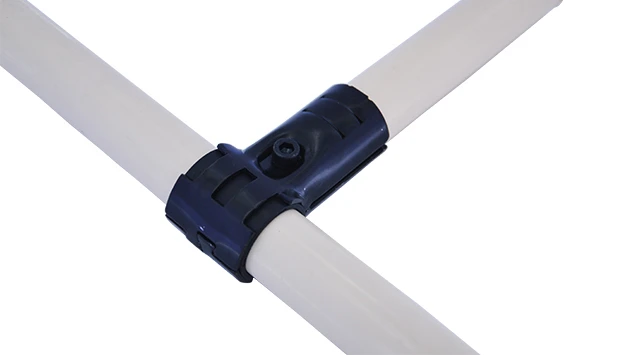
In the fast-paced world of manufacturing and warehouse operations, efficiency isn't just a buzzword—it's the backbone of success. Every component on the production floor, from the largest conveyor system to the smallest connector, plays a role in keeping workflows lean, adaptable, and cost-effective. Today, we're zeroing in on a unsung hero of lean systems: the aluminum one way rotatory straight lean pipe joint. It may sound like a part, but this small yet mighty component is transforming how teams build, adjust, and maintain everything from workbenches to material racks. Let's dive into why it's become a game-changer for businesses invested in lean manufacturing.
Understanding the Basics: What Is an Aluminum One Way Rotatory Straight Lean Pipe Joint?
Before we jump into its advantages, let's clarify what this joint actually is. At its core, it's a specialized connector designed to link aluminum lean pipes—those lightweight, durable tubes that form the skeleton of lean systems—into straight, stable structures. What sets it apart? The "one way rotatory" feature: it allows for smooth, controlled rotation in a single direction, making it easier to align pipes during assembly and adjust angles with precision. Unlike rigid, fixed joints, this flexibility doesn't compromise strength; in fact, its aluminum construction ensures it can handle the daily wear and tear of industrial environments.
Think of it as the "hinge" that brings lean systems to life. Whether you're building a lean pipe workbench for assembly line workers, a material rack to organize inventory, or a custom conveyor system, this joint is the silent partner that holds everything together—literally and figuratively.
Advantage 1: Lightweight Durability That Stands the Test of Time
Aluminum is the star here, and for good reason. Unlike traditional steel joints, which are heavy and prone to rust, aluminum one way rotatory straight lean pipe joints offer the best of both worlds: strength and lightness. This matters in two key ways. First, during installation: teams can carry, position, and connect these joints without heavy lifting equipment, reducing strain and speeding up setup. Second, in day-to-day use: lighter structures are easier to reconfigure if production needs change—say, shifting a workbench from one line to another or adjusting a material rack's height to accommodate new inventory.
But don't let the "lightweight" label fool you. Aluminum is naturally resistant to corrosion, making these joints ideal for environments where moisture, oils, or chemicals are present—think automotive plants, food processing facilities, or warehouses with high humidity. Over time, this resistance translates to lower replacement costs. A steel joint might start rusting after a year of exposure; an aluminum one? It'll keep performing like new, even with minimal maintenance.
And let's talk about structural integrity. The one-way rotation mechanism is engineered to lock securely once positioned, so there's no wobbling or shifting during use. Whether it's supporting heavy tools on a workbench or bearing the weight of stacked materials on a rack, this joint holds firm—giving operators peace of mind that their setup is safe and reliable.

Advantage 2: Unmatched Flexibility for Agile Manufacturing
In today's manufacturing landscape, agility isn't optional—it's essential. Customer demands change, product lines evolve, and production schedules shift. Your equipment needs to keep up, and that's where the one-way rotatory feature shines. Traditional fixed joints require tools, time, and sometimes even disassembly to adjust. With this aluminum joint? It's as simple as loosening a knob, rotating the pipe to the desired angle, and tightening it back down. No wrenches, no bolts, no hassle.
Let's put this in context. Suppose a electronics manufacturer introduces a new smartphone model with a slightly larger casing. Their existing lean pipe workbench, which holds assembly tools, might need its shelves adjusted to fit the new components. With traditional joints, the team would spend hours taking the workbench apart, re-drilling holes, and reassembling. With aluminum one way rotatory straight lean pipe joints? They can reposition the shelves in minutes, getting the line back up and running without missing a beat.
This flexibility also extends to modularity. These joints play well with other aluminum profile accessories—think roller tracks for material flow, casters for mobility, or side guards for safety. Mix and match components, and you've got a system that grows with your business. Need to add a second level to a material rack? Just connect a few more pipes with these joints. Want to turn a static workbench into a mobile cart? Swap out fixed feet for casters, using the same joints to keep everything stable. It's like building with industrial-grade Legos—endless possibilities, minimal effort.

Advantage 3: Time and Cost Savings That Add Up
Every minute saved on the production floor is a minute that can be reinvested in making goods, serving customers, or innovating. Aluminum one way rotatory straight lean pipe joints deliver savings in spades, starting with installation. Traditional systems often require skilled labor—welders, electricians, or specialized technicians—to put together. These joints? Any team member with basic training can assemble them. No welding, no complex tools, just a few simple steps: slide the pipe into the joint, rotate to align, tighten the locking mechanism. It's so intuitive that even new hires can contribute to setup, reducing reliance on specialized staff.
Then there's the long-term cost of ownership. Because aluminum resists corrosion and wear, these joints have a longer lifespan than plastic or steel alternatives. Plastic joints might crack under heavy loads; steel joints rust and weaken. Aluminum? It keeps going, meaning fewer replacements and less downtime. And when you do need to make changes—like reconfiguring a line or expanding a workbench—you won't have to buy entirely new components. Just adjust the existing joints and pipes, and you're good to go. This "reuse and repurpose" model is a cornerstone of lean manufacturing, and these joints embody it perfectly.
Let's crunch some numbers to illustrate. Imagine a small manufacturing plant that builds 10 lean pipe workbenches per year. With traditional steel joints, each workbench takes 4 hours to assemble, requires a skilled welder ($50/hour), and needs replacement joints every 2 years. With aluminum one way rotatory joints, assembly time drops to 1 hour (no welder needed, just a general laborer at $25/hour), and joints last 5+ years. Over five years, that's a savings of (4-1 hours) x $25 x 10 workbenches x 5 years = $3,750 in labor, plus $0 in replacement joints (vs. $500 for steel). That's real money that can be invested back into the business.
Advantage 4: Seamless Integration with Lean Systems and Accessories
A lean system is only as strong as its weakest link, and these joints are designed to be the strongest. They're compatible with a wide range of aluminum lean pipes, from basic aluminum tubes to specialized options like t-slot aluminum pipes or corrugated aluminum pipes. This means you can mix and match pipe types based on your needs—using lightweight basic tubes for shelving, stronger t-slot pipes for heavy tool mounting, and so on—without worrying about whether the joints will fit.
But it's not just pipes. These joints work seamlessly with aluminum profile accessories, too. Need to add a roller track to a material rack for easy part sliding? Connect it using the same joints. Want to mount a tool board on a workbench? Use t-slot aluminum pipes with compatible accessories, secured by these rotatory joints. Even casters—those essential components for mobile workstations—attach easily, turning a static structure into a movable one with minimal effort.
This integration is key for maintaining a cohesive, efficient lean system. When all components work together, there's less friction in operations. Parts flow smoothly from one station to the next, tools are within easy reach, and inventory is organized—all of which reduces waste (a core principle of lean manufacturing) and boosts productivity. It's like having a puzzle where every piece fits perfectly; you spend less time forcing components together and more time focusing on what matters: making great products.
How It Stacks Up: A Comparison with Other Joint Types
To truly appreciate the value of aluminum one way rotatory straight lean pipe joints, let's compare them to common alternatives. The table below breaks down key factors like material, adjustability, durability, and cost:
| Joint Type | Material | Adjustability | Durability | Installation Time |
|---|---|---|---|---|
| Aluminum One Way Rotatory Straight Lean Pipe Joint | Aluminum | High (one-way rotation, tool-free adjustment) | High (corrosion-resistant, wear-resistant) | Low (10-15 minutes per joint) |
| Traditional Steel Fixed Joint | Steel | Low (fixed angle, requires welding/bolts to adjust) | Medium (prone to rust, heavy) | High (30-45 minutes per joint, requires welding) |
| Plastic Snap-On Joint | Plastic | Medium (limited rotation, may loosen over time) | Low (prone to cracking under heavy loads) | Low (5-10 minutes per joint) |
As the table shows, aluminum one way rotatory joints outperform alternatives in key areas: they're more adjustable than steel, more durable than plastic, and nearly as quick to install as plastic—all while offering the strength needed for industrial use. It's a balance that's hard to beat.
Real-World Applications: Where These Joints Make a Difference
Theory is great, but let's look at how these joints perform in real settings. Take a mid-sized automotive parts manufacturer in Ohio, for example. They recently switched from steel fixed joints to aluminum one way rotatory straight lean pipe joints when upgrading their assembly line workbenches. The results? Setup time for new workbenches dropped by 60%, and reconfiguration time when switching between part models went from 4 hours to 45 minutes. "We used to have to bring in a welder every time we needed to adjust a shelf height," says the plant manager. "Now, the line operators can do it themselves during breaks. It's been a game-changer for our agility."
Another example: a warehouse in Texas that handles perishable goods. They needed material racks that could withstand humid conditions without rusting. By using aluminum lean pipes and aluminum one way rotatory joints, they eliminated rust-related downtime and reduced rack replacement costs by 40% over three years. "The joints still look brand new, even with daily exposure to moisture," notes the warehouse supervisor. "And when we need to rearrange racks for seasonal inventory spikes, it's as easy as loosening a few knobs and rotating the shelves."
Even small businesses are benefiting. A local electronics repair shop in California uses these joints to build custom workbenches for their technicians. "We have different tools for phones, laptops, and tablets," explains the owner. "With these joints, we can swap out tool holders and adjust shelf heights in minutes, so each technician has exactly what they need. It keeps our workspace organized and our repair times fast."
Maintenance Tips: Keeping Your Joints in Top Shape
Like any component, aluminum one way rotatory straight lean pipe joints perform best with a little care. Luckily, maintenance is minimal. Here are a few tips to ensure they last for years:
- Regular Cleaning: Wipe down joints with a damp cloth to remove dust, oil, or debris. This prevents buildup that could hinder rotation over time.
- Check Tightness: Every few months, give the locking knobs a gentle twist to ensure they're secure. Vibration from machinery can loosen them slightly, but a quick tighten is all it takes.
- Lubricate Sparingly: If rotation feels stiff, apply a small amount of dry lubricant (like graphite powder) to the joint mechanism. Avoid oil-based lubricants, which can attract dust.
- Inspect for Wear: Look for cracks or excessive wear on the joint's rotation points. While aluminum is durable, heavy impact (like dropping a tool on the joint) can damage it. replace worn joints promptly to avoid structural issues.
Follow these steps, and your joints will keep performing reliably for years—minimizing downtime and maximizing your investment.
Conclusion: The Unsung Hero of Lean Manufacturing
In the world of lean manufacturing, success lies in the details. The aluminum one way rotatory straight lean pipe joint may not be the most glamorous component on the production floor, but it's a critical one. Its lightweight durability, unmatched flexibility, time and cost savings, and seamless integration with other lean system components make it an indispensable tool for businesses looking to stay agile, efficient, and competitive.
Whether you're building a lean pipe workbench, a material rack, or an entire production line, these joints offer the adjustability and reliability you need to adapt to changing demands. They reduce waste—in time, labor, and materials—and empower your team to work smarter, not harder. In short, they're more than just connectors; they're enablers of the lean vision: a workplace where everything has a purpose, nothing is wasted, and success is built on efficiency.
So the next time you walk through a manufacturing facility or warehouse, take a closer look at those aluminum structures. Chances are, the quiet efficiency you see is thanks in part to these small but mighty joints—working tirelessly to keep operations lean, adaptable, and ready for whatever the future brings.