- Company Articles
- Products and Technology
- Product knowledge
- The Advantages of Using Two Way Aluminum Pipe Joints in Warehousing and Logistics

The Advantages of Using Two Way Aluminum Pipe Joints in Warehousing and Logistics
Related Product
Two Way Aluminum Pipe Joint
Aluminum 2 way pipe joint for 28mm aluminum pipe connection in 2 direction.
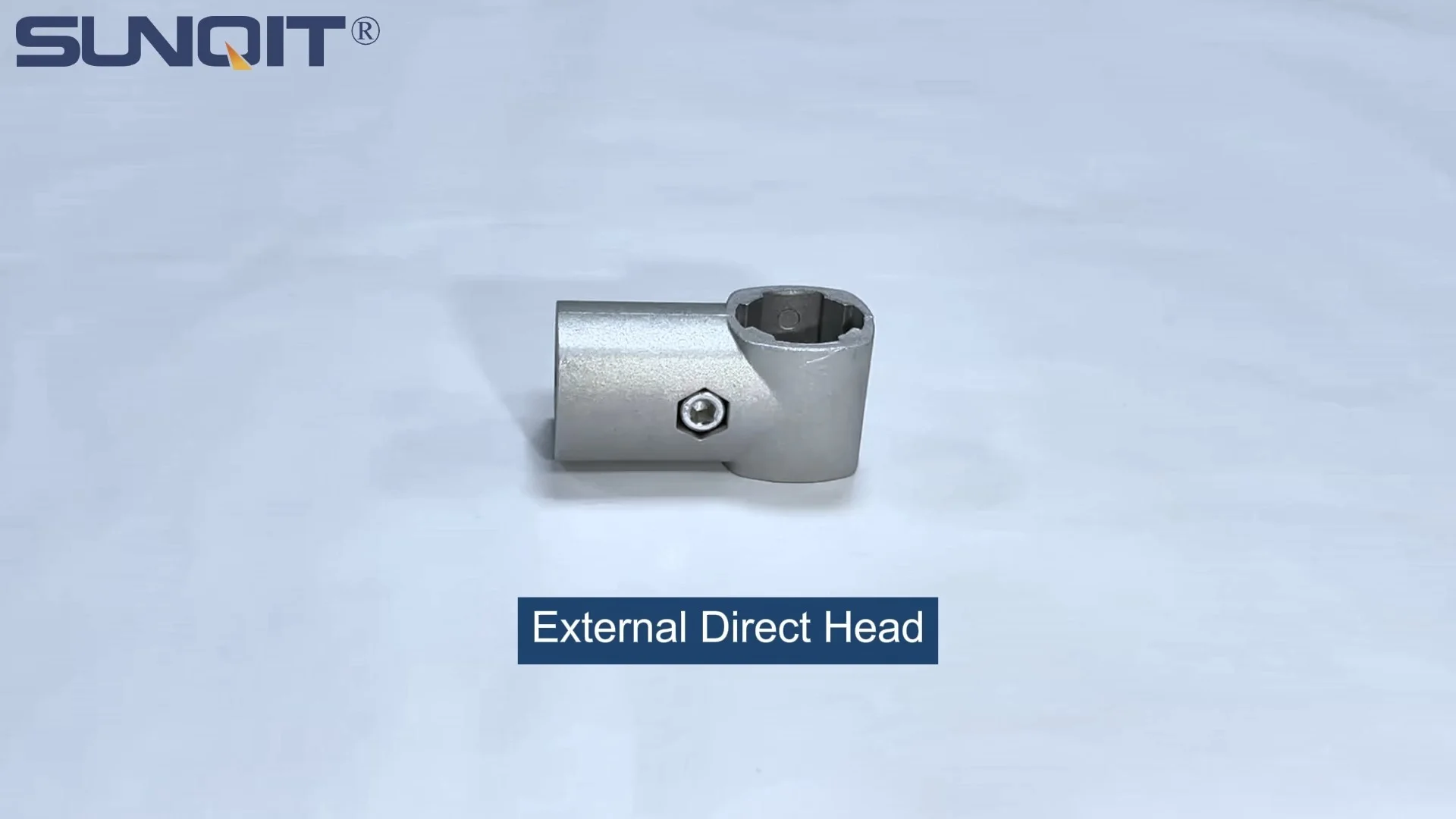
In the fast-paced world of warehousing and logistics, where efficiency, adaptability, and cost-effectiveness are the cornerstones of success, the tools and equipment that keep operations running smoothly often fly under the radar. Yet, one component that's quietly revolutionizing how warehouses and distribution centers operate is the two way aluminum pipe joint . These unassuming connectors, part of modern aluminum profile systems, play a pivotal role in building flexible, durable, and customizable material handling solutions. Whether you're setting up a new workbench, reconfiguring a flow rack, or assembling a turnover trolley, two way aluminum pipe joints offer a level of versatility that traditional fixed joints simply can't match. In this article, we'll dive deep into why these joints have become a go-to choice for logistics managers and warehouse operators, exploring their key advantages, real-world applications, and how they integrate seamlessly with aluminum lean pipe, aluminum profile accessories, and other modular components.
What Are Two Way Aluminum Pipe Joints?
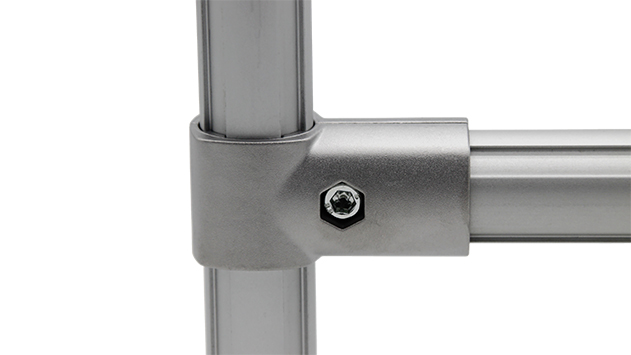
Before we jump into their advantages, let's clarify what two way aluminum pipe joints are. Simply put, these are connectors designed to join two lengths of aluminum pipe (or aluminum lean pipe) at various angles—most commonly 90 degrees, but often adjustable to other angles depending on the design. Made from high-grade aluminum alloy, they're engineered to be lightweight, strong, and resistant to corrosion. Unlike traditional steel joints that require welding or heavy bolts, two way aluminum pipe joints typically feature a clamping mechanism that tightens around the aluminum pipe, creating a secure connection without permanent modifications. This design is the backbone of modular aluminum systems, which prioritize flexibility and quick assembly.
Two way aluminum pipe joints are part of a broader ecosystem of aluminum profile accessories, which includes everything from caster wheels and roller track to workbench components and aluminum guide rails. Together, these parts allow warehouses to build custom solutions tailored to their unique needs—no two operations are the same, and neither should their equipment.
The Key Advantages of Two Way Aluminum Pipe Joints
So, why are logistics professionals increasingly turning to two way aluminum pipe joints? Let's break down their most compelling benefits, backed by real-world use cases and practical examples.
1. Unmatched Flexibility for Dynamic Warehouses
Warehouses are not static spaces. Seasonal demand, new product lines, or shifts in shipping patterns often require layout reconfigurations. A fixed steel shelving unit or welded rack might work for a year, but when you need to expand, shrink, or reposition it, you're left with a costly or replacement project. Two way aluminum pipe joints eliminate this problem.
Consider a scenario where a warehouse needs to add a new picking station during peak season. With aluminum lean pipe and two way joints, workers can assemble a temporary workbench in hours: connect aluminum pipes with two way joints at the desired height, add a wooden or aluminum honeycomb panel top, and attach caster wheels for mobility. When the season ends, the workbench can be disassembled, and the components reused to build a material rack or turnover trolley. This flexibility isn't just convenient—it's a strategic advantage. According to a 2023 survey by the Warehousing Education and Research Council (WERC), 68% of warehouses report reconfiguring their layouts at least twice a year; modular systems with two way joints cut the time for these changes by up to 70% compared to fixed systems.
Aluminum profile accessories enhance this flexibility further. For example, adding roller track to a rack built with two way joints transforms it into a flow rack, allowing gravity-fed product movement. Need to adjust the angle of the roller track? Simply loosen the two way joints, reposition the aluminum pipe, and retighten. No welding, no drilling—just quick, tool-free adjustments.
2. Lightweight Design Reduces Labor Strain and Installation Time
Traditional steel pipe systems are sturdy, but their weight is a double-edged sword. Installing a steel rack often requires multiple workers or heavy lifting equipment, increasing the risk of injury and extending project timelines. Aluminum, by contrast, is about one-third the weight of steel, and two way aluminum pipe joints inherit this advantage.
A single worker can easily carry a 6-foot length of aluminum lean pipe and a handful of two way joints, assembling a basic material rack on their own. This not only speeds up installation but also reduces reliance on specialized labor. For example, a small manufacturing facility in Ohio recently switched from steel to aluminum systems for their assembly lines. Their maintenance manager noted, "We used to need two people and a forklift to move a single steel workbench. Now, one person can wheel an aluminum workbench—built with two way joints and caster wheels—across the shop floor in minutes. It's cut our setup time in half and made our team more independent."
Lightweight doesn't mean flimsy, though. Aluminum alloys used in these joints are engineered for strength, with tensile strengths comparable to mild steel. For most warehousing applications—storing boxes, tools, or small parts—two way aluminum pipe joints provide more than enough support. And if heavier loads are needed, manufacturers offer reinforced joints and thicker-walled aluminum pipe options.
3. Cost-Effective Over the Long Term
At first glance, aluminum systems might seem pricier than basic steel or plastic alternatives. But when you factor in installation, reusability, and maintenance, two way aluminum pipe joints often prove more cost-effective over time.
- Lower Installation Costs: No need for welders, electricians, or specialized tools. Basic hand tools (a hex key or wrench) are all that's required, reducing labor expenses.
- Reusability: When you reconfigure your warehouse, aluminum components can be disassembled and reused. Steel welded structures, by contrast, are often cut apart and discarded, turning your initial investment into scrap metal.
- Minimal Maintenance: Aluminum is naturally resistant to rust and corrosion, unlike steel, which requires painting or coating to prevent degradation. In humid or temperature-fluctuating environments—common in logistics—this translates to lower upkeep costs.
Many suppliers also offer lean pipe wholesale or aluminum pipe wholesale options, making bulk purchases more affordable for larger operations. A distribution center in Texas, for instance, saved 35% on their annual equipment budget by switching to aluminum modular systems and buying components in bulk from a lean pipe supplier. "We used to replace steel racks every 3-4 years due to rust," their operations director explained."Aluminum has lasted 7 years and counting, and we've reused 80% of the components in three layout changes. The ROI was clear within the first year."
4. Seamless Compatibility with Modular Components
Two way aluminum pipe joints don't work in isolation—they're designed to play well with a wide range of modular parts, creating endless possibilities for customization. This compatibility is what makes aluminum systems so versatile.
For example, let's say you need a mobile picking cart. Start with aluminum pipe and two way joints to build the frame. Add caster wheels (with brakes for stability) using caster accessories. Attach a small workbench top with aluminum profile fixings, and line the bottom shelf with swivel roller balls for easy box movement. Need to add a tool holder? Use additional two way joints to mount aluminum profile accessories like hooks or trays. The result is a custom cart tailored to your picking process, built from off-the-shelf components.
This compatibility extends to specialized equipment, too. Roller track—used in flow racks or conveyor systems—easily attaches to aluminum pipe frames via two way joints and roller track connectors. Aluminum guide rails can be mounted to the same frame to guide products, ensuring smooth movement. Even ESD workbenches (essential for electronics manufacturing) can be built using two way joints, aluminum pipe, and ESD-safe accessories, providing a static-free workspace without the need for custom fabrication.
5. Tool-Free Assembly for Quick Deployment
Time is money in logistics, and two way aluminum pipe joints are designed to save both. Unlike steel systems that require welding or drilling, these joints can be assembled with nothing more than a standard hex wrench. This simplicity means even workers with minimal training can build or modify equipment.
Let's walk through a quick example of assembling a basic material rack using two way joints:
- Measure and cut aluminum pipe: Cut pipes to the desired length (most suppliers offer pre-cut options, too).
- Attach two way joints: Slide a two way joint onto each pipe end. Position the joint at the angle you need (90 degrees for a square rack).
- Connect pipes: insert the end of another pipe into the joint's second opening. Tighten the joint's clamping screw with a hex wrench until secure—no need for excessive force; aluminum's malleability means over-tightening can damage the pipe.
- Add shelves: Use additional two way joints to attach horizontal pipes for shelves, then lay plywood or aluminum panels on top.
Total assembly time for a small 4-foot rack? Less than 30 minutes. Compare that to a steel rack, which might take 2-3 hours to weld and bolt together. For warehouses facing tight deadlines—like setting up a new shipping station before a product launch—this speed is invaluable.
Two Way Aluminum Pipe Joints vs. Other Joint Types: A Comparison
To better understand the value of two way aluminum pipe joints, let's compare them to common alternatives:
| Feature | Two Way Aluminum Pipe Joints | Fixed Steel Welded Joints | Plastic Snap-Fit Joints |
|---|---|---|---|
| Flexibility | High – Reconfigurable, adjustable angles | Low – Permanent, cannot be adjusted | Medium – Some adjustment, but limited durability |
| Weight | Light (aluminum) | Heavy (steel) | Light (plastic) |
| Durability | High – Corrosion-resistant, long lifespan | High – Sturdy but prone to rust without coating | Low – Prone to cracking under stress |
| Assembly Time | Rapid (tool-free, 30 mins for basic rack) | Slow (requires welding, 2-3 hours) | Medium (quick snap-fit, but less secure) |
| Cost (Long-Term) | Cost-effective (reusable, low maintenance) | High (permanent, requires replacement) | Low upfront, but high replacement cost |
| Compatibility | High – Works with aluminum profile accessories, roller track, casters, etc. | Low – Limited to steel components | Medium – Works with plastic pipes only |
To put these advantages into context, let's look at a real-world example (names have been changed for privacy). Midwest Distribution, a regional logistics firm handling food and beverage products, was struggling with outdated steel shelving and fixed workstations. Their warehouse layout hadn't changed in a decade, and with growing demand, they needed to optimize space and reduce order processing time.
Their solution? A complete switch to aluminum modular systems, centered around two way aluminum pipe joints. Over six months, they:
- Replaced fixed steel racks with flow racks built from aluminum lean pipe, two way joints, and roller track, reducing picking time by 25%.
- Built mobile workbenches using aluminum pipe, two way joints, and caster wheels, allowing workers to move stations to where they were needed most.
- Assembled temporary storage racks during peak seasons, then disassembled them for off-season use, freeing up 1,200 square feet of floor space.
The results spoke for themselves: order fulfillment rates increased by 18%, labor costs for layout changes dropped by 60%, and employee satisfaction scores rose (workers reported less physical strain from moving lighter equipment). As their operations manager put it, "We used to see our warehouse as a fixed space—now we see it as a canvas. Two way aluminum joints let us paint whatever picture we need, whenever we need it."

Considerations: When Might Two Way Aluminum Pipe Joints Not Be the Best Fit?
While two way aluminum pipe joints excel in most warehousing and logistics scenarios, they're not a one-size-fits-all solution. Extremely heavy loads—such as storing industrial machinery or palletized goods weighing over 2,000 pounds—may require the rigidity of steel. In these cases, hybrid systems (aluminum for lighter components, steel for heavy supports) can be a compromise. Additionally, in highly corrosive environments (e.g., chemical storage), stainless steel pipe series might be preferable, though aluminum's corrosion resistance still holds up well in most indoor warehouses.
It's also important to choose the right joint size and pipe thickness for your needs. Most suppliers offer joints compatible with 28mm, 30mm, or 40mm aluminum pipe—matching the joint to the pipe diameter ensures a secure fit. When in doubt, consult with a lean system supplier who can recommend components based on your specific load requirements.

Conclusion: Building the Future of Warehousing with Two Way Aluminum Pipe Joints
In an industry where adaptability, efficiency, and cost control are paramount, two way aluminum pipe joints stand out as a simple yet transformative solution. Their flexibility, lightweight design, cost-effectiveness, and compatibility with modular systems make them ideal for modern warehouses and logistics operations—whether you're a small fulfillment center or a large manufacturing plant.
By choosing aluminum lean pipe, two way joints, and aluminum profile accessories, you're not just buying equipment—you're investing in a system that grows with your business. Reconfigure, reuse, and adapt without the hassle of traditional fixed systems. In the end, the goal of logistics is to move goods quickly and safely; two way aluminum pipe joints help you do just that, one connection at a time.