- Company Articles
- Products and Technology
- Product knowledge
- The Aesthetic Benefits of Aluminum Side Guards in Modern Manufacturing Facilities

The Aesthetic Benefits of Aluminum Side Guards in Modern Manufacturing Facilities
Related Product
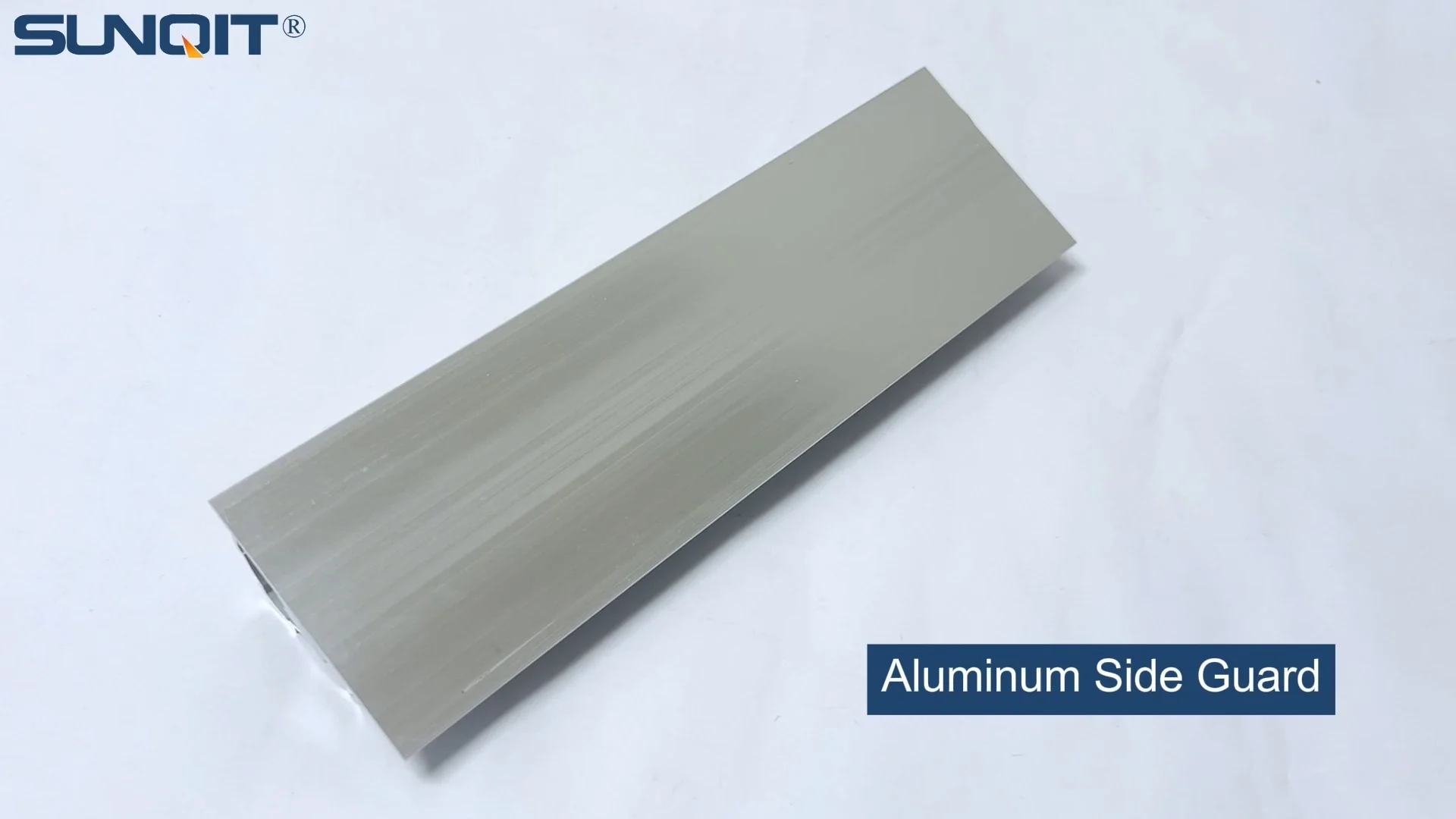
Aluminum Side Guard
Aluminum side guard, it works with a aluminum pipe or a roller track as side guard to prevent material drop,or move to wrong direction.
Walk into a cutting-edge manufacturing facility today, and you'll likely be struck by more than just the hum of machinery or the precision of assembly lines. Instead, your eyes might linger on the clean lines of workstations, the coordinated color palettes of equipment, and the overall sense of intentional design—elements that were once afterthoughts in industrial spaces. This shift isn't accidental. Modern manufacturers are waking up to a powerful truth: a facility's aesthetics aren't just about looking good—they shape employee morale, brand perception, and even operational efficiency. Among the unsung heroes of this visual transformation? Aluminum side guards. Often overlooked in discussions of industrial design, these unassuming components play a pivotal role in turning cluttered, utilitarian spaces into environments that feel organized, modern, and even inspiring. In this article, we'll explore how aluminum side guards, rooted in versatile materials like aluminum extrusion profile, are redefining manufacturing aesthetics, and why their impact extends far beyond mere decoration.
1. The Evolution of Manufacturing Aesthetics: From Function to Form
Not long ago, manufacturing facilities were largely defined by their "no-nonsense" ethos. Sturdy steel structures, exposed pipes, and a mishmash of equipment dominated the landscape—prioritizing durability and functionality above all else. A factory's success was measured by output, not appearance, and few gave much thought to how the space felt to the people working there. But over the past decade, that mindset has undergone a radical shift. Companies like Tesla, Toyota, and Siemens have led the charge, showcasing factories that resemble high-tech labs more than gritty workshops: think bright, natural light, sleek white and metallic surfaces, and equipment arranged with almost artistic precision. What's driving this change? Research has increasingly linked workplace design to employee well-being and productivity. A 2022 study by the World Economic Forum found that workers in visually appealing, organized environments report 12% higher job satisfaction and 8% greater productivity than those in cluttered, outdated spaces. Additionally, as manufacturing becomes more competitive, facilities have become "brand ambassadors"—spaces where clients, investors, and even the public are invited to see innovation in action. In this context, aesthetics are no longer a luxury; they're a strategic imperative.
Against this backdrop, materials like aluminum extrusion profile have emerged as game-changers. Unlike heavy steel or rigid plastic, aluminum extrusion profile offers a rare blend of strength, flexibility, and visual appeal. Its ability to be molded into custom shapes, combined with its lightweight nature and resistance to corrosion, makes it ideal for creating components that are both functional and beautiful. And aluminum side guards, often crafted from this versatile material, are a prime example of how form and function can coexist. They protect equipment, guide materials, and enhance safety—all while contributing to a facility's overall design language. To understand their aesthetic impact, let's first unpack what makes aluminum extrusion profile such a powerful tool for industrial design.
2. Aluminum Extrusion Profile: The Foundation of Modern Industrial Design
At its core, aluminum extrusion profile is the result of pushing heated aluminum through a die to create uniform, complex shapes. This process allows manufacturers to produce components with precise dimensions, intricate details, and consistent quality—all at scale. What sets it apart, though, is its modularity. Aluminum extrusion profiles are designed to interlock with compatible accessories, making them infinitely customizable. Need a longer guardrail? Add an extension. Want to adjust the height of a workbench? Swap out a section. This flexibility isn't just practical; it's aesthetically revolutionary. In traditional manufacturing setups, equipment was often "one-size-fits-all," leading to mismatched components and a jumbled visual landscape. Aluminum extrusion profile, by contrast, enables a cohesive design language. Whether it's a workbench, a material rack, or a side guard, components made from the same profile system share consistent lines, colors, and proportions—creating a sense of harmony that's hard to achieve with disparate materials.
Another key advantage of aluminum extrusion profile is its surface versatility. Unlike steel, which often requires painting or coating to prevent rust (and can chip or fade over time), aluminum can be anodized, powder-coated, or left in its natural state for a clean, metallic finish. Anodization, a process that forms a protective oxide layer on the metal, not only enhances durability but also adds a subtle, matte sheen that feels modern and premium. Powder-coating, meanwhile, allows for a wide range of colors—from neutral grays and whites to bold blues or greens—enabling manufacturers to align their facility's design with brand colors or create specific moods (e.g., calming blues for high-focus areas, energizing yellows for collaborative zones). This adaptability makes aluminum extrusion profile the perfect foundation for aluminum side guards, which need to be both tough enough to withstand daily wear and visually cohesive with the rest of the facility.

3. Design Elements of Aluminum Side Guards: Beauty in the Details
Aluminum side guards may seem simple at first glance, but their aesthetic impact lies in the details. Let's break down the key design elements that make them stand out in modern manufacturing spaces:
Sleek Lines and Minimalism
Traditional side guards—often made from thick steel or bulky plastic—tended to be visually heavy, with sharp edges and awkward proportions. Aluminum side guards, by contrast, leverage the precision of aluminum extrusion profile to achieve sleek, minimalist lines. Their slim profiles (often just a few inches wide) and smooth surfaces create a sense of lightness, avoiding the "clunky" feel of older designs. This minimalism is crucial in modern facilities, where visual clutter can be distracting. By reducing visual noise, aluminum side guards help draw the eye to what matters: the work itself. For example, in an electronics assembly line, where precision is key, the clean lines of aluminum side guards frame workstations without overwhelming them, creating a calm, focused environment.
Modularity and Customization
Thanks to aluminum extrusion profile's modular design, aluminum side guards can be tailored to fit any space or need. Want a curved guardrail to follow the contour of a conveyor belt? Aluminum extrusion can be bent to match. Need to add cutouts for cables or tools? Custom dies make it possible. This level of customization ensures that side guards never feel like "aftermarket add-ons" but rather integral parts of the facility's design. For instance, a pharmaceutical manufacturer might use transparent acrylic panels mounted on aluminum side guards to enclose a sterile production area—combining safety, visibility, and a sleek, futuristic look. Or a automotive plant could install color-coded side guards (blue for assembly lines, green for quality control) to visually organize workflows, making the space easier to navigate and more intuitive to use.
Color and Finish: More Than Just "Silver"
Gone are the days when industrial equipment was limited to "factory gray" or "rusty steel." Aluminum side guards, with their customizable finishes, add a pop of intentional color to manufacturing spaces. Anodized aluminum, for example, offers a range of subtle tones—from warm bronze to cool nickel—that add depth without being overwhelming. Powder-coated options, meanwhile, open the door to bolder choices: a bright orange guardrail might mark a high-traffic area, while soft pastels could soften the look of a packaging station. These colors aren't just decorative; they serve functional purposes, too. OSHA guidelines recommend using color coding to highlight hazards (e.g., red for emergency stops, yellow for caution), and aluminum side guards can seamlessly integrate these requirements into the facility's design. The result? A space that's both compliant and visually engaging.
Integration with Workbenches and Material Racks
Perhaps the most powerful aspect of aluminum side guards' aesthetics is their ability to integrate with other facility components—specifically, workbenches and material racks. In a modern manufacturing setup, these elements aren't standalone; they're part of a cohesive system. Aluminum extrusion profile ensures that side guards, workbenches, and material racks share the same design language, creating a unified look that feels intentional. Imagine a workbench with a smooth aluminum frame, paired with matching side guards along its edges, and a material rack nearby constructed from the same profile system. The consistent lines, colors, and proportions tie the space together, eliminating the visual chaos of mismatched equipment. This integration also enhances functionality: side guards on a workbench can double as tool holders or cable organizers, while those on a material rack can prevent items from sliding off—proving that beauty and utility often go hand in hand.
| Feature | Traditional Steel Side Guards | Aluminum Extrusion Profile Side Guards |
|---|---|---|
| Visual Appeal | Bulky, often rust-prone; limited color options (typically gray or black). | Sleek, lightweight profiles; customizable finishes (anodized, powder-coated) in a range of colors. |
| Modularity | Rigid, fixed designs; difficult to modify or extend without welding. | Modular, interlocking components; easy to adjust, extend, or repurpose with compatible accessories. |
| Integration | Often mismatched with other equipment (different materials, colors, or proportions). | Seamless integration with workbenches, material racks, and conveyors using the same aluminum extrusion system. |
| Durability | Prone to corrosion; requires regular painting/coating to maintain appearance. | Corrosion-resistant; anodized/powder-coated finishes maintain color and sheen over time. |
| Safety-Compliance Aesthetics | Color coding often added as an afterthought (e.g., painted stripes that chip easily). | Color and finish integrated into design; OSHA-compliant hues applied during manufacturing for long-lasting visibility. |

4. Functional Beauty: How Aesthetics Enhance Operational Efficiency
Critics might argue that focusing on aesthetics in manufacturing is a "frivolous" expense—that the priority should always be output. But as countless studies have shown, a well-designed space isn't just nicer to look at; it's more efficient. Aluminum side guards embody this principle of "functional beauty," where their visual appeal directly supports better operations. For example, their clean lines and consistent design reduce visual clutter, making it easier for workers to focus on tasks. A study by the Design Management Institute found that companies that invest in design outperform their peers by 219% over 10 years—a statistic that speaks to the tangible benefits of thoughtful aesthetics. In manufacturing, this translates to fewer errors, faster training times (as workers can more easily navigate organized spaces), and lower turnover (as employees feel valued in environments that prioritize their well-being).
Take, for instance, a food packaging facility that upgraded from steel to aluminum side guards. The old steel guards were prone to rust, requiring frequent repainting that disrupted production. They were also heavy, making it hard to reconfigure workstations as product lines changed. The new aluminum guards, by contrast, were lightweight and corrosion-resistant, so they stayed looking new with minimal maintenance. Their modular design allowed the facility to quickly adjust layouts for seasonal products, and their bright white powder-coat finish reflected light, reducing the need for extra lighting (cutting energy costs). Employees reported feeling "proud" of their workspace, and the facility saw a 10% reduction in packaging errors—proof that aesthetics and efficiency are not mutually exclusive.
5. Case Study: Transforming a Electronics Assembly Plant with Aluminum Side Guards
To illustrate the real-world impact of aluminum side guards, let's look at a hypothetical (but representative) case study of a mid-sized electronics manufacturer. Prior to 2023, the facility was typical of older plants: dim lighting, mismatched steel workbenches, and a hodgepodge of side guards—some made of wood, others of rusting steel. Employee turnover was high, and visitors often commented on the "dated" feel of the space. The plant manager, eager to boost morale and modernize operations, decided to invest in a full facility redesign centered on aluminum extrusion profile systems.
The first step was replacing all workbenches with aluminum extrusion profile models, chosen for their clean lines and adjustability. Next, aluminum side guards were added to each workstation, not just for safety but to create a unified look. The guards were powder-coated in the company's brand color—a soft blue—with subtle white accents to match the workbench surfaces. Material racks, also constructed from aluminum extrusion profile, were placed strategically around the floor, with side guards that mirrored those on the workbenches. Even the conveyor belts got an upgrade: aluminum side guards with clear acrylic panels were installed to prevent components from falling off, while also allowing visibility into the assembly process.
The results were striking. Within six months, employee satisfaction scores rose by 18%, and turnover dropped by 22%. The plant manager noted that workers were "more engaged" and "took better care of their stations," with fewer instances of tools or parts left out of place. Clients, too, noticed the difference: one major customer commented that the facility now "felt like a reflection of the high-quality products they make." Perhaps most surprisingly, the upgrade paid for itself within a year, thanks to reduced maintenance costs (no more repainting rusted steel) and improved productivity (fewer errors, faster assembly times). This case study underscores a simple truth: aluminum side guards aren't just about making a space look good—they're about creating environments that work with people, not against them.
6. Future Trends: Where Aluminum Side Guards and Manufacturing Aesthetics Are Headed
As manufacturing continues to evolve, so too will the role of aluminum side guards in facility design. One emerging trend is the integration of smart technology: imagine side guards embedded with LED strips that change color to indicate workflow status (green for "on track," red for "delayed") or sensors that alert managers to equipment malfunctions. Another trend is sustainability. Aluminum is 100% recyclable, and manufacturers are increasingly prioritizing eco-friendly finishes (like water-based powder coatings) to reduce their environmental footprint. This aligns with the growing demand for "green" facilities, where aesthetics and sustainability go hand in hand.
We're also seeing a shift toward "human-centric" design—spaces that prioritize the physical and emotional needs of workers. Aluminum side guards, with their ability to be customized for ergonomics (e.g., curved edges to reduce strain, adjustable heights for different users), are well-positioned to support this trend. In the future, we might even see side guards designed with built-in charging ports or tool organizers, blurring the line between "safety equipment" and "workplace amenities."
7. Conclusion: Aesthetics as a Catalyst for Manufacturing Excellence
Aluminum side guards may seem like small components in the grand scheme of manufacturing, but their impact is anything but minor. By leveraging the versatility of aluminum extrusion profile, they transform utilitarian spaces into environments that inspire, organize, and engage. They prove that aesthetics aren't a luxury in manufacturing—they're a strategic tool that enhances productivity, boosts morale, and strengthens brand identity. As more manufacturers embrace this mindset, we can expect to see even more innovative uses of aluminum extrusion profile, aluminum lean pipe, and other materials that marry form and function.
In the end, the true beauty of aluminum side guards lies in their ability to tell a story. They say, "This facility cares about precision, about its people, and about the future." In a world where manufacturing is as much about innovation as it is about production, that story is invaluable. So the next time you step into a modern factory, take a moment to appreciate the details—the sleek lines of the side guards, the cohesion of the design, the way every element feels intentional. Chances are, aluminum extrusion profile is at the heart of it all, quietly transforming industrial spaces one guardrail at a time.