- Company Articles
- Products and Technology
- Product knowledge
- The Basics of 3060 Aluminum Angle Yards: From Alloy to Yard Measurements

The Basics of 3060 Aluminum Angle Yards: From Alloy to Yard Measurements
Related Product
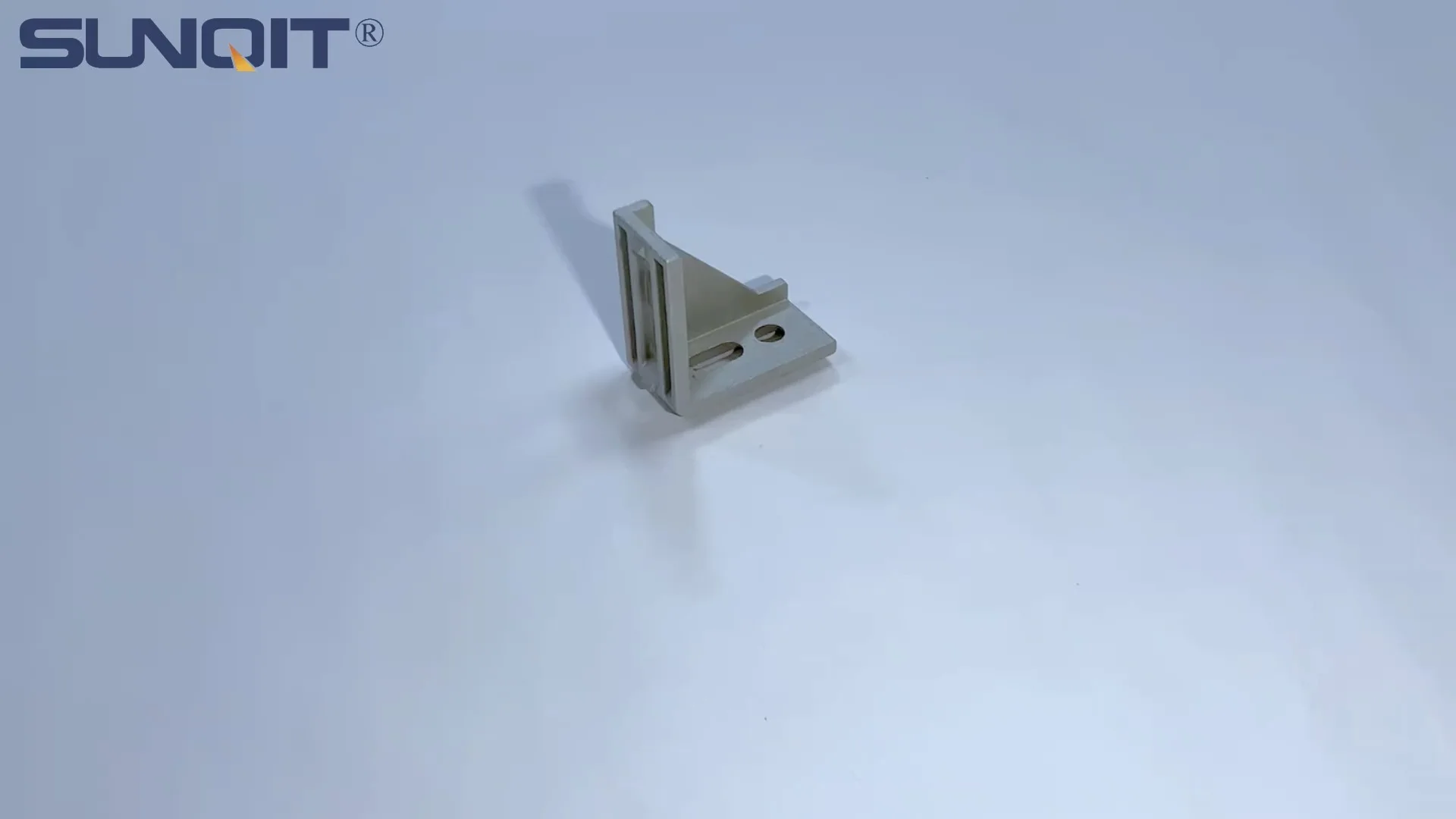
3060 Aluminum Angle Yards
It used for 90° flat connection for 20 series aluminum profile.
Walk into any modern manufacturing facility, warehouse, or even a DIY workshop, and you'll likely spot a silent workhorse holding everything together: aluminum profiles. These unassuming metal structures are the backbone of modular systems, supporting everything from workbenches and material racks to production lines and display shelves. Among the many profiles available, the 3060 aluminum angle yard stands out for its unique blend of strength, versatility, and adaptability. Whether you're a seasoned engineer designing an industrial workspace or a hobbyist building a custom storage solution, understanding the basics of 3060 aluminum angle yards—from their alloy composition to how they're measured and used—can transform how you approach your next project. Let's dive in.
Alloy Composition: What Makes 3060 Aluminum Tick?
Aluminum itself is a lightweight, corrosion-resistant metal, but on its own, it's too soft for most structural tasks. That's where alloys come in. 3060 aluminum angle yards are typically made from 6063 aluminum alloy , a popular choice for extrusion profiles thanks to its excellent formability and finishing characteristics. What's in this alloy? It's a mix of aluminum (the base), magnesium (for strength), and silicon (for improved extrusion). This combination creates a material that's strong enough to support heavy loads yet malleable enough to be shaped into complex profiles—like the 30mm x 60mm angle shape that defines the 3060 yard.
Why does this matter? Let's break down the key properties: Strength : 6063 alloy has a tensile strength of around 180 MPa, making it sturdy enough for medium-duty applications like workbenches or material racks. Corrosion Resistance : Unlike steel, aluminum forms a natural oxide layer that protects it from rust, so 3060 profiles hold up well in humid or dusty environments. Lightweight : Aluminum is about one-third the weight of steel, so even long lengths of 3060 are easy to handle during installation. Thermal Conductivity : While not the primary reason for choosing 3060, this property can be useful in applications where heat dissipation matters, such as electronics manufacturing.
Think of 3060 aluminum as the "goldilocks" of profiles—not too flimsy for heavy tasks, not too bulky for delicate setups. Its alloy makeup is what allows it to balance these traits, making it a go-to for engineers and builders alike.
From Billet to Profile: The Extrusion Journey
Ever wondered how a solid block of aluminum becomes a sleek 3060 angle yard? The magic happens through a process called aluminum extrusion —a method that's been refined over decades to create precise, consistent profiles. Here's a step-by-step look at how it works:
1. Billet Preparation
It all starts with a cylindrical block of 6063 aluminum alloy, called a "billet." These billets are typically 6 to 12 feet long and heated to around 480°C (900°F)—hot enough to make the metal pliable but not molten. Heating softens the aluminum, allowing it to flow through a die without cracking.
2. Die Design & Setup
Next, a custom die is created. For 3060 angle yards, the die has a cross-sectional shape that matches the 30mm x 60mm angle, complete with T-slots (those handy grooves along the length that let you attach accessories). Dies are made from hardened steel to withstand the pressure of extrusion and ensure precision.
3. Extrusion Press
The heated billet is loaded into an extrusion press, where a hydraulic ram pushes it through the die at high pressure (up to 10,000 psi). As the aluminum flows through the die, it takes on the die's shape, emerging as a long, continuous profile. Imagine squeezing toothpaste through a shaped nozzle—except on a massive, industrial scale!
4. Cooling & Stretching
Once extruded, the hot profile is cooled with water sprays to set its shape. It's then stretched slightly (a process called "stretching") to straighten it and relieve internal stresses, ensuring the final product is dimensionally stable.
5. Cutting & Finishing
Finally, the continuous profile is cut into standard lengths (we'll get to "yard measurements" next!) and finished. Most 3060 angle yards receive an anodized coating—a process that thickens the natural oxide layer, boosting corrosion resistance and giving the metal a smooth, uniform appearance (often silver, but sometimes colored for aesthetic projects).
This extrusion process is what makes aluminum profiles like 3060 so cost-effective and versatile. Dies can be reused to produce thousands of identical profiles, and the ability to add T-slots during extrusion means the finished product is ready to connect with accessories right out of the box.

Key Features of 3060 Aluminum Angle Yards
What sets 3060 aluminum angle yards apart from other profiles? Let's break down their defining features:
Dimensions: 30mm x 60mm Angle Shape
The "3060" in the name refers to its cross-section: 30mm (width) x 60mm (height), formed into an L-shape (angle). This design offers two flat surfaces at 90°, making it ideal for corner supports, frames, or structures where two directions of load need to be distributed. Unlike square profiles (like 3030 or 4040), the angle shape provides flexibility in how you orient the profile—use the long leg for vertical support, the short leg for horizontal bracing, or both for a sturdy corner joint.
T-Slots for Modularity
One of the biggest advantages of 3060 angle yards is the inclusion of T-slots. These are narrow, T-shaped grooves running the length of the profile, designed to accept T-slot nuts, bolts, and other aluminum profile accessories . Need to attach a shelf? Slide a T-slot nut into the slot, bolt on a bracket, and you're done. Want to add a tool holder? Use a T-slot bolt to secure it in place. No drilling or welding required—this modularity is why 3060 is a favorite for projects that need to evolve over time.
Load Capacity
Thanks to its 6063 alloy composition and angle design, 3060 aluminum angle yards can handle impressive loads. On average, a single 3-meter length can support around 200-300 kg when used as a horizontal beam (depending on how it's mounted). This makes it suitable for medium-duty applications like workbenches, material racks, and light-duty conveyor supports. For heavier loads, you can reinforce it by pairing two profiles or using thicker-walled versions.

Yard Measurements: Understanding Lengths & Sizing
When suppliers talk about "yard measurements" for 3060 aluminum angle yards, they're referring to the standard lengths these profiles are sold in. While "yard" historically refers to 3 feet (0.914 meters), in modern manufacturing, aluminum profiles are more commonly measured in meters. Here's what you need to know about sizing:
Standard Lengths
Most suppliers offer 3060 angle yards in standard lengths to balance usability and shipping efficiency. The most common options include:
- 2 meters (6.56 feet): Ideal for small projects like workbenches or shelving units.
- 3 meters (9.84 feet): The go-to length for medium-sized structures, such as material racks or production line frames.
- 6 meters (19.68 feet): Used for large-scale applications like warehouse shelving or industrial partitions. These longer lengths often require special shipping but reduce the number of joints needed in a project.
Many suppliers also offer custom cutting—if you need a 1.2-meter piece for a specific shelf, they can cut a standard length to size, saving you time and reducing waste.
Weight Per Length
Understanding the weight of 3060 angle yards is key for transportation, installation, and load-bearing calculations. A typical 3060 profile with a wall thickness of 1.5mm weighs about 1.8 kg per meter. For reference:
- 2m length: ~3.6 kg
- 3m length: ~5.4 kg
- 6m length: ~10.8 kg
Heavier wall thicknesses (like 2mm) will increase the weight and strength, making them better for high-load applications.

Essential Accessories: Making the Most of 3060 Profiles
A 3060 aluminum angle yard is just the starting point—the real versatility comes from pairing it with the right aluminum profile accessories . These add-ons turn a simple metal bar into a fully functional system. Here are the must-know accessories for 3060 angle yards:
3060 Aluminum Profile End Cap
Ever noticed sharp edges on cut aluminum profiles? End caps solve that. These plastic or metal caps snap onto the ends of the profile, covering rough edges to prevent injury and keep out dust and debris. They also give projects a polished, professional look—no more exposed raw metal ends.
Angle Connectors
To join two 3060 angle yards at a corner, you'll need angle connectors. These come in 90°, 45°, and even 135° versions, designed to fit snugly into the T-slots. Most use T-slot bolts to secure the connection, making assembly quick and tool-free (just a hex key is needed). For extra strength, some connectors have set screws to lock them in place.
T-Slot Nuts & Bolts
These are the backbone of T-slot systems. T-slot nuts slide into the profile's slots and rotate 90° to lock in place, while T-slot bolts have a head that fits into the slot, allowing you to attach brackets, panels, or other components without drilling. They come in various sizes (M5, M6, M8) to match different load requirements.
Panels & Shelves
Turn your 3060 frame into a workbench or shelf by adding panels. Options include aluminum honeycomb panels (lightweight and strong), plywood (affordable and customizable), or even ESD-safe panels (for electronics manufacturing). These panels attach to the profile using brackets or directly via T-slot bolts.
Real-World Applications: Where 3060 Aluminum Angle Yards Shine
3060 aluminum angle yards are everywhere, even if you don't always notice them. Here are some common applications across industries:
Manufacturing Workbenches
In factories, 3060 angle yards are often used to build custom workbenches. The angle shape provides a stable frame, while T-slots let workers add tool holders, bins, or even small conveyors. For example, an electronics assembly line might use a 3060-based workbench with ESD-safe panels to prevent static damage to components.
Material Racks & Storage
Warehouses and workshops rely on 3060 to build modular material racks. A material rack b (3 row and 3 floor) —a common design with three rows and three levels—might use 3060 angle yards for the vertical posts and horizontal beams. The T-slots make it easy to adjust shelf heights as inventory needs change, and the aluminum's light weight means the rack can be moved if needed (with casters added via T-slot accessories).
Retail Displays
Retailers love 3060 for display shelves and product stands. Its clean, modern look pairs well with branding, and T-slots allow for quick updates (swap out a shelf for a new product line, add hooks for accessories). Anodized finishes in black or silver give displays a sleek, professional appearance that holds up to daily use.
DIY Projects
Hobbyists and makers are increasingly turning to 3060 for DIY projects. From garage storage systems to custom computer desks, the modularity and ease of use make it accessible even for beginners. A quick search online reveals countless tutorials for building everything from 3D printer enclosures to home gym equipment using 3060 angle yards and basic accessories.
How 3060 Compares to Other Aluminum Profiles
With so many aluminum profiles available, how do you know if 3060 angle yards are right for your project? Let's compare them to three common alternatives:
| Profile Type | Dimensions (mm) | Weight per Meter (kg) | Max Load (kg/m) | Best For |
|---|---|---|---|---|
| 2020 Square | 20x20 (square) | 0.8 | 50-80 | Light-duty: Small shelves, 3D printer frames, DIY carts |
| 3030 Square | 30x30 (square) | 1.5 | 150-200 | Medium-duty: Workbenches, small material racks, display stands |
| 3060 Angle | 30x60 (angle) | 1.8 | 200-300 | Medium-heavy duty: Corner supports, frames, multi-level racks |
| 4040 Square | 40x40 (square) | 2.5 | 300-400 | Heavy-duty: Industrial production lines, large material racks, machine frames |
As the table shows, 3060 angle yards strike a balance between size, weight, and load capacity. They're stronger than smaller profiles (like 2020) but lighter and more compact than larger square profiles (like 4040), making them ideal for projects that need both strength and flexibility.
Maintenance & Longevity: Keeping Your 3060 Profiles in Top Shape
One of the perks of aluminum profiles is their low maintenance, but a little care goes a long way in extending their lifespan. Here's how to keep your 3060 angle yards looking and performing their best:
Cleaning
Aluminum is resistant to corrosion, but dirt and grime can build up over time, especially in T-slots. Wipe down profiles with a soft cloth and mild soap (avoid abrasive cleaners, which can scratch the anodized finish). For stubborn debris in T-slots, use a small brush (like a toothbrush) to dislodge dirt, then wipe clean with a damp cloth.
Tightening Connections
If your 3060 system is used in a high-vibration environment (like near machinery), check T-slot bolts and connectors periodically. Vibration can loosen fasteners over time, so a quick tighten with a hex key every few months will prevent wobbling or failure.
Preventing Corrosion
While 6063 aluminum is corrosion-resistant, it's not immune to saltwater or harsh chemicals. If using 3060 outdoors or in a corrosive environment, opt for a powder-coated or anodized finish (anodizing thickens the oxide layer, adding extra protection). Avoid contact with steel tools or hardware, as steel can cause galvanic corrosion when in direct contact with aluminum.
Conclusion: Why 3060 Aluminum Angle Yards Deserve a Spot in Your Toolkit
From its 6063 alloy composition to its modular T-slot design, the 3060 aluminum angle yard is more than just a metal profile—it's a building block for innovation. Whether you're constructing a workbench for your garage, a material rack for your warehouse, or a custom display for your store, 3060 offers the strength, flexibility, and ease of use that modern projects demand. Its ability to adapt to changing needs (thanks to aluminum profile accessories like end caps and connectors) means it will grow with your project, saving you time and money in the long run.
So the next time you're planning a build, don't overlook the 3060 aluminum angle yard. It might just be the versatile, reliable solution you've been looking for.