- Company Articles
- Products and Technology
- Product knowledge
- The Basics of Aluminum Workbench B: Why It's a Staple in Modern Manufacturing

The Basics of Aluminum Workbench B: Why It's a Staple in Modern Manufacturing
Related Product
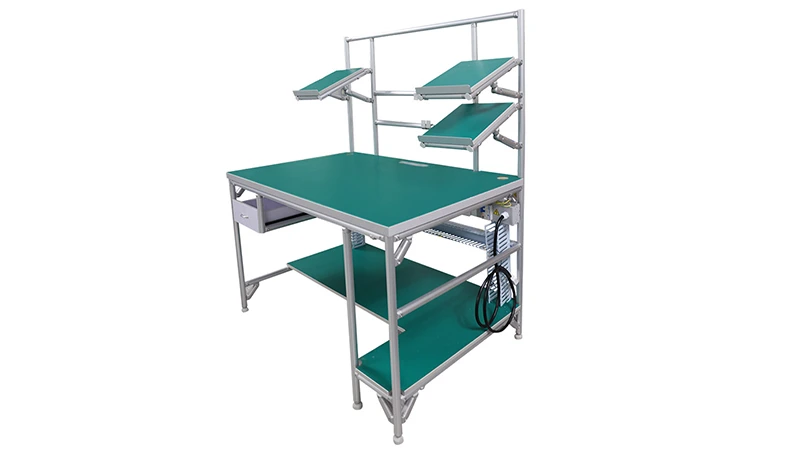
Aluminum Workbench B
Aluminum tube workbench is more flexible and durable, compared with traditional PE/ABS coated steel tube. It is easy to assemble, anti corrosion, rust protection, and recycle use after disassemble.
The Changing Face of Manufacturing Floors
Walk into any modern manufacturing plant today, and you'll notice a shift. The chaos of cluttered workstations, mismatched tools, and rigid setups is giving way to something more intentional—spaces designed for efficiency, adaptability, and people. In an era where production lines pivot overnight, waste reduction is non-negotiable, and every square foot of floor space counts, the tools that keep these operations running smoothly have become stars in their own right. Among them, one piece of equipment stands out not for its flash, but for its quiet reliability: the Aluminum Workbench B. It's not just a table; it's a cornerstone of lean manufacturing, a partner in productivity, and a silent enabler of the workflows that power today's factories.
But why has this particular workbench become so indispensable? To answer that, we need to start with the challenges modern manufacturers face. Let's break it down: You're running a production line that might assemble circuit boards one week and small appliances the next. Your team needs workspaces that can adjust—adding a shelf here, repositioning a tool rack there—without slowing down. You're also laser-focused on lean principles: cutting out unnecessary movement, reducing wait times, and keeping materials flowing seamlessly from storage to assembly. And let's not forget durability—this bench will see daily use, from heavy tool placement to constant cleaning. Steel workbenches are tough, sure, but they're heavy and hard to reconfigure. Wooden ones? They warp, scratch, and can't stand up to industrial cleaners. Plastic? Too flimsy for real-world use. Enter Aluminum Workbench B, built with a material that checks every box: aluminum profile. Lightweight yet strong, modular by design, and built to integrate with the systems that make modern manufacturing tick.
What Exactly Is Aluminum Workbench B?
Let's start with the basics. Aluminum Workbench B is a standardized workstation designed for industrial use, but don't let the "standard" label fool you—it's anything but one-size-fits-all. At its core, it's a robust frame made from extruded aluminum profile, topped with a durable work surface (often a single deck, though configurations vary), and engineered to balance strength, flexibility, and mobility. Unlike some workbenches that come pre-loaded with unnecessary features, Workbench B is a blank canvas—built to adapt to your needs, not the other way around.
Let's break down its anatomy. The frame is the backbone, constructed from aluminum profile—hollow, lightweight tubes with precision-engineered T-slots running along their length. These T-slots are game-changers: they let you attach accessories—shelves, tool hooks, monitor arms, you name it—without drilling or welding. Need a parts bin holder on the left today? Screw it into the T-slot. Tomorrow, move it to the right? Just unscrew and reposition. The work surface itself is typically a solid aluminum or composite panel, smooth enough for delicate assembly work but tough enough to handle dropped tools. And while some models come with built-in mobility (we'll get to caster wheels later), even the stationary versions are designed to integrate with material handling systems like flow racks, ensuring parts and tools are always within arm's reach.
But what sets Workbench B apart from, say, Workbench A or E? It's all in the details. While Workbench E, for example, is a single-deck model without casters (great for fixed assembly lines), Workbench B often strikes a balance: sturdy enough for heavy-duty tasks but flexible enough to grow with your operation. Think of it as the "everyday hero" of workbenches—reliable for routine tasks, but ready to step up when you need to scale or pivot.

Aluminum Profile: The Material That Makes It All Possible
If Aluminum Workbench B is the star, aluminum profile is its supporting actor—quietly stealing the show with its versatility. Let's talk about why this material is non-negotiable here. Aluminum is naturally lightweight, which might make you wonder, "Is it strong enough?" The answer is a resounding yes. Extruded aluminum profile, in particular, is engineered to be rigid and load-bearing. We're talking about a frame that can support hundreds of pounds of equipment without bending, even over years of use. Compare that to steel: a steel workbench of the same size would weigh twice as much, making it nearly impossible to reposition without a forklift. Aluminum? Two people can move it (with the right casters, but more on that later) in minutes, letting you rearrange your floor plan on a whim.
Then there's corrosion resistance. Manufacturing floors are messy places—oils, coolants, cleaning agents, and even humidity can take a toll on metal. Steel rusts; wood warps; aluminum? It forms a natural oxide layer that protects it from corrosion, meaning your Workbench B will look and perform like new for years, even in harsh environments. And let's not overlook aesthetics—aluminum has a clean, modern look that fits with the visual management principles of lean manufacturing. A cluttered, rusty workbench sends a message of disorganization; a sleek aluminum one? It signals pride in your process, which trickles down to team morale.
But the real magic is in those T-slots we mentioned earlier. Aluminum profile isn't just a tube—it's a system. The slots are precision-cut to accept bolts, brackets, and accessories, turning your workbench into a customizable hub. Need to add a LED task light? Slide a bracket into the T-slot and tighten. Want a bin for small parts? Snap on a holder. This modularity is key for lean systems: instead of buying a new workbench every time your needs change, you adapt the one you have. It's sustainable, cost-effective, and—most importantly—keeps your team focused on production, not retooling.

Mobility Matters: Caster Wheels and the Art of Flexibility
Let's talk about movement. In a lean manufacturing setup, the ability to reposition workstations isn't a luxury—it's a necessity. Maybe your morning shift assembles components at Station 3, but the afternoon shift needs that same bench at Station 7 for testing. Or perhaps a sudden rush order requires you to reconfigure your line to prioritize a new product. In these moments, a stationary workbench becomes a bottleneck. Enter caster wheels—the unsung heroes that turn Aluminum Workbench B from a fixed fixture into a mobile asset.
Not all casters are created equal, though. The ones paired with Workbench B are typically heavy-duty, with locking mechanisms to keep the bench stable during use. Think about it: you don't want your workstation rolling mid-assembly, but you do want to unlock it and glide it across the floor when the line needs to shift. Many models come with optional caster kits, letting you choose between stationary (for fixed lines) or mobile (for dynamic setups). And because the aluminum frame is lightweight, even with casters, the bench remains easy to maneuver—no straining, no waiting for equipment, just quick, efficient repositioning.
This mobility ties directly to lean principles. One of the biggest wastes in manufacturing is unnecessary movement—whether it's a worker walking 20 feet to grab a tool or a team waiting for a workstation to be freed up. With a mobile Aluminum Workbench B, you bring the work to the worker, not the other way around. Need to stage parts next to the assembly line? Roll the bench into place. Finished with a task? Move it out of the way to free up floor space. It's small adjustments like these that add up to big gains in productivity.
Lean System Integration: More Than a Workbench—A Workflow Partner
Here's where Aluminum Workbench B truly shines: it doesn't exist in a vacuum. It's part of a larger ecosystem—the lean system that drives modern manufacturing. Lean isn't just about cutting costs; it's about creating value by eliminating waste, and Workbench B is built to support that mission from the ground up.
Let's start with 5S—the foundation of lean: Sort, Set in Order, Shine, Standardize, Sustain. Aluminum Workbench B makes 5S easy. "Sort" becomes simple when you have T-slots to attach only the tools you need (no more junk drawers). "Set in Order"? Use those same T-slots to position tools and materials exactly where your team reaches—reducing motion waste. "Shine" (cleanliness) is a breeze thanks to aluminum's smooth, non-porous surface—wipes clean with a cloth and industrial cleaner. "Standardize"? Since every Workbench B is built to the same specs, your team knows exactly where to find tools, no matter which station they're at. And "Sustain"? The bench's durability means it stays functional for years, so your 5S gains aren't lost to wear and tear.
Then there's material flow. Pair Aluminum Workbench B with a flow rack, and you've got a one-two punch for efficiency. Flow racks use gravity to keep materials moving—parts roll forward as they're used, ensuring the next item is always within reach. Place a flow rack next to your Workbench B, and suddenly, your assembler isn't walking to a distant storage area to grab components. They reach over, pick up the part, and get back to work. That's minutes saved per hour, hours saved per shift, and a workforce that stays focused instead of fatigued.
Waste reduction goes deeper, too. Traditional workbenches often come with fixed shelves or built-in features you don't need—wasting space and money. Workbench B? It's modular, so you only pay for (and use) what you need. No extra shelves collecting dust, no unused hooks taking up T-slot space. It's lean by design, and that philosophy ripples through your entire operation.
Aluminum Workbench B vs. the Competition: Why It Stands Out
To really appreciate Aluminum Workbench B, let's stack it against the alternatives. How does it hold up to steel, wood, or plastic workbenches? Let's break it down:
| Feature | Aluminum Workbench B | Steel Workbench | Wooden Workbench | Plastic Workbench |
|---|---|---|---|---|
| Weight | Lightweight (easy to reposition) | Heavy (requires machinery to move) | Moderate (but prone to warping over time) | Light (but flimsy under load) |
| Durability | Corrosion-resistant, scratch-proof, long lifespan | Strong but rust-prone without coating | Scratches easily, warps with moisture | Weak under heavy loads; cracks over time |
| Customization | Modular (T-slots for endless accessories) | Limited (welding/ drilling required for changes) | Basic (screws/nails damage wood over time) | Minimal (no integrated accessory systems) |
| Lean Compatibility | Designed for 5S, material flow, and waste reduction | Too rigid for dynamic workflows | Hard to clean/organize (violates 5S principles) | Not durable enough for sustained lean practices |
The verdict? Steel is strong but static. Wood is familiar but high-maintenance. Plastic is cheap but disposable. Aluminum Workbench B? It's the only one that balances strength, flexibility, and lean alignment—making it the clear choice for manufacturers who refuse to compromise.
Real-World Impact: How Teams Are Using Aluminum Workbench B
Enough theory—let's talk about real life. Walk into a mid-sized electronics manufacturer in Ohio, and you'll find Aluminum Workbench B stations lining the assembly line. Each bench is kitted out with T-slot tool holders, LED lights, and a small parts bin attached via aluminum profile brackets. Next to each bench? A flow rack stocked with circuit boards, resistors, and wiring—all rolling forward as they're used. The result? The team here cut assembly time by 15% in six months, and worker fatigue complaints dropped by 30%. Why? No more walking to grab parts, no more fumbling for tools, and a workspace that feels intentional, not chaotic.
Or take a medical device plant in California. Their production lines change weekly—assembling everything from surgical tools to diagnostic equipment. Aluminum Workbench B is their secret weapon. When a new product comes in, they reconfigure the benches in hours: adding a shelf for specialized jigs, swapping out a flat work surface for a tilted one (easier on the wrists for detailed work), and attaching a monitor arm to display assembly instructions. With steel benches, this would take days and require a contractor. With Workbench B? The team does it themselves, saving time and keeping production on track.
Even small businesses are getting in on the action. A family-owned machine shop in Texas recently replaced their old wooden workbenches with Aluminum Workbench B. They were skeptical at first—wood had been "good enough" for decades. But within a month, they noticed the difference: tools stayed organized, cleanup took half the time, and when they landed a big order requiring a new layout, they rearranged the benches in an afternoon. "We used to think of workbenches as just furniture," the shop foreman told me. "Now? They're part of our competitive edge."
Specs That Matter: What to Look for in Your Aluminum Workbench B
If you're considering adding Aluminum Workbench B to your operation, here's what to keep in mind. Not all models are created equal, so focus on these key specs:
- Aluminum Profile Thickness: Look for at least 1.2mm wall thickness for the frame—this ensures rigidity under heavy loads. Thicker profiles (1.5mm or 2.0mm) are better for extra-heavy tasks, like machining or automotive work.
- Work Surface Material: Opt for a solid aluminum or composite panel with a scratch-resistant finish. If you're working with electronics, an ESD (electrostatic discharge) surface is a must to protect sensitive components.
- Weight Capacity: Check the maximum load rating—most standard models handle 500–800 lbs, but heavy-duty versions can go up to 1,500 lbs or more. Don't skimp here; a bench that sags under weight will throw off your workflow and risk injury.
- Caster Wheels (If Mobile): If you need mobility, choose lockable casters with rubber treads—they protect your floor and keep the bench stable when locked. Look for casters rated for at least the bench's weight capacity plus your tools.
- Accessory Compatibility: Ensure the T-slots are standard size (most use 20mm or 30mm slots) so you can mix and match accessories from different suppliers—shelves, bins, tool hooks, etc.
And don't forget to think about the future. Buy a bench that can grow with you—extra T-slots, room to add casters later, or compatibility with taller shelves if you expand. Aluminum Workbench B is an investment, and the right model will serve you for years.
Conclusion: More Than a Workbench—A Catalyst for Change
Aluminum Workbench B isn't just another piece of equipment. It's a statement about how you run your operation. It says you value efficiency, but not at the expense of your team. It says you're ready to adapt, but not to compromise on quality. It says you believe in the power of small, intentional choices—like a well-designed workbench—to drive big results.
In a world where manufacturing is faster, more complex, and more people-centric than ever, the tools we use matter. Aluminum Workbench B has become a staple because it doesn't just keep up with the pace—it sets it. It's lightweight but strong, simple but customizable, and built to support the lean systems that turn good operations into great ones. Whether you're running a massive production line or a small shop, this workbench isn't just a place to work—it's a partner in progress.
So the next time you walk through your plant, take a closer look at the workbenches. Are they holding you back, or lifting you up? If it's the former, maybe it's time to make the switch. Aluminum Workbench B isn't just changing workstations—it's changing how we think about manufacturing, one bench at a time.