- Company Articles
- Products and Technology
- Product knowledge
- The Basics of Four Way Straight Lean Pipe Joint: What Every Production Manager Should Know

The Basics of Four Way Straight Lean Pipe Joint: What Every Production Manager Should Know
Related Product
Four Way Straight Lean Pipe Joint
Four way lean pipe joint for 4 pcs 28MM lean pipe connection in straight angle, which used widely in workbench, flow rack, hand trolley frame connection.
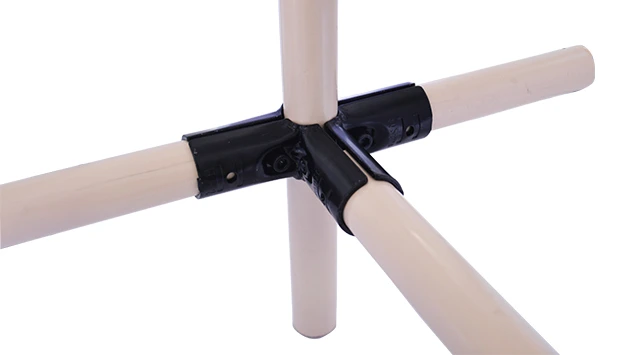
In the fast-paced world of manufacturing, where efficiency and adaptability can make or break a production line, the smallest components often play the biggest roles. As a production manager, you're tasked with optimizing workflows, reducing waste, and ensuring your team has the tools they need to perform at their best. One such tool that might not immediately grab headlines but is quietly critical to lean operations is the four way straight lean pipe joint . This unassuming connector is the backbone of modular lean systems, enabling the creation of everything from workbenches to flow racks with unmatched flexibility. In this article, we'll dive deep into what makes this joint essential, how it works, and why understanding its nuances can transform your factory floor.
1. What is a Four Way Straight Lean Pipe Joint?
Definition and Core Function
At its core, a four way straight lean pipe joint is a specialized connector designed to join lean pipes (also known as "lean tubes") at a straight, 180-degree angle across four directions. Unlike two-way joints that connect pipes in a straight line or three-way joints that add a perpendicular branch, the four way variant allows for connections along the same axis in four distinct directions—typically up, down, left, and right. This unique design makes it ideal for building symmetrical structures or creating multi-level frameworks where pipes need to extend uniformly from a central point.
Imagine a production line where a material rack needs to support shelves on both sides, or a workbench that requires additional bracing in four directions to handle heavy loads. In these scenarios, a four way joint becomes indispensable. It eliminates the need for multiple overlapping joints, reducing complexity and improving the structural integrity of the entire system.
Design Anatomy: Breaking It Down
A typical four way straight lean pipe joint consists of a central body with four equally spaced connection ports. Each port is engineered to grip a lean pipe securely, often using a combination of internal threading, set screws, or friction-based clamping mechanisms. The body itself is usually made from metal—commonly steel or aluminum—for durability, and may feature a coating like chrome (as seen in "four way straight lean pipe joint chrome" variants) to resist corrosion and wear.
Key components of the joint include:
- Connection Ports: Four cylindrical openings, each sized to fit standard lean pipe diameters (most commonly 28mm or 30mm). Some ports include rubber or plastic liners to enhance grip and prevent pipe damage.
- Locking Mechanism: Set screws or cam levers that tighten against the pipe, ensuring a secure fit. High-quality joints often use hex-head set screws made from hardened steel for maximum torque.
- Central Body: The core structure that distributes weight evenly across all four connections. Its shape—often cylindrical or octagonal—minimizes stress concentration and improves load-bearing capacity.
- Coating: Chrome plating, zinc plating, or powder coating to protect against rust, especially in environments with moisture or chemicals.
Why "Four Way"? Comparing with Other Joints
To appreciate the value of a four way straight joint, it helps to compare it with other common lean pipe joints:
- Two-Way Joints: Connect two pipes in a straight line. Simple but limited—they can't branch out.
- Three-Way Joints: Add a perpendicular branch, useful for building corners or T-shaped structures. However, they lack the symmetry of four way joints.
- Five-Way or Multi-Angle Joints: Offer more connection points but are bulkier and often overkill for straightforward, symmetrical setups.
The four way straight joint strikes a balance between versatility and simplicity. It's not the most complex joint available, but its ability to create balanced, multi-directional structures makes it a workhorse in lean manufacturing.
2. Materials Matter: The Build Behind the Joint
Steel vs. Aluminum: Choosing the Right Base
Four way joints are primarily made from two materials: steel and aluminum. Each has its pros and cons, and the choice depends on your application:
Steel Joints: Known for their strength and durability, steel joints are ideal for heavy-duty applications. They can handle higher load capacities (often up to 500kg per joint, depending on pipe thickness) and are less prone to bending under stress. However, they're heavier than aluminum, which can make large structures harder to reconfigure. Steel joints are also more susceptible to corrosion unless coated (e.g., chrome plating or powder coating).
Aluminum Joints: Lighter and more corrosion-resistant than steel, aluminum joints are perfect for lightweight structures or environments where rust is a concern (e.g., food processing or pharmaceutical facilities). They're easier to handle during installation and reconfiguration, but their load capacity is generally lower (around 300-400kg per joint). Aluminum joints are often anodized to scratch resistance and give them a clean, modern finish.
Many manufacturers offer both options, allowing production managers to mix and match based on the specific needs of each workstation or rack.
Chrome Plating: More Than Just Shine
You'll often see "four way straight lean pipe joint chrome" listed among product offerings, and for good reason. Chrome plating isn't just about aesthetics—it adds a layer of protection that extends the joint's lifespan. The plating process involves depositing a thin layer of chromium onto the steel surface, which creates a hard, smooth barrier against moisture, chemicals, and abrasion. This is especially important in busy factories where joints are frequently adjusted or exposed to oils, coolants, or cleaning agents.
Chrome-plated joints also offer better friction resistance, making it easier to tighten and loosen set screws without damaging the joint's surface. Over time, this reduces wear on the locking mechanism, ensuring a secure fit even after repeated use.
Understanding Load Capacity Ratings
Every four way joint comes with a load capacity rating, which indicates the maximum weight it can support when properly installed. This rating is influenced by several factors: material (steel vs. aluminum), joint design, pipe diameter, and the quality of the locking mechanism. As a production manager, it's critical to never exceed this rating, as overloading can lead to joint failure, structural collapse, or workplace accidents.
For example, a standard steel four way joint with 28mm pipes might have a load capacity of 400kg when all four connections are evenly loaded. If the load is concentrated on just two connections, however, the capacity could drop to 250kg. Always check the manufacturer's specifications and factor in dynamic loads (e.g., materials being placed or removed from a rack) in addition to static loads.

3. Installation Process: Step-by-Step Guide
Tools You'll Need (and Which Ones to Avoid)
Installing a four way straight lean pipe joint is relatively straightforward, but having the right tools ensures a secure and efficient setup. Here's what you'll need:
- Hex Key (Allen Wrench): Most joints use hex-head set screws, so a set of metric hex keys (typically 4mm, 5mm, or 6mm) is essential. Avoid using adjustable wrenches, as they can strip the screw heads.
- Level: To ensure pipes are straight and joints are aligned, preventing uneven weight distribution.
- Tape Measure: For measuring pipe lengths and ensuring symmetrical spacing between joints.
- Rubber Mallet: Gently tapping pipes into joints to seat them properly without damaging the coating.
- Deburring Tool: To remove sharp edges from cut pipes, preventing injury and ensuring a snug fit in the joint.
Avoid power tools like impact drivers, as they can easily overtighten set screws and strip threads or crack the joint body.
Step-by-Step Installation
Follow these steps to install a four way straight lean pipe joint:
- Prepare the Pipes: Cut lean pipes to the desired length using a pipe cutter or hacksaw. Use a deburring tool to smooth the ends, removing any burrs or sharp edges.
- Loosen Set Screws: Using a hex key, loosen all four set screws on the joint until they're retracted into the body. This creates enough space for the pipes to slide in.
- insert Pipes: Slide one pipe into each of the four connection ports. Push the pipes in until they bottom out against the internal stop (if present) or until they extend evenly from the joint.
- Align Pipes: Use a level to ensure all pipes are straight and perpendicular to the joint. For multi-joint structures, check alignment across the entire framework to avoid twists or warps.
- Tighten Set Screws: Tighten each set screw gradually, alternating between ports to ensure even pressure. Stop when you feel resistance—overtightening can damage the pipe or joint.
- Test Stability: Gently shake the structure to check for wobbling. If a pipe feels loose, retighten the corresponding set screw. For heavy-duty applications, consider using thread-locking adhesive on the set screws to prevent loosening over time.
Common Installation Mistakes to Avoid
Even experienced teams can make errors during installation. Here are three mistakes to watch for:
- Overtightening Set Screws: This is the most common mistake. Excessive force can strip the screw threads, crack the joint body, or indent the pipe, weakening the connection.
- Misalignment: Pipes that aren't straight or joints that are angled incorrectly create uneven stress, leading to premature failure. Always use a level and measure twice before tightening.
- Using Damaged Pipes: Bent, dented, or corroded pipes won't seat properly in the joint, creating weak points. Inspect pipes before installation and replace any that show signs of damage.
| Aspect | Four Way Straight Joint | Three Way Joint |
|---|---|---|
| Connection Directions | 4 (straight, 180°) | 3 (2 straight, 1 perpendicular) |
| Typical Load Capacity | 300-500kg (evenly distributed) | 250-400kg (evenly distributed) |
| Best For | Symmetrical structures, multi-level racks, central support columns | Corners, T-junctions, workbench frames |
| Installation Time | 5-8 minutes (per joint) | 4-6 minutes (per joint) |
| Reconfiguration Ease | High (symmetrical design simplifies adjustments) | Moderate (asymmetrical branches may require rework) |

4. Role in Lean Systems: Flexibility, Modularity, and Efficiency
Flexibility: Adapting to Changing Production Needs
Lean manufacturing thrives on flexibility—the ability to quickly retool lines, adjust workflows, and respond to shifting customer demands. Four way straight lean pipe joints excel in this area. Unlike welded structures or fixed metal frameworks, which are permanent and time-consuming to modify, joints allow for tool-free adjustments. Need to add a shelf to a material rack? Simply loosen the set screws, insert a new pipe, and tighten. Producing a larger product that requires a wider workbench? Swap out shorter pipes for longer ones using the same joints.
This flexibility is especially valuable in industries with short product lifecycles, such as electronics or automotive manufacturing. A factory producing smartphone components today might need to reconfigure its assembly line next month for a new model, and four way joints make that transition seamless.
Modularity: Building and Rebuilding with Ease
Modularity is the cornerstone of lean systems, and four way joints are modular by design. They allow you to build structures in components, which can be disassembled and reused elsewhere. For example, a flow rack that's no longer needed in the assembly area can be taken apart, and its joints and pipes repurposed to build a turnover trolley in the warehouse. This reduces waste and cuts down on the need to purchase new equipment, lowering long-term costs.
Modularity also simplifies maintenance. If a single joint becomes damaged, you can replace it without tearing down the entire structure. This minimizes downtime and keeps production running smoothly.
Cost Efficiency: Long-Term Savings Through Reusability
While high-quality four way joints may have a higher upfront cost than cheap, disposable alternatives, their reusability delivers significant long-term savings. A well-maintained joint can last 5-10 years, surviving multiple disassembly and reassembly cycles. Compare this to welded structures, which are often scrapped when no longer needed, and the value becomes clear.
Additionally, the ability to reconfigure existing structures reduces the need for new capital equipment. A 2023 study by the Lean Manufacturing Institute found that factories using modular lean systems with reusable joints saved an average of 22% on material handling equipment costs over five years.
5. Real-World Applications: Where Four Way Joints Shine
Lean Pipe Workbenches: Custom Configurations for Every Task
Lean pipe workbenches are perhaps the most common application for four way straight joints. These workbenches need to support tools, materials, and sometimes heavy equipment, while also allowing for customization—such as adding shelves, tool holders, or lighting. Four way joints are used to create the bench's frame, with vertical pipes supporting the tabletop and horizontal pipes adding stability. By using four way joints at the corners, production managers can easily add side shelves or overhead racks, expanding the workbench's functionality without rebuilding it from scratch.
For example, a electronics assembly workbench might start with a simple frame, but as the team adds ESD (electrostatic discharge) mats, cable management systems, and parts bins, four way joints allow for the seamless integration of these accessories. When the product line changes, the workbench can be reconfigured in hours, not days.
Flow Racks: Streamlining Material Handling
Flow racks (also known as "gravity racks") use inclined roller tracks to move materials from the back to the front, reducing the need for manual lifting and improving picking efficiency. Four way joints are critical here, as they form the vertical supports and horizontal beams that hold the roller tracks. By using four way joints, flow racks can be built with multiple levels and lanes, ensuring materials are organized and easily accessible.
In a automotive parts warehouse, for instance, a flow rack built with four way joints might have three levels, each with four lanes of roller tracks. This setup allows for high-density storage while maintaining first-in, first-out (FIFO) inventory management. If demand for a particular part increases, the rack can be expanded by adding more sections using the same joints, without disrupting existing operations.
Turnover Trolleys: Moving Goods Safely and Efficiently
Turnover trolleys are used to transport materials between workstations, and their frames must be both strong and lightweight. Four way joints excel here, as they allow for the creation of sturdy yet maneuverable trolley frames. The joints connect vertical pipes (for handles and side rails) and horizontal pipes (for the base and shelves), with casters attached to the bottom for mobility. The symmetrical design of four way joints ensures the trolley's weight is evenly distributed, preventing tipping and making it easier to push or pull.
A food packaging plant, for example, might use turnover trolleys with four way joint frames to transport bulk ingredients. The trolleys can be customized with mesh sides to contain bags or boxes, and their modular design means they can be disassembled for cleaning or storage during downtime.
Case Study: How Company X Improved Line Efficiency with Four Way Joints
Challenge: A mid-sized automotive parts manufacturer was struggling with rigid, welded workbenches on its assembly line. When introducing a new product variant, the team needed to reposition tools and add additional shelving, but the fixed workbenches required hours of cutting and welding, leading to costly downtime.
Solution: The production manager replaced the welded workbenches with modular lean pipe workbenches using four way straight lean pipe joints. The new workbenches featured adjustable shelves, tool hooks, and overhead lighting, all connected via four way joints for easy reconfiguration.
Results: Within three months, the company saw a 30% reduction in changeover time when switching between product variants. Workbench reconfigurations that previously took 4-6 hours now took just 1-2 hours, and the team reported a 15% increase in productivity due to better organization and easier access to tools. Additionally, the reusable joints and pipes allowed the company to repurpose old workbenches for use in its warehouse, saving $12,000 on new equipment.
6. Troubleshooting Common Issues
Loose Connections: Causes and Quick Fixes
Loose connections are the most common issue with four way joints. They can occur due to vibration from machinery, overtightening (which weakens threads), or pipes that weren't fully inserted into the joint. Signs of a loose connection include wobbling structures, creaking sounds, or pipes that rotate within the joint.
To fix a loose connection: First, check if the set screws are tight. If they're loose, tighten them with a hex key—remember to alternate between screws to ensure even pressure. If the screws won't tighten (stripped threads), replace the joint immediately. If the pipe is rotating, remove it, check for damage, and reinsert it, ensuring it bottoms out in the joint before retightening.
Corrosion: Identifying Early Signs and Prevention
Corrosion is a risk in humid or chemical-exposed environments. Early signs include rust spots, discoloration, or flaking coating on the joint body. To prevent corrosion, choose chrome-plated or stainless steel joints for high-moisture areas. Regular cleaning with a damp cloth and mild detergent can also help remove chemicals or salts that cause rust. For severe cases, applying a thin layer of anti-corrosion spray (e.g., WD-40) to the set screws and joint body can extend lifespan.
Overloading: How to Avoid Joint Failure
Overloading occurs when the weight on a joint exceeds its rated capacity, leading to bending, cracking, or complete failure. To avoid this, always calculate the total load on each joint before installation. For example, a flow rack with four levels, each holding 50kg of materials, would place 200kg on the vertical joints—well within the capacity of a standard steel four way joint (300-500kg). If adding heavier items, use reinforced joints or increase the number of support columns.
If a joint does fail, inspect the surrounding structure for damage and replace all affected joints (not just the failed one). Overloading often stresses multiple components, and replacing only one joint can lead to secondary failures.
6. Choosing the Right Lean Pipe Supplier for Your Joints
Key Qualities to Look For
Not all four way straight lean pipe joints are created equal, and choosing the right supplier is critical to ensuring quality and reliability. When evaluating potential suppliers, look for these key qualities:
- Material Quality: Reputable suppliers use high-grade steel or aluminum (e.g., Q235 steel for strength, 6063 aluminum for lightweight applications) and provide material certifications upon request.
- Manufacturing Standards: Suppliers should adhere to international standards like ISO 9001, ensuring consistent quality control throughout production.
- Load Testing: Ask if the supplier load-tests their joints and can provide test reports. A reliable supplier will have data on maximum load capacity, fatigue resistance, and durability.
- Customization Options: The ability to provide joints in non-standard sizes or coatings (e.g., food-grade stainless steel for pharmaceutical facilities) is a plus.
- Technical Support: Look for suppliers that offer installation guides, troubleshooting advice, and responsive customer service. A supplier with in-house engineers can help you design optimal structures for your needs.
Questions to Ask Before Ordering
Before placing an order, ask the supplier these questions:
- What is the load capacity of your four way straight joints under dynamic and static loads?
- What coating options do you offer, and how do they perform in corrosive environments?
- Do you offer samples for testing before bulk orders?
- What is your lead time for standard and custom orders?
- Do you provide warranties, and what do they cover?
7. Conclusion: Small Joints, Big Impact on Lean Manufacturing
The four way straight lean pipe joint may be a small component, but its impact on lean manufacturing is undeniable. By enabling flexible, modular, and cost-effective structures, it empowers production managers to adapt quickly to changing demands, reduce waste, and keep their teams productive. From workbenches to flow racks, this unassuming connector is the glue that holds lean systems together.
As you look to optimize your factory floor, don't overlook the details—like choosing the right joint, installing it properly, and partnering with a reliable supplier. These small steps can lead to significant improvements in efficiency, safety, and bottom-line results. After all, in lean manufacturing, success lies in the details—and the four way straight lean pipe joint is one detail that deserves your attention.