- Company Articles
- Products and Technology
- Product knowledge
- The Benefits of Adjustable Leveling Feet in Automotive Manufacturing Workstations

The Benefits of Adjustable Leveling Feet in Automotive Manufacturing Workstations
Related Product
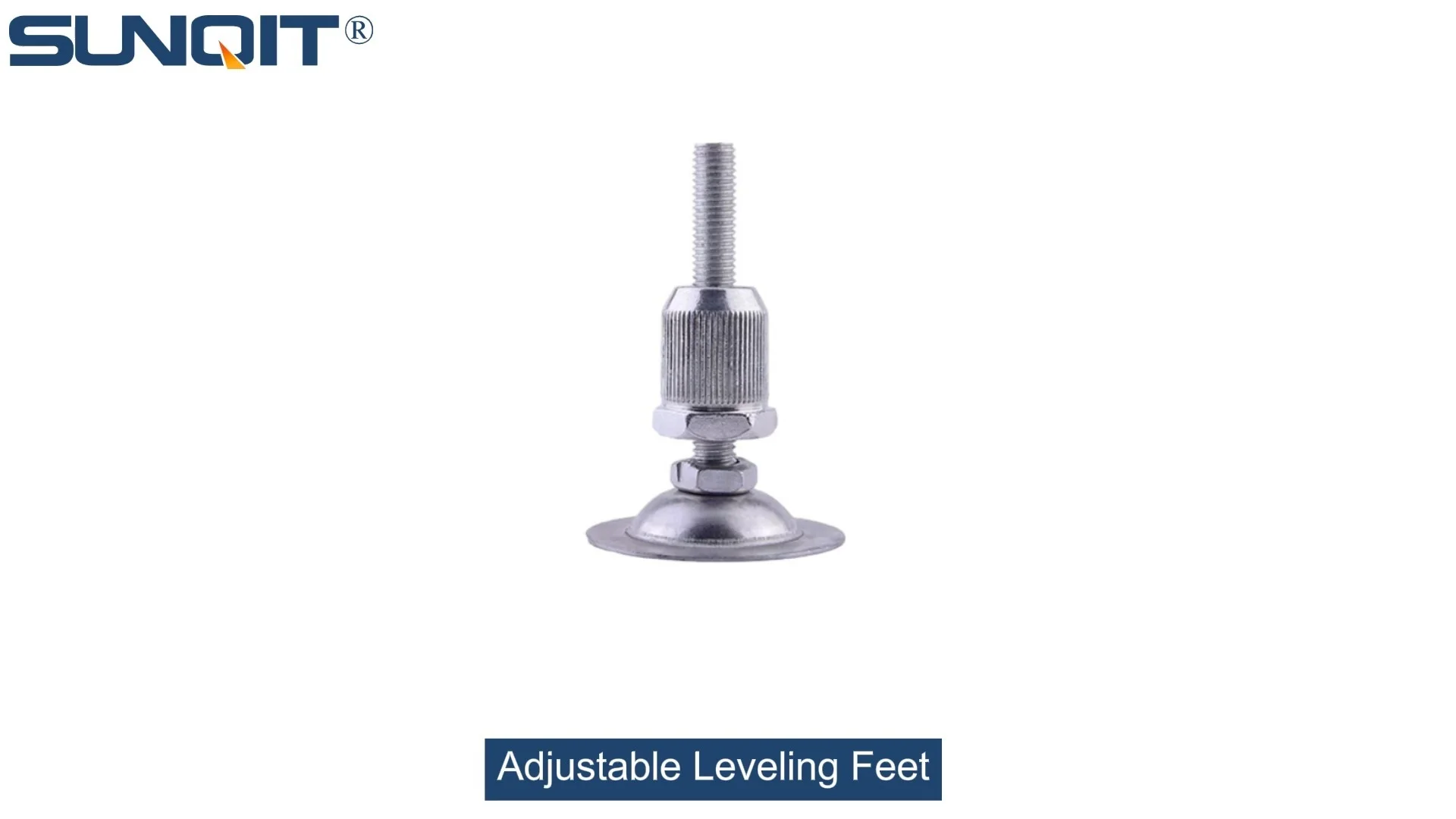
Adjustable Leveling Feet
Adjustable leveling feet are designed to keep machines level when placed on uneven or sloped ground. Otherwise known as adjustable equipment feet, they are available to order in a wide variety of size and load capacity combinations.
In the high-stakes world of automotive manufacturing, where precision is measured in millimeters and production timelines leave no room for error, every component of the assembly line matters—including the often-overlooked details that keep workstations stable, efficient, and safe. Among these unsung heroes are adjustable leveling feet: small, unassuming devices that play a critical role in ensuring workbenches, material racks, and assembly stations perform at their best. For workers assembling intricate engine parts, aligning body panels, or testing electronic systems, the stability of their workstation isn't just a convenience—it's a cornerstone of quality, productivity, and workplace well-being. Let's dive into why adjustable leveling feet have become indispensable in modern automotive manufacturing, and how they contribute to smoother operations, fewer defects, and happier teams.
Understanding Adjustable Leveling Feet: More Than Just "Feet"
Before we explore their benefits, let's clarify what adjustable leveling feet are. At their core, these are support components attached to the base of workbenches, trolleys, or racks, designed to compensate for uneven surfaces by allowing height adjustments. Typically made from durable materials like steel, aluminum, or reinforced plastic, they feature a threaded stem that screws into a base, with a rubber or non-slip pad at the bottom to grip the floor. By turning the stem, operators can raise or lower individual feet, ensuring the entire workstation sits perfectly level—even on floors that have seen years of heavy machinery traffic, spills, or minor structural shifts.
In automotive plants, where workbenches are often loaded with heavy tools, sensitive measuring equipment, or stacks of components, the ability to fine-tune stability is game-changing. Unlike fixed feet, which lock a workstation into a single height (and a single level of stability), adjustable leveling feet adapt to their environment. This adaptability isn't just about convenience; it's about maintaining control over a process where even the smallest imbalance can ripple into costly mistakes.
The Automotive Manufacturing Workstation: A Complex Ecosystem
To appreciate the value of adjustable leveling feet, it helps to first understand the demands of the automotive manufacturing workstation. These aren't just tables with tools—they're dynamic hubs where precision, speed, and safety intersect. A typical workstation might be used for:
- Assembling small parts (e.g., sensors, wiring harnesses, or brake components) that require steady hands and precise alignment.
- Inspecting finished parts for defects using microscopes, calipers, or laser measurement tools.
- Mounting heavy components (e.g., transmissions or suspension parts) onto assembly fixtures, where uneven weight distribution could cause shifts.
- Storing materials like fasteners, adhesives, or gaskets in organized racks, where tilting could lead to spills or disorganization.
Add to this the reality of factory floors: few are perfectly flat. Over time, concrete can crack, settle, or develop ruts from forklifts and pallet jacks. Even new facilities may have minor unevenness due to subfloor inconsistencies. For a workstation without adjustable leveling feet, this unevenness translates to wobbling, tilting, or "rocking"—issues that might seem minor until they affect a worker's ability to focus or a machine's ability to measure accurately.
This is where the workbench itself becomes a critical variable. A stable workbench is the foundation of consistent, high-quality production assemble. Without it, workers compensate by leaning, over-gripping tools, or adjusting their posture to counteract wobble—leading to fatigue, slower work, and increased risk of errors. Adjustable leveling feet address this by turning an uneven surface into a level, reliable platform, ensuring the workstation works with the worker, not against them.

Key Benefits of Adjustable Leveling Feet in Automotive Manufacturing
Now, let's break down the specific advantages adjustable leveling feet bring to automotive workstations. From improving precision to reducing costs, their impact is both tangible and far-reaching.
1. Unmatched Stability: The Foundation of Precision
In automotive manufacturing, precision is non-negotiable. A misaligned bolt in an engine block, a slightly tilted circuit board during soldering, or a wobbly fixture when mounting a door panel can all lead to defects that compromise safety or performance. Adjustable leveling feet eliminate these risks by ensuring the workstation remains stable, even under varying loads or on imperfect floors.
Consider a workbench used to assemble fuel injectors. These components have tiny nozzles that must align with engine cylinders to within 0.01mm—about the width of a human hair. If the workbench tilts by just 1°, the injector's alignment could shift enough to cause fuel leakage or inefficient combustion. With adjustable leveling feet, the operator can level the bench once, lock it in place, and trust that it will stay stable all shift long. No more second-guessing whether the measurement tool is off because the table is wobbling; no more rework because a part was installed at a slight angle.
Stability also matters for heavy loads. Many automotive workstations hold hundreds of pounds of materials: a rack stacked with steel brackets, a workbench with a 500-lb torque wrench, or a parts trolley loaded with transmission assemblies. Fixed feet might sink into soft spots on the floor or slide on smooth surfaces, but adjustable feet with non-slip pads distribute weight evenly, preventing tipping or shifting. This is especially critical for mobile workstations, which often use caster wheels for mobility but need leveling feet to lock into place during use—combining the best of both worlds: flexibility and stability.
2. Ergonomic Excellence: Keeping Workers Comfortable and Productive
Automotive manufacturing is physically demanding. Workers spend hours standing, bending, or reaching, and even small discomforts can add up to chronic pain or reduced productivity. Adjustable leveling feet contribute to ergonomic workstations by allowing height customization—not just for the bench itself, but for individual workers.
Imagine two workers sharing a workstation: one is 5'4" and the other is 6'2". A fixed-height bench might force the shorter worker to stretch upward (straining shoulders) or the taller worker to hunch over (straining the lower back). With adjustable leveling feet, the bench's height can be (fine-tuned) to match each worker's ideal elbow height—typically 90° at the elbow when standing, which minimizes muscle fatigue. Over a full shift, this adjustment can reduce the risk of repetitive strain injuries (RSIs) and keep workers focused on the task, not their discomfort.
Ergonomics also ties into safety. A worker who's straining to reach a tool on a tilted bench is more likely to fumble, drop equipment, or lose balance. By keeping the workstation level and at the right height, adjustable leveling feet reduce these risks, creating a workspace that feels supportive rather than stressful.
3. Adaptability: Thriving in a Changing Environment
Automotive manufacturing lines are rarely static. New models are introduced, production volumes fluctuate, and workflows are reorganized to meet demand. This means workstations are often moved, repurposed, or reconfigured. A bench used for assembling door handles one month might be reassigned to battery pack testing the next—requiring it to perform reliably in a new location with a new floor condition.
Adjustable leveling feet shine in this dynamic environment. Unlike fixed feet, which may leave a workstation wobbly after a move, adjustable feet can be readjusted in minutes. For example, if a workbench is relocated to a corner of the factory where the floor slopes slightly, the operator simply adjusts the feet until the surface is level—no need for shims, plywood, or other makeshift fixes that can slip or degrade over time.
This adaptability also extends to load changes. A material rack might hold lightweight plastic parts in the morning and heavy metal brackets in the afternoon. As the weight shifts, the rack's feet might compress unevenly, causing tilting. Adjustable leveling feet allow workers to realign the rack quickly, ensuring materials stay organized and accessible—no more searching for fallen parts or struggling with stuck drawers.
4. Cost Savings: Reducing Waste, Rework, and Downtime
In a lean system, every dollar saved on waste goes straight to the bottom line. Adjustable leveling feet contribute to lean manufacturing by minimizing three major sources of waste: defects, downtime, and worker inefficiency.
Defects: As we've discussed, instability leads to errors. A tilted workbench might cause a worker to drill a hole slightly off-center, or a misaligned fixture might result in a part that doesn't fit. These defects require rework, scrap, or even recall—costing time, materials, and reputation. By stabilizing workstations, adjustable leveling feet reduce defects, keeping production on track and quality high.
Downtime: When a workstation wobbles so badly that it's unsafe to use, or when a material rack tips and spills parts, production stops. Workers must clean up, realign the station, or even replace damaged tools. Adjustable leveling feet prevent these disruptions by keeping workstations stable and functional, even under stress.
Inefficiency: A worker struggling with an unstable bench is a slower worker. They might take longer to complete tasks, double-check measurements, or adjust their grip to compensate for wobble. Over a shift, this adds up to lost productivity. By creating a stable, predictable workspace, adjustable leveling feet let workers focus on their jobs, not the workstation—boosting output and morale.

Real-World Impact: How Adjustable Leveling Feet Transform Workstations
To put these benefits into context, let's look at a hypothetical (but realistic) scenario in an automotive plant. Suppose a facility assembles electric vehicle (EV) battery packs—a process that requires extreme precision, as even a small misalignment can affect battery performance or safety. The assembly workbench is loaded with a laser alignment tool, a torque wrench, and trays of delicate battery cells. Initially, the bench uses fixed plastic feet. Over time, the concrete floor under the bench develops a slight dip from years of pallet jack traffic, causing the bench to tilt by about 2°. At first, workers don't notice, but soon, the laser tool begins showing inconsistent readings, and a few battery packs fail quality checks due to misaligned connectors.
The plant manager investigates and discovers the tilted bench is the culprit. The solution? Install adjustable leveling feet. After a 10-minute adjustment, the bench is perfectly level. Within a week, the failure rate for battery packs drops by 40%, and workers report less eye strain from squinting at misaligned laser readings. The plant saves thousands in rework costs and avoids potential recalls. Meanwhile, the workers—no longer fighting a wobbly bench—report feeling more confident in their work and less fatigued at the end of the day.
This scenario isn't an anomaly. Across the industry, manufacturers are recognizing that small investments in workstation stability yield big returns. According to a 2023 survey by the Manufacturing Ergonomics Institute, facilities that upgraded to adjustable leveling feet reported a 28% reduction in assembly defects and a 15% increase in worker productivity for tasks requiring precision.

Why Adjustable Leveling Feet Outperform Alternatives
You might be wondering: Can't other solutions, like shims or fixed-height feet with thicker bases, achieve the same stability? While these options exist, they fall short in key areas. Let's compare adjustable leveling feet to common alternatives:
| Feature | Adjustable Leveling Feet | Fixed Feet + Shims | Rubber Pads (Non-Adjustable) |
|---|---|---|---|
| Stability on Uneven Floors | Excellent: Can be fine-tuned to any floor condition | Poor: Shims slip, compress, or need constant readjustment | Fair: Absorb minor unevenness but don't correct tilt |
| Adaptability to Load Changes | High: Can be readjusted as weight shifts | Low: Shims may need to be added/removed, risking instability | Low: Pads compress unevenly under heavy loads |
| Ergonomic Customization | Yes: Height-adjustable for worker comfort | No: Fixed height; shims add height but not precision | No: Fixed height |
| Long-Term Durability | High: Threaded stems and non-slip pads resist wear | Low: Shims degrade, wood warps, metal bends | Medium: Pads wear down, losing grip over time |
| Cost Over Time | Low: One-time purchase; minimal maintenance | High: Ongoing cost of shims, time spent readjusting | Medium: Need replacement as pads wear |
The table makes clear: adjustable leveling feet offer superior stability, adaptability, and cost-efficiency compared to makeshift or non-adjustable solutions. For automotive manufacturers, this isn't just a "nice-to-have"—it's a competitive advantage.
Integration with Lean Systems: Aligning with the Principles of Efficiency
Lean manufacturing is all about eliminating waste—whether it's wasted time, materials, or effort. Adjustable leveling feet align perfectly with this philosophy by supporting three core lean principles:
1. Respect for People: A stable, ergonomic workstation shows workers their comfort and safety matter. When employees feel valued, they're more engaged, productive, and likely to contribute ideas for improvement.
2. Continuous Improvement: Adjustable leveling feet make it easy to refine workstation setup as processes evolve. If a new tool is added or a workflow changes, the feet can be adjusted to optimize the workspace—no need for major overhauls.
3. Quality at the Source: By reducing defects caused by instability, adjustable leveling feet ensure quality is built into the production process, not inspected in afterward. This aligns with the lean goal of "doing it right the first time."
In short, adjustable leveling feet aren't just tools for stability—they're tools for building a leaner, more efficient operation.
Conclusion: Small Feet, Big Impact
In the grand scheme of automotive manufacturing—with its robots, AI-powered quality checks, and cutting-edge materials—adjustable leveling feet might seem. But as we've explored, their impact is profound. They stabilize workbenches to prevent defects, support workers to reduce fatigue, adapt to changing environments to keep production flowing, and save costs by minimizing waste. For a industry where every detail counts, these small devices play a starring role in delivering the quality, efficiency, and safety that define modern manufacturing.
So the next time you walk through an automotive plant, take a moment to look down. Underneath those workbenches, racks, and assembly stations, you'll find adjustable leveling feet quietly doing their job—keeping the line moving, the parts perfect, and the workers supported. In a world of complex challenges, sometimes the simplest solutions are the most powerful.