- Company Articles
- Products and Technology
- Product knowledge
- The Complete Handbook: External Straight Aluminum Joints for Modern Manufacturers

The Complete Handbook: External Straight Aluminum Joints for Modern Manufacturers
Related Product
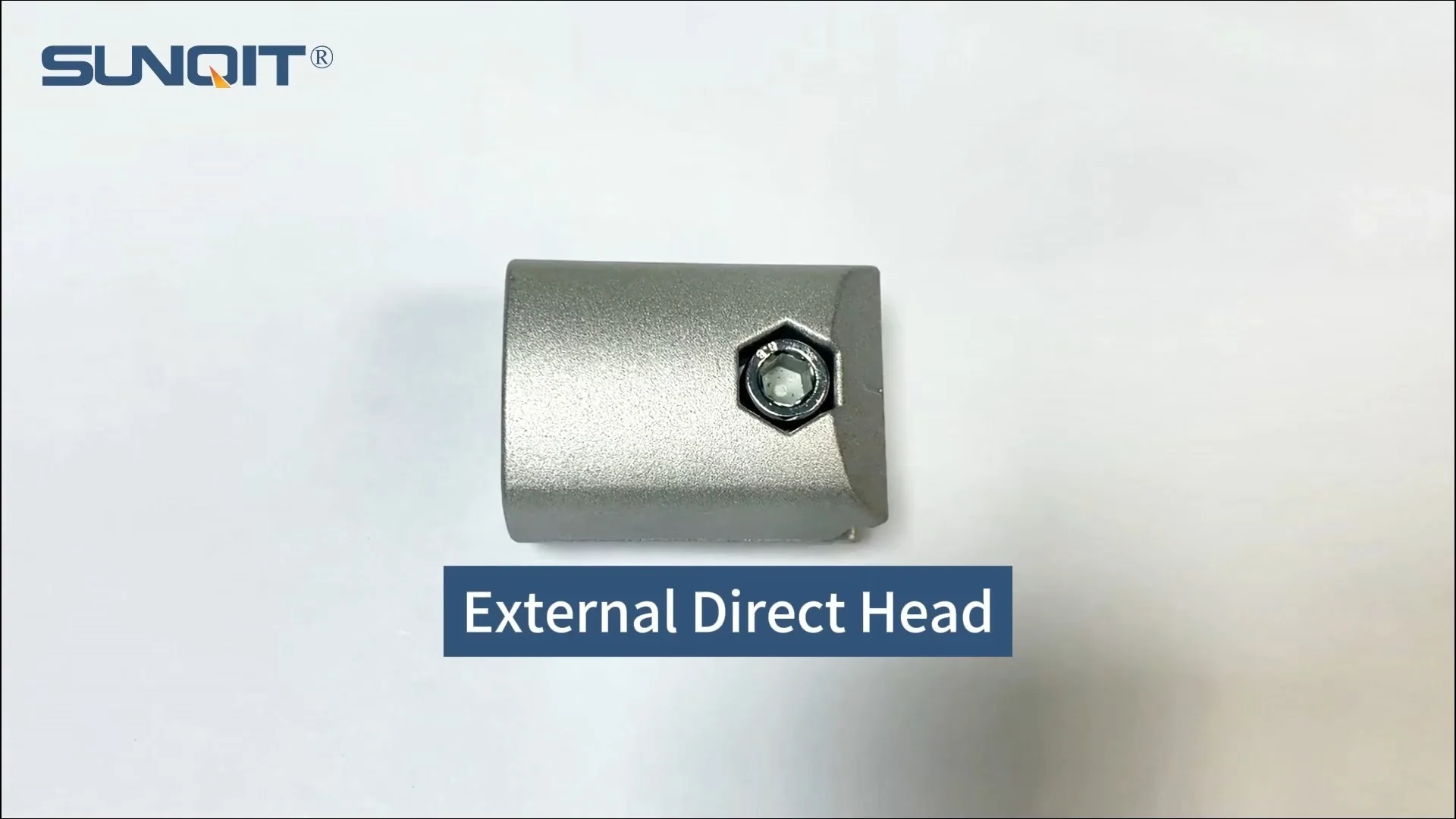
External Straight Aluminum Joint
Aluminum pipe joint outside connection used for two pcs 28pcs aluminum pipe connection in straight angle,it connects two pcs pipe from outside.
Introduction: The Unsung Hero of Manufacturing Efficiency
Walk into any modern manufacturing facility, and you'll see a symphony of moving parts: conveyor belts gliding with precision, workbenches holding tools and components, material racks stacked with inventory, and turnover trolleys zipping between stations. What ties all these elements together? Often, it's a small but critical component: the joints that connect pipes, profiles, and structures. Among these, external straight aluminum joints stand out as quiet workhorses, enabling the flexibility, durability, and adaptability that today's manufacturers demand.
In an industry where downtime costs money and adaptability is key to staying competitive, the choice of joints can make or break operational efficiency. External straight aluminum joints aren't just pieces of metal—they're the backbone of modular workspaces, allowing teams to reconfigure layouts, scale operations, and maintain consistency across production lines. Whether you're assembling a lightweight aluminum lean pipe workbench or a heavy-duty material rack, these joints ensure that every connection is secure, reliable, and built to last.
This handbook dives deep into the world of external straight aluminum joints, exploring their design, benefits, applications, and how they fit into the broader ecosystem of lean manufacturing. We'll also cover how to select the right joints for your needs, install them effectively, and maintain them for long-term performance. By the end, you'll understand why these unassuming components are indispensable for modern manufacturers—and how partnering with a trusted lean system supplier can elevate your operations.
What Are External Straight Aluminum Joints?
At their core, external straight aluminum joints are mechanical connectors designed to join two or more aluminum pipes or profiles in a straight line. Unlike internal joints, which fit inside the pipe, external straight joints clamp around the exterior of the pipes, creating a strong, rigid connection without compromising the pipe's structural integrity. They're typically made from high-grade aluminum alloys, chosen for their lightweight properties, corrosion resistance, and strength-to-weight ratio.
The design of these joints is deceptively simple but engineered for precision. Most feature a split-body construction with bolts or screws that tighten around the pipes, creating a secure grip. Some models include rubber or plastic gaskets to enhance stability and reduce vibration, while others are designed with ESD (electrostatic discharge) properties to protect sensitive electronics during assembly. This versatility makes them suitable for a wide range of environments, from cleanrooms to heavy-industrial settings.
External straight aluminum joints are part of a larger family of aluminum pipe accessories, which includes elbows, tees, and crosses. While other joints handle angles and branches, the external straight variant is the go-to for creating linear structures—think the rails of a workbench, the beams of a material rack, or the frame of a conveyor system. Their ability to create seamless straight lines is why they're a staple in lean manufacturing setups, where organization and flow are paramount.

Key Features and Benefits: Why Manufacturers Choose External Straight Aluminum Joints
Lightweight Yet Strong
Aluminum is renowned for its low density, and external straight aluminum joints inherit this trait. Compared to steel joints, they're significantly lighter, making them easier to handle during assembly and reducing the overall weight of structures like workbenches and trolleys. This lightness doesn't come at the expense of strength, though: aluminum alloys like 6061-T6 offer impressive tensile strength, ensuring joints can support heavy loads without bending or warping.
Corrosion Resistance
Manufacturing environments are often harsh, with exposure to moisture, chemicals, or humidity. Steel joints can rust over time, weakening connections and requiring frequent replacement. External straight aluminum joints, however, form a natural oxide layer that resists corrosion, even in damp or dusty conditions. For facilities with strict cleanliness standards—such as pharmaceutical or food packaging plants—this resistance to degradation is a game-changer, reducing maintenance costs and extending the lifespan of equipment.
Tool-Free Assembly (In Many Cases)
Traditional steel pipe joints often require welding or specialized tools, slowing down assembly and making reconfiguration difficult. External straight aluminum joints, by contrast, are designed for quick, tool-free installation. Most models use hand-tightened bolts or cam levers, allowing workers to assemble or disassemble structures in minutes. This speed is a boon for lean manufacturing, where downtime during line changes can eat into productivity.
Modularity and Reusability
In today's fast-paced manufacturing landscape, flexibility is key. A production line that works for one product may need to be reconfigured for the next. External straight aluminum joints excel here: they can be easily loosened, adjusted, and reused on new structures. Unlike welded joints, which are permanent, these connectors allow for endless iterations, making it easy to adapt to changing production needs. This reusability also reduces waste, aligning with sustainable manufacturing practices.
Compatibility with Aluminum Lean Pipes
External straight aluminum joints are designed to work seamlessly with aluminum lean pipes—a popular choice for lean manufacturing setups. Aluminum lean pipes are lightweight, easy to cut to length, and compatible with a range of accessories, from caster wheels to roller tracks. When paired with external straight joints, they form a modular system that can be customized to fit any workspace. Whether you're building a basic workbench or a complex material handling system, this compatibility ensures consistency and reduces the need for custom parts.

Applications: Where External Straight Aluminum Joints Shine
External straight aluminum joints are versatile enough to be used in almost any manufacturing setup, but they truly excel in specific applications where linear strength and adaptability are critical. Let's explore some of the most common use cases:
Workbenches and Assembly Stations
Workbenches are the heart of any production line, and their frames demand stability and precision. External straight aluminum joints are ideal for building the rails and supports of workbenches, whether it's a simple single-deck Workbench E (without casters) or a multi-tiered station with tool racks and storage. The joints ensure the bench remains level and sturdy, even when loaded with heavy equipment or components. Plus, if the workbench needs to be extended or modified—say, to accommodate a new tool—external straight joints make adjustments quick and easy.
Material Racks and Storage Systems
Material racks, like the Material Rack B (3 rows and 3 floors), rely on straight, strong beams to support inventory. External straight aluminum joints connect the vertical and horizontal rails of these racks, creating a rigid structure that can hold boxes, bins, or raw materials. Their corrosion resistance is especially valuable here, as storage areas often have fluctuating humidity levels. Additionally, if your storage needs change—for example, if you need to add more shelves—you can easily disassemble and reconfigure the rack using the same joints.
Conveyor and Roller Track Systems
Conveyors and roller tracks are essential for moving materials efficiently through a facility. External straight aluminum joints play a key role in building the frames of these systems, ensuring the tracks remain aligned and stable. They're often paired with roller track placon mounts and aluminum guide rails to create smooth, continuous paths for products. Whether you're using plastic roller track guide rails (yellow or grey) or steel roller tracks, the joints keep the system rigid, reducing jams and improving throughput.
Turnover Trolleys and Carts
Turnover trolleys are used to transport materials between stations, and their frames need to be both lightweight and durable. External straight aluminum joints help achieve this balance, connecting the trolley's rails and supports without adding unnecessary weight. When combined with caster wheels and accessories, they create trolleys that are easy to maneuver yet strong enough to carry heavy loads. And if the trolley's design needs to change—for example, to fit through narrower aisles—the joints allow for quick modifications.
Lean Manufacturing Cells
Lean manufacturing cells are designed to minimize waste and maximize efficiency, and modularity is key to their success. External straight aluminum joints enable teams to build and reconfigure cells on the fly, whether it's adjusting the height of a workbench or repositioning a material rack. By using these joints, manufacturers can implement "5S" principles (Sort, Set in Order, Shine, Standardize, Sustain) more effectively, keeping the workspace organized and adaptable to changing production demands.

Comparing External Straight Aluminum Joints to Other Connector Types
To understand why external straight aluminum joints are so popular, it's helpful to compare them to other common connector types. Below is a table highlighting key differences between external straight aluminum joints and alternatives like internal rotatory aluminum joints, stainless steel lean pipe joints, and parallel aluminum joints.
| Connector Type | Material | Primary Use | Load Capacity (Approx.) | Key Advantage | Best For |
|---|---|---|---|---|---|
| External Straight Aluminum Joint | Aluminum Alloy | Straight-line connections | 200-500 lbs per joint | Lightweight, corrosion-resistant, easy to install | Workbenches, linear material racks, conveyor frames |
| Internal Rotatory Aluminum Joint | Aluminum Alloy | Angled connections with rotation | 150-300 lbs per joint | Allows for 360° rotation, ideal for adjustable structures | Tool racks, adjustable shelving, ergonomic workstations |
| Stainless Steel Lean Pipe Joint | Stainless Steel | Heavy-duty connections | 500-1000 lbs per joint | Extreme durability, heat resistance | High-temperature environments, heavy machinery frames |
| Parallel Aluminum Joint A | Aluminum Alloy | Parallel pipe connections | 100-300 lbs per joint | Creates spaced, parallel rails (e.g., for shelves) | Multi-tiered racks, double-sided workbenches |
As the table shows, external straight aluminum joints strike a balance between strength, weight, and versatility that's hard to match. While stainless steel joints offer higher load capacity, they're heavier and more expensive, making them overkill for many applications. Internal rotatory joints are great for angles, but they can't match the straight-line stability of external straight joints. For most lean manufacturing setups, external straight aluminum joints offer the best combination of performance and value.
How to select the Right External Straight Aluminum Joint for Your Needs
Choosing the right external straight aluminum joint depends on several factors, including the application, load requirements, and environment. Here's a step-by-step guide to help you make the best decision:
1. Determine the Pipe Size
External straight aluminum joints are designed to fit specific pipe diameters, so start by measuring your aluminum lean pipes or profiles. Common sizes include 20mm, 28mm, and 40mm. Using a joint that's too small or too large will result in a loose connection, which can compromise safety and stability. Most manufacturers list compatible pipe sizes on their product specs, so always check before purchasing.
2. Assess Load Requirements
Next, calculate the maximum load the joint will need to support. This includes the weight of the structure itself plus any materials or equipment placed on it. For example, a workbench used for assembling small electronics may only need a joint with a 200-lb capacity, while a material rack holding heavy machinery parts could require 500 lbs or more. Be sure to factor in dynamic loads (e.g., vibrations from a conveyor) as well, as these can increase stress on the joint.
3. Consider the Environment
Where will the joint be used? If it's in a damp or corrosive environment (like a food processing plant), opt for joints with additional corrosion resistance, such as anodized aluminum. For ESD-sensitive areas (e.g., electronics manufacturing), look for joints with ESD coatings to prevent static buildup. In cleanrooms, choose joints with smooth surfaces that are easy to sanitize and won't shed particles.
4. Evaluate Installation and Adjustability Needs
Do you need to assemble and disassemble the structure frequently? If so, prioritize joints with tool-free installation, such as those with hand-tightened bolts or quick-release levers. For permanent structures, a bolted joint may offer better long-term stability. Also, consider whether you'll need to adjust the joint after installation—some models allow for minor tweaks to alignment, which can be helpful during setup.
5. Choose a Reputable Supplier
Finally, partner with a trusted lean system supplier that specializes in aluminum pipe accessories. A reliable supplier will offer high-quality joints that meet industry standards, provide technical support, and have a wide range of compatible products (like pipes, casters, and roller tracks). They can also help you select the right joints for your specific application, ensuring you get the best performance and value.
Installation Guide: Tips for Setting Up External Straight Aluminum Joints
Installing external straight aluminum joints is relatively straightforward, but following best practices will ensure a secure, long-lasting connection. Here's a step-by-step guide to help you get started:
Step 1: Gather Your Tools and Materials
Before you begin, make sure you have everything you need: external straight aluminum joints, aluminum lean pipes (cut to the desired length), a tape measure, a level, a hex key or screwdriver (depending on the joint type), and a rubber mallet (for gentle adjustments). If the joint uses gaskets or washers, ensure those are included and in good condition.
Step 2: Prepare the Pipes
Clean the ends of the aluminum pipes to remove any dirt, oil, or debris. This ensures the joint can grip the pipe securely. If the pipes have burrs from cutting, smooth them with a file or sandpaper to prevent damage to the joint's inner surface.
Step 3: Position the Joint
Slide the external straight joint onto one end of the first pipe until it's flush with the end. Then, align the second pipe with the joint, ensuring the two pipes are perfectly straight. Use a level to check alignment—even a small angle can cause stress on the joint over time. For longer structures, have a helper hold the pipes steady while you position the joint.
Step 4: Tighten the Joint
If the joint uses bolts, start by hand-tightening them to hold the pipes in place. Then, use a hex key or screwdriver to tighten them gradually, alternating between bolts to ensure even pressure. Avoid over-tightening, as this can strip the threads or warp the joint. For cam-lever joints, simply flip the levers until they're snug against the joint body.
Step 5: Test the Connection
Once the joint is tightened, give the pipes a gentle shake to test stability. There should be no wobbling or movement. If the joint feels loose, check the alignment and retighten the bolts. For load-bearing structures, do a test run by placing a weighted object on the structure to ensure the joint holds.
Step 6: Repeat and Assemble the Structure
Continue adding pipes and joints until the structure is complete. Use a level periodically to ensure the entire structure remains straight and level. For complex setups, like workbenches with multiple rails, assemble the frame in sections and then connect them together.
Pro Tips for Success
- For outdoor or high-moisture environments, apply a thin layer of anti-seize lubricant to the bolts to prevent corrosion.
- If you need to disassemble the joint later, mark the position of the bolts with a marker to ensure easy reassembly.
- For extra stability, use two external straight joints on long spans (over 6 feet) to distribute weight evenly.
- When building mobile structures (like trolleys), ensure the joints on the caster mounts are tightened extra securely to handle movement.
Maintenance and Care: Extending the Life of Your External Straight Aluminum Joints
External straight aluminum joints are designed for durability, but regular maintenance will keep them performing at their best for years to come. Here's how to care for them:
Clean Regularly
Dust, dirt, and debris can accumulate in the joint's crevices, leading to corrosion or reduced grip. Wipe down the joints with a damp cloth or mild detergent every few weeks, especially in dusty environments. For stubborn grime, use a soft-bristled brush to reach tight spaces.
Check for Loose Bolts
Vibration from machinery or movement can loosen bolts over time. Inspect the joints monthly and retighten any loose bolts. This is especially important for structures like conveyor frames or mobile trolleys, which experience constant motion.
Inspect for Damage
Look for signs of wear, such as cracks in the aluminum, stripped threads, or damaged gaskets. If a joint is damaged, replace it immediately—using a compromised joint can lead to structural failure. Most lean system suppliers offer replacement parts, so keeping a few spares on hand is a good idea.
Lubricate Moving Parts
If the joint has moving components (like adjustable clamps), apply a small amount of silicone lubricant to keep them operating smoothly. Avoid oil-based lubricants, as they can attract dust and grime.
Store Properly When Not in Use
If you disassemble a structure for storage, clean the joints and store them in a dry, cool place. Avoid stacking heavy objects on top of them, as this can warp the joint bodies.
Case Study: How a Electronics Manufacturer Improved Efficiency with External Straight Aluminum Joints
To illustrate the impact of external straight aluminum joints, let's look at a real-world example. A mid-sized electronics manufacturer was struggling with outdated, fixed steel workbenches that were difficult to reconfigure for new product lines. Setup times for new assemblies were taking 8+ hours, and the heavy steel frames made it hard to move workstations to optimize workflow.
The manufacturer partnered with a lean system supplier to upgrade to aluminum lean pipe workbenches using external straight aluminum joints. The new system offered several benefits:
- Faster Setup: External straight joints allowed workers to assemble and reconfigure workbenches in under 2 hours, reducing downtime between product runs.
- Improved Ergonomics: The lightweight aluminum frames made it easy to adjust the height of workbenches, reducing worker fatigue and injuries.
- Better Organization: The modular system allowed for custom tool racks and material holders, keeping the workspace clutter-free and improving efficiency.
- Cost Savings: The reusability of the joints and pipes meant the manufacturer could repurpose components for new projects, reducing the need for new equipment purchases.
After six months, the manufacturer reported a 30% reduction in setup time and a 15% increase in productivity. Workers also noted higher job satisfaction due to the more comfortable and adaptable workspace.
Conclusion: Elevating Your Manufacturing Setup with External Straight Aluminum Joints
External straight aluminum joints may not be the most glamorous components in a manufacturing facility, but their impact on efficiency, flexibility, and cost savings is undeniable. By providing strong, lightweight, and adaptable connections, they enable manufacturers to build modular workspaces that can evolve with changing production needs. Whether you're constructing workbenches, material racks, or conveyor systems, these joints offer the reliability and versatility modern manufacturers demand.
When paired with high-quality aluminum lean pipes, aluminum pipe accessories, and a trusted lean system supplier, external straight aluminum joints become part of a comprehensive solution that drives lean manufacturing success. They're a small investment that delivers big returns—increased productivity, reduced downtime, and a workspace that can keep up with the pace of innovation.
So, the next time you look at your production floor, take a closer look at the joints holding it all together. Chances are, external straight aluminum joints are there, quietly supporting the efficiency and adaptability that make your operations thrive.