- Company Articles
- Products and Technology
- Product knowledge
- The Cost-Effectiveness of Adjustable Leveling Feet vs. Replacing Uneven Workbenches

The Cost-Effectiveness of Adjustable Leveling Feet vs. Replacing Uneven Workbenches
Related Product
Adjustable Leveling Feet
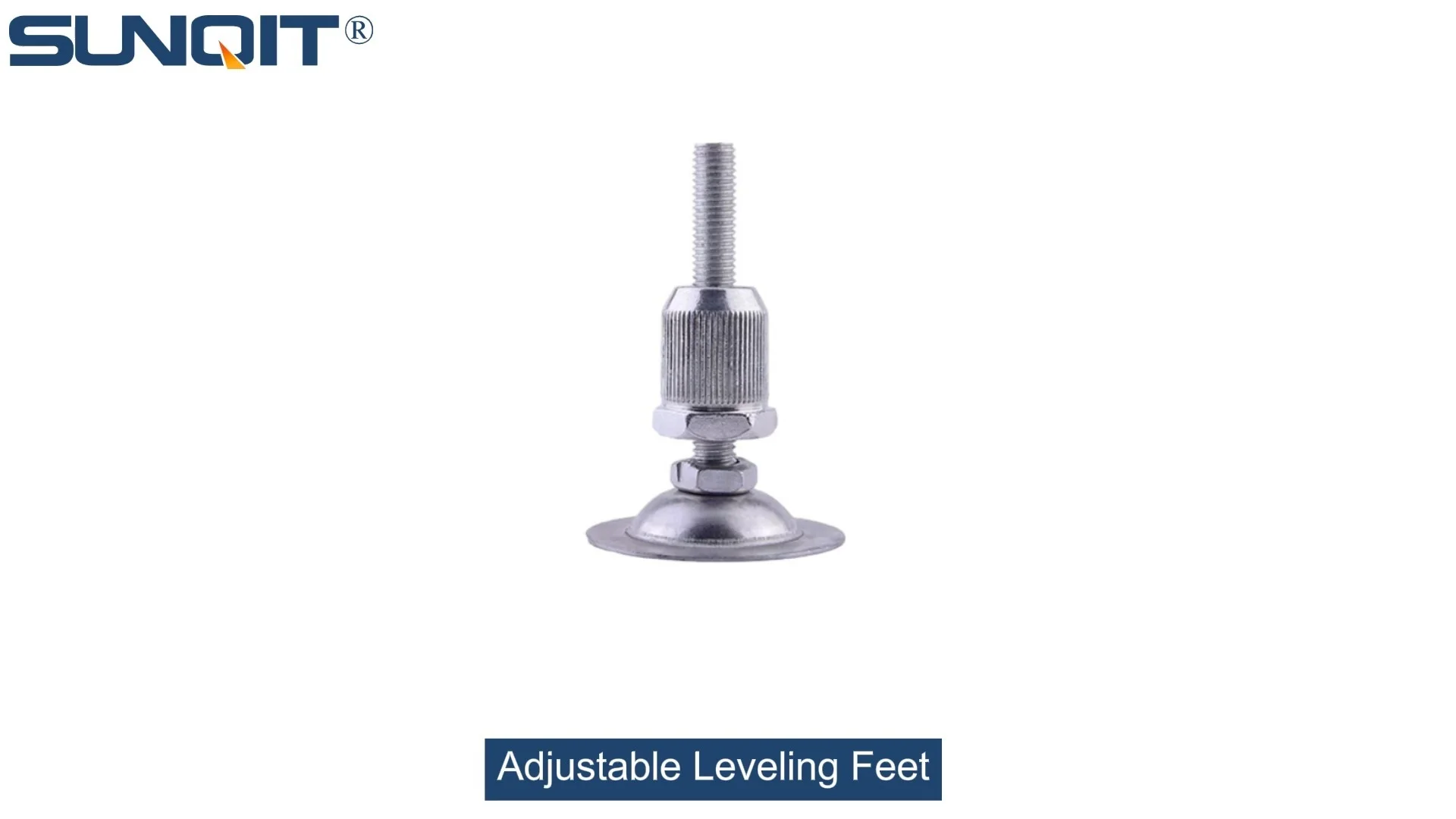
Adjustable leveling feet are designed to keep machines level when placed on uneven or sloped ground. Otherwise known as adjustable equipment feet, they are available to order in a wide variety of size and load capacity combinations.
If you've ever walked into a workshop, garage, or manufacturing floor and noticed a workbench that just doesn't sit right—tools sliding off the edge, workers hunching to compensate, or that annoying "wobble" when you lean on it—you know how frustrating uneven workbenches can be. What you might not realize is how much those wobbly surfaces are actually costing your business. From lost productivity to safety risks, the price of ignoring an uneven workbench adds up fast. But before you rush to replace the entire bench (and drain your budget), let's talk about a simpler, more affordable solution: adjustable leveling feet. In this article, we'll break down why workbenches go uneven, the hidden costs of letting them stay that way, and how adjustable leveling feet stack up against the alternative of buying brand-new workbenches.
Why Do Workbenches Go Uneven in the First Place?
First, let's get to the root of the problem. Workbenches don't just "suddenly" become uneven—more often, it's a slow, gradual process that happens over months or even years. Here are a few common culprits:
Floor settling: Most buildings shift slightly over time, especially in older spaces. What was once a perfectly level floor might develop small dips or slopes, throwing your workbench off balance.
Worn-out casters: If your workbench has wheels (hello, caster wheel convenience!), those casters take a beating. Over time, they can wear down unevenly, or their brakes might fail, causing the bench to tilt.
Heavy, uneven loads: Piling tools, materials, or equipment on one side of the bench can cause the frame to bend or the legs to compress—especially if the bench is made of materials like wood or basic aluminum tube that aren't reinforced for constant heavy use.
Poor initial installation: Maybe the bench was never properly leveled to begin with. Rushed setup, using mismatched leg lengths, or skipping the step of checking with a spirit level can come back to haunt you later.
Environmental factors: For wooden workbenches, humidity can cause swelling or warping. Even metal or aluminum profile workbenches aren't immune—temperature changes can lead to minor expansion or contraction, and exposure to moisture might corrode legs or joints over time.
The Hidden Costs of Letting Workbenches Stay Uneven
You might think, "It's just a little wobbly—no big deal." But that "little" wobble can have big consequences. Let's break down the costs:
1. Lost Productivity
Imagine trying to assemble a small electronic component on a bench that tilts. Every time you set down a part, it slides to one side. You spend extra seconds grabbing it, readjusting your tools, or realigning the product. Multiply that by 10 workers, 8 hours a day, and suddenly you're losing hours of productive time each week. One study by the Manufacturing Productivity Institute found that workers on uneven surfaces spend up to 15% more time on tasks due to constant adjustments—time that could be spent finishing orders or innovating.
2. Safety Risks (and Potential Lawsuits)
An uneven workbench is an accident waiting to happen. Tools can fall off and hit feet, leading to bruises or broken toes. Workers might overcompensate with awkward postures, increasing the risk of back strain or repetitive motion injuries. And if a product slides off and breaks, that's a cost—but if a worker slips trying to catch it? Now you're looking at workers' compensation claims, medical bills, and possible OSHA fines. OSHA reports that "slips, trips, and falls" are among the top causes of workplace injuries, and uneven surfaces are a leading contributor.
3. Premature Tool and Equipment Wear
Your tools weren't designed to work on a slope. A drill press or circular saw on an uneven bench has to work harder to stay aligned, leading to faster wear on motors, bits, and blades. Even hand tools like screwdrivers or wrenches can suffer—using them at an angle increases stress on handles and joints, meaning you'll be replacing them more often. Over time, those replacement costs add up far more than you might expect.
4. Damaged Products and Wasted Materials
For businesses that build or assemble products, uneven workbenches are a recipe for defects. A wobbly bench can lead to misaligned parts, scratches, or even broken components during assembly. That means reworking products, scrapping materials, or—worst case—shipping faulty items to customers, which damages your reputation and leads to returns. One small manufacturer we spoke to estimated they lost $2,000 in wasted materials last year alone, all because of a few uneven lean pipe workbenches in their assembly line.

Adjustable Leveling Feet: A Small Fix with Big Benefits
So, what's the alternative to letting these costs pile up? Enter adjustable leveling feet. If you're not familiar, these are simple, screw-in devices that attach to the bottom of your workbench legs. They have a threaded stem that allows you to twist them up or down, raising or lowering each corner of the bench until it's perfectly level. Think of them as "training wheels" for your workbench—they adapt to your floor's flaws so your bench doesn't have to.
What Are Adjustable Leveling Feet, Exactly?
Adjustable leveling feet come in all shapes and sizes, but they all share the same core design: a threaded metal or plastic stem (the part that screws into the bench leg) and a base (the part that touches the floor). The base might be rubber (for grip and to prevent scratching floors), plastic, or even stainless steel for durability in harsh environments. Some, like the suction cup anti-slip foot adjuster, have specialized bases that stick to smooth floors, adding extra stability. Others, like the M10*56 rubber leveling feet (a common size, where "M10" refers to the 10mm thread diameter), are designed to fit standard workbench leg threads, making them easy to swap in.
How Do They Work?
Installing adjustable leveling feet is surprisingly simple—you don't need to be a handyman or hire a professional. Here's a quick step-by-step:
1. Clear the bench: Remove all tools, materials, and equipment to make it light enough to lift (or use a jack if it's heavy).
2. Access the legs: Flip the bench on its side or lift each corner slightly to reach the existing feet (if there are any).
3. Remove old feet (if needed): If your bench already has fixed feet, unscrew them using a wrench or pliers. If the legs are bare, skip this step.
4. Screw in the new leveling feet: Hand-tighten the adjustable feet into the leg threads. For metal legs, you might need a wrench to get them snug, but be careful not to over-tighten and strip the threads.
5. Level the bench: Set the bench back down and place a spirit level on top. Twist each leveling foot clockwise to lower that corner or counterclockwise to raise it until the bubble is centered. Check both lengthwise and widthwise to ensure it's level in all directions.
6. Test for stability: Gently push the bench from all sides to make sure it doesn't wobble. If it does, fine-tune the feet until it's steady.
That's it! Most installations take 15–30 minutes per bench, and you can do it during a lunch break or between shifts—no need to shut down production for hours.
The Benefits of Adjustable Leveling Feet
Now, let's talk about why adjustable leveling feet are such a game-changer:
1. They're incredibly cost-effective: A set of adjustable leveling feet typically costs between $20 and $100, depending on the material and size. Compare that to replacing a workbench, which can range from $500 for a basic model to $3,000 or more for a heavy-duty aluminum profile or lean pipe workbench. For a shop with 10 benches, that's a savings of $4,900 to $29,000—money that can go toward other business needs like new tools, employee training, or expanding your product line.
2. Minimal downtime, maximum convenience: As we mentioned, installing leveling feet takes minutes, not days. There's no need to wait for new benches to be delivered, no disposal fees for old ones, and no disruption to your workflow. You can level a bench and have it back in use the same day.
3. They work on almost any workbench: Whether your benches are wood, metal, aluminum profile, or even lean pipe workbenches, there's an adjustable leveling foot that will fit. Most come with standard thread sizes (like M10 or M8), and adapters are available if your legs have non-standard threads. This versatility means you can use them across your entire shop, not just one type of bench.
4. They adapt to your space (and your needs): Floors settle, and workbenches can shift over time. With adjustable feet, you're not stuck with a "one-and-done" fix—you can easily readjust them whenever needed. Moving benches to a new location? No problem—just level them again in the new spot. Adding heavier equipment to a bench later? Adjust the feet to compensate for any new unevenness.
5. They protect your floors (and your benches): Many leveling feet have rubber or plastic bases that prevent scratching or denting floors, unlike metal legs that can leave marks. They also reduce vibration, which is gentler on both the bench frame and the tools on top.
6. Eco-friendly and sustainable: By extending the life of your existing workbenches, you're reducing waste and cutting down on the resources needed to manufacture new ones. It's a small step, but it adds up—especially for businesses looking to reduce their environmental footprint.

When Does Replacing the Workbench Make Sense?
Don't get us wrong—adjustable leveling feet are a fantastic solution, but they're not a magic bullet. There are times when replacing a workbench is the better (or only) option. Here are a few scenarios where a new bench might be necessary:
The frame is damaged beyond repair: If the legs are bent, cracked, or rusted through, or the tabletop is warped, split, or delaminated, leveling feet can't fix structural issues. A bench with a compromised frame is unsafe and won't hold up, even with level feet.
You need a different size or configuration: If your business is growing, you might need longer benches, benches with built-in shelves, or specialized workbenches (like ESD workstations for electronics). In this case, upgrading makes sense—but you can still use leveling feet on the new benches to keep them level!
The bench is outdated or inefficient: Older workbenches might lack features like built-in power outlets, tool storage, or ergonomic heights. If upgrading to a more efficient model will save time or improve workflow, the investment could pay off—just be sure to factor in the cost of downtime and installation.
Leveling feet aren't enough: In rare cases, floors might be so uneven (think major slopes or potholes) that even the longest leveling feet can't compensate. In this scenario, you might need to repair the floor first, but if that's not feasible, a new bench with extra-long legs (or custom leveling solutions) could be necessary.

Adjustable Leveling Feet vs. Replacing Workbenches: A Side-by-Side Comparison
To help you decide which option is right for your business, let's put them head-to-head:
Comparison of Adjustable Leveling Feet and Workbench Replacement
| Factor | Adjustable Leveling Feet | Replacing the Workbench |
|---|---|---|
| Cost per Bench | $20–$100 | $500–$3,000+ |
| Installation Time | 15–30 minutes | 2–4 hours (plus delivery lead time) |
| Downtime | Minimal (can be done during breaks) | Significant (hours to days, depending on delivery and setup) |
| Longevity | 5–10 years (can be replaced individually if worn) | 10–15 years (but higher initial cost) |
| Versatility | Works on existing benches; adjustable to new spaces/floors | Fixed to new bench; limited to new size/features |
| Environmental Impact | Low (reduces waste, extends bench life) | High (manufacturing new benches, disposing of old ones) |
| Best For | Structurally sound benches with uneven legs/floors | Damaged, outdated, or undersized benches |
Real-World Success: How One Shop Saved Thousands
Let's look at a real example to see how this plays out. Take "Precision Parts Co.," a small manufacturer with 8 lean pipe workbenches in their assembly area. Last year, their manager, Mike, noticed workers were complaining about wobbly benches, and product defects were up 10%. His first thought was to replace all 8 benches with new aluminum profile models, which he quoted at $2,500 each—$20,000 total, plus $1,000 for disposal and delivery.
Before pulling the trigger, Mike did some research and discovered adjustable leveling feet. He ordered 8 sets of M10*56 rubber leveling feet for $60 each, totaling $480. Over a weekend, he and his team installed the feet, leveling each bench. The result? Defects dropped back to normal levels, workers stopped complaining, and they saved $20,520. "It was a no-brainer," Mike told us. "We used the extra money to buy new power tools, and the team's morale improved because we fixed the problem quickly. I wish I'd known about leveling feet years ago!"
Conclusion: Level Up Without Breaking the Bank
Uneven workbenches are more than just an annoyance—they're a silent drain on your business's time, money, and resources. But before you commit to the high cost and downtime of replacing them, consider adjustable leveling feet. These simple, affordable devices can fix most unevenness issues in minutes, saving you thousands of dollars, reducing waste, and keeping your workflow on track.
Of course, there are times when a new workbench is necessary—if the frame is damaged, or you need a different configuration. But for most businesses, adjustable leveling feet are the smart, cost-effective first step. So, grab a spirit level, check your benches, and see where a few twists of a leveling foot could make a world of difference. Your bottom line (and your workers) will thank you.