- Company Articles
- Products and Technology
- Product knowledge
- The Difference Between Fixed and Rotational Two Way Aluminum Pipe Joints

The Difference Between Fixed and Rotational Two Way Aluminum Pipe Joints
Related Product
Two Way Aluminum Pipe Joint
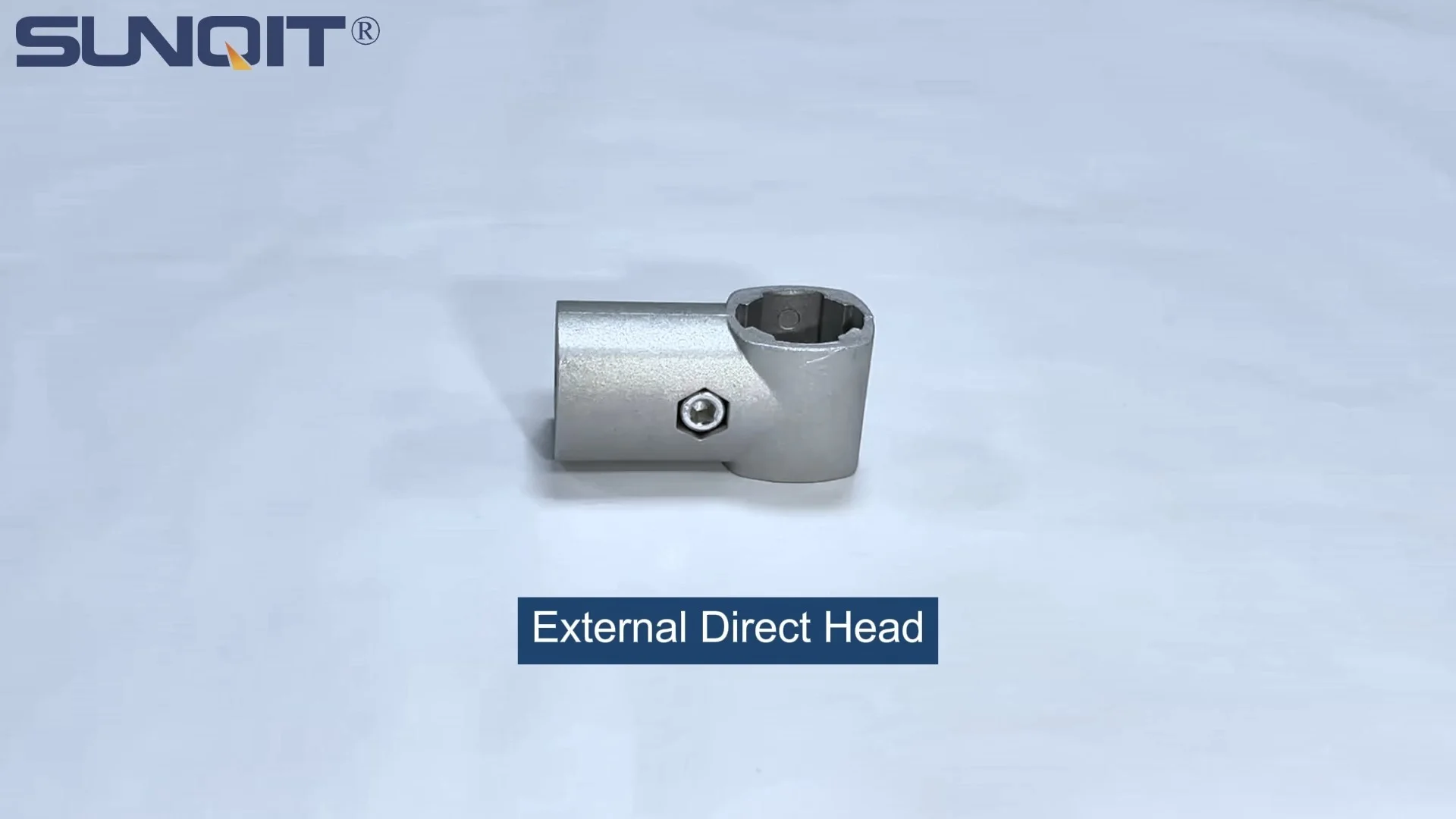
Aluminum 2 way pipe joint for 28mm aluminum pipe connection in 2 direction.
In the world of lean manufacturing and modular workspace design, the smallest components often make the biggest difference. Aluminum pipe joints, in particular, are the quiet workhorses that hold together everything from workbenches to roller tracks, ensuring operations run smoothly and adaptably. Among these, fixed and rotational two way aluminum pipe joints stand out for their unique roles in balancing stability and flexibility. Let's dive into what sets them apart, how they shape lean systems, and why choosing the right one matters for your workflow.
What Are Two Way Aluminum Pipe Joints, Anyway?
Before we compare fixed and rotational types, let's get clear on the basics. A two way aluminum pipe joint is a connector designed to link two aluminum pipes at a specific angle, forming the "bones" of modular structures. Think of them as the elbows and hinges of your workspace—without them, you'd be stuck with rigid, one-size-fits-all setups that can't keep up with changing production needs. These joints are typically made from lightweight, corrosion-resistant aluminum alloys (like 6061 or 6063, known for their strength and machinability), making them ideal for lean systems where efficiency and durability go hand in hand.
Two way joints are especially common in applications where two pipes meet—say, the corner of a workbench frame or the junction of a roller track and its support legs. Their design dictates everything from how much weight a structure can bear to whether it can be reconfigured later. And that's where the split between fixed and rotational comes into play.
Fixed Two Way Aluminum Pipe Joints: The Rock-Solid Foundation
Design & Mechanics: Built for Stability
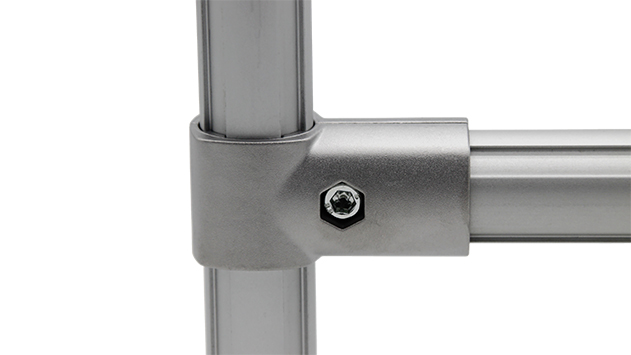
Fixed two way aluminum pipe joints are exactly what they sound like: connectors that lock two pipes into a fixed angle, with no room for rotation or adjustment. Picture a 90-degree corner joint that holds the vertical and horizontal pipes of a workbench together—once tightened, that angle isn't budging. Most fixed joints come pre-engineered for common angles (90°, 45°, or 180° for straight lines), though custom angles are available for specialized setups.
The key to their rigidity lies in their construction. These joints often feature a clamping mechanism (like set screws or friction fit) that bites into the aluminum pipes when tightened, creating a solid bond. Some heavier-duty models even use internal threads or welded components for extra strength. The result? A connection that can withstand constant vibration, heavy loads, and daily wear without loosening.
Materials & Durability: Made to Last
Fixed joints prioritize strength, so they're usually crafted from high-grade aluminum alloy with added reinforcements. Many are also anodized—a process that coats the surface with a protective oxide layer—boosting resistance to scratches, corrosion, and chemical exposure. This makes them perfect for environments like factories or warehouses where dust, moisture, or oils might otherwise take a toll.
Fun fact: Some fixed joints even incorporate steel components (like hardened set screws) for added grip, though the main body remains aluminum to keep weight low. This hybrid approach ensures they can handle static loads of up to 500kg or more, depending on size and design.
When to Use Them: Stability Over Flexibility
Fixed joints shine in situations where stability is non-negotiable. Think about a heavy-duty workbench where assembly line workers place tools, parts, or machinery—you wouldn't want that surface wobbling mid-task. Similarly, the vertical supports of a material rack (like a 3-row, 3-floor material rack) rely on fixed joints to keep shelves level and secure, even when stacked with heavy inventory.
They're also ideal for permanent or long-term setups. If you don't anticipate needing to reconfigure a structure (say, a dedicated testing station that's been in use for years), fixed joints eliminate the risk of accidental movement. In lean terms, this translates to less downtime spent readjusting and more time focused on production.
Real-World Example:
A car parts manufacturer uses fixed two way joints to build their assembly line workbenches. Each bench holds torque wrenches, pneumatic tools, and half-assembled components—weight that could easily cause instability if joints weren't rock-solid. By choosing fixed joints, they ensure workers can lean on the bench, set down heavy parts, and operate tools without worrying about the structure shifting.
Rotational Two Way Aluminum Pipe Joints: The Flexible Problem-Solvers
Design & Mechanics: Built for Movement
If fixed joints are the "rocks" of modular design, rotational two way joints are the "chameleons." These connectors allow the two linked pipes to rotate relative to each other, either freely or with a locking mechanism to hold them in place at specific angles. Imagine a joint that lets you tilt a roller track from 10° to 30° to control how quickly parts slide down— that's the rotational advantage in action.
How do they work? Most rotational joints feature a pivot point (often a stainless steel pin or bearing) between the two pipe sockets. Some have a friction-based system where tightening a knob increases resistance, letting you "lock" the joint at any angle; others use detents (small notches) for preset positions (like 0°, 45°, 90°). This flexibility makes them indispensable in lean systems where adaptability is key—after all, today's low-volume production might need a different setup than tomorrow's rush order.
Materials & Durability: Balancing Flexibility and Strength
Like their fixed counterparts, rotational joints are made from aluminum alloy, but with extra attention to moving parts. The pivot mechanism often includes bearings (plastic or metal) to reduce friction and wear, ensuring smooth rotation even after months of use. Many also have rubber or silicone gaskets to prevent dust and debris from jamming the pivot—a small detail that goes a long way in busy factories.
That said, rotational joints typically have lower weight capacities than fixed ones. A standard rotational two way joint might handle 200-300kg, compared to 500kg+ for a fixed joint of the same size. This trade-off is intentional: adding moving parts means sacrificing some rigidity for flexibility.
When to Use Them: Adaptability Over Rigidity
Rotational joints thrive in setups that need to evolve. Take roller tracks, for example. If you're moving small electronic components one day and heavier plastic parts the next, you might need to adjust the track's incline to control speed—rotational joints let you do that without disassembling the entire structure. They're also a boon for workbenches that double as packing stations: tilt the tabletop slightly to let boxes slide toward the edge, then lock it flat for assembly tasks.
Another common use? Temporary or seasonal setups. A warehouse gearing up for holiday shipments might use rotational joints to build adjustable sorting stations that can be broken down and stored once the rush is over. In lean terms, this reduces waste by maximizing the use of existing equipment across multiple tasks.
Real-World Example:
A small electronics manufacturer uses rotational two way joints on their testing bench. The bench has a fold-down shelf that holds testing equipment—when not in use, the shelf rotates up to save space. The joints lock securely at 90° (for use) and 180° (folded up), letting workers toggle between setups in seconds. This adaptability has cut down on clutter and made it easier to switch between product lines.

Side-by-Side: Fixed vs. Rotational Two Way Joints
Still trying to decide which is right for your project? This table breaks down their key differences at a glance:
| Feature | Fixed Two Way Aluminum Pipe Joint | Rotational Two Way Aluminum Pipe Joint |
|---|---|---|
| Angle Adjustability | Fixed (pre-set angles like 90°, 45°) | Adjustable (free rotation or preset notches) |
| Weight Capacity | Higher (often 500kg+ for heavy-duty models) | Lower (typically 200-300kg) |
| Best For | Permanent, high-stability structures (workbench frames, fixed shelving) | Reconfigurable setups (adjustable roller tracks, foldable workbenches) |
| Installation Complexity | Simpler (tighten and done—no alignment needed post-install) | Slightly more involved (may require calibrating rotation or locking mechanisms) |
| Maintenance Needs | Low (occasional tightening of set screws) | Moderate (lubrication of pivot points, cleaning debris from bearings) |
| Cost | Generally lower (fewer moving parts) | Slightly higher (due to bearings and locking mechanisms) |

How They Shape Lean Systems: Beyond the Joint Itself
At first glance, fixed and rotational joints might seem like minor details, but their impact ripples through entire lean systems. Lean manufacturing is all about eliminating waste—whether that's wasted time, space, or resources—and the right joint can make or break those efforts.
Stability for Streamlined Workbenches
Workbenches are the heart of many operations, and fixed joints are their backbone. A sturdy workbench with fixed joints ensures tools and materials stay in place, reducing the risk of errors or delays caused by shifting surfaces. For example, a electronics assembly workbench using fixed 90° joints will keep circuit boards level, making soldering and component placement more precise. In lean terms, this stability minimizes rework and keeps production flowing.
But what if you need a workbench that can grow with your team? That's where rotational joints come in. Add a rotational joint to the legs, and you can adjust the height to fit workers of different sizes, reducing fatigue and boosting productivity. It's a small change that aligns with lean's focus on employee well-being as a driver of efficiency.
Flexibility for Dynamic Roller Tracks
Roller tracks are another area where joint type matters. These systems rely on gravity (or gentle inclines) to move parts from one station to the next, and the angle of the track directly affects flow speed. A fixed joint might lock a roller track at a 5° incline for lightweight parts, but what if you switch to heavier items that need a steeper slope? With rotational joints, you can tweak the angle in minutes, avoiding bottlenecks and ensuring parts arrive exactly when needed.
Some roller tracks even use rotational joints to create "switchbacks"—sections that rotate to redirect parts to different lanes. This is a game-changer for lean systems handling multiple product types, as it eliminates the need for separate tracks and reduces floor space usage.
The Bottom Line: Lean Systems Need Both
Here's the truth: most lean setups aren't "all fixed" or "all rotational." They're a mix. A typical workspace might use fixed joints for the core structure of a workbench (stability first), then rotational joints for adjustable shelves or tool holders (flexibility where it counts). This hybrid approach lets you build systems that are both reliable and adaptable—exactly what lean manufacturing demands.
Installation & Maintenance Tips for Both Joint Types
Whether you choose fixed or rotational, proper installation and maintenance will extend the life of your aluminum pipe joints and keep your lean system running smoothly.
Installing Fixed Joints
- Measure twice, tighten once: Fixed joints are permanent, so double-check angles before tightening. A 90° joint that's slightly off will throw off your entire structure.
- Use the right tools: Avoid over-tightening set screws with a regular wrench—use a torque wrench to hit the manufacturer's recommended specs (usually 15-20 Nm for aluminum joints). Over-tightening can strip threads or warp the pipe.
- Check for alignment: After installing, give the structure a gentle shake. If it wobbles, the joint might be loose or the pipes might be misaligned. Fix it now to prevent bigger issues later.
Installing Rotational Joints
- Lubricate first: Before assembling, apply a drop of lightweight machine oil to the pivot point. This prevents friction and ensures smooth rotation from day one.
- Test the lock: If your rotational joint has a locking mechanism (like a knob or lever), test it at different angles to make sure it holds securely. A loose lock defeats the purpose of the joint!
- Leave room to rotate: Avoid installing rotational joints too close to other components (like shelves or walls) that might block movement. Measure the maximum rotation angle and ensure there's clearance.
Maintenance Must-Dos
For fixed joints: Every 3-6 months, check set screws for tightness—vibration can loosen them over time. If you notice corrosion (common in humid environments), wipe the joint with a damp cloth and apply a thin coat of anti-corrosion spray.
For rotational joints: Clean the pivot point monthly to remove dust and debris (a toothbrush works well for hard-to-reach areas). Re-lubricate every 2-3 months, and replace worn bearings immediately if rotation becomes stiff or jerky.
Wrapping Up: Choosing the Right Joint for Your Lean Journey
Fixed and rotational two way aluminum pipe joints might not grab headlines, but they're the unsung heroes of flexible, efficient workspaces. Fixed joints offer the rock-solid stability needed for high-stakes, permanent setups, while rotational joints bring the adaptability to pivot quickly in a changing world. The key is to match their strengths to your needs: ask yourself, Is this structure here to stay, or will it need to evolve? Does it carry heavy loads, or does it need to move?
And remember, lean systems thrive on balance. You don't have to choose one type exclusively—mix and match to build a workspace that's both stable and flexible, reducing waste and boosting productivity. After all, in lean manufacturing, the best solutions are the ones that work as hard as your team does.
So next time you're designing a workbench, building a roller track, or reconfiguring your production line, take a moment to appreciate the little joint holding it all together. It might just be the difference between a setup that works for you and one that works with you.