- Company Articles
- Products and Technology
- Product knowledge
- The Environmental Benefits of Using Turning Angle Code 3030 in Factories

The Environmental Benefits of Using Turning Angle Code 3030 in Factories
Related Product
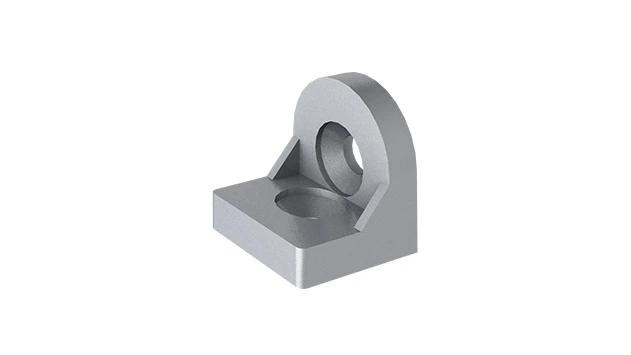
Turning Angle Code 3030
The turning angle aluminum profile connector provides a 90 degree hidden corner connection. 3030 it is means this size is used for 30 series aluminum profile.The corner code comes with set screws that allow for quick, easy connections.
In an era where industries worldwide are racing to reduce their carbon footprint, factories are under increasing pressure to rethink every aspect of their operations—from energy use to waste management. While large-scale solutions like solar panels or electric machinery grab headlines, it's often the smaller, more overlooked components that quietly drive sustainable change. Enter the Turning Angle Code 3030: a unassuming yet powerful connector that's transforming how factories build, adapt, and reduce their environmental impact. This article explores how this simple aluminum component is becoming a cornerstone of eco-friendly manufacturing, proving that sustainability often starts with the details.
Understanding Turning Angle Code 3030: More Than Just a Connector
Before diving into its environmental perks, let's clarify what Turning Angle Code 3030 is and why it matters in factory settings. At its core, this component is a precision-engineered bracket designed to join Aluminum Extrusion Profiles—those versatile, groove-lined metal rails used in everything from workbenches to material racks. Unlike traditional welding or permanent fasteners, the Turning Angle Code 3030 creates secure, joints between 30mm x 30mm Aluminum Profiles (hence "3030"), allowing for tool-free assembly and reconfiguration.
Crafted from high-grade aluminum, the angle code features pre-threaded holes and a compact, L-shaped design that locks into the T-slots of Aluminum Profiles. This simplicity makes it a favorite among manufacturers, but its true value lies in how it aligns with sustainable practices. By enabling modularity, durability, and material efficiency, Turning Angle Code 3030 addresses key environmental pain points in factory operations—often without requiring a complete overhaul of existing systems.
Environmental Benefit 1: Reducing Material Waste Through Precision Engineering
One of the most tangible environmental advantages of Turning Angle Code 3030 is its role in cutting material waste, both in its own production and in how it interacts with the Aluminum Profiles it connects. Let's start with the material itself: aluminum. Unlike steel, which demands energy-intensive mining and processing, aluminum is lightweight, corrosion-resistant, and—crucially—requires minimal material to achieve strength. But the real efficiency comes from how the angle code is made: through aluminum extrusion, a process that minimizes waste by design.
Aluminum extrusion works by forcing heated aluminum through a die to create complex shapes with pinpoint accuracy. This means the Turning Angle Code 3030 is formed exactly to its required dimensions, with almost no excess material. Compare this to steel brackets, which are often cut from larger sheets, leaving behind 15-20% scrap metal. For a factory producing thousands of brackets yearly, this difference adds up: aluminum extrusion reduces manufacturing waste by up to 80%, according to industry data. And when paired with Aluminum Profiles—also extruded with minimal waste—the system becomes a model of material efficiency.
But waste reduction doesn't stop at production. The Turning Angle Code 3030's modular design means factories can build custom structures (like workbenches or flow racks) using only the materials they need. No more over-ordering steel beams that end up as scrap when a layout changes; with aluminum profiles and angle codes, components are added or removed as needed, keeping excess material out of landfills.

Environmental Benefit 2: Recyclability—Closing the Loop on Waste
In the fight against climate change, recyclability is non-negotiable. Here, aluminum—and by extension, Turning Angle Code 3030—shines brighter than most materials. Aluminum is infinitely recyclable: it can be melted down and reshaped repeatedly without losing strength, and recycling it requires just 5% of the energy needed to produce new aluminum from ore. This "closed-loop" potential makes the Turning Angle Code 3030 a sustainability standout, especially compared to steel brackets, which often end up in landfills due to corrosion or damage from welding.
Consider a typical factory scenario: after a production line upgrade, old steel workbenches are torn down, their welded joints making disassembly impossible. The steel is sent to a scrapyard, where much of it is downcycled into lower-grade products. Now, imagine the same scenario with Turning Angle Code 3030: the angle codes are unbolted, the Aluminum Profiles are separated, and both components are either reused in a new layout or sent for recycling. Because the angle code doesn't damage the profiles during assembly (unlike welding), 100% of the material remains viable for reuse or recycling. Over time, this reduces the demand for virgin aluminum, cutting the factory's reliance on resource-intensive mining.
Even better, many manufacturers of Turning Angle Code 3030 use recycled aluminum in their production, further lowering the component's carbon footprint. For factories prioritizing circularity, this means choosing the angle code isn't just about reducing waste—it's about actively participating in a sustainable supply chain.

Environmental Benefit 3: Energy Savings Across the Lifespan
A product's environmental impact spans far beyond its manufacturing; it includes transportation, installation, and long-term use. Here, the Turning Angle Code 3030 delivers again, thanks to its lightweight design and tool-free assembly.
Start with transportation: aluminum is 66% lighter than steel. A shipment of Turning Angle Code 3030 and Aluminum Profiles weighs a fraction of the steel equivalents, requiring fewer trucks to transport. For a factory ordering bulk components, this translates to lower fuel consumption and fewer emissions. A single truck can carry three times as many aluminum components as steel ones, slashing transportation-related carbon emissions by up to 50% per order.
Then there's on-site energy use. Traditional factory setups often involve welding steel frames, which demands electricity, gas, and ventilation systems to manage fumes. The Turning Angle Code 3030 eliminates welding entirely: assembly involves aligning the bracket with the Aluminum Profile and tightening a few bolts by hand. This not only cuts energy use during setup but also speeds up reconfigurations. A factory that once took days to rebuild a production line with steel can now do it in hours with aluminum profiles and angle codes—minimizing downtime and the energy wasted during idle periods.
Long-term energy savings add up, too. Factories with modular layouts (enabled by Turning Angle Code 3030) adapt quickly to workflow changes, reducing the need for excess lighting, heating, or cooling in underused areas. Employees move more efficiently, machines run only when needed, and the overall operation becomes leaner—all while shrinking the factory's energy bill and carbon footprint.
Environmental Benefit 4: Durability That Reduces Replacement Cycles
Sustainability isn't just about reducing waste today—it's about building for the long term. Turning Angle Code 3030 excels here, thanks to aluminum's natural resistance to corrosion and wear. Unlike steel, which rusts when exposed to moisture, chemicals, or humidity, aluminum forms a protective oxide layer that prevents degradation. This means the angle code and its connected Aluminum Profiles last decades, even in harsh factory environments.
Consider a food processing plant, where constant cleaning with water and chemicals would corrode steel brackets within 3-5 years. With Turning Angle Code 3030, the same brackets remain functional for 15-20 years, reducing the need for frequent replacements. Fewer replacements mean less material extraction, manufacturing, and transportation—all of which lower the factory's environmental impact over time. It's a simple equation: longer-lasting components equal fewer resources consumed.
This durability also aligns with Lean System principles, which emphasize eliminating waste ("muda") in all forms. By reducing the need to replace worn-out parts, Turning Angle Code 3030 helps factories operate more efficiently, cutting costs while benefiting the planet.
Traditional Steel vs. Turning Angle Code 3030: A Sustainability Showdown
To put these benefits in perspective, let's compare Turning Angle Code 3030 with traditional steel angle brackets—a common alternative—across key environmental metrics:
| Metric | Traditional Steel Angle Brackets | Turning Angle Code 3030 (Aluminum) |
|---|---|---|
| Material Type | Carbon steel (high embodied carbon) | Recyclable aluminum (low embodied carbon) |
| Manufacturing Waste | 15-20% scrap (from cutting/welding) | 2-5% scrap (precision extrusion) |
| Recyclability Rate | 30-50% (welding damage limits reuse) | 95-100% (no damage, reusable/recyclable) |
| Weight (per unit) | 0.4 kg (heavier, higher transport emissions) | 0.14 kg (lighter, lower transport emissions) |
| Average Lifespan | 5-7 years (prone to rust) | 15-20 years (corrosion-resistant) |
| Assembly Energy Use | High (welding, heavy machinery) | Low (hand tools, no welding) |
Real-World Impact: A Factory's Journey to Sustainability
Take the example of a automotive parts manufacturer in Michigan that switched from steel workbenches to modular systems using Turning Angle Code 3030 and Aluminum Profiles. Within two years, the factory reported:
- 70% less construction waste during layout changes
- 35% lower transportation costs for components
- 25% reduction in energy use for assembly (no more welding)
- Zero steel scrap sent to landfills (all aluminum components reused or recycled)
The factory's sustainability director noted, "We didn't just reduce our carbon footprint—we made our operations more flexible. The Turning Angle Code 3030 let us adapt to new production needs without tearing everything down, which saved time and resources."
Conclusion: Small Components, Big Green Impact
The Turning Angle Code 3030 may be small in size, but its environmental impact is substantial. By prioritizing material efficiency, recyclability, energy savings, and durability, it embodies the "small changes, big results" philosophy that defines modern sustainability. For factories looking to reduce waste, cut emissions, and align with Lean System principles, this unassuming aluminum bracket is more than a connector—it's a catalyst for greener manufacturing.
As industries continue to evolve, the lesson is clear: sustainability isn't just about grand gestures. It's about choosing components that work with the planet, not against it. Turning Angle Code 3030 proves that when it comes to building a sustainable factory, the right angle can make all the difference.