- Company Articles
- Products and Technology
- Product knowledge
- The Environmental Impact of Aluminum Profile 3 Way Connectors

The Environmental Impact of Aluminum Profile 3 Way Connectors
Related Product
Aluminum Profile 3 Way Connector
The 3 way - squared corner connector is an external fastening method that is typically used to create a corner connection between three profiles. It is a heavy-duty connection that is simple to use and provides a polished look.
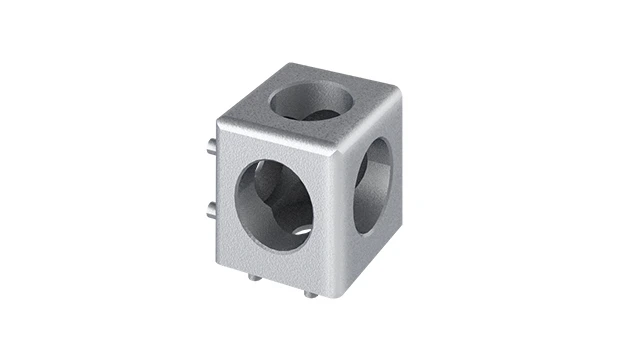
Walk into any modern factory, warehouse, or assembly line, and you'll likely spot a network of sleek, modular structures: workbenches adjusted to ergonomic heights, material racks organizing components with precision, and conveyor systems moving products seamlessly from one station to the next. Behind these functional setups lies a quiet hero: the aluminum profile 3 way connector. These unassuming pieces—small, often metallic, and designed to link aluminum tubes at precise angles—are the backbone of modular industrial systems. But as the world leans harder into sustainability, even the smallest components are under scrutiny. How do these connectors affect the environment? From the moment bauxite is mined to the day a connector is recycled, every step leaves a footprint. Let's unpack the environmental journey of aluminum profile 3 way connectors, and why they might just be a greener choice than you'd think.
1. The Basics: What Are Aluminum Profile 3 Way Connectors, Anyway?
Before diving into environmental impact, let's ground ourselves in what these connectors do. Aluminum profile 3 way connectors are part of a broader family of aluminum profile accessories—components that transform raw aluminum extrusion profiles into functional structures. Think of them as the "Lego blocks" of industrial design: they allow manufacturers to build, modify, and repurpose workstations, racks, and flow systems without welding or heavy tools. A 3 way connector, specifically, joins three aluminum tubes at 90-degree angles (or sometimes adjustable angles), creating stable corners for frames, shelves, or support structures.
Why aluminum? Unlike steel, which is heavy and prone to rust, or plastic, which lacks durability, aluminum offers a sweet spot: it's lightweight, corrosion-resistant, and strong enough to support industrial loads. And because aluminum extrusion profiles are standardized—meaning tubes and connectors from different suppliers often fit together—they enable a "build-as-you-go" flexibility that reduces waste. If a factory needs to reconfigure a production line, workers can disassemble the old setup, reuse the connectors and tubes, and build something new. No need to scrap entire systems—a key point for sustainability.
2. From Bauxite to Aluminum: The Raw Material Journey
Every aluminum product starts with bauxite, a reddish-brown ore found in tropical regions like Guinea, Australia, and Brazil. Mining bauxite isn't without environmental cost. Open-pit mining—the most common method—involves clearing vegetation, digging up soil, and extracting the ore. This can disrupt ecosystems, displace wildlife, and contribute to soil erosion. In some cases, mining operations have been linked to deforestation, particularly in areas where bauxite deposits lie beneath rainforests. For example, Guinea, which produces over 20% of the world's bauxite, has faced criticism for mining activities near protected forest areas, raising concerns about biodiversity loss.
Once mined, bauxite is processed into alumina (aluminum oxide) via the Bayer process, which uses high temperatures and caustic soda. This step requires large amounts of water—up to 500 liters per ton of alumina, by some estimates—and produces "red mud," a toxic byproduct rich in heavy metals. If not managed properly, red mud can leak into waterways, contaminating drinking water and harming aquatic life. In 2010, a red mud spill in Hungary released over a million cubic meters of waste, killing ten people and devastating local ecosystems. While modern facilities have stricter containment measures, red mud remains a persistent challenge.
The next step—smelting alumina into pure aluminum—is where the energy bill skyrockets. Aluminum smelting uses the Hall-Héroult process, which involves passing an electric current through molten alumina to separate aluminum metal. This is energy-intensive: producing one ton of primary aluminum (from raw bauxite) requires about 16,000 kilowatt-hours of electricity—enough to power an average U.S. home for over a year. Most of this energy comes from fossil fuels, particularly coal in countries like China (the world's top aluminum producer), leading to significant greenhouse gas emissions. For context, aluminum production accounts for roughly 2% of global carbon dioxide emissions—more than aviation.
So, does this mean aluminum profile 3 way connectors are inherently "bad" for the environment? Not quite. The story takes a turn when we talk about recycling—and aluminum is a recycling rockstar.

3. The Recycling Revolution: Aluminum's Secret Superpower
Here's the game-changer: aluminum is 100% recyclable, and it can be recycled infinitely without losing quality. That soda can you tossed in the bin yesterday? It could become part of an aluminum lean pipe or a 3 way connector in as little as 60 days. Even better, recycling aluminum uses just 5% of the energy required to produce it from bauxite. Let that sink in: 95% less energy. For a material that's so energy-heavy to make initially, this is a massive environmental win.
Why is recycling aluminum so efficient? Unlike plastics, which degrade when melted down, or paper, which loses fiber strength, aluminum's atomic structure remains intact through the recycling process. When you melt down an old connector, you get pure aluminum again, ready to be reshaped into a new one. This closed-loop system drastically cuts emissions: recycling one ton of aluminum saves 14 tons of CO2 compared to producing new aluminum. For manufacturers of aluminum profile accessories, this is a golden opportunity to reduce their carbon footprint by using recycled aluminum (often called "secondary aluminum") in their connectors.
Many suppliers are already leaning into this. Some aluminum profile 3 way connectors are made from 100% recycled aluminum, sourced from scrap metal yards, old industrial equipment, or even discarded consumer goods. Others blend recycled and primary aluminum to balance strength and sustainability. Either way, the more recycled content in a connector, the lower its environmental impact. For example, a connector made with 70% recycled aluminum would have a carbon footprint roughly 65% smaller than one made with 100% primary aluminum.

4. Comparing Materials: How Aluminum Stacks Up Against Steel and Plastic
To truly understand aluminum's environmental impact, we need to compare it to alternatives. Let's pit aluminum profile 3 way connectors against two common rivals: steel connectors and plastic connectors.
| Environmental Factor | Aluminum Connectors | Steel Connectors | Plastic Connectors |
|---|---|---|---|
| Energy to Produce (per kg) | ~16 kWh (primary); ~0.8 kWh (recycled) | ~7 kWh (primary); ~2 kWh (recycled) | ~2-5 kWh (depends on plastic type) |
| Recyclability | 100% infinite recycling; high market demand for scrap | 100% recyclable, but often downcycled (loses quality) | Mostly non-recyclable (e.g., PVC) or downcycled (e.g., PP) |
| Corrosion Resistance | High (naturally forms protective oxide layer) | Low (prone to rust; requires coating like zinc) | High, but degrades in UV light/heat |
| Weight (per unit strength) | Lightweight (1/3 the weight of steel) | Heavy (increases transportation emissions) | Lightweight, but less strong (may require thicker design) |
| End-of-Life Impact | Recyclable; minimal waste | Recyclable, but coating (zinc) can complicate recycling | Often ends in landfills; may leach toxins |
Steel is cheaper than aluminum, but it's heavier—meaning transporting steel connectors requires more fuel, boosting emissions. Steel also rusts, so many steel connectors are coated with zinc (galvanized) or paint, which adds chemicals to the production process and complicates recycling. When steel is recycled, it often loses strength, so it's "downcycled" into lower-quality products (e.g., rebar instead of precision connectors). Aluminum, by contrast, maintains its strength through recycling, so it can loop back into high-quality industrial components.
Plastic connectors are lightweight and cheap, but they're a sustainability nightmare. Most industrial plastic connectors are made from non-recyclable plastics like PVC or low-density polyethylene (LDPE). Even recyclable plastics like polypropylene (PP) often end up in landfills because sorting industrial scrap is costly. Plastic also degrades over time, especially in hot or sunny industrial environments, leading to brittle connectors that need frequent replacement—creating a cycle of waste. Aluminum, with its 50+ year lifespan in industrial settings, outlasts plastic by decades, reducing the need for replacements.
The verdict? Aluminum isn't perfect, but when recycled content is high, it beats steel and plastic in long-term sustainability. Its durability and recyclability make it a strong candidate for eco-conscious manufacturers.
5. Lean Systems and Aluminum: Reducing Waste Through Modularity
Sustainability isn't just about the materials themselves—it's about how they're used. This is where lean system principles intersect with aluminum profile 3 way connectors. Lean manufacturing, a philosophy focused on minimizing waste (or "muda"), emphasizes efficiency, flexibility, and continuous improvement. Aluminum's modularity aligns perfectly with these goals.
Imagine a electronics factory that needs to switch from assembling smartphones to tablets. With traditional fixed steel workbenches, this might require tearing down the old setup and building new ones from scratch—wasting materials, time, and labor. With aluminum profile systems, though, workers can simply loosen the 3 way connectors, adjust the height of the aluminum extrusion profiles, and reattach the benches to fit the larger tablet components. The connectors and tubes are reused, not scrapped. This "adapt-and-reuse" model cuts down on waste dramatically.
Lean systems also reduce overproduction, another key waste source. Since aluminum components are lightweight and easy to transport, factories can order just the number of connectors and tubes they need, avoiding excess inventory that might end up unused. And because aluminum profile accessories are standardized, there's less risk of ordering the wrong part—no more boxes of mismatched connectors gathering dust in a warehouse.
Even the production of aluminum connectors itself can be lean. Many suppliers use precision machining to minimize scrap metal during manufacturing. For example, a 3 way connector might be milled from a single block of aluminum, with leftover shavings collected and recycled back into the production process. This closed-loop within the factory further reduces waste.
6. The Dark Side: Where Aluminum Still Falls Short
For all its benefits, aluminum isn't a silver bullet. Let's acknowledge the challenges. First, primary aluminum production is still energy-intensive, even with recycling. While recycled aluminum is green, the global supply of recycled aluminum isn't infinite. If demand for aluminum connectors outpaces the availability of scrap metal, suppliers may have to rely more on primary aluminum, boosting emissions.
Second, bauxite mining's environmental toll can't be ignored. Even with reforestation efforts, mining disrupts local ecosystems. Communities near mines often face water shortages, as bauxite processing requires massive amounts of water. In some regions, indigenous lands are threatened by mining operations, raising ethical concerns alongside environmental ones.
Third, transportation emissions add up. Aluminum is produced in countries like China, Canada, and Australia, but used globally. Shipping aluminum profile 3 way connectors from a factory in China to a warehouse in the U.S. or Europe releases CO2. While aluminum's lightweight nature reduces transportation emissions compared to steel, it's still a factor. Local sourcing—buying connectors from regional suppliers—can mitigate this, but it's not always feasible for small manufacturers.
7. Innovations on the Horizon: Making Aluminum Connectors Greener
The aluminum industry is racing to address these challenges, and innovations are emerging that could make aluminum profile 3 way connectors even more sustainable. Here are a few to watch:
Low-Carbon Aluminum: Companies like Rio Tinto and Alcoa are developing "green aluminum" produced using renewable energy. For example, Rio Tinto's Canadian smelters run on hydroelectric power, cutting emissions by 90% compared to coal-powered smelters. If adopted widely, green primary aluminum could make even virgin aluminum connectors far less carbon-intensive.
Lightweighting Connectors: Engineers are redesigning 3 way connectors to use less material without sacrificing strength. By using computer-aided design (CAD) and 3D printing, they're creating hollow or lattice-like connector structures that reduce aluminum use by 10-15% per piece. Less material means lower mining and energy demands.
Closed-Loop Supplier Networks: Some aluminum profile suppliers are launching take-back programs, where they collect old connectors and tubes from customers, recycle them, and turn them into new components. This creates a circular economy where waste from one factory becomes raw material for another.
Biodegradable Coatings: While aluminum is naturally corrosion-resistant, some connectors use protective coatings for extra durability. Traditional coatings like chrome are toxic, but companies are testing plant-based or biodegradable coatings that break down harmlessly if a connector ever ends up in a landfill.
8. What Can You Do? Choosing Sustainable Aluminum Connectors
If you're a manufacturer, warehouse manager, or anyone specifying aluminum profile systems, you have the power to drive demand for greener connectors. Here's how:
Ask for Recycled Content: When ordering connectors, ask suppliers for the percentage of recycled aluminum in their products. Look for certifications like the Aluminum Stewardship Initiative (ASI), which verifies responsible sourcing and recycling practices.
Opt for Modular Over Fixed Systems: Choose aluminum profile systems over fixed steel or plastic setups. The upfront cost may be higher, but the long-term savings in waste and replacement costs make it worthwhile.
Partner with Local Suppliers: Buying from regional aluminum profile suppliers reduces transportation emissions. Many countries now have domestic aluminum recyclers and fabricators, so you don't have to import from afar.
Plan for End-of-Life: When designing your industrial setup, factor in how you'll recycle the connectors and tubes later. Work with suppliers who offer take-back programs, or partner with local scrap yards that accept aluminum industrial waste.
9. Conclusion: Small Connectors, Big Impact
Aluminum profile 3 way connectors may be small, but their environmental impact ripples through the entire industrial lifecycle—from bauxite mines to recycling plants. They're not without flaws: primary aluminum production is energy-heavy, and mining can harm ecosystems. But their recyclability, durability, and role in lean system waste reduction make them a standout choice for sustainable manufacturing.
As the world moves toward a circular economy, the humble aluminum connector is poised to play a bigger role. With innovations in green aluminum production, lightweight design, and closed-loop recycling, these little components could become even greener in the years ahead. So the next time you walk past that modular workbench or material rack, take a second look at the connectors holding it all together—they're not just building better factories; they're helping build a better planet, one joint at a time.