- Company Articles
- Products and Technology
- Product knowledge
- The Environmental Impact of Parallel Lean Pipe Joints: Reusability Metrics

The Environmental Impact of Parallel Lean Pipe Joints: Reusability Metrics
Related Product
Parallel Lean Pipe Joint
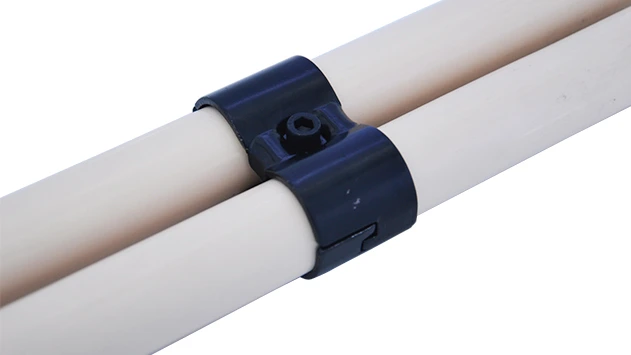
Parallel lean pipe joint used for 2 pcs 28MM lean pipe connection in parallel direction to enhance frame structure, usually for heavy payload requirement for workbench. flow rack, hand trolley.
In the bustling world of manufacturing, where efficiency and productivity often take center stage, there's a quiet revolution happening—one that marries operational excellence with environmental responsibility. At the heart of this shift lies the humble lean pipe and its unsung hero: the parallel lean pipe joint. These unassuming components are redefining how factories, warehouses, and production lines approach sustainability, proving that "lean" isn't just about cutting costs—it's about cutting waste, too. Let's dive into the environmental impact of these systems, focusing on the reusability metrics that make them a game-changer for eco-conscious businesses.
Understanding Lean Systems: More Than Just Efficiency
Before we zoom in on parallel lean pipe joints, let's ground ourselves in what a lean system truly is. At its core, lean manufacturing is about maximizing value while minimizing waste—a philosophy that aligns perfectly with sustainability. Traditional production setups often rely on fixed, one-size-fits-all structures: rigid workbenches bolted to the floor, inflexible material racks, and conveyor systems that become obsolete when a product line changes. When that happens, these structures are often torn down and sent to landfills, contributing to the 11 million tons of industrial waste generated annually in the U.S. alone (EPA, 2023).
Enter lean systems, built around modularity and adaptability. At the heart of these systems are components like aluminum lean pipe , lightweight yet durable, and joints that allow for quick assembly and disassembly. Unlike fixed structures, these systems can be reconfigured, extended, or repurposed as needs evolve—turning a single workbench into a turnover trolley, or a simple material rack into a multi-tiered flow rack with just a few adjustments. This flexibility isn't just good for productivity; it's a lifeline for the planet.
The Star Player: Parallel Lean Pipe Joints and Reusability
If lean pipes are the bones of a lean system, then parallel lean pipe joints are the joints that let those bones move. These small, often overlooked connectors are designed to hold pipes together at precise angles, but their real magic lies in their (detachability). Unlike welded or glued connections, parallel lean pipe joints can be (loosened), removed, and reused without damaging the pipes or the joints themselves. This simple feature unlocks a world of reusability, turning what would be waste into a resource.
Real-World Impact: A Case Study
Take a mid-sized electronics manufacturer in Ohio, for example. Five years ago, they relied on fixed steel workbenches for their assembly lines. When they launched a new product line, those workbenches became obsolete—too short, too narrow, and impossible to modify. The result? Sixteen workbenches ended up in a scrapyard, weighing over 2,000 pounds. Today, they've switched to aluminum lean pipe workbenches with parallel joints. When they recently retooled for a smaller device, they disassembled the old workbenches, kept the aluminum pipes and joints, and reassembled them into new, compact workstations. Not a single pipe or joint was discarded. That's 2,000 pounds of steel saved from landfills—just from one reconfiguration.

Defining Reusability Metrics: How We Measure "Green"
To truly understand the environmental impact of parallel lean pipe joints, we need to quantify their reusability. Let's break down the key metrics that matter:
1. Reusability Rate (RR)
Reusability Rate measures what percentage of a system's components can be reused in a new configuration. For traditional fixed systems, RR is often as low as 5-10% (only metals might be recycled, but the energy required to melt them down negates some benefits). For lean systems with parallel joints? Studies show RR can reach 90-95%. Why? Aluminum lean pipes, joints, and even accessories like caster wheels or roller tracks can be disconnected and reassembled without degradation. A 2022 study by the Lean Sustainability Institute found that a typical lean pipe workbench retains 92% of its components after three reconfigurations—far higher than any fixed alternative.
2. Material Recovery Rate (MRR)
MRR calculates how much of a product's material can be recovered at the end of its lifecycle. Aluminum is a standout here: it's 100% recyclable, and recycling it uses just 5% of the energy required to produce new aluminum (Aluminum Association, 2024). When a lean pipe system finally reaches the end of its useful life (after decades of reuse), the aluminum pipes and joints can be melted down and turned into new components—closing the loop on waste. Compare that to plastic pipes, which often end up in landfills, or steel, which requires more energy to recycle.
3. Energy Savings Factor (ESF)
ESF measures the energy saved by reusing components instead of manufacturing new ones. Let's crunch the numbers: Producing one ton of new aluminum emits 12 tons of CO2. Recycling that same ton? Just 0.6 tons. Now, imagine a factory reusing 500 pounds of aluminum lean pipes and joints over five years instead of buying new ones. That's a CO2 savings of over 28 tons—equivalent to taking six cars off the road for a year (EPA Greenhouse Gas Equivalencies Calculator, 2024).

Aluminum Lean Pipe vs. The Alternatives: A Metric Comparison
To put these metrics into perspective, let's compare aluminum lean pipe systems (with parallel joints) to two common alternatives: steel welded systems and plastic modular systems.
| Metric | Aluminum Lean Pipe (Parallel Joints) | Steel Welded Systems | Plastic Modular Systems |
|---|---|---|---|
| Reusability Rate (RR) | 90-95% | 5-10% | 40-50% (plastics degrade with reuse) |
| Material Recovery Rate (MRR) | 100% (recyclable) | 90% (recyclable, but high energy use) | 20-30% (mixed plastics hard to recycle) |
| Energy Savings Factor (ESF) | 95% energy saved vs. new production | 75% energy saved vs. new production | 10-15% energy saved (recycling plastic is energy-intensive) |
| Lifespan (Average) | 15-20 years (with reuse) | 10-12 years (fixed, no reuse) | 5-7 years (plastic weakens with UV exposure) |
The data speaks for itself: aluminum lean pipe systems with parallel joints outperform alternatives across every sustainability metric. Their ability to be taken apart, reused, and recycled makes them a clear choice for businesses looking to reduce their environmental footprint.
Beyond the Metrics: The Human Side of Reusability
Numbers tell a story, but so do people. Talk to factory floor managers who've made the switch to lean systems, and you'll hear a common theme: pride. Workers who once watched perfectly good equipment get hauled away now take ownership of reconfiguring their own workspaces. A line operator in Michigan put it best: "I built this workbench with my own hands three years ago. Last month, I took it apart and built a new one for the night shift. It feels good to know I'm not just making products—I'm making a difference."
This cultural shift matters. When sustainability becomes part of daily operations, it stops being a "corporate initiative" and becomes a team effort. And that's when real, lasting change happens.
Challenges and the Road Ahead
Of course, no solution is without challenges. The initial cost of aluminum lean pipe systems can be higher than steel or plastic, though the ROI (return on investment) through reusability often offsets this within 2-3 years. There's also a learning curve: workers need training to safely assemble and disassemble joints, and suppliers need to ensure consistent quality so reused components perform as well as new ones.
Looking ahead, the future is bright. Innovations like internal rotary aluminum joints and corrosion-resistant stainless steel pipe series are making lean systems even more durable and reusable. Some suppliers are even adding QR codes to components, letting factories track a joint's lifespan, reuse history, and maintenance needs—turning reusability into a data-driven science.
Conclusion: Small Joints, Big Impact
Parallel lean pipe joints may be small, but their impact is enormous. By prioritizing reusability, these humble connectors are helping businesses build systems that grow with them, adapt with them, and respect the planet in the process. In a world where "reduce, reuse, recycle" is more than a slogan, lean systems—built on aluminum lean pipes, flexible joints, and a commitment to adaptability—are leading the way.
So the next time you walk through a factory, take a closer look at that workbench or flow rack. Chances are, it's held together by parallel lean pipe joints—quietly working to make manufacturing a little greener, one reuse at a time.