- Company Articles
- Products and Technology
- Product knowledge
- The Evolution of Lean Pipe Clamp Chrome: From Traditional to Modern Manufacturing

The Evolution of Lean Pipe Clamp Chrome: From Traditional to Modern Manufacturing
Related Product
Lean Pipe Clamp Chrome
Lean pipe clamp is used for rack system hang monitor or other panel for workbenck, flowrack in production daily use.
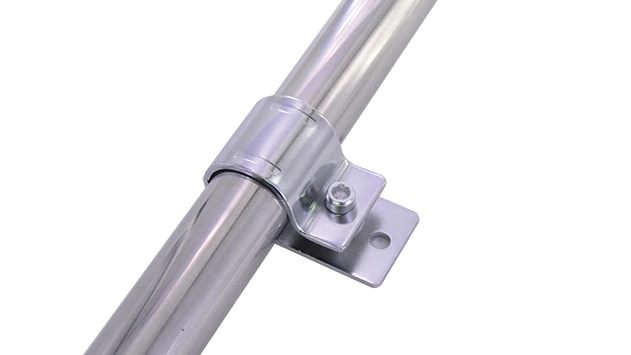
Walk into any modern manufacturing facility today, and you'll likely see a symphony of efficiency: assembly lines humming with precision, materials gliding smoothly along flow racks, and workbenches tailored to every task. Behind this harmony lies a quiet hero of lean manufacturing: the lean pipe system. At its heart? The unassuming yet critical lean pipe clamp chrome—a component that has undergone a remarkable transformation from its humble beginnings to become a cornerstone of modern production. Let's journey through time to explore how this small but mighty tool has shaped the way we build, adapt, and innovate in factories around the world.
The Roots of Lean: Why Manufacturing Needed a Better Way
Before we dive into clamps and pipes, let's step back to understand the "why" behind it all. The story of lean manufacturing begins in the aftermath of World War II, when global industries were grappling with the need to produce more with less. Factories were bloated with waste—excess inventory, inefficient workflows, and rigid systems that couldn't adapt to changing demands. It was in this context that the Toyota Production System (TPS) emerged, pioneered by engineers like Taiichi Ohno, who sought to eliminate waste ("muda") and prioritize value for the customer.
Central to TPS was the idea of flexibility. Traditional manufacturing relied on heavy, fixed machinery that took weeks to reconfigure. Ohno and his team realized that to stay competitive, factories needed tools that could evolve with production needs—tools that were lightweight, modular, and easy to adjust. Enter the first lean pipe systems: simple steel pipes and basic joints cobbled together to create workstations, material racks, and assembly lines that could be rearranged in hours, not months.
Fun Fact: Early lean pipe systems were often called "Toyota pipes" because of their origins in TPS. Workers would repurpose galvanized steel pipes—similar to those used in plumbing—and basic connectors to build temporary structures, proving that innovation often starts with resourcefulness.
The Early Days: Traditional Lean Pipe Clamps and Their Shortcomings
In the 1950s and 1960s, the first lean pipe systems were functional but far from perfect. The star of the show was the lean pipe joint—a simple connector that held pipes together to form structures. But the real workhorse? The clamp that secured these joints in place. Early clamps were made from uncoated steel, designed to tighten around pipes with a basic screw mechanism. They got the job done, but not without frustrations.
Imagine a factory worker in 1965, tasked with reconfiguring a material rack to accommodate a new product line. They grab a wrench and start loosening the steel clamps holding the pipes together. The metal is cold and rough, and after a few turns, the screw strips—corroded from exposure to oil and coolant on the factory floor. The clamp itself is rusted, leaving red streaks on the worker's gloves. Even when they manage to adjust it, the clamp never feels tight enough; by the end of the shift, the rack has wobbled, and a box of parts crashes to the floor. Sound familiar? This was the reality of traditional clamps.
These early clamps had three major flaws:
- Corrosion: Uncoated steel is prone to rust, especially in damp or chemical-heavy environments like automotive plants. Rust weakened the clamp's grip and shortened its lifespan.
- Poor Adjustability: The screws were often imprecise, making it hard to get a consistent tightness. Over-tighten, and you risked damaging the pipe; under-tighten, and the structure wobbled.
- Lack of Durability: The steel was prone to bending or warping under heavy loads, meaning clamps needed frequent replacement.
As manufacturing evolved, these limitations became impossible to ignore. Factories were producing more complex products, and downtime from faulty clamps was costing companies thousands. The industry needed a better clamp—one that could keep up with the pace of lean manufacturing.

Chrome to the Rescue: The Rise of Lean Pipe Clamp Chrome
By the 1980s, manufacturers began experimenting with ways to improve clamp durability and performance. The solution? Chrome plating. Chrome—short for chromium—offered a sleek, protective layer that transformed the humble steel clamp into a workhorse. But why chrome? Let's break it down.
Why Chrome Plating?
Chromium is a naturally occurring metal known for its resistance to corrosion and wear. When applied as a thin layer (via electroplating) to steel clamps, it acts as a shield, preventing rust and reducing friction. For factory workers, this meant clamps that were smoother to adjust, longer-lasting, and easier to clean. No more rust stains on gloves, no more seized screws—just a clamp that worked, shift after shift.
The electroplating process itself is a marvel of engineering. First, the steel clamp is cleaned to remove dirt, oil, and rust. It's then dipped in a bath of chromium sulfate solution, with an electric current passing through to deposit chromium ions onto the steel surface. The result? A mirror-like finish that's just 0.0005 to 0.002 inches thick but tough enough to withstand years of use.
Beyond Durability: The Aesthetic and Ergonomic Benefits
Chrome-plated clamps didn't just perform better—they looked better, too. The shiny, uniform finish gave lean pipe systems a more professional appearance, which mattered as factories began opening their doors to clients and investors. But the benefits went beyond aesthetics. The smooth surface of chrome reduced friction, making it easier for workers to tighten or loosen clamps with less effort. This might seem like a small detail, but over a 12-hour shift, less strain on hands and wrists translates to happier, more productive employees.
Take Maria, a line supervisor at an electronics factory in the 1990s. She remembers switching from traditional steel clamps to chrome-plated ones: "Before, adjusting a workstation would take two people—one to hold the pipe, one to wrestle with the clamp. With chrome, one person could do it in half the time. The clamps didn't stick, the screws didn't strip, and we spent less time fixing wobbling racks and more time making products. It was a game-changer."
Material Evolution: From Steel to Aluminum Lean Pipe
As chrome-plated clamps solved the durability problem, another innovation was on the horizon: aluminum lean pipe. By the early 2000s, manufacturers began replacing steel pipes with aluminum, and the combination of aluminum pipes and chrome clamps proved to be a match made in lean heaven.
Aluminum offered three key advantages over steel:
- Lightweight: Aluminum is 60% lighter than steel, making structures easier to move and reconfigure. A worker could now rearrange a workstation alone, without needing a forklift or extra help.
- Corrosion Resistance: Unlike steel, aluminum naturally forms a protective oxide layer, so it resists rust even without plating. This made it ideal for cleanrooms, food processing plants, and outdoor applications.
- Strength-to-Weight Ratio: Despite being lighter, aluminum is surprisingly strong. Modern aluminum lean pipes can support heavy loads—up to 500 pounds per linear foot—without bending or warping.
The introduction of aluminum lean pipe didn't replace chrome clamps; instead, it elevated them. Chrome-plated clamps, with their smooth, corrosion-resistant finish, paired perfectly with aluminum pipes. The combination created systems that were not only durable but also incredibly flexible. Want to build a flow rack for small parts? Use aluminum pipes and chrome clamps. Need an ESD workbench for electronics assembly? Aluminum's conductivity (when paired with ESD-safe accessories) and chrome clamps' stability made it possible.
Real-World Impact: A 2018 study by the Manufacturing Technology Insights found that factories using aluminum lean pipe and chrome clamps reported a 35% reduction in workstation reconfiguration time and a 20% decrease in tool replacement costs compared to traditional steel systems. That's more time spent producing, less time fixing.
Modern Applications: How Chrome Clamps Power Today's Factories
Today, lean pipe clamp chrome isn't just a component—it's a linchpin of modern manufacturing. Let's look at two key applications where chrome clamps shine: flow racks and ESD workbenches.
Flow Racks: Keeping Materials Moving
Flow racks are a staple in warehouses and factories, designed to use gravity to move materials from the back to the front, ensuring first-in, first-out (FIFO) inventory management. They're essential for reducing waste—no more searching for parts or overstocking shelves. But a flow rack is only as good as its structure, and that's where chrome clamps come in.
A typical flow rack is built with aluminum lean pipes, roller tracks, and chrome clamps. The clamps secure the roller tracks to the frame, ensuring they're angled correctly for smooth material flow. Unlike traditional clamps, chrome-plated versions won't loosen over time, even with constant vibration from rolling boxes. This stability is critical—imagine a flow rack where the tracks shift, causing boxes to jam. That's downtime, and in manufacturing, downtime is money.
John, a warehouse manager at a automotive parts supplier, explains: "We run three shifts a day, and our flow racks never stop. Five years ago, we used steel clamps, and we'd have to tighten them every week. Now, with chrome clamps on aluminum pipes, I can't remember the last time a track jammed. It's one less thing to worry about, and that lets my team focus on getting parts to the line on time."
ESD Workbenches: Protecting Sensitive Electronics
In electronics manufacturing, static electricity is the enemy. A single electrostatic discharge (ESD) can fry a microchip, costing hundreds of dollars. That's why ESD workbenches—designed to dissipate static—are non-negotiable. And again, chrome clamps play a vital role here.
An ESD workbench is built with conductive materials, including aluminum lean pipes, which help channel static away from sensitive components. The clamps that hold the bench together must be both stable and non-corrosive—chrome-plated clamps fit the bill perfectly. Their smooth surface won't scratch the aluminum pipes (which could compromise conductivity), and their durability ensures the bench remains level and secure, even when workers are leaning on it or placing heavy equipment.
Sarah, an electronics assembler, describes her experience: "I build circuit boards for medical devices, and precision is everything. My ESD workbench has to stay steady—if it wobbles, I could misplace a component. The chrome clamps on the frame never loosen, even when I'm using power tools. And because they're easy to clean, I don't have to worry about dust or debris building up, which is crucial for keeping our cleanroom compliant."
The Lean Pipe Joint: A Partner in Evolution
No discussion of lean pipe clamp chrome is complete without mentioning its sidekick: the lean pipe joint. Over the years, clamps and joints have evolved in tandem, each pushing the other to be better. Early joints were basic T-shaped or L-shaped connectors, but today's joints are marvels of engineering—swivel, multi-angle, and quick-release designs that work seamlessly with chrome clamps.
Modern lean pipe joints are designed for modularity. Want to build a workstation with a 45-degree angle? Use a multi-angle joint and a chrome clamp to lock it in place. Need to add a shelf halfway up a rack? A parallel joint and clamp make it possible in minutes. This modularity is what makes lean pipe systems so powerful—they're not just tools, but blank canvases for innovation.
The synergy between chrome clamps and modern joints is evident in every adjustment. A worker can loosen a clamp, rotate a joint to a new position, and retighten—all in under a minute. No welding, no drilling, no specialized tools. It's this speed and flexibility that allows factories to pivot quickly, whether they're ramping up production for the holidays or shifting to a new product line.
Looking Ahead: The Future of Lean Pipe Clamp Chrome
As manufacturing marches into the era of Industry 4.0—smart factories, IoT integration, and AI-driven efficiency—the humble lean pipe clamp chrome is evolving once again. What does the future hold?
Smart Clamps for Smart Factories
Imagine a clamp with a built-in sensor that alerts maintenance when it's starting to loosen. Or one that tracks how often it's adjusted, helping managers identify which workstations need redesigning for better efficiency. These aren't just pipe dreams (pun intended)—companies are already experimenting with "smart" clamps that integrate with factory management systems, providing real-time data on equipment health.
Sustainable Materials
As sustainability becomes a priority, manufacturers are exploring eco-friendly alternatives to traditional chrome plating. One promising development is trivalent chrome plating, which uses less toxic chemicals than the hexavalent chrome used in the past. This reduces environmental impact without sacrificing performance—a win-win for factories and the planet.
Lightweight, High-Strength Alloys
While aluminum lean pipe is already lightweight, researchers are developing new alloys that are even stronger and lighter. Pair these with advanced chrome-plated clamps, and we could see lean pipe systems that are 30% lighter than today's models, making them even easier to reconfigure.
Conclusion: The Clamp That Changed Manufacturing
From its humble beginnings as a rusty steel clamp to its current status as a chrome-plated workhorse, the lean pipe clamp has come a long way. It's a testament to the power of incremental innovation—small improvements that add up to transformative change. Today, in factories around the world, chrome clamps work tirelessly, holding together flow racks, ESD workbenches, and assembly lines that produce everything from cars to medical devices.
But perhaps the greatest legacy of the lean pipe clamp chrome is the freedom it gives workers and manufacturers. It's a tool that says, "You don't have to accept the status quo. You can adapt, innovate, and build something better." In a world where change is constant, that's more valuable than any chrome finish.
So the next time you walk through a factory, take a moment to look at the lean pipe systems around you. Notice the shiny clamps holding it all together. They may be small, but they're a big reason we can build smarter, faster, and more efficiently than ever before.
| Feature | Traditional Steel Clamps (1950s-1980s) | Modern Chrome-Plated Clamps (2000s-Present) |
|---|---|---|
| Material | Uncoated steel | Chrome-plated steel (often paired with aluminum pipes) |
| Corrosion Resistance | Poor—prone to rust | Excellent—chrome layer prevents rust and wear |
| Adjustability | Difficult—screws often stripped or seized | Easy—smooth surface reduces friction; precise tightening |
| Durability | Low—prone to bending/warping under load | High—resistant to wear and impact |
| Applications | Basic racks and workstations | Flow racks, ESD workbenches, complex assembly lines |