- Company Articles
- Products and Technology
- Technology Sharing
- The Future of 85 Staggered Roller Track in Smart Factories

The Future of 85 Staggered Roller Track in Smart Factories
Related Product
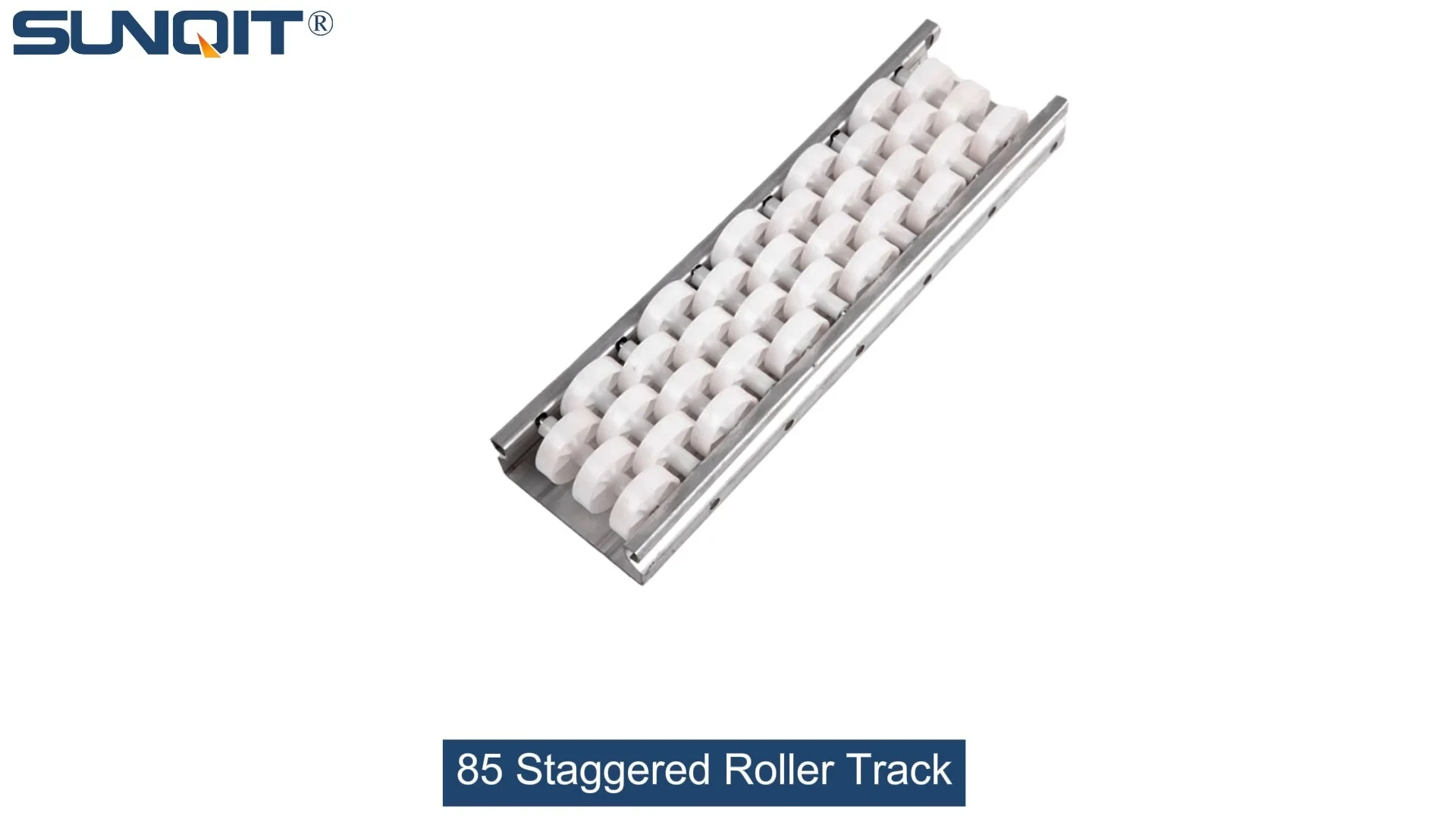
85 Staggered Roller Track
Triple staggered roller track is designed to enhance carton flow in various applications, such as flow racks and carton flow systems. This triple-staggered roller track is ideal for bins, boxes, or products that require smoother, more efficient rolling.
In the bustling heart of modern manufacturing, where every second counts and precision is non-negotiable, the flow of materials isn't just a logistical detail—it's the lifeblood of productivity. As smart factories evolve, driven by Industry 4.0 and the relentless pursuit of leaner operations, one component has quietly emerged as a unsung hero of seamless material handling: the 85 staggered roller track. More than just a conveyor accessory, it's a bridge between traditional efficiency and future-ready flexibility, reshaping how industries from 3C assembly to medical device manufacturing move, sort, and process components. Let's dive into why this unassuming yet innovative tool is poised to redefine the future of smart factory workflows.
What Makes 85 Staggered Roller Track Unique?
At first glance, roller tracks might seem like simple hardware—but the 85 staggered roller track stands out for its thoughtful engineering. Unlike standard linear roller tracks, its "staggered" design places rollers in offset rows, creating a gentle, continuous flow that minimizes jams and ensures smooth movement even for irregularly shaped items. The "85" refers to its optimized width, balancing stability for larger components with compactness for tight workstation setups. Crafted from durable steel or aluminum, it's built to withstand the daily grind of high-volume production lines, while its modular design means it can be easily adjusted, extended, or reconfigured as production needs change.
But what truly sets it apart is its synergy with lean principles. In a world where "sustainable improvement" isn't just a buzzword but a business imperative, the 85 staggered roller track embodies the lean system ethos: it's reusable, adaptable, and designed to eliminate waste. Whether paired with flow racks for parts storage or integrated into conveyor systems for line-side delivery, it turns static workspaces into dynamic, responsive ecosystems where materials move exactly when and where they're needed.
Why Smart Factories Are Embracing It: Key Advantages
| Advantage | Impact on Smart Factories |
|---|---|
| Staggered Roller Design | Reduces friction and jams, cutting downtime by up to 25% in high-speed lines. |
| Modular Flexibility | Easily reconfigured for new product lines—no need for full system overhauls. |
| Durable Materials | Withstands heavy loads (up to 50kg/m) and corrosive environments, extending lifespan by 3+ years. |
| Energy Efficiency | Gravity-driven (no power needed for basic flow), lowering energy costs in lean setups. |
| Seamless Integration | Works with lean pipe workbenches , ESD stations, and automated conveyors for end-to-end workflow harmony. |
Take, for example, a leading 3C manufacturer in Shenzhen. Faced with frequent product updates (common in smartphone assembly), their old fixed conveyor system required weeks of retooling for new models. After switching to 85 staggered roller tracks paired with adjustable flow racks , they reduced reconfiguration time to just 2 days—saving over 1,200 production hours annually. "It's like having a material handling system that speaks our language," their production manager noted. "We don't build lines around equipment anymore; the equipment adapts to our lines."

Industry Spotlight: Where It's Making the Biggest Impact
The true test of any smart factory tool is its versatility across industries. Here's how the 85 staggered roller track is transforming workflows in key sectors:
3C Assembly: Speed Meets Precision
In 3C (computers, communications, consumer electronics) manufacturing, where components are small, delicate, and produced in massive volumes, precision handling is critical. The 85 staggered roller track excels here by providing controlled, vibration-free movement—essential for sensitive PCBs or tiny smartphone parts. Paired with ESD workbenches, it ensures electrostatic safety while keeping assembly lines fed with components exactly when operators need them. One electronics giant reported a 15% boost in line throughput after integrating it with their lean pipe workbench setups, as workers spent less time retrieving parts and more time assembling.
Medical Device Manufacturing: Compliance and Cleanliness
Medical device production demands strict adherence to hygiene and regulatory standards. The 85 staggered roller track's smooth, easy-to-clean surface (often stainless steel or powder-coated aluminum) meets FDA and ISO requirements, while its gentle material flow reduces the risk of damaging sterile components like surgical instruments or implant parts. A medical equipment manufacturer in Guangdong recently replaced rigid conveyors with modular roller track systems, allowing them to quickly switch between producing syringes and pacemaker components—all while maintaining Class 8 cleanroom standards.
Automotive Parts: Heavy-Duty Reliability
Automotive plants thrive on high-volume, heavy-part handling, from engine blocks to dashboard assemblies. The 85 staggered roller track's robust steel construction handles these loads with ease, while its staggered design prevents jamming even when moving oily or greasy parts. Integrated with automated conveyor systems, it creates a seamless flow from warehousing to assembly lines, reducing the need for manual material transport. One automotive supplier noted a 30% drop in workplace injuries after installing roller track-guided material lanes, as workers no longer had to lift or push heavy bins.

Beyond Standalone Use: Synergy with Lean Systems
The 85 staggered roller track doesn't work in isolation—it's a linchpin in a broader lean system ecosystem. When combined with complementary tools, its impact multiplies:
- Flow Racks: Mounted at the heart of flow racks, the roller track turns static storage into dynamic "pick-to-light" systems. Parts glide forward as they're used, ensuring first-in-first-out (FIFO) inventory management and reducing stockouts.
- Lean Pipe Workbenches: Integrated into workbench setups (like the popular Workbench E), it creates a "U-shaped" workflow where components arrive at the operator's fingertips, minimizing movement and boosting focus.
- Turnover Trolleys: When paired with mobile trolleys, roller tracks enable easy loading/unloading between stations, turning batch transport into continuous flow.
- Custom Solutions: For unique needs—like medical device cleanrooms or 3C micro-assembly—suppliers can design hybrid systems that combine 85 staggered roller tracks with aluminum profiles, adjustable guides, and ESD-safe materials. These tailored setups embody the "reusable, sustainable improvement" lean philosophy, as they can be repurposed when product lines change.
Consider a case study from a major manufacturer: They wanted to reduce changeover time between producing refrigerators and washing machines. By integrating 85 staggered roller tracks with modular flow racks and adjustable aluminum guide rails, they created a flexible line that could switch between product types in under an hour—down from 4 hours with their old fixed conveyor system. The key? The roller track's ability to adapt to different part sizes and weights without requiring tooling changes.

Future Trends: How 85 Staggered Roller Track Will Evolve
As smart factories grow more connected and data-driven, the 85 staggered roller track is set to evolve beyond mechanical efficiency into a "smart" component itself. Here's what we can expect:
IoT Integration: Predictive Maintenance
Imagine roller tracks embedded with sensors that monitor roller speed, temperature, and vibration in real time. Paired with factory IoT platforms, this data could predict when a roller might jam or wear out, triggering maintenance alerts before downtime occurs. Early prototypes already exist in pilot smart factories, and widespread adoption could reduce unplanned downtime by up to 40%.
Sustainability: Eco-Friendly Materials
With global manufacturing shifting toward carbon neutrality, suppliers are exploring recycled steel and aluminum for roller track production, as well as biodegradable lubricants for smoother operation. Some are even testing modular designs that use 30% less material without sacrificing strength—aligning with the "circular economy" goals of forward-thinking brands.
AI-Driven Routing
In hyper-connected factories, AI algorithms could optimize material flow by adjusting roller track speeds or diverting parts to less congested lines in real time. For example, if a sudden surge in smartphone orders hits a 3C plant, AI could reroute components via alternate roller track lanes to prevent bottlenecks—all without human intervention.
Why Choose the Right Supplier Matters
Not all roller tracks are created equal. To unlock the full potential of 85 staggered roller track, partnering with a supplier that understands both lean principles and smart factory needs is crucial. Look for providers that offer:
- Customization: The ability to tailor roller track length, material, and accessories (like side guides or ESD coatings) to your specific industry.
- Modular Expertise: Experience integrating roller tracks with lean pipe systems , workbenches, and conveyors for end-to-end workflow solutions.
- Durability Testing: Products validated for 100,000+ cycles of use to ensure long-term reliability.
- Sustainability Commitment: Use of recycled materials or energy-efficient production processes to align with your green manufacturing goals.
A trusted supplier doesn't just sell hardware—they become a partner in your lean journey, helping you adapt and grow as smart factory technologies advance.
Conclusion: The Quiet Revolution in Smart Factories
In the grand narrative of Industry 4.0, it's easy to focus on flashy technologies like robots or AI. But the future of smart manufacturing lies in the details—the tools that make the "smart" possible. The 85 staggered roller track is one such detail: unassuming, yet indispensable. It's a testament to the power of lean thinking—proving that sometimes, the most impactful innovations are the ones that make complex processes simpler, more flexible, and more human-centric.
As factories continue to evolve, the 85 staggered roller track won't just keep up—it will lead the way, turning static production lines into dynamic, adaptable ecosystems where materials flow as smoothly as ideas. For manufacturers ready to embrace the future, it's not just a purchase; it's an investment in a more efficient, sustainable, and successful tomorrow.