- Company Articles
- Products and Technology
- Technology Sharing
- The Future of Adjustable Leveling Feet: Smart Sensors for Real-Time Stability Monitoring

The Future of Adjustable Leveling Feet: Smart Sensors for Real-Time Stability Monitoring
Related Product
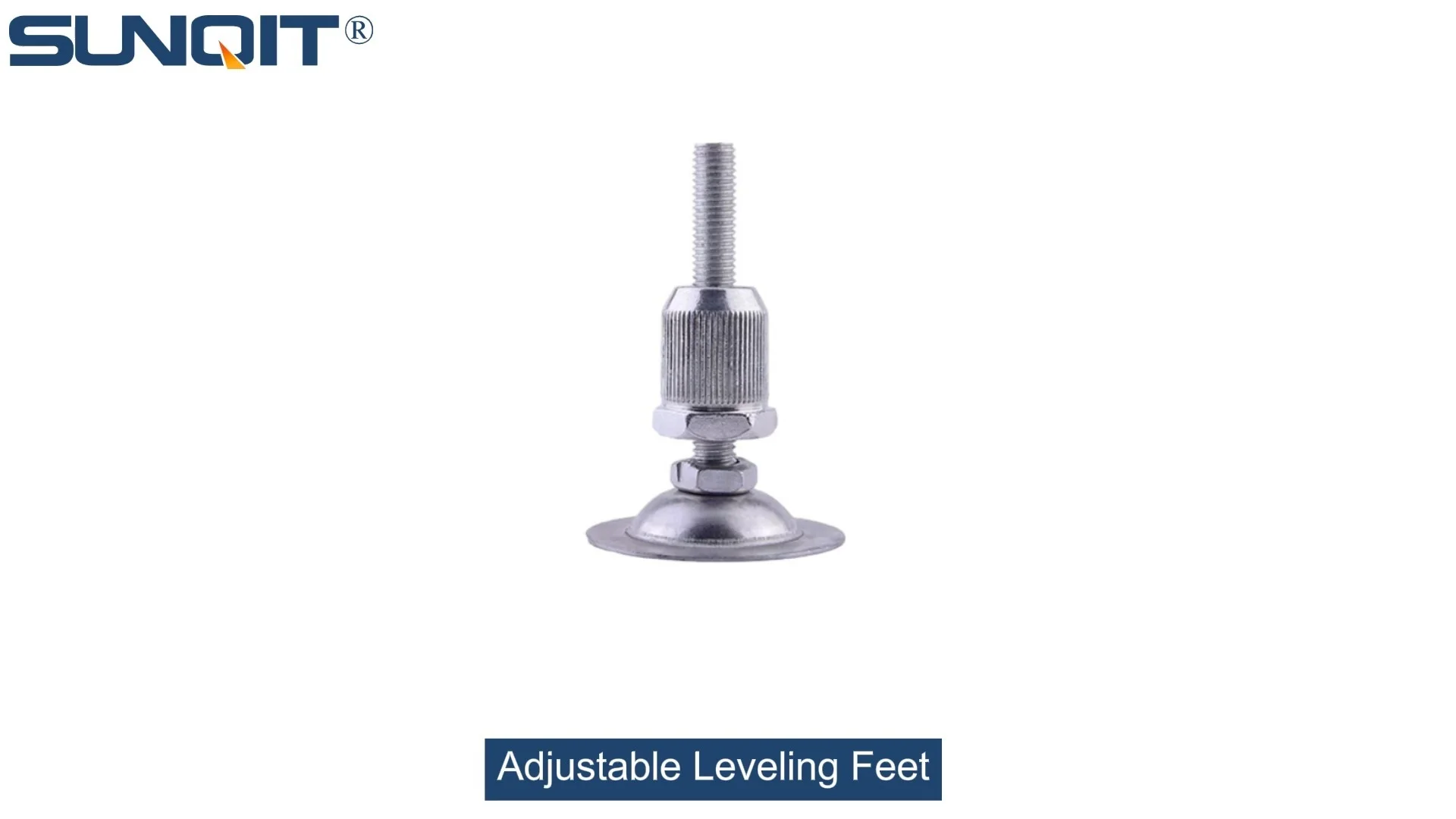
Adjustable Leveling Feet
Adjustable leveling feet are designed to keep machines level when placed on uneven or sloped ground. Otherwise known as adjustable equipment feet, they are available to order in a wide variety of size and load capacity combinations.
Stability: The Unsung Hero of Industrial Efficiency
In the hum of a busy factory, where conveyor belts whir and assembly lines pulse with precision, there's a silent foundation keeping everything on track: stability. It's the quiet assurance that a workbench won't wobble mid-assembly, that a material rack won't shift under the weight of components, and that every piece of equipment stays anchored exactly where it needs to be. Yet, for decades, this critical element has relied on a surprisingly low-tech solution: the humble leveling foot. These unassuming components—often little more than threaded bolts with rubber bases—have borne the responsibility of keeping our industrial world balanced. But as manufacturing evolves, driven by lean principles, precision demands, and the rise of smart factories, the question arises: Are traditional leveling feet keeping up?
Walk through any production floor, and you'll spot them: adjustable leveling feet peeking out from under workbenches, supporting heavy machinery, and stabilizing everything from electronics assembly stations to warehouse racks. Their job seems simple enough: compensate for uneven floors, absorb vibrations, and maintain a steady base. But in reality, they're performing a high-stakes balancing act. A single loose or worn leveling foot can send ripples through an entire operation—misaligned parts, scrapped products, even safety hazards. For workers hunched over a lean pipe workbench, carefully fitting tiny circuit boards, a wobbly surface isn't just an annoyance; it's a threat to quality and efficiency.
The problem? Traditional adjustable leveling feet are passive. They rely on manual checks, periodic inspections, and reactive adjustments. A maintenance worker might notice a workbench during a routine walkthrough, kneel down, and twist the foot to tighten it—but by then, how many defective parts have already rolled off the line? How much time has been wasted on rework? In the age of real-time data and predictive analytics, this "wait and see" approach feels increasingly outdated. What if our leveling feet could do more than just adjust? What if they could communicate —alerting us to instability before it becomes a problem, and even predicting when maintenance is needed?
The Limitations of Traditional Adjustable Leveling Feet
To understand why change is necessary, let's first examine the status quo. Traditional adjustable leveling feet, including variants like anti-slip adjustable leveling feet, are designed around a basic mechanical principle: a threaded stem allows height adjustment, while a base (often rubber or plastic) provides grip. They're affordable, easy to install, and have served industries well for generations. But in today's fast-paced manufacturing environments, their shortcomings are becoming impossible to ignore.
The Hidden Costs of "Good Enough" Stability
Consider a typical scenario in an electronics plant. A lean pipe workbench, used for assembling smartphone components, is outfitted with standard adjustable leveling feet. Over time, the constant vibration from nearby machinery loosens one of the feet. At first, the wobble is barely noticeable—maybe a worker dismisses it as a minor annoyance. But as the days pass, the instability grows. Tiny misalignments creep into the assembly process: a solder joint is off by a fraction of a millimeter, a connector isn't seated properly, a screen is tilted during bonding. By the time the issue is flagged, hundreds of units have to be reworked or discarded. The cost? Not just materials, but labor, missed deadlines, and strained quality metrics.
Then there's the matter of safety. A heavy material rack, loaded with metal parts, on adjustable feet to stay upright. If one foot fails—due to corrosion, wear, or improper adjustment—the rack could tip, endangering workers and causing costly downtime. Even in less extreme cases, uneven workbenches force employees into awkward postures, leading to fatigue and long-term ergonomic injuries. These are the hidden costs of relying on passive stability solutions: they don't prevent problems—they only react to them, often too late.
Manual Maintenance: A Game of Cat and Mouse
Maintaining traditional leveling feet is a labor-intensive process. In large facilities, technicians might spend hours each week inspecting workbenches, racks, and machinery—kneeling, checking for wobbles, tightening stems, and replacing worn bases. This isn't just time-consuming; it's inefficient. A technician might adjust a foot on Monday, only for vibrations to loosen it again by Wednesday. Worse, inspections are subjective: what feels "stable enough" to one person might be borderline unstable to another. There's no standardized data, no way to track trends, and no early warning system for developing issues.
For companies embracing lean manufacturing, this inefficiency is a direct contradiction of core principles. Lean systems thrive on eliminating waste—whether it's time, materials, or labor. Manual leveling foot maintenance is wasteful by design: it's reactive, inconsistent, and prone to human error. What if we could flip the script? What if our leveling feet could tell us when they need attention, rather than waiting for us to notice?

From Passive to Proactive: The Rise of Smart Adjustable Leveling Feet
Enter the next generation of adjustable leveling feet: smart sensors integrated directly into the heart of these critical components. Imagine a leveling foot that doesn't just provide stability, but monitors it in real time. A foot that can detect even the smallest shifts in tilt, measure weight distribution, and wirelessly transmit data to a central dashboard. This isn't science fiction—it's the future of industrial stability, and it's already beginning to take shape.
What Makes a "Smart" Leveling Foot?
At its core, a smart adjustable leveling foot combines the tried-and-true mechanical design of traditional feet with cutting-edge sensor technology. Here's how it works: embedded within the foot's housing (often constructed from durable materials like reinforced plastic or stainless steel) are tiny sensors—tilt sensors to measure angle changes, pressure sensors to monitor weight distribution, and sometimes even vibration sensors to detect abnormal movement. These sensors connect to a low-power microprocessor, which processes the data and sends it via Bluetooth or Wi-Fi to a cloud-based platform or on-site control system.
The result? A constant stream of actionable insights. Managers can log into a dashboard and see, at a glance, the stability status of every workbench, rack, or machine in the facility. Red alerts flash for feet showing excessive tilt; yellow warnings flag those with increasing vibration levels; green lights confirm stable operation. No more guesswork, no more manual inspections—just data-driven stability management.
Bridging the Gap with Anti-Slip Adjustable Leveling Feet
Of course, smart sensors alone aren't enough. The physical design of the leveling foot still matters. That's why many smart feet build on the success of anti-slip adjustable leveling feet, which feature textured or rubberized bases to prevent sliding. By combining anti-slip technology with sensors, manufacturers ensure that the foot not only reports instability but also resists it. For example, a smart foot might detect that it's beginning to slide and trigger an alert before the movement affects the workbench above. This dual functionality—prevention and detection—makes smart feet a powerful upgrade over traditional models.

The Benefits: Beyond Stability
The value of smart adjustable leveling feet extends far beyond just keeping things steady. They're a catalyst for broader improvements in efficiency, safety, and operational visibility. Let's break down the key advantages:
Real-Time Monitoring: Stability at Your Fingertips
In a large manufacturing plant with hundreds of workbenches and racks, tracking stability manually is impossible. Smart feet change that by providing real-time data on every connected component. For example, during a night shift, a sudden temperature drop might cause a concrete floor to contract, loosening a leveling foot on an aluminum profile workbench. Within seconds, the sensor detects the tilt, sends an alert to the maintenance team's phones, and logs the event in the system. By the time the morning shift arrives, the issue is already fixed—no defective products, no downtime, no safety risks.
This level of visibility is transformative. It turns stability from an abstract concept into a measurable metric, allowing managers to optimize workflows based on actual data. Need to rearrange a production line? Check the stability history of each workbench to identify which ones are most resilient to movement. Planning a preventive maintenance schedule? Prioritize feet that show consistent vibration patterns, indicating potential wear.
Predictive Maintenance: Fixing Problems Before They Happen
Perhaps the most game-changing benefit of smart leveling feet is predictive maintenance. Traditional feet fail unexpectedly; smart feet predict failure. By analyzing trends in sensor data—such as increasing vibration, gradual loss of grip, or repeated adjustments—algorithms can forecast when a foot is likely to wear out or loosen. This allows maintenance teams to replace or repair the foot during scheduled downtime, avoiding unplanned disruptions.
Consider a lean pipe workbench in an automotive parts plant. The smart feet on the bench have been collecting data for six months. The system notices that one foot's tilt angle has been slowly increasing by 0.5 degrees per week—a sign that the internal threads are wearing down. Instead of waiting for the foot to fail, the maintenance team is notified to replace it during the next scheduled shutdown. This proactive approach reduces downtime by up to 50% in some cases, according to industry studies.
Integration with Lean Systems: Aligning with Efficiency Goals
For companies using lean manufacturing principles, smart leveling feet are a natural fit. Lean systems aim to eliminate waste, streamline processes, and maximize value—and instability is a hidden source of waste. By preventing defects, reducing rework, and minimizing maintenance time, smart feet directly support these goals. They also integrate seamlessly with other lean tools, such as 5S (Sort, Set in Order, Shine, Standardize, Sustain). A stable, well-monitored workbench is easier to keep organized (Set in Order), cleaner (Shine), and consistent (Standardize)—all pillars of 5S.
In one case study, a electronics manufacturer using lean pipe workbenches reported a 15% reduction in production waste after installing smart leveling feet. The sensors identified instability issues that were causing parts to misalign during assembly, leading to rework. By fixing these issues proactively, the company saved over $100,000 annually in material costs alone.
Safety: Protecting Workers and Assets
Stability and safety are inseparable. An unstable workbench or rack is an accident waiting to happen. Smart leveling feet mitigate this risk by alerting teams to potential hazards before they escalate. For example, a sensor detecting a sudden 2-degree tilt in a heavy material rack would immediately trigger an alarm, prompting workers to evacuate the area and secure the rack. This not only prevents injuries but also protects expensive equipment and inventory.
Additionally, smart feet can help with ergonomic improvements. By tracking how often a workbench requires adjustment, managers can identify floors that are uneven or machinery that generates excessive vibration—issues that might otherwise go unnoticed. Addressing these root causes leads to a more comfortable, safer work environment for employees.

Applications: Where Smart Feet Shine
Smart adjustable leveling feet aren't limited to one industry or use case. Their versatility makes them valuable in any setting where stability matters. Here are a few key applications:
Lean Pipe Workbenches: The Backbone of Lean Manufacturing
Lean pipe workbenches are a staple of lean manufacturing, prized for their flexibility and modularity. They're used in everything from electronics assembly to packaging lines, where precision and efficiency are critical. Smart leveling feet enhance these workbenches by ensuring they remain stable even as layouts change. For example, a workbench might be reconfigured weekly to accommodate new products; smart feet automatically adjust and report their stability status, ensuring the new setup is safe and efficient.
Aluminum Profile Workstations: Lightweight, Strong, and Stable
Aluminum profile workstations are popular for their lightweight yet durable construction, making them ideal for industries like aerospace and medical device manufacturing. However, their light weight can make them more susceptible to vibration and instability. Smart leveling feet counteract this by providing constant monitoring and anti-slip grip. In a medical device lab, where even a tiny wobble can ruin a batch of precision tools, smart feet ensure that aluminum profile workbenches remain rock-solid.
Heavy Machinery and Material Racks
Beyond workbenches, smart feet are invaluable for heavy machinery and material racks. A metal stamping press, for example, generates intense vibrations that can loosen traditional leveling feet over time. Smart feet with vibration sensors can detect when the press is operating outside its normal stability range, alerting technicians to check for loose bolts or worn components. Similarly, high-rise material racks, loaded with pallets of goods, rely on smart feet to prevent tipping—sensors can detect uneven weight distribution and trigger alerts before the rack becomes unstable.
Traditional vs. Smart: A Comparison
To better understand the gap between traditional and smart adjustable leveling feet, let's compare them side by side:
| Feature | Traditional Adjustable Leveling Feet | Smart Sensor-Equipped Leveling Feet |
|---|---|---|
| Stability Monitoring | Manual inspection only; no real-time data | Continuous, real-time monitoring via sensors |
| Maintenance | Reactive (fixes after failure); manual checks | Predictive (alerts before failure); data-driven scheduling |
| Safety | Relies on worker vigilance; risk of unexpected failure | Proactive alerts for instability; reduces accident risk |
| Integration with Lean Systems | Minimal; stability is not a measurable metric | Seamless; stability data optimizes lean workflows |
| Cost Over Time | Low upfront cost, but high hidden costs (downtime, defects) | Higher upfront cost, but lower long-term costs (reduced waste, maintenance) |
The Road Ahead: What's Next for Smart Leveling Feet?
As technology advances, smart adjustable leveling feet will only become more capable. Here are a few trends to watch:
AI-Powered Analytics
Future smart feet will leverage artificial intelligence to analyze sensor data more deeply. For example, machine learning algorithms could identify patterns in stability issues that correlate with specific production processes, allowing managers to adjust workflows to reduce stress on leveling feet. AI might even predict how a foot will perform in different environmental conditions—temperature, humidity, floor type—enabling customized recommendations for each location.
Self-Adjusting Capabilities
Imagine a leveling foot that not only detects instability but also fixes it automatically. This is the next frontier: smart feet with built-in actuators that can adjust their height or grip in real time. For example, if a sensor detects a tilt, the foot could extend or retract its stem to level the workbench without human intervention. While this technology is still in development, it has the potential to eliminate manual adjustments entirely.
Integration with Industry 4.0
Industry 4.0—the fourth industrial revolution—focuses on connecting physical systems with digital technologies. Smart leveling feet will play a key role in this ecosystem by feeding stability data into broader manufacturing execution systems (MES) or enterprise resource planning (ERP) platforms. This integration will allow for end-to-end visibility: a single dashboard could show how stability issues on a workbench impact production times, defect rates, and maintenance costs across the entire facility.
Conclusion: Stability Reimagined
Adjustable leveling feet have long been the unsung heroes of industrial stability, but their time as passive components is ending. Smart sensors are transforming these humble parts into active participants in the manufacturing process—providing real-time data, predicting failures, and enhancing safety. For companies embracing lean principles, precision manufacturing, or Industry 4.0, smart feet aren't just an upgrade—they're a necessity.
From the lean pipe workbench on the factory floor to the aluminum profile workstation in the lab, smart adjustable leveling feet are redefining what it means to be stable. They're not just keeping things steady—they're keeping operations efficient, workers safe, and businesses competitive in an increasingly fast-paced world. As we look to the future, one thing is clear: the foundation of our industrial world is getting smarter, and the benefits will be felt from the shop floor to the bottom line.
So the next time you walk past a workbench, take a moment to glance at its feet. Chances are, they're not just holding it up—they're watching, learning, and working to make sure tomorrow's manufacturing is more stable, efficient, and innovative than ever before.