- Company Articles
- Products and Technology
- Technology Sharing
- The Future of Aluminum Side Guards: Innovations in Lean Production Design

The Future of Aluminum Side Guards: Innovations in Lean Production Design
Related Product
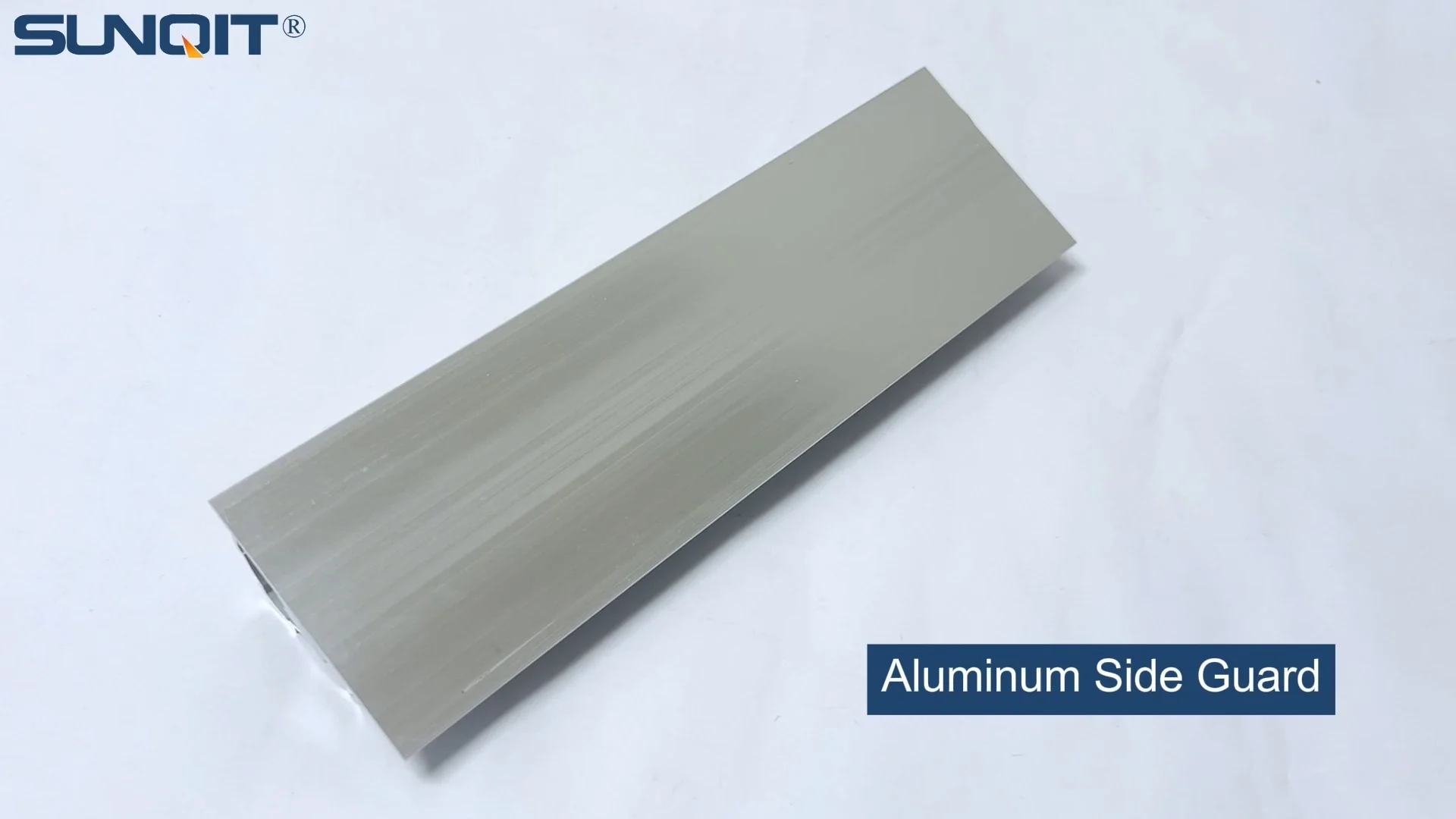
Aluminum Side Guard
Aluminum side guard, it works with a aluminum pipe or a roller track as side guard to prevent material drop,or move to wrong direction.
Walk into any modern manufacturing facility, and you'll notice a quiet revolution happening on the factory floor. It's not the whir of new robots or the flash of cutting-edge software—though those play a role. Instead, it's in the details: the smooth glide of materials along a roller track , the sturdy yet lightweight frame of a workstation, the unassuming barriers that keep parts from slipping or getting damaged. These are the unsung heroes of lean production, and among them, aluminum side guards stand out as a critical piece of the puzzle. But what exactly makes these simple-looking components so essential? And how are they evolving to meet the demands of tomorrow's factories?
Lean production isn't just a buzzword—it's a philosophy built on eliminating waste, streamlining workflows, and empowering workers to do their best. At its core, it's about creating systems that work with people, not against them. And when it comes to material handling, few tools embody this better than aluminum side guards. They're the silent organizers, the protectors, the connectors that turn chaotic piles of parts into a seamless flow. But as factories push for greater efficiency, flexibility, and sustainability, the side guards of yesterday are giving way to smarter, more adaptable designs. Let's dive into how aluminum side guards are reshaping lean production—and why their future matters for anyone who cares about building better, faster, and more human-centered workplaces.
The Backbone of Lean: Why Aluminum Matters
Before we talk about side guards specifically, let's take a step back and ask: why aluminum? For decades, factories relied on steel for structural components. It's strong, durable, and familiar—but it's also heavy, prone to rust, and inflexible. When lean principles started gaining traction in the late 20th century, manufacturers realized that heavy steel frames and rigid workstations were actually creating waste: wasted time moving bulky equipment, wasted effort adjusting fixed structures, wasted space due to inflexible layouts. Enter aluminum. Lightweight yet surprisingly strong, resistant to corrosion, and infinitely customizable, aluminum quickly became the material of choice for lean systems. And at the heart of this shift is the aluminum profile —the modular building block that makes everything from workbenches to side guards possible.
Aluminum profiles are extruded into precise shapes, with grooves (called T-slots) that allow for easy attachment of accessories: brackets, panels, handles, and yes, side guards. This modularity is a game-changer. Unlike steel, which often requires welding or drilling to modify, aluminum profiles let workers reconfigure a workstation or a flow rack in minutes, not hours. Need to adjust the height of a side guard to accommodate taller parts? Swap out a few brackets. Want to add a label holder or a tool hook? Slide it into the T-slot and tighten a screw. This flexibility isn't just convenient—it's essential for lean production, where adaptability can mean the difference between meeting a tight deadline and falling behind.
But aluminum's benefits go beyond modularity. It's also lightweight, which reduces the physical strain on workers. Imagine a team that has to reposition a heavy steel side guard multiple times a day versus one that can lift an aluminum version with one hand. The difference in fatigue, injury risk, and overall morale is stark. And because aluminum doesn't rust, it lasts longer in harsh factory environments—think humid assembly lines or facilities that use water-based cleaning solutions. This durability means fewer replacements, less downtime, and lower long-term costs. When you combine all these factors—lightweight, modular, durable, and corrosion-resistant—it's clear why aluminum has become the backbone of modern lean systems.
Evolution of Aluminum Side Guards: From Basic Barriers to Smart Solutions
Let's rewind to the early days of lean manufacturing. Side guards back then were often afterthoughts: simple steel rails bolted to a frame, or plastic strips that cracked easily under heavy use. They did one job—keep parts on the track—but that was it. If a factory needed to change the width of a roller track or adjust the height of a guard, it meant hours of disassembly, drilling new holes, and hoping the new setup worked. There was little consideration for ergonomics, and even less for adaptability. But as lean principles matured, so did the understanding that every component, no matter how small, should contribute to the system's overall efficiency. That's when aluminum side guards started to evolve.
The first wave of innovation was about replacing steel with aluminum. Suddenly, side guards were lighter, easier to handle, and less likely to damage delicate parts (no more scratches from rough steel edges). But manufacturers didn't stop there. They started to think about the shape of the side guards. Traditional flat rails worked, but why not design profiles that could do more? Today's aluminum side guards often feature rounded edges to prevent snags, channels for routing cables or labels, and even built-in slots for attaching accessories like sensors or LED lights. These small tweaks might seem minor, but they add up: a label slot means workers can quickly identify parts without hunting for a separate sign; rounded edges reduce the risk of cuts or scrapes; cable channels keep wires from tangling in the roller track .
The next leap was modularity. Early aluminum side guards were still fixed in place—you could adjust their position, but only by unbolting and rebolting them. Now, thanks to advancements in aluminum profile accessories, side guards can be adjusted on the fly. Quick-connect joints let workers slide guards up, down, left, or right with a twist of a lever. Some systems even use magnetic attachments for ultra-fast changes. This is a game-changer for factories that handle multiple product lines or frequent design updates. For example, a electronics manufacturer might switch from assembling small circuit boards to larger displays in the same day; with modular side guards, they can adjust their flow rack to fit the new parts in minutes, not hours.
But the most exciting evolution is the shift toward "smart" side guards. Today's manufacturers aren't just asking, "Will this keep parts from falling off?" They're asking, "Can it tell me when a part is stuck?" or "Can it adjust automatically based on the size of the item?" While we're not quite at self-aware side guards (yet), we are seeing integration with sensors and IoT (Internet of Things) technology. Imagine a side guard with built-in pressure sensors that detect when a part is jamming on the roller track and send an alert to a worker's tablet. Or one with RFID tags that track which parts are passing through, feeding data into inventory management systems. These innovations blur the line between "passive barrier" and "active participant" in the production process—and they're just the beginning.

Design Innovations Shaping the Future of Aluminum Side Guards
So, what does the future hold for aluminum side guards? If recent trends are any indication, the answer is: more flexibility, more integration, and more focus on the human element. Let's break down the key design innovations that are driving this evolution.
1. Adaptive Ergonomics: Side Guards That Work for Every Worker
Ergonomics has long been a priority in lean production, but it's often focused on big-ticket items like chairs or lifting equipment. Side guards, however, play a subtle yet critical role in worker comfort. A guard that's too low might force a worker to bend over to retrieve parts; one that's too high could strain their shoulders. Traditional side guards were one-size-fits-all, but the future is about adjustability. New designs feature telescoping aluminum profiles that can be raised or lowered with a simple clamp, or angled to match the natural reach of the worker. Some even have padded edges to reduce fatigue during long shifts. The goal? To create side guards that adapt to people , not the other way around.
2. Sustainability: Green by Design
Sustainability isn't just a trend—it's a business imperative. Factories are under increasing pressure to reduce their carbon footprint, and aluminum side guards are stepping up. Aluminum is 100% recyclable, and many manufacturers now use recycled aluminum in their profiles, cutting down on energy use and raw material waste. But the innovation doesn't stop there. New designs are focused on "right-sizing" materials: using thinner profiles where strength isn't critical, or hollow cores to reduce weight (and material use) without sacrificing durability. Even the finishes are getting greener—water-based coatings and anodization processes that emit fewer VOCs are replacing traditional paints. For factories aiming for LEED certification or simply looking to align with their sustainability goals, these eco-friendly side guards are a win-win.
3. Compatibility: Playing Well with Others
A lean system is only as good as its ability to work as a whole. In the past, side guards from one manufacturer might not fit with a roller track from another, forcing factories into proprietary ecosystems. Today's designs prioritize interoperability. Standardized T-slot sizes, universal brackets, and modular joints mean that a side guard from Supplier A can easily attach to a flow rack from Supplier B. This not only gives factories more choice but also reduces costs by allowing them to mix and match components based on their needs. It's the manufacturing equivalent of using USB-C instead of a dozen different chargers—and it's making lean systems more flexible than ever.
4. Durability 2.0: Beyond "Good Enough"
Aluminum is already durable, but new alloys and treatments are pushing the limits. For example, some manufacturers are using heat-treated aluminum profiles that are 30% stronger than standard versions, making them suitable for heavy-duty applications like automotive part handling. Others are adding ceramic coatings to side guard edges to resist scratches and wear, extending their lifespan even in high-traffic areas. And because aluminum doesn't rust, these guards hold up better than steel in humid or corrosive environments—think food processing plants or coastal factories. The result? Side guards that last longer, need fewer replacements, and keep production running smoothly for years.

Integration with Lean Systems: How Aluminum Side Guards Fit into the Big Picture
Aluminum side guards don't exist in a vacuum—they're part of a larger ecosystem of tools and processes that make lean production tick. To understand their true value, we need to see how they interact with other key components, like flow racks , roller tracks , and workstations. Let's take a closer look at this integration and why it matters.
Consider a typical assembly line for small electronics. Parts start in a flow rack , where they're organized by station. From there, they move along a roller track to the first workstation, then to the next, until the final product is complete. Now, imagine that flow rack without side guards: parts might slide off the edges, getting damaged or lost. The roller track without guards? Parts could veer off course, jamming the line or causing delays. Aluminum side guards act as the "traffic cops" of this system, keeping materials on track and ensuring a steady flow. But their role goes beyond just containment—they also help shape the flow.
For example, adjustable side guards can be used to create "lanes" on a roller track, separating different parts and preventing mix-ups. On a flow rack, they can be positioned to angle parts toward the front, making it easier for workers to grab what they need (a technique called "first-in, first-out," or FIFO, which reduces waste from expired or outdated parts). And because aluminum profiles are compatible with so many accessories, side guards can be outfitted with dividers, bins, or even small shelves, turning a simple rack into a mini storage system. In this way, side guards don't just support lean systems—they enable them.
Another key integration point is with ergonomic workstations. A well-designed workstation should minimize unnecessary movement: tools within arm's reach, parts at eye level, and materials that glide smoothly into place. Aluminum side guards can be extended to create a "buffer zone" around the workstation, keeping parts within easy reach while preventing clutter. They can also be paired with height-adjustable aluminum profiles, allowing workers to raise or lower the entire workstation (side guards included) to match their height. This not only reduces strain but also makes the workstation accessible to workers of all sizes—a critical factor in inclusive, human-centered lean systems.
| Feature | Traditional Side Guards (Steel/Plastic) | Modern Aluminum Side Guards |
|---|---|---|
| Weight | Heavy (often requiring 2+ workers to move) | Lightweight (one worker can adjust or reposition) |
| Customization | Limited (requires drilling, welding, or replacement) | High (modular joints, T-slot accessories, telescoping designs) |
| Durability | Prone to rust (steel) or cracking (plastic) | Corrosion-resistant, scratch-resistant coatings available |
| Integration with Lean Systems | Minimal (fixed design limits workflow flexibility) | High (compatible with flow racks, roller tracks, IoT sensors) |
| Sustainability | Low (steel recycling is energy-intensive; plastic not always recyclable) | High (100% recyclable aluminum, recycled materials used in production) |
Case Study: How Aluminum Side Guards Transformed a Automotive Parts Plant
To put all this into perspective, let's look at a real-world example. A mid-sized automotive parts manufacturer in the Midwest was struggling with inefficiencies in their transmission assembly line. Their old system relied on steel side guards and fixed roller tracks, which meant that every time they switched between transmission models (which happened 3-4 times a week), workers had to spend 2-3 hours reconfiguring the line. Parts frequently fell off the unguarded edges, leading to damage and delays. And the heavy steel guards were causing ergonomic issues—workers reported shoulder and back pain from moving them.
The solution? They invested in a modular aluminum system, including adjustable aluminum side guards, T-slot aluminum profiles, and compatible roller tracks. Here's what happened next:
- Setup time dropped by 75%: Instead of 3 hours, reconfiguring the line for a new model took just 45 minutes, thanks to quick-connect side guard joints and adjustable profiles.
- Part damage decreased by 90%: The rounded edges of the aluminum side guards prevented scratches, and the adjustable height kept even small parts from slipping off the roller track.
- Worker complaints about pain fell by 60%: The lightweight aluminum guards were easy to move, and the ergonomic design reduced strain during long shifts.
- Space utilization improved: Modular side guards allowed the plant to add more lanes to their flow racks without expanding the footprint, increasing capacity by 20%.
This isn't an isolated success story. From electronics factories to food packaging plants, aluminum side guards are proving that even the smallest components can drive big changes in lean production. And as manufacturers continue to prioritize flexibility, sustainability, and worker well-being, we can expect to see more stories like this in the years to come.
Future Trends: What's Next for Aluminum Side Guards?
So, where do we go from here? If the past decade is any guide, the future of aluminum side guards will be defined by three key trends: intelligence, sustainability, and customization.
1. Smart Integration with Industry 4.0: As factories adopt Industry 4.0 technologies—like AI-powered analytics, IoT sensors, and digital twins—aluminum side guards will become more connected. Imagine side guards with built-in cameras that track part flow and alert managers to bottlenecks, or sensors that measure vibration on a roller track to predict maintenance needs before a breakdown occurs. Some manufacturers are even experimenting with "self-healing" coatings that repair minor scratches, extending the guard's lifespan. The goal? To turn side guards from passive barriers into active data collectors that help optimize the entire production system.
2. Circular Economy Design: Sustainability will move beyond using recycled materials to embrace the "circular economy"—designing products that can be reused, repaired, or repurposed instead of thrown away. Future aluminum side guards might feature modular components that can be swapped out individually (instead of replacing the entire guard) when worn, or profiles that can be disassembled and recycled at the end of their life. Some companies are even exploring "lease-a-guard" models, where they retain ownership of the aluminum and refurbish old guards for reuse, reducing waste and costs for customers.
3. Hyper-Customization: With the rise of 3D printing and advanced extrusion techniques, aluminum side guards will become more tailored to specific industries and even specific products. A medical device manufacturer might need ultra-sanitary side guards with smooth, bacteria-resistant surfaces; a furniture factory might want guards with built-in cable management for power tools. 3D printing could allow for on-demand production of custom brackets or accessories, making it possible to create side guards that fit unique workflows perfectly. The days of "one-size-fits-most" are numbered.
Conclusion: Aluminum Side Guards—Small Parts, Big Impact
At first glance, aluminum side guards might seem like trivial components in the grand scheme of manufacturing. But as we've explored, they're anything but. They're the glue that holds lean systems together, the protectors of materials, the enablers of flexibility, and the silent partners in worker productivity. From their humble beginnings as steel rails to their future as smart, sustainable, and hyper-customized tools, aluminum side guards reflect the evolution of lean production itself: a shift from rigid systems to adaptable, human-centered ones.
The future of manufacturing isn't just about faster machines or smarter software—it's about creating environments where people and systems work in harmony. Aluminum side guards, with their lightweight strength, modular design, and endless potential for innovation, are leading the way. They remind us that lean production isn't just about eliminating waste—it's about building better workplaces. And in that mission, even the smallest component can make a world of difference.
So the next time you walk through a factory, take a moment to notice those unassuming aluminum barriers along the roller tracks and flow racks. They might not grab headlines, but they're quietly shaping the future of how we make things. And that future? It's looking leaner, smarter, and more human than ever.