- Company Articles
- Products and Technology
- Technology Sharing
- The Future of Aluminum Workbench D: Innovations in Design and Functionality

The Future of Aluminum Workbench D: Innovations in Design and Functionality
Related Product
Aluminum Workbench D
Aluminum tube workbench is more flexible and durable, compared with traditional PE/ABS coated steel tube. It is easy to assemble, anti corrosion, rust protection, and recycle use after disassemble.
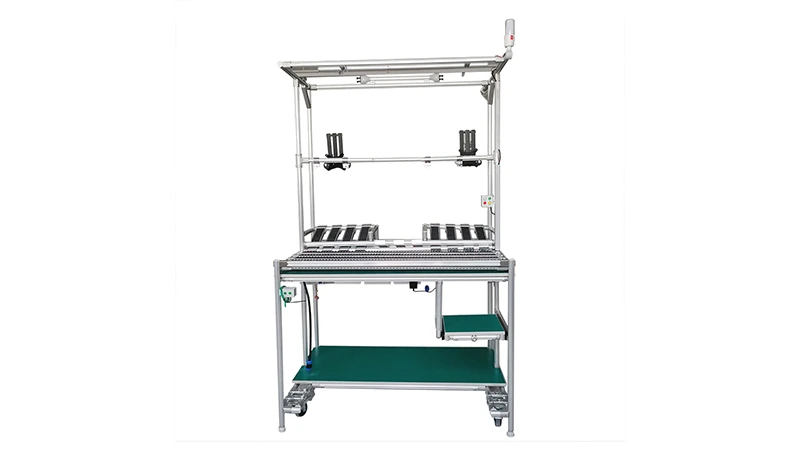
Walk into any workshop, manufacturing floor, or research lab, and you'll likely spot a familiar workhorse: the workbench. For decades, these flat surfaces have been the silent backbone of productivity, holding tools, parts, and projects as ideas transform into tangible products. But in an era where efficiency, adaptability, and user-centric design reign supreme, the humble workbench is undergoing a revolution—and leading the charge is the Aluminum Workbench D. More than just a (upgrade) of its predecessors, this workbench is a testament to how thoughtful engineering and modern materials can redefine what a workspace essential can be. Let's dive into the innovations that make Aluminum Workbench D not just a tool, but a partner in productivity.
The Evolution of Workbenches: From Static to Dynamic
To appreciate where Aluminum Workbench D is headed, it helps to look at where workbenches have been. Not long ago, workbenches were largely one-size-fits-all affairs—heavy, wooden, and stubbornly static. A carpenter might have a bench built from solid oak, bolted to the floor, with a few drawers and a vice; a lab technician might make do with a metal table that barely accommodated their equipment. These workbenches were durable, sure, but they lacked flexibility. As industries evolved—manufacturing lines became more agile, labs adopted new technologies, and workshops catered to custom projects—the need for a workbench that could keep up became undeniable.
Enter the era of modular workbenches. Early iterations used steel frames and particleboard tops, offering limited adjustability. But they hinted at a future where workbenches could adapt to tasks, not the other way around. Then came aluminum—lightweight, corrosion-resistant, and infinitely moldable. Aluminum workbenches began to replace heavier steel models, but many still fell short of true innovation. They were lighter, yes, but often rigid in design, with fixed heights and minimal customization options. That's where Aluminum Workbench D steps in. It doesn't just use aluminum; it reimagines what an aluminum workbench can be, blending cutting-edge design with real-world functionality to meet the demands of today's dynamic workspaces.
Aluminum Workbench D: A Deep Dive into Design Innovations
Modular Aluminum Profile Construction: Build It Your Way
At the heart of Aluminum Workbench D's design is its use of aluminum extrusion profile—a material that's been a game-changer in manufacturing and construction, and for good reason. Unlike traditional workbenches made from solid slabs or welded frames, Aluminum Workbench D is built using interlocking aluminum profiles. These profiles are created by pushing heated aluminum through a die, forming precise, uniform shapes with built-in channels (called T-slots) that allow for easy attachment of accessories. Think of it like a grown-up version of building blocks, but with industrial-grade strength.
What does this mean for users? Endless customization. Need a shelf above the work surface? Slide brackets into the T-slots and attach a shelf. Want to add a tool rail on the side? Snap it into place without drilling or welding. Even the workbench's height can be adjusted by swapping out leg profiles—no need for a whole new bench if your team's needs change. This modularity is a far cry from traditional workbenches, which often require sawing, drilling, or professional modification to alter. With Aluminum Workbench D, reconfiguring takes minutes, not hours, making it ideal for spaces that handle multiple projects or shift priorities regularly.
Ergonomic Design: Putting People First
In the past, workbenches were designed with the "average user" in mind—a one-height-fits-all approach that left many workers straining, slouching, or stretching to reach tools. Aluminum Workbench D flips that script by prioritizing ergonomics, recognizing that a comfortable worker is a productive (and healthy) worker. Let's start with adjustability. The bench's legs, made from heavy-duty aluminum profiles, can be easily swapped or extended using simple connectors, allowing heights to range from 30 inches (standard for seated work) up to 42 inches (ideal for standing tasks). Some models even come with motorized height adjustment, letting users switch between sitting and standing with the push of a button—perfect for long shifts where movement is key to reducing fatigue.
But ergonomics go beyond height. The work surface itself is designed with edge profiling—rounded edges that prevent forearm strain during long hours of work. The surface material, too, is chosen for comfort: a textured, non-slip finish that's easy on the hands but tough enough to resist scratches from tools. Even the placement of accessories is thoughtful. Tool hooks, monitor arms, and storage bins can be mounted at waist height or eye level, reducing the need to bend or twist. It's these small, user-focused details that turn a good workbench into a great one—and Aluminum Workbench D nails them.
Aesthetic and Functional Finishes: More Than Just Looks
Let's be honest: workspaces matter. A cluttered, outdated area can drain motivation, while a clean, modern one can boost morale. Aluminum Workbench D doesn't skimp on aesthetics, but its design choices are about more than just looking good—they serve a functional purpose, too. The aluminum extrusion profiles are available in a range of finishes, from matte silver to anodized black, allowing the bench to blend into any environment, whether it's a sleek tech lab or a rugged manufacturing plant.
Beyond color, the finishes are practical. Anodized aluminum, for example, creates a hard, corrosion-resistant layer that stands up to spills, chemicals, and daily wear—critical in settings like automotive shops or labs where fluids are common. The work surface, often made from a composite material or aluminum honeycomb panel, is stain-resistant and easy to clean; a quick wipe with a damp cloth removes oil, grease, or ink. Even the accessories, like tool holders and cable management clips, are designed to be low-profile, keeping the workspace tidy without sacrificing accessibility. In short, Aluminum Workbench D looks as good as it performs, turning a utilitarian tool into a centerpiece of a well-organized workspace.

Functionality Redefined: Beyond the Basics
Adaptable Storage: No More Cluttered Surfaces
A workbench is only as good as its ability to keep tools and materials within reach but out of the way. Aluminum Workbench D takes storage to the next level with a system that's both versatile and space-efficient. Let's start with under-bench storage. Traditional workbenches might have a few fixed drawers, but Aluminum Workbench D uses modular cabinets and bins that attach directly to the aluminum profile legs. These can be mixed and matched: deep drawers for power tools, shallow bins for screws and washers, or even open shelving for larger items like toolboxes. Since they're mounted via T-slots, you can rearrange them as needed—no more empty drawers because a tool no longer fits.
Above the work surface, the options are just as flexible. Want a pegboard for hand tools? Mount it to the back profile. Need a magnetic strip for screwdrivers? Snap it into the T-slots. There's even a cable management system built into the profiles, with channels to route power cords and USB cables, keeping them from tangling or dangling over the edge. For workshops that deal with small parts, optional add-ons like sliding bins or rotating carousels can be attached, ensuring that even the tiniest components are easy to find. The result? A work surface that stays clear of clutter, letting you focus on the task at hand instead of digging through piles of tools.
Mobility with Purpose: The Role of Caster Wheels
Not every workbench needs to move, but when it does, mobility can transform a workspace. Aluminum Workbench D addresses this with an optional caster wheel system that's both sturdy and easy to use. These aren't your average office chair casters; they're heavy-duty, lockable wheels designed to handle the bench's weight (and whatever you put on it) without wobbling or getting stuck. Each caster is mounted to a reinforced aluminum base that attaches to the bench's legs via T-slots, ensuring a secure fit.
Why does this matter? Imagine a manufacturing line where a workbench needs to move between stations, or a workshop that hosts weekend classes and needs to be rearranged quickly. With Aluminum Workbench D, you simply unlock the casters, roll the bench into place, and lock them again—no heavy lifting required. Even better, the casters are designed to protect floors: soft rubber wheels prevent scratches on hardwood or tile, while durable polyurethane wheels stand up to concrete in industrial settings. For spaces where mobility isn't needed, the casters can be removed and replaced with fixed feet, giving you the best of both worlds. It's this adaptability that makes Aluminum Workbench D a favorite in dynamic environments where flexibility is key.
Integration with Lean Systems: Streamlining Workflows
In today's fast-paced industries, lean manufacturing and lean principles—focused on reducing waste and increasing efficiency—have become essential. Aluminum Workbench D is designed to support these systems, acting as a hub for streamlined workflows. Let's take a typical scenario: a small electronics assembly line. With a traditional workbench, parts might be stored on a separate rack across the room, requiring workers to walk back and forth, wasting time and energy. Aluminum Workbench D changes that by integrating with flow racks and conveyor systems—both of which can be attached directly to the bench's aluminum profiles.
For example, a flow rack (a shelf with inclined rollers) can be mounted to the side of the bench, allowing parts to slide forward as they're used, ensuring the next component is always within reach. A small conveyor, attached to the back of the bench, can move finished products to the next station without manual carrying. Even tools can be organized using a "5S" system (sort, set in order, shine, standardize, sustain), with designated spots on the bench for each item, reducing the time spent searching. By keeping everything needed for a task within arm's reach, Aluminum Workbench D cuts down on non-value-added activities, aligning perfectly with lean system goals of maximizing productivity and minimizing waste.

Material Matters: Why Aluminum Extrusion Profile Stands Out
We've touched on aluminum extrusion profile earlier, but it's worth diving deeper into why this material is so critical to Aluminum Workbench D's success. At first glance, aluminum might seem like a lightweight alternative to steel, but its benefits go far beyond weight. Let's break it down:
Strength-to-Weight Ratio: Tough Without the Bulk
Aluminum extrusion profile has an impressive strength-to-weight ratio, meaning it's strong enough to handle heavy loads without being cumbersome. A typical aluminum workbench can support up to 1,000 pounds (depending on the profile thickness) while weighing significantly less than a steel bench of the same capacity. This makes it easier to move (with casters) and simpler to assemble—no need for a forklift or team of people to set it up. For small businesses or workshops with limited space, this is a huge advantage; you get industrial strength without sacrificing maneuverability.
Durability and Resistance: Built to Last
Aluminum is naturally resistant to corrosion, thanks to a thin oxide layer that forms on its surface when exposed to air. This layer acts as a barrier, preventing rust and deterioration—even in humid environments like coastal workshops or food processing plants. When combined with anodization (a process that thickens this oxide layer), aluminum extrusion profile becomes even more resistant to scratches, chemicals, and UV rays. Compare that to steel, which requires painting or coating to prevent rust, or wood, which warps and rots over time. Aluminum Workbench D isn't just a purchase; it's an investment that will last for decades, even with heavy daily use.
Sustainability: Green Without Compromise
In an age where sustainability is a priority for businesses and consumers alike, aluminum stands out as an eco-friendly choice. Aluminum is 100% recyclable, and recycling it uses just 5% of the energy required to produce new aluminum. Many aluminum extrusion profiles are made from recycled content, and at the end of the workbench's life, its components can be melted down and reused—no waste. Additionally, aluminum's lightweight nature reduces transportation emissions; shipping an aluminum workbench requires less fuel than shipping a steel one. For companies looking to reduce their carbon footprint, Aluminum Workbench D is a practical, planet-friendly option that doesn't skimp on performance.
Traditional vs. Aluminum Workbench D: A Head-to-Head Comparison
To truly understand the impact of Aluminum Workbench D, let's compare it to traditional workbenches across key categories. The table below highlights the differences that make Aluminum Workbench D a standout choice for modern workspaces:
| Feature | Traditional Workbench | Aluminum Workbench D |
|---|---|---|
| Primary Material | Solid wood, steel, or particleboard | Aluminum extrusion profile with composite or aluminum work surface |
| Weight (per sq ft of work surface) | 25–40 lbs (steel), 15–25 lbs (wood) | 8–15 lbs |
| Assembly Time | 2–4 hours (requires tools, often professional help) | 30–60 minutes (tool-free or minimal tools, modular assembly) |
| Load Capacity | 500–1,000 lbs (varies widely by material) | 800–1,500 lbs (high strength-to-weight ratio) |
| Customization Options | Limited (fixed shelves, pre-drilled holes; modifications require tools) | Unlimited (modular accessories, adjustable height, T-slot mounting) |
| Maintenance Needs | High (wood requires refinishing, steel needs painting to prevent rust) | Low (corrosion-resistant, easy to clean, no painting required) |
| Mobility | Static (often bolted to floor; heavy to move) | Optional (lockable caster wheels for easy repositioning) |
| Sustainability | Low (wood may come from non-renewable sources; steel recycling is energy-intensive) | High (100% recyclable, made from recycled content, low transportation emissions) |
As the table shows, Aluminum Workbench D outperforms traditional workbenches in nearly every category, from customization to sustainability. It's not just a better workbench—it's a smarter investment in productivity, adaptability, and long-term value.
Real-World Applications: Where Aluminum Workbench D Shines
Manufacturing Floors: Keeping Pace with Production
In manufacturing, downtime is the enemy. Every minute spent adjusting tools or searching for parts eats into profits. Aluminum Workbench D thrives here, thanks to its integration with lean systems and modular design. For example, an automotive assembly line might use Aluminum Workbench D stations with attached flow racks, ensuring that screws, washers, and small parts roll directly to the worker as needed. The bench's height can be adjusted to match the line's ergonomic standards, reducing worker fatigue and injuries. When the production line switches to a new model, the workbench is reconfigured in minutes—no need to shut down for days to install new equipment. It's this flexibility that makes Aluminum Workbench D a staple in factories where efficiency is non-negotiable.
Research Labs and Testing Facilities: Precision and Cleanliness
Labs demand precision, cleanliness, and adaptability—all areas where Aluminum Workbench D excels. The workbench's non-porous surface resists chemicals, making it ideal for handling acids, solvents, or biological samples. Its modular design allows for easy integration of lab-specific accessories: microscope mounts, fume hoods, or ESD (electrostatic discharge) mats to protect sensitive electronics. Cable management channels keep power cords and data lines organized, reducing tripping hazards and ensuring equipment stays connected. Even the bench's quiet mobility (thanks to soft rubber caster wheels) is a plus in labs where noise can disrupt experiments. For researchers, Aluminum Workbench D isn't just a work surface—it's a reliable partner in groundbreaking work.
Small Workshops and Maker Spaces: Creativity Unleashed
In small workshops or maker spaces, versatility is key. One day might be spent building furniture, the next repairing electronics, and the next hosting a hands-on class. Aluminum Workbench D adapts seamlessly to these changing needs. Need extra workspace for a large project? Connect two benches together using aluminum profile connectors. Want to add a vice for woodworking? Attach it to the T-slots. Teaching a class? Remove the casters and lock the bench in place, then reconfigure for solo work later. The bench's lightweight design also makes it easy to move outdoors for projects that require fresh air or extra space. For makers and small business owners, Aluminum Workbench D is more than a tool—it's a blank canvas for creativity.
The Future is Customizable: Tailoring to Unique Needs
If there's one trend shaping the future of workspaces, it's customization. No two teams work the same way, and workbenches shouldn't either. Aluminum Workbench D embraces this with a system that goes beyond "one-size-fits-most" to offer truly personalized solutions. Manufacturers of Aluminum Workbench D often provide online configurators, where users can select bench length, width, height, work surface material, storage options, and accessories—all from a digital interface. The result is a workbench that's built to order, with no unnecessary features cluttering the design.
But customization doesn't stop at purchase. As technology advances, new accessories are constantly being developed for aluminum extrusion profiles. From 3D printer mounts to wireless charging pads, these add-ons can be retrofitted to existing benches, ensuring they stay up-to-date with the latest tools. Even the aluminum profiles themselves are evolving; new designs with improved T-slot geometry or integrated LED lighting are on the horizon, promising to make Aluminum Workbench D even more versatile. In short, the future of Aluminum Workbench D isn't just about what it is today, but how it can grow and adapt with its users for years to come.
Conclusion: Building the Workbench of Tomorrow, Today
Workbenches have come a long way from their humble beginnings as static slabs of wood or metal. Aluminum Workbench D represents the next step in this evolution—a tool that's as adaptable as the workspaces it serves, as durable as the projects it supports, and as thoughtful as the people who use it. By combining modular aluminum extrusion profile, ergonomic design, and a focus on functionality, it transforms the workbench from a passive surface into an active participant in productivity.
Whether you're running a manufacturing line, conducting cutting-edge research, or pursuing a passion project in a home workshop, Aluminum Workbench D offers something traditional workbenches can't: the freedom to work your way. It's a workbench that grows with you, adapts to your needs, and stands the test of time—all while looking good and supporting a sustainable future. In a world where change is constant, Aluminum Workbench D is more than a piece of equipment; it's a foundation for success.
So, the next time you step into a workspace, take a look at the workbench. Is it holding you back, or helping you move forward? With Aluminum Workbench D, the answer is clear: the future of workbenches is here, and it's built to elevate how we create, build, and innovate.