- Company Articles
- Products and Technology
- Technology Sharing
- The Future of External Straight Aluminum Joints in Smart Manufacturing

The Future of External Straight Aluminum Joints in Smart Manufacturing
Related Product
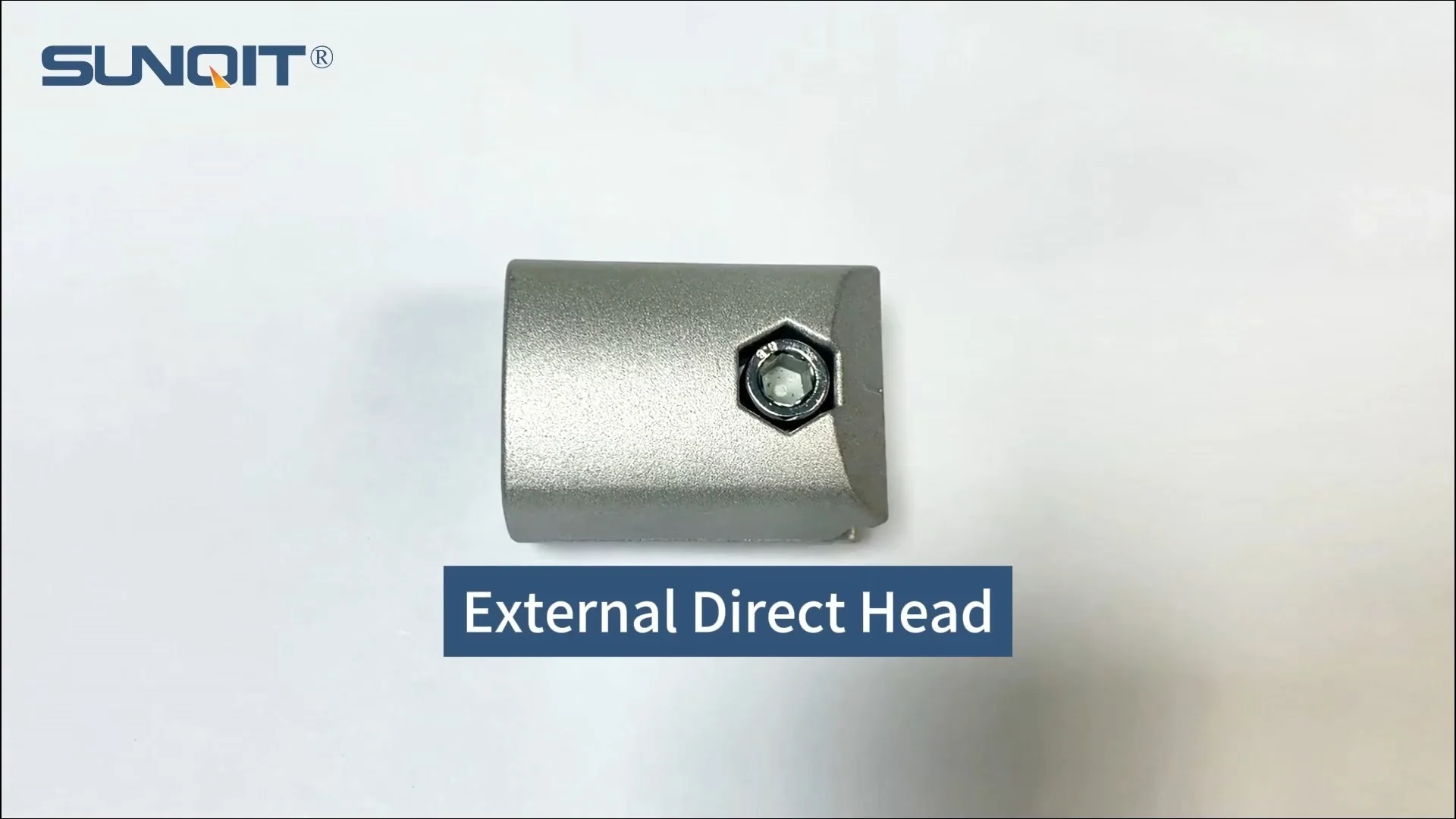
External Straight Aluminum Joint
Aluminum pipe joint outside connection used for two pcs 28pcs aluminum pipe connection in straight angle,it connects two pcs pipe from outside.
Walk into any modern factory today, and you'll notice a quiet revolution unfolding. The clunky, rigid assembly lines of the past—where reconfiguring a production setup meant weeks of welding, heavy lifting, and lost productivity—are making way for something far more dynamic. Smart manufacturing, with its focus on agility, data-driven efficiency, and adaptability, isn't just a buzzword; it's a shift in how we build, create, and innovate. At the heart of this transformation lies a surprisingly unassuming component: the external straight aluminum joint.
For decades, manufacturers relied on fixed, one-size-fits-all infrastructure. If a product design changed, or demand spiked for a new model, the factory floor became a logistical nightmare. Today, the game has changed. Smart factories need systems that can pivot as quickly as market trends, that support small-batch production without sacrificing speed, and that reduce waste—both in materials and time. This is where components like external straight aluminum joints step in, quietly but powerfully reshaping how factories operate.
In this article, we'll dive into why these unassuming joints are becoming the backbone of smart manufacturing. We'll explore their design, their role in creating flexible systems, and how they integrate with other key components like aluminum profiles and workbenches. We'll also look at real-world applications, future innovations, and what to consider when choosing a supplier. Whether you're a factory manager, a production engineer, or simply curious about the future of manufacturing, this is a story about how the smallest parts often drive the biggest changes.
From Rigidity to Flexibility: The Evolution of Manufacturing Infrastructure
Let's rewind to the mid-20th century. Manufacturing was dominated by mass production—think Henry Ford's assembly line. The goal was to produce as many identical products as possible, as cheaply as possible. Factories were built around this idea: heavy steel frames bolted to the floor, conveyor belts fixed in place, workbenches welded into position. It worked brilliantly for standardized goods, but it had a fatal flaw: inflexibility.
Fast forward to the 21st century, and the rules have flipped. Today's consumers want customization. A smartphone user might choose from 10 different case colors; a car buyer expects add-ons tailored to their lifestyle. This shift to "mass customization" has put enormous pressure on factories. Suddenly, a production line that once made 10,000 identical widgets now needs to switch between 10 different widget variations in a single day.
Early attempts to solve this problem often involved brute force: hiring more workers to manually reconfigure equipment, or investing in expensive, specialized machinery for each product line. But these band-aids were costly and inefficient. What manufacturers really needed was a modular approach—systems that could be easily rearranged, expanded, or repurposed without overhauling the entire factory.
Enter aluminum. Lightweight, strong, and infinitely customizable, aluminum profiles began to replace steel in factory setups. Unlike steel, which requires welding or heavy tools to modify, aluminum profiles feature T-slots—longitudinal grooves that allow accessories like brackets, shelves, and joints to be attached anywhere along the length. This was a breakthrough, but it was only part of the puzzle. To truly make these systems flexible, you need joints that can connect profiles quickly, securely, and without permanent modifications.
This is where components like the external straight aluminum joint came into play. Designed to slide into T-slots and lock into place with simple fasteners, these joints turned rigid aluminum frames into dynamic structures that could be disassembled, reconfigured, and reused. For the first time, a workbench could be adjusted in height in minutes, or a conveyor system extended by adding a few extra profiles and joints. It was like building with industrial-grade Legos—and it transformed the manufacturing landscape.
Meet the Unsung Hero: What Is an External Straight Aluminum Joint?
At first glance, an external straight aluminum joint might not look like much—just a small, angular piece of metal with a few holes and grooves. But appearances are deceiving. This humble component is the glue that holds modern modular manufacturing systems together. Let's break down what it is, how it works, and why its design matters.
An external straight aluminum joint is a connector designed to join two aluminum profiles at a straight angle (though some variations handle 90-degree or 45-degree angles, too). Unlike traditional steel joints, which often require welding or drilling, these joints use the T-slots in aluminum profiles to attach securely. Most feature a clamping mechanism: a bolt or screw that, when tightened, presses a metal plate against the inside of the T-slot, creating a strong, vibration-resistant hold.
The "external" in the name refers to how it's mounted: on the outside of the profiles, rather than sliding inside. This makes installation and adjustment a breeze. Imagine a factory worker needing to extend a material rack. With an external joint, they can simply slide the joint onto the end of an existing profile, align a new profile next to it, tighten the screw, and they're done—no drilling, no welding, no specialized tools. It's a far cry from the days when modifying a rack meant calling in a metalworker for a full day's job.
Materials matter, too. These joints are typically made from high-grade aluminum alloy—lightweight but incredibly strong. Some are anodized (coated with a protective oxide layer) to resist corrosion, making them suitable for factories with harsh environments, like those handling chemicals or food processing. Others are treated with ESD (electrostatic discharge) coatings, critical for electronics manufacturing where static electricity can damage sensitive components.
But the real genius is in the precision engineering. A well-designed external straight aluminum joint can support hundreds of pounds of weight while still allowing for easy repositioning. The tolerances are tight—often within a fraction of a millimeter—to ensure profiles align perfectly, keeping conveyor belts level and workbenches stable. For anyone who's ever tried to assemble furniture with misaligned holes, you know how frustrating a poorly made joint can be. In a factory, that frustration turns into downtime, lost productivity, and even safety risks. That's why quality matters—and why top lean system suppliers invest heavily in perfecting these small but critical components.

Why Smart Manufacturing Can't Thrive Without Flexible Joints
Smart manufacturing isn't just about robots and AI (though those play a role). At its core, it's about creating systems that can learn, adapt, and improve over time. For that to happen, the physical infrastructure of the factory needs to be just as adaptable as the software running it. This is where external straight aluminum joints and their modular counterparts shine. Let's unpack the key reasons they've become indispensable.
1. Speed: From Weeks to Hours
In traditional manufacturing, launching a new product line could take months. You'd need to design custom machinery, fabricate steel frames, weld everything together, and test for stability. Today, with modular systems, that timeline collapses. A study by the Manufacturing Technology Insights found that factories using aluminum profile systems reduced setup time for new production lines by up to 70%. How? Because external straight aluminum joints allow workers to assemble, disassemble, and reconfigure structures on the fly.
Consider a scenario: A electronics manufacturer gets a rush order for a new smartphone model. The production line needs to be modified to include a new testing station. With traditional steel workbenches, this would mean hiring contractors to build a custom bench, which could take a week. With aluminum profiles and external straight joints? The maintenance team can assemble the new bench in a few hours using pre-cut profiles and joints, then bolt it into place. The line is up and running by the end of the day, and the manufacturer meets the tight deadline.
2. Cost Savings: Reduce, Reuse, Recycle
Factories are always looking to cut costs, but in the past, flexibility often meant higher expenses. Custom machinery is expensive, and once a product line was discontinued, that machinery became scrap metal. Modular systems flip this equation on its head. External straight aluminum joints make it easy to repurpose components. A material rack used for one product can be disassembled and rebuilt as a conveyor support for another. A workbench can be shortened, extended, or reconfigured with new shelves—all without buying new materials.
Then there's the cost of labor. Welding steel structures requires skilled workers and specialized equipment. Assembling aluminum profiles with external joints? Most factory maintenance teams can learn the basics in a day. No more waiting for a welding crew to become available—your own staff can handle modifications. Over time, these savings add up. One automotive supplier reported saving $200,000 annually after switching to aluminum modular systems, thanks to reduced labor and material costs.
And let's not forget sustainability. Aluminum is 100% recyclable, and because modular systems are reused instead of replaced, they generate far less waste. For manufacturers under pressure to reduce their carbon footprint—whether from regulations or consumer demand—this is a huge win. A single external straight aluminum joint might seem small, but multiplied across an entire factory, the environmental impact is significant.
3. Agility: Keeping Up with Market Demands
In 2020, when the COVID-19 pandemic hit, factories around the world faced an unprecedented challenge: overnight, demand for medical supplies like ventilators and PPE skyrocketed, while demand for other products (like cars) plummeted. Factories that could pivot quickly survived; others struggled. Those with modular infrastructure—built on aluminum profiles and flexible joints—were able to retool their lines in days, not months.
A case in point: a furniture manufacturer in Italy. Normally producing office chairs, they switched to making hospital bed frames by reconfiguring their existing aluminum workbenches and material racks. Their external straight aluminum joints allowed them to adjust the height of work surfaces to accommodate the larger bed frames and add new conveyor sections to move parts more efficiently. Without that flexibility, they would have faced massive delays—or worse, shutdown.
This agility isn't just for crises. In everyday manufacturing, it means being able to test new product ideas without huge upfront investments. Want to trial a new assembly process? Build a small prototype line with modular components. If it works, scale it up; if not, disassemble and reuse the parts. This kind of "fail fast, iterate quickly" approach is central to smart manufacturing—and it's only possible with flexible joints.

Building Blocks of Smart Factories: How Joints Work with Other Components
External straight aluminum joints don't work in isolation. They're part of a larger ecosystem of modular components that together create the flexible infrastructure of smart factories. Let's take a closer look at how they team up with other key players: aluminum profiles, workbenches, conveyors, and more.
Aluminum Profiles: The Backbone of Modular Systems
If external joints are the "glue," aluminum profiles are the "bones" of modular systems. These are long, extruded aluminum bars with T-slots running along their length—the same slots that joints clamp onto. Profiles come in various shapes and sizes: some are square, some rectangular, some with rounded edges for safety. The choice depends on the application: a heavy-duty conveyor might use a 40x80mm profile, while a lightweight workbench could get by with a 20x20mm profile.
The beauty of profiles is their versatility. A single profile can serve as a workbench leg, a shelf bracket, or a conveyor frame—depending on how it's connected with joints. And because they're made of aluminum, they're light enough for workers to handle without heavy machinery but strong enough to support industrial loads. When paired with external straight aluminum joints, they become a blank canvas for factory designers.
Workbenches: Where Precision Meets Flexibility
Workbenches are the heartbeat of any factory—where assembly, testing, and packaging happen. In the past, workbenches were static: a wooden or steel top bolted to fixed legs. Today's smart factories need workbenches that can adapt to different tasks. A bench used for assembling small circuit boards might need ESD protection and built-in tool holders; one used for heavy machinery assembly needs a reinforced top and adjustable height.
Modular workbenches solve this by using aluminum profiles for the frame and external straight aluminum joints to connect the legs, shelves, and crossbars. Need to add a shelf for tools? Attach a new profile with a joint. Want to raise the height by 6 inches? Swap out the leg profiles for longer ones—no need to buy a whole new bench. Some workbenches even come with casters (another modular component!) that can be added or removed via joints, turning a stationary bench into a mobile workstation in minutes.
For example, the "Workbench E (Single Deck—Without Caster)" from many lean system suppliers is a popular base model. It's simple: a frame of aluminum profiles connected by external joints, topped with a durable work surface. But customers can customize it endlessly: adding side shelves, tool hooks, LED lights, or even integrating a small conveyor section using roller track and accessories. It's a far cry from the one-size-fits-all benches of the past.
Conveyors and Roller Tracks: Keeping Materials Moving
In any factory, moving materials from point A to point B efficiently is critical. Conveyors and roller tracks are the arteries of the production line, and they rely heavily on modular components to stay flexible. Roller tracks, for instance, are made of aluminum or steel rails with wheels that let materials glide smoothly. To connect these tracks into longer lines or around corners, you need—you guessed it—joints.
External straight aluminum joints are often used to secure roller tracks to support frames. But there are also specialized roller track connectors designed to link track sections together. For example, "roller track placon mount for rail connection" or "roller track placon mount bracket" might sound technical, but they're essentially just specialized joints that ensure tracks align perfectly, so materials don't get stuck. When paired with external straight joints, these components allow factories to build custom conveyor systems that can be extended, shortened, or rerouted as needed.
Imagine a food processing plant that needs to switch from packaging 12-ounce cans to 16-ounce bottles. The bottles are taller, so the conveyor side rails need to be raised. With modular roller tracks and external joints, workers can loosen the joints, adjust the rail height, and retighten—done. No need to replace the entire conveyor; just tweak the existing system. That's the power of modularity.
| Feature | Traditional Steel Systems | Modular Aluminum Systems (with External Joints) |
|---|---|---|
| Assembly Time | Days to weeks (requires welding, drilling) | Hours (tool-free, bolt-together assembly) |
| Reconfigurability | Very limited (often requires cutting/welding) | High (easily disassembled and reassembled) |
| Weight | Heavy (difficult to move without machinery) | Lightweight (manually movable by workers) |
| Cost Over Time | High (frequent replacement, labor-intensive modifications) | Low (reusable components, minimal labor) |
| Sustainability | Low (high waste, limited recyclability) | High (aluminum is 100% recyclable, reusable components) |

Real-World Impact: Stories from the Factory Floor
It's one thing to talk about the benefits of external straight aluminum joints in theory; it's another to see them in action. Let's look at a few real-world examples of how these components have transformed manufacturing operations.
Case Study 1: Automotive Parts Manufacturer
A mid-sized automotive parts supplier in Michigan was struggling with frequent product changes. They produced brackets for various car models, and each new model required a different assembly setup. Their old system used steel workbenches and welded material racks, which took 3-4 days to reconfigure. This led to missed deadlines and overtime costs for workers staying late to finish retooling.
They decided to switch to a modular system, investing in aluminum profiles, external straight aluminum joints, and modular workbenches. The results were dramatic. Their first reconfiguration—a switch from SUV brackets to sedan brackets—took just 4 hours, not 4 days. Workers reported less fatigue, as they no longer had to wrestle with heavy steel components. Over the next year, the company reduced setup time by 85% and cut overtime costs by $60,000. They even repurposed old steel racks by cutting them down and using them as bases for new aluminum structures, further reducing waste.
Case Study 2: Electronics Assembly Plant
An electronics manufacturer in China specializes in custom circuit boards for medical devices. The challenge? Each board is unique, with different component layouts and testing requirements. Their old production line used fixed ESD workbenches (critical for preventing static damage) that couldn't be adjusted for different board sizes. Workers often had to bend or stretch to reach components, leading to ergonomic issues and slower assembly times.
They turned to a lean system supplier for help, opting for ESD workstations built with aluminum profiles and external straight aluminum joints. The new workstations featured adjustable heights, modular tool rails, and built-in ESD mats. But the real game-changer was the ability to add custom accessories via joints: holders for specific tools, bins for small components, even integrated LED magnifying lights. Assembly time per board dropped by 15%, and worker complaints about discomfort decreased significantly. Best of all, when a new board design came in, they could reconfigure the workstation in minutes by moving the accessories—no more one-size-fits-all setups.
Case Study 3: Logistics Warehouse
A third-party logistics provider (3PL) in Germany handles warehousing for dozens of clients, from clothing retailers to electronics companies. Their biggest challenge is seasonal demand spikes—like back-to-school or holiday shopping—when they need to expand storage capacity quickly. Traditional pallet racks are fixed, so they'd have to rent extra warehouse space during peak times, a costly solution.
They invested in modular material racks built with aluminum profiles and external straight aluminum joints. These racks could be assembled, disassembled, and rearranged as needed. During peak season, they'd set up extra racks in unused warehouse corners; during slower months, they'd take them down and store the components (profiles and joints) compactly. This eliminated the need for extra warehouse space, saving them over €100,000 a year in rental costs. Plus, the racks were lightweight enough that a small team could assemble a 3-row, 3-floor rack (like "Material Rack B" from their supplier) in under an hour—no heavy equipment needed.
The Road Ahead: Innovations Shaping the Future of Modular Components
As smart manufacturing evolves, so too will the components that power it. External straight aluminum joints and their modular counterparts are no exception. Let's look at some emerging trends and innovations that could shape their future.
1. Smarter Materials: Stronger, Lighter, Greener
Aluminum alloys are already impressive, but researchers are developing new formulations that are even stronger and lighter. Imagine a joint that can support twice the weight while weighing 30% less—that would open up new possibilities for mobile systems like turnover trolleys and racks. There's also growing interest in bio-based materials for non-load-bearing components, like plastic end caps or joint covers, reducing reliance on petroleum-based plastics.
Sustainability is also driving innovation. Some lean system suppliers are experimenting with recycled aluminum for joints and profiles, without sacrificing strength. Others are exploring "circular economy" models, where old components are collected, refurbished, and resold. For manufacturers aiming for net-zero emissions, these options will become increasingly attractive.
2. IoT Integration: Joints That "Talk"
The Internet of Things (IoT) is transforming factories into connected ecosystems, where machines, sensors, and even workbenches share data. Could joints be next? Imagine an external straight aluminum joint embedded with a small sensor that tracks how often it's adjusted, how much weight it's supporting, or if it's coming loose. This data could be sent to a central dashboard, alerting maintenance teams to potential issues before they cause downtime.
For example, a conveyor system using sensor-equipped joints could detect when a section is starting to sag (indicating a loose joint) and automatically notify a technician. Or a workbench joint could track usage patterns, helping managers optimize workflow by rearranging benches based on how often they're adjusted. It's early days, but the potential for "smart joints" is exciting.
3. 3D Printing: Custom Joints on Demand
3D printing (additive manufacturing) is no longer a novelty in factories. It's being used to create custom parts quickly and cheaply. For modular systems, this could mean on-demand production of specialized joints. Need a unique joint for a one-off project? Design it in CAD, print it in aluminum or high-strength plastic, and have it ready in hours. This would eliminate the need for large minimum orders from suppliers, making custom solutions accessible even for small manufacturers.
Some suppliers are already offering 3D-printed prototypes of joints, allowing customers to test fit and function before committing to mass production. As 3D printing technology improves and costs drop, this could become standard practice.
4. AI-Driven Design Tools: Perfect Joints, Every Time
Designing a modular system can be complex, with hundreds of components to choose from. Artificial intelligence (AI) is stepping in to simplify the process. Imagine a software tool that asks you: "What's the maximum weight your rack needs to support?" "Will it be used indoors or outdoors?" "How often do you need to reconfigure it?" Then, it generates a custom design, selecting the right profiles, joints, and accessories—including the optimal external straight aluminum joints for your needs.
Some leading lean system suppliers are already testing AI-powered configurators on their websites, allowing customers to design workbenches, racks, and conveyors in minutes. These tools can even simulate how the system will perform under different conditions, ensuring the joints and profiles are up to the task.
Choosing the Right Partner: What to Look for in a Lean System Supplier
With so many options on the market, choosing the right lean system supplier for your external straight aluminum joints and modular components can be overwhelming. Here are key factors to consider to ensure you're getting quality, reliability, and value.
1. Quality and Precision
This might seem obvious, but not all joints are created equal. A poorly made joint with loose tolerances can lead to wobbly workbenches, misaligned conveyors, and safety hazards. Look for suppliers who use high-grade aluminum alloys and have strict quality control processes. Ask about certifications—ISO 9001 is a good indicator of consistent quality management.
It's also worth requesting samples. A good supplier will send you a joint and a short profile so you can test the fit, feel, and strength. Pay attention to details like how smoothly the joint slides onto the profile, how securely it locks in place, and whether the finish is durable (no rough edges or flaking anodization).
2. Customization Options
Every factory has unique needs. A supplier that offers only off-the-shelf components might not be able to meet your specific requirements. Look for suppliers who can customize joints, profiles, or accessories—whether it's a special coating (like ESD), a custom size, or a unique color to match your factory's branding.
Ask about their design capabilities. Can they work with your team to create a custom modular system? Do they have in-house engineers who can help with layout planning? The best suppliers act as partners, not just vendors.
3. Inventory and Lead Times
In manufacturing, downtime is costly. You don't want to wait weeks for a replacement joint or profile. Choose a supplier with a large inventory of standard components, ideally with multiple warehouses to reduce shipping time. Ask about lead times for custom orders—some suppliers can turn around simple custom parts in days, while others take weeks.
4. Technical Support and Training
Even the best modular systems are only as good as the people assembling them. Look for suppliers that offer technical support, whether it's via phone, email, or video chat. Many also provide assembly guides, videos, or on-site training for your team. This is especially valuable if you're new to modular systems—you'll want to ensure your workers know how to safely and efficiently use the joints and profiles.
5. Sustainability Practices
As mentioned earlier, sustainability is a growing priority. Ask suppliers about their environmental practices: Do they use recycled materials? What's their waste reduction policy? Do they offset carbon emissions from shipping? Choosing a supplier with strong sustainability credentials can help you meet your own ESG (environmental, social, governance) goals.
Conclusion: Small Joints, Big Impact
External straight aluminum joints might not grab headlines like industrial robots or AI-powered predictive maintenance systems. But in the quiet, day-to-day operations of smart factories, they're the unsung heroes—enabling the flexibility, speed, and efficiency that modern manufacturing demands.
From the factory worker who can now reconfigure a workbench in minutes instead of days, to the manager who's cutting costs while reducing waste, to the planet that benefits from more sustainable manufacturing practices—these small components have a ripple effect that touches every corner of the industry.
As smart manufacturing continues to evolve, so too will the role of modular components. We'll see stronger materials, smarter designs, and deeper integration with emerging technologies like IoT and AI. But at the core, the mission will remain the same: to create factories that can adapt, learn, and thrive in an ever-changing world.
So the next time you walk through a factory, take a moment to look at the workbenches, the conveyor tracks, the material racks. Chances are, you'll spot an external straight aluminum joint holding it all together. And now, you'll know—this small, unassuming component is part of something much bigger: the future of manufacturing.