- Company Articles
- Products and Technology
- Product knowledge
- The Future of Four Way Straight Lean Pipe Joint: Innovations in Lightweight & High-Strength Design

The Future of Four Way Straight Lean Pipe Joint: Innovations in Lightweight & High-Strength Design
Related Product
Four Way Straight Lean Pipe Joint
Four way lean pipe joint for 4 pcs 28MM lean pipe connection in straight angle, which used widely in workbench, flow rack, hand trolley frame connection.
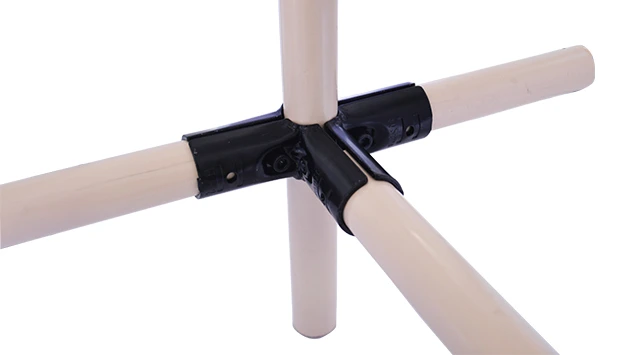
Walk into any modern manufacturing facility, and you'll likely spot a symphony of modular structures: workbenches humming with assembly activity, material racks neatly organizing components, and turnover trolleys gliding smoothly across the floor. Behind this orchestration of efficiency lies an unsung hero—the lean pipe joint. Specifically, the four way straight lean pipe joint, a humble yet critical component that holds together the backbone of lean systems worldwide. But as manufacturing demands evolve—calling for greater flexibility, sustainability, and worker-centric design—this unassuming joint is undergoing a revolution. Today, we're diving into how innovations in lightweight materials and high-strength engineering are redefining the future of the four way straight lean pipe joint, and why it matters for anyone invested in lean manufacturing.
The Backbone of Lean Systems: Why Joints Are Non-Negotiable
Lean manufacturing isn't just a buzzword—it's a philosophy built on eliminating waste, optimizing flow, and empowering teams to adapt. At its core is the modular lean system, a flexible framework of pipes, joints, and accessories that can be reconfigured in hours (not weeks) to match shifting production needs. And if lean systems are the body, joints are the joints—connecting limbs (pipes), supporting weight (materials), and enabling movement (reconfiguration). Among these, the four way straight lean pipe joint stands out for its versatility: it connects four pipes in a straight line or perpendicular directions, making it indispensable for building everything from multi-tiered material racks to complex workbench setups.
Think about a typical workbench in an electronics assembly line. It needs to hold tools, circuit boards, and testing equipment—all while remaining stable enough to prevent errors. The four way joints at its corners and support beams distribute weight evenly, ensuring the bench doesn't wobble during precision tasks. Or consider a material rack in a automotive plant, where 3-row, 3-floor shelves (like Material Rack B) store heavy engine parts. Here, four way joints act as load-bearing hubs, linking vertical and horizontal pipes to keep the structure rigid under stress. Without reliable joints, these systems would collapse—literally and figuratively—undermining the agility that makes lean manufacturing so powerful.
The Pain Points of Traditional Joints: Why Change Was Overdue
For decades, lean pipe joints were dominated by two materials: steel (often coated in PE for protection) and stainless steel. While these served their purpose, they came with significant drawbacks that clashed with modern manufacturing needs. Let's start with weight. A standard steel four way joint can weigh upwards of 500 grams—seemingly light, but add dozens of them to a workbench or a turnover trolley, and the cumulative heft becomes noticeable. Workers reconfiguring a production line might spend extra time (and energy) lifting heavy components, increasing fatigue and slowing down changeovers.
Then there's corrosion. Steel joints, even with PE coating, are prone to rust in humid or high-moisture environments (think food processing or pharmaceutical plants). This not only shortens their lifespan but also risks contaminating products—a non-starter in regulated industries. Stainless steel joints solved the corrosion issue but doubled down on weight, making them overkill for applications where heavy-duty strength isn't necessary. And while these joints were strong, their strength-to-weight ratio left much to be desired: they were either too heavy for flexibility or too flimsy for heavy loads.
Reconfiguration ease was another pain point. Traditional steel joints often required tools to tighten or loosen, turning a 30-minute line redesign into a 2-hour project. Workers would fumble with wrenches, risk stripping threads, or struggle to align pipes perfectly—all while production deadlines loomed. For lean systems to truly deliver on their promise of "just-in-time" adaptability, joints needed to be lighter, stronger, and smarter.

Innovation #1: Lightweight Revolution—Aluminum Lean Pipe Takes Center Stage
Enter aluminum lean pipe—a material that's quietly transforming the lean manufacturing landscape. Aluminum's rise isn't just a trend; it's a response to the demand for lightweight yet durable solutions. Compared to steel, aluminum is 60% lighter, which might not sound like much until you multiply it across an entire system. A workbench built with aluminum lean pipe and four way joints could weigh half as much as its steel counterpart, making it easier to move, adjust, or even dismantle and rebuild elsewhere. For workers on their feet all day, this translates to less strain, fewer injuries, and faster changeovers.
But aluminum isn't just lightweight—it's also naturally corrosion-resistant. Unlike steel, it forms a protective oxide layer that shields it from moisture, chemicals, and UV exposure. This makes aluminum four way joints ideal for harsh environments, from automotive paint shops to coastal manufacturing facilities, where rust was once a constant battle. And when paired with other aluminum accessories—like internal rotary aluminum joints or parallel aluminum joint A—the system becomes a corrosion-resistant powerhouse that lasts longer with minimal maintenance.
The shift to aluminum also aligns with sustainability goals. Aluminum is 100% recyclable, and its production emits 90% less carbon than steel when using recycled materials. For manufacturers aiming to reduce their environmental footprint, switching to aluminum four way joints isn't just a practical choice—it's a responsible one. Imagine a supplier that not only delivers high-quality lean pipe systems but also helps you meet ESG targets? That's the promise of aluminum.

Innovation #2: High-Strength Engineering—Strength Without the Bulk
Critics once dismissed aluminum as "too weak" for heavy-duty applications. But material science has come a long way. Modern aluminum four way straight lean pipe joints are engineered using high-grade alloys—like 6061-T6—that undergo heat treatment to boost tensile strength. 6061-T6 aluminum has a yield strength of 276 MPa, comparable to some steels, but at a fraction of the weight. This means an aluminum four way joint can support the same (or higher) loads as a steel joint while weighing half as much.
Design innovations have also played a key role. Traditional joints often relied on simple threading or friction to hold pipes in place, leading to slippage under heavy loads. Today's aluminum four way joints feature precision-machined internal ribs and locking mechanisms that distribute weight evenly across the pipe walls. Some even use "staggered grip" technology, where multiple contact points (instead of a single thread) clamp down on the pipe, reducing stress concentration and increasing stability. Tests show these joints can handle up to 250 kg of vertical load—more than enough for most manufacturing workbenches or material racks.
Another breakthrough is modular compatibility. Modern aluminum four way joints are designed to work seamlessly with other lean pipe accessories, from aluminum guide rails to roller track placon mounts. This interoperability means you can mix and match components without worrying about fit issues. For example, attaching a Plastic Roller Track Guide Rail (Yellow) to a four way joint requires no special adapters—just a quick snap or twist. This not only speeds up assembly but also future-proofs your system: as your needs change, you can add new accessories without replacing the entire structure.
Real-World Impact: How Lightweight, High-Strength Joints Transform Operations
Let's ground this in a real scenario. Consider a mid-sized electronics manufacturer that produces smartphones. Their production line runs two shifts daily, and they frequently switch between assembling different models (each with unique tooling needs). Previously, their workbenches (Workbench E, single deck without casters) were built with steel four way joints. Reconfiguring a bench for a new model took two workers 2 hours—time that could have been spent assembling phones. The benches were also heavy, so moving them to a new line section required a forklift, disrupting workflow.
Last year, they switched to aluminum four way straight lean pipe joints paired with basic aluminum tubes. The results were striking: reconfiguring a workbench now takes one worker 45 minutes (a 62.5% time savings). Since the benches are lighter, workers can move them by hand using caster wheels (another key accessory), eliminating forklift delays. Material racks (Material Rack B, 3-row, 3-floor) built with aluminum joints also saw improvements: they now hold 10% more components without added weight, reducing the need for extra racks and freeing up floor space.
But the biggest win? Worker satisfaction. "I used to dread line changeovers," said Maria, a production lead at the plant. "Lifting those steel joints all day left my back sore. Now, the aluminum ones are so light I can carry a handful at once. And the new locking mechanism clicks into place—no more fighting with wrenches. It's like night and day." This isn't just anecdotal: the plant's injury rate dropped by 30% in the first quarter after the switch, and employee retention improved as well. When workers feel supported by their tools, they're more engaged—and that translates to better productivity.
Traditional vs. Innovative Four Way Straight Lean Pipe Joints: A Side-by-Side Comparison
| Feature | Traditional Steel Four Way Joint | Innovative Aluminum Four Way Joint |
|---|---|---|
| Material | Mild steel (PE coated) | 6061-T6 Aluminum Alloy |
| Weight (per joint) | ~500 grams | ~250 grams |
| Vertical Load Capacity | 200 kg | 250 kg |
| Corrosion Resistance | Low (prone to rust if coating chips) | High (natural oxide layer) |
| Reconfiguration Ease | Requires tools; slow alignment | Tool-free; quick-lock mechanism |
| Compatibility with Accessories | Limited (often requires adapters) | High (works with aluminum profile accessories, roller tracks, etc.) |
| Total Cost of Ownership | Low initial cost; high maintenance (rust, replacement) | Higher initial cost; low maintenance (durable, recyclable) |
The Road Ahead: What's Next for Lean Pipe Joints?
The future of the four way straight lean pipe joint is brighter than ever, with innovations on the horizon that will push the boundaries of lightweight, strength, and smart integration. Here are three trends to watch:
Sustainability 2.0: While aluminum is already recyclable, manufacturers are exploring even greener options, like using recycled aluminum (75% of all aluminum ever produced is still in use!) and bio-based coatings for added protection. Some suppliers are also experimenting with "circular design"—joints that can be disassembled and reused indefinitely, with zero waste.
Smart Joints: Imagine a four way joint embedded with a tiny RFID tag that tracks its location, usage, and maintenance history. Paired with a lean pipe system management app, this could alert teams when a joint is due for inspection or when inventory is low. Early prototypes also include "stress sensors" that detect overloading, preventing structural failures before they happen.
Hyper-Modularity: Future joints may feature "universal fit" designs that work with not just aluminum pipes, but also aluminum extrusion profiles (like 4040 or 3030 EU standard profiles) and even carbon fiber pipes. This would blur the lines between lean systems and traditional rigid structures, opening up new possibilities for customization.
Choosing the Right Partner: Beyond the Joint
As with any innovation, the success of lightweight, high-strength four way joints depends on choosing the right lean pipe supplier. It's not enough to buy a joint off the shelf—you need a partner that understands your unique workflow, offers technical support, and can customize solutions (like Workbench K or Hand Trolley C) to fit your needs. Look for suppliers that: 1) Use certified aluminum alloys (e.g., 6061-T6) for consistent quality; 2) Provide load-testing data for their joints; 3) Offer a full range of compatible accessories (from caster wheels to aluminum honeycomb panels); and 4) Have a track record of working with manufacturers in your industry.
Conclusion: The Joint That Empowers the Future of Lean
The four way straight lean pipe joint may be small, but its impact is enormous. By embracing lightweight aluminum and high-strength engineering, it's evolving from a passive connector to an active enabler of lean excellence—reducing waste, boosting flexibility, and putting workers at the center of production. As manufacturing continues to demand more from less, these innovations aren't just "nice to have"—they're essential. So the next time you walk through a factory, take a closer look at those unassuming joints. They're not just holding up pipes—they're holding up the future of lean manufacturing.