- Company Articles
- Products and Technology
- Product knowledge
- The Future of Heavy Duty Split Foot Seats: Innovations in Lean Manufacturing

The Future of Heavy Duty Split Foot Seats: Innovations in Lean Manufacturing
Related Product
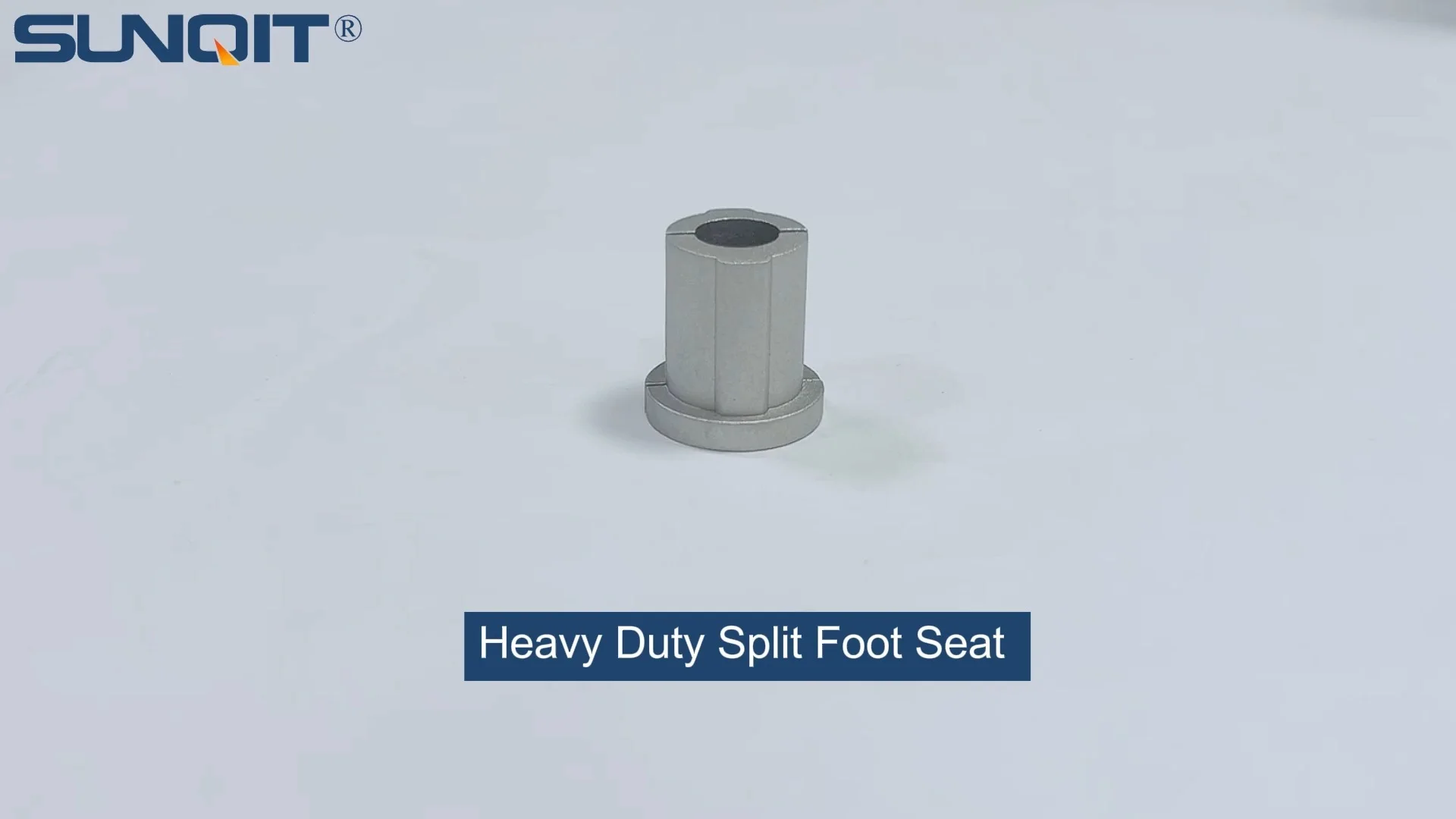
Heavy Duty Split Foot Seat
M10 aluminum heavy duty split foot deat with foot adjuster for workbench and flow rack.
In the fast-paced world of modern manufacturing, where every second counts and efficiency is the cornerstone of success, the smallest components often hold the power to transform entire operations. Lean manufacturing, a philosophy built on eliminating waste, optimizing workflows, and prioritizing continuous improvement, has long recognized that workspace design is not just about aesthetics—it's about empowering workers, reducing downtime, and driving sustainable growth. Among the unsung heroes of this design revolution are heavy duty split foot seats : unassuming yet critical components that form the stable foundation of workbenches, material racks, and turnover trolleys. As lean systems evolve to meet the demands of Industry 4.0, these foot seats are undergoing a quiet transformation, blending durability, adaptability, and ergonomics to redefine what's possible in the factory of the future.
The Lean Manufacturing Revolution: Where Workspace Design Meets Efficiency
At its core, lean manufacturing is a mindset—a commitment to examining every aspect of production and asking, "How can we do this better?" Developed from the Toyota Production System, its principles—value, value stream, flow, pull, and perfection—guide manufacturers to strip away inefficiencies, from excess inventory to unnecessary motion. Yet, for all its focus on process optimization, lean thinking has increasingly turned to the physical environment as a key driver of performance. A poorly designed workspace, after all, can undermine even the most streamlined processes: wobbly workbenches lead to wasted time adjusting tools, unstable material racks increase the risk of accidents, and uneven surfaces force workers into awkward postures that drain energy and slow output.
This is where components like heavy duty split foot seats enter the picture. Often overlooked in favor of flashier technologies like automation or AI, these base components are the silent enablers of lean systems. By providing a stable, secure foundation for equipment, they reduce the risk of downtime caused by equipment failure, minimize the need for rework due to unstable surfaces, and create a safer environment where workers can focus on value-adding tasks rather than compensating for poor ergonomics. In short, they turn "good" lean practices into "great" ones by addressing the fundamental truth that efficiency starts from the ground up.
From Basic Bases to Engineered Solutions: The Evolution of Heavy Duty Split Foot Seats
Heavy duty split foot seats have come a long way from their early iterations. Decades ago, manufacturers relied on simple, one-size-fits-all metal bases—often little more than flat steel plates welded to legs. While functional, these designs had significant limitations: they were heavy, difficult to adjust, and prone to corrosion in harsh factory environments. As lean systems became more sophisticated, and as manufacturers began to prioritize flexibility (think modular workbenches that can be reconfigured for new products or aluminum profile systems that adapt to changing workflows), the need for a more versatile base component became clear.
The first wave of innovation came with the shift from fixed to adjustable designs. Early split foot seats introduced threaded adjustments, allowing workers to level equipment on uneven floors—a game-changer for older factories with imperfect concrete surfaces. But as lean principles pushed for greater customization, manufacturers began experimenting with materials. Steel, while strong, added unnecessary weight to mobile trolleys and made reconfiguration labor-intensive. Enter aluminum: lightweight, corrosion-resistant, and infinitely recyclable, aluminum quickly became a favorite for split foot seats in lean systems. Its natural strength-to-weight ratio meant seats could support heavy loads (often up to 1,000 kg or more) without sacrificing maneuverability, making them ideal for dynamic workspaces where equipment is frequently moved or repurposed.
Today, the evolution continues. Modern heavy duty split foot seats are no longer just "bases"—they're engineered systems. Many now feature modular designs that integrate seamlessly with aluminum profiles , allowing for quick assembly and disassembly without welding or specialized tools. Some include anti-slip rubber pads to prevent equipment from shifting during use, while others are ESD (Electrostatic Discharge) compatible, critical for electronics manufacturing where static electricity can damage sensitive components. The "split" design itself has also been refined: by dividing the base into two or more support points, manufacturers have improved weight distribution, reducing stress on floors and increasing stability even when equipment is loaded unevenly.

Innovations Shaping the Future: What's New in Split Foot Seat Design?
As we look to the future, three key trends are driving innovation in heavy duty split foot seats: material science, integration with smart technologies, and a focus on sustainability—all aligned with the latest lean manufacturing goals.
1. Advanced Materials: Strength Without the Weight
While aluminum remains a staple, manufacturers are now exploring hybrid materials to push the boundaries of performance. One promising development is the use of carbon fiber composites in high-load applications. Though more expensive than aluminum, carbon fiber offers an unbeatable strength-to-weight ratio, making it ideal for portable equipment like turnover trolleys that need to support heavy loads while remaining easy to move. For corrosive environments (such as food processing or pharmaceutical manufacturing), stainless steel variants are gaining traction, with polished finishes that resist rust and simplify cleaning—critical for compliance with strict hygiene standards.
Another material innovation is the use of recycled aluminum alloys. As lean systems increasingly incorporate sustainability as a core value (after all, waste reduction includes environmental waste), suppliers are prioritizing recycled content without compromising strength. Some split foot seats now contain up to 80% recycled aluminum, reducing their carbon footprint while maintaining the durability required for heavy-duty use.
2. Smart Integration: Data-Driven Stability
Industry 4.0 has brought sensors and connectivity to nearly every corner of the factory, and heavy duty split foot seats are no exception. The next generation of seats will feature built-in load sensors that monitor weight distribution in real time. Imagine a workbench equipped with split foot seats that can detect if a tool rack is overloaded on one side, sending an alert to a supervisor's tablet before instability becomes a hazard. Or a material rack where the foot seats track usage patterns, helping managers optimize inventory by identifying which items are accessed most frequently—and thus should be placed closer to the production line.
These "smart" foot seats will also play a role in predictive maintenance. By measuring vibration or subtle shifts in leveling, they can flag potential issues (like a loose bolt or worn adjustment mechanism) before they lead to equipment failure. This not only reduces downtime but also aligns with lean's focus on proactive problem-solving rather than reactive fixes.
3. Ergonomics and Worker-Centric Design
Lean manufacturing has always emphasized "respect for people," and modern split foot seat design reflects this by putting worker comfort front and center. Adjustable height settings are becoming standard, allowing workers of different statures to customize their workbenches to avoid strain. Some designs now include swivel mechanisms, making it easier to reposition equipment without heavy lifting—a small change that can significantly reduce the risk of musculoskeletal injuries, a leading cause of lost workdays in manufacturing.
Even the shape of split foot seats is evolving with ergonomics in mind. Rounded edges reduce the risk of trips and falls, while contoured bases distribute weight more evenly, reducing pressure on floors and minimizing noise when equipment is moved. For workers who stand for long shifts, some manufacturers are experimenting with integrated anti-fatigue features, such as shock-absorbing materials in the base that reduce the impact of standing on hard surfaces.

Heavy Duty Split Foot Seats in Action: Real-World Impact on Lean Systems
To understand the true value of these innovations, consider a case study from a mid-sized electronics manufacturer specializing in printed circuit boards (PCBs). The company had adopted lean principles but struggled with frequent delays caused by unstable workbenches in its assembly area. Workers reported spending up to 15 minutes per shift adjusting tools that slid on uneven surfaces, and rework rates were high due to precision errors caused by wobbly equipment. The root cause? Outdated, fixed steel foot seats that couldn't compensate for the factory's sloped floor.
After upgrading to adjustable aluminum split foot seats with integrated leveling mechanisms, the results were striking: rework rates dropped by 22%, and workers reported a 30% reduction in time spent adjusting tools. The new seats also allowed the company to reconfigure workbenches quickly when switching between PCB models, cutting changeover time by 40%. Perhaps most importantly, the stable base reduced worker fatigue, leading to a 15% improvement in productivity during afternoon shifts. In short, a relatively small investment in foot seats yielded significant gains in efficiency—proof that lean success often lies in addressing the "small stuff."
| Feature | Traditional Heavy Duty Foot Seats | Innovative Heavy Duty Split Foot Seats |
|---|---|---|
| Material | Carbon steel (prone to corrosion) | Aluminum, stainless steel, or carbon fiber composites (lightweight, corrosion-resistant) |
| Adjustability | Fixed height; no leveling | Threaded leveling, height-adjustable, swivel capabilities |
| Integration | Welded or bolted (permanent, hard to reconfigure) | Modular; compatible with aluminum profiles and lean pipe systems |
| Smart Features | None | Load sensors, vibration monitoring, predictive maintenance alerts |
| Sustainability | Low recycled content; difficult to recycle | High recycled content; fully recyclable materials |

The Road Ahead: What's Next for Heavy Duty Split Foot Seats?
As lean systems continue to evolve, heavy duty split foot seats will play an even more critical role in shaping the factories of tomorrow. Here are three predictions for their future:
1. Customization at Scale: With the rise of 3D printing, manufacturers will soon be able to produce split foot seats tailored to specific applications—whether that's a ultra-thin design for tight spaces or a reinforced model for extra-heavy loads—without the high costs of traditional tooling. This will make lean systems even more adaptable, allowing small and medium-sized manufacturers to compete with larger players by customizing their workspaces on a budget.
2. Circular Economy Integration: As sustainability becomes a non-negotiable goal for manufacturers, split foot seats will be designed with end-of-life in mind. Think modular components that can be disassembled and recycled, or seats made from bio-based composites that biodegrade after use. Suppliers will also offer take-back programs, ensuring that old seats are repurposed rather than sent to landfills—closing the loop on lean's waste-reduction promise.
3. Seamless Connectivity: In the smart factory of the future, split foot seats will communicate with other equipment in real time. A workbench's foot seats might sync with a conveyor system, adjusting their height automatically to align with incoming materials. Or they could integrate with worker wearables, using biometric data to suggest ergonomic adjustments (e.g., raising the workbench slightly if a worker's posture indicates fatigue). The goal? A fully connected ecosystem where every component—from the smallest foot seat to the largest robot—works in harmony to optimize flow.
Conclusion: The Foundation of Future Lean Success
Heavy duty split foot seats may not grab headlines like robotics or AI, but their role in the future of lean manufacturing is undeniable. As we've explored, these humble components are evolving from basic bases to engineered solutions that blend strength, flexibility, and intelligence—all while staying true to lean's core principles of waste reduction and continuous improvement. They remind us that lean success is not just about big-picture strategies but about the details: the stability of a workbench, the adjustability of a base, the comfort of a worker's posture.
For manufacturers looking to stay ahead in an increasingly competitive landscape, investing in innovative split foot seats is not just a smart choice—it's a lean choice. By prioritizing the foundation of their workspace, they're building a future where efficiency, safety, and sustainability coexist. And in the end, that's what lean manufacturing is all about: creating systems that work for people, not the other way around. So the next time you walk through a factory, take a moment to look down. The future of lean might just be under your feet.