- Company Articles
- Products and Technology
- Technology Sharing
- The Future of Lean Manufacturing: Duplex Aluminum Pipe Joint Innovations

The Future of Lean Manufacturing: Duplex Aluminum Pipe Joint Innovations
Related Product
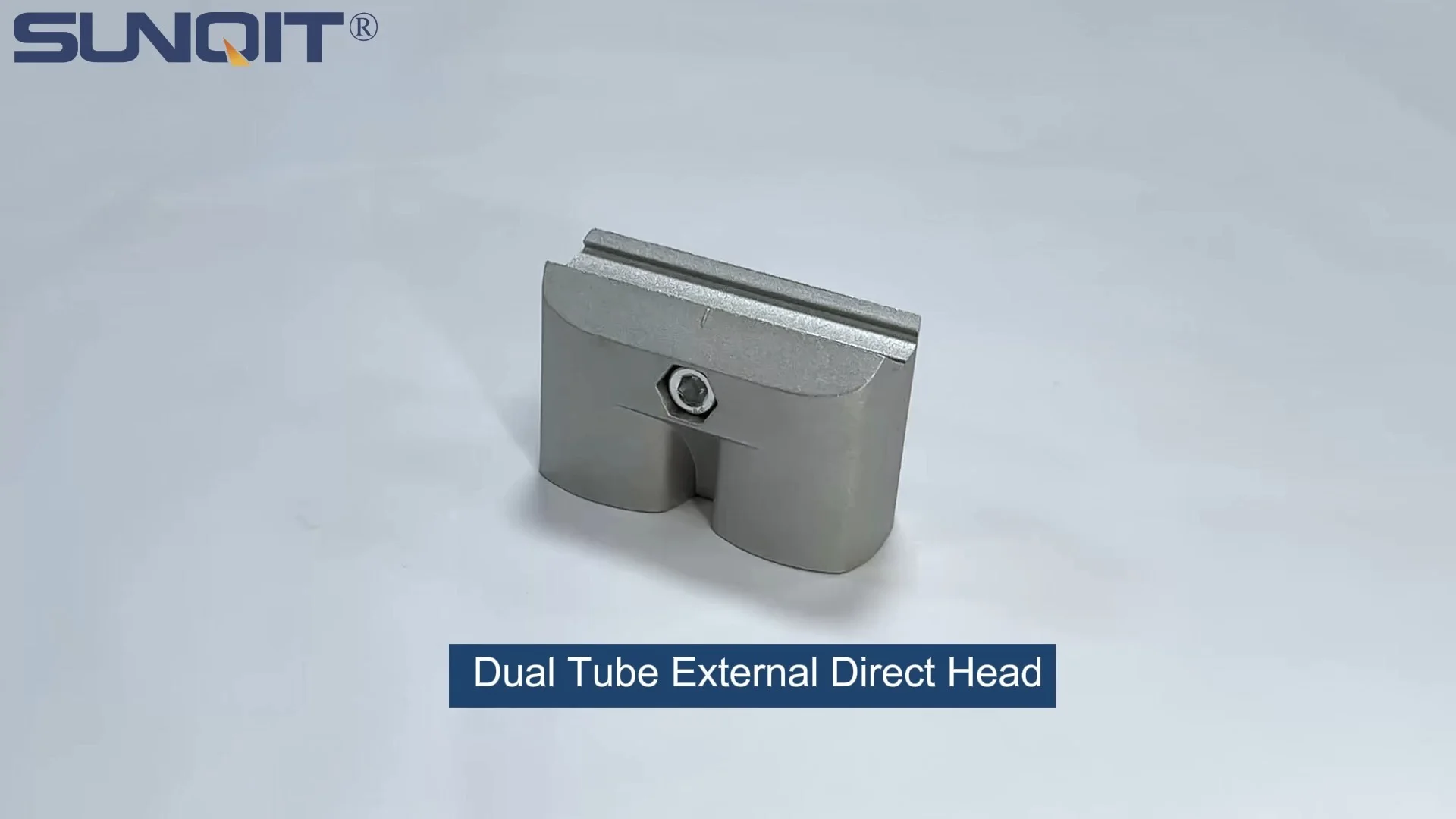
Duplex Aluminum Pipe Joint
Duplex Aluminum pipe joint used for one pcs 28pcs aluminum pipe and one pcs of 28mm duplex pipe connection in straight angle.
In today's manufacturing landscape, where customer demands shift overnight, production cycles shrink by the quarter, and operational costs are under constant scrutiny, the pressure to do more with less has never been greater. For decades, lean manufacturing has been the north star—guiding teams to eliminate waste, streamline workflows, and build systems that adapt as needs evolve. But as factories pivot from mass production to mass customization, and as "just-in-time" becomes "just-in-case" amid supply chain uncertainties, the tools that once defined lean systems are starting to show their age. Enter the duplex aluminum pipe joint: a quiet innovation that's quietly redefining how lean manufacturing systems are built, reconfigured, and sustained. This isn't just a new part; it's a paradigm shift in how we think about flexibility, durability, and efficiency on the factory floor.
Lean Manufacturing: The Need for Adaptable Foundations
At its core, lean manufacturing is about one thing: creating value without waste. From Toyota's original "Toyota Production System" to today's global factories, the principles remain the same—reduce overproduction, minimize inventory, cut down on waiting times, optimize transportation, streamline processing, eliminate defects, and reduce unnecessary motion. But if there's one principle that's grown in importance over the past decade, it's flexibility. Modern production lines can't afford to be static. A single factory might produce 50 different product variants in a week, each with unique assembly steps, tooling needs, and material flows. That means the workbenches, flow racks, and material trolleys that form the backbone of the operation need to shift as quickly as the orders do.
Traditional lean systems, often built with steel pipes, plastic-coated lean tubes, or basic aluminum profiles, have served us well. They're sturdy, familiar, and relatively affordable. But ask any plant manager about their pain points, and you'll hear the same frustrations: reconfiguring a workbench takes hours (if not days) of loosening rusted bolts and wrestling with heavy pipes. Flow racks designed for last month's product don't fit this month's larger components. Joints that felt tight on day one start to wobble after weeks of vibration, leading to frequent maintenance checks. And when a sudden surge in demand hits, scaling up the line means waiting for new parts or custom fabrications—time that can't be recouped.
The Hidden Costs of Outdated Lean Tools
To understand why duplex aluminum pipe joints matter, let's first unpack the limitations of the status quo. Take, for example, the humble lean pipe joint—the unsung hero that holds together everything from assembly workbenches to turnover trolleys. Traditional joints, whether made of cast iron or plastic, often rely on a single-point connection: a bolt that tightens around the pipe, or a clamp that pinches it into place. Over time, as the system vibrates (from machinery, worker movement, or material handling), these connections loosen. A loose joint might seem minor, but it cascades into problems: a wobbly workbench leads to misaligned parts and increased defects; a sagging flow rack slows down material flow as products get stuck; and a wobbly trolley risks damaging both goods and worker safety.
Then there's material choice. Steel lean pipes are durable but heavy—so heavy that reconfiguring a simple material rack b (3 row and 3 floor) might require two workers and a forklift. Plastic-coated pipes are lighter but prone to scratches and corrosion, especially in humid or chemical-heavy environments (think automotive or electronics plants). Aluminum profiles, while lighter, often use basic joints that sacrifice strength for simplicity, limiting their use in high-load applications like heavy-part assembly lines.
Perhaps the biggest cost, though, is time. In a recent survey of manufacturing managers, 68% cited "inability to quickly reconfigure production lines" as a top barrier to meeting customer demand. When a new order comes in requiring a 20% longer workbench, or a narrower flow rack, the process of disassembling old joints, sourcing compatible parts, and reassembling can take days. Days that the line sits idle, workers are pulled from value-adding tasks, and deadlines inch closer.

Duplex Aluminum Pipe Joints: Redefining Connection
So, what makes duplex aluminum pipe joints different? Let's start with the name: "duplex" refers to their dual-design structure, which combines internal and external components to create a connection that's both rock-solid and remarkably flexible. Unlike traditional single-point joints, these innovative connectors feature two layers of security: an internal rotary mechanism that grips the aluminum pipe from the inside, and an external clamp that reinforces the connection from the outside. The result? A joint that can withstand vibration, heavy loads, and repeated reconfiguration without loosening or degrading.
But the magic isn't just in the dual grip. Duplex joints are engineered for aluminum pipes specifically—and aluminum is a game-changer here. Aluminum's natural corrosion resistance means these systems thrive in wet, dusty, or chemical-exposed environments, from food processing plants to electronics cleanrooms. It's also 30% lighter than steel, turning a two-person job of moving a workbench into a one-person task. And because aluminum conducts heat and electricity poorly, duplex aluminum systems are safer for ESD (electrostatic discharge) sensitive work, like assembling circuit boards or semiconductors—no more grounding straps or expensive anti-static coatings.
Let's break down the key features that set duplex aluminum pipe joints apart:
- Dual-Lock Design: Internal rotary teeth bite into the pipe's inner wall, while an external lever or bolt tightens the outer sleeve, creating a "double lock" that resists loosening under vibration.
- Tool-Free Assembly: Most duplex joints can be tightened or loosened by hand, using nothing more than a standard hex key (and even that is often optional). No welding, no drilling, no specialized tools—meaning line workers can make adjustments on the fly.
- Universal Compatibility: Designed to work with standard aluminum pipes (including basic aluminum tube and t-slot aluminum pipe), as well as aluminum profile accessories like end caps, hinges, and clamps. This means you can mix and match components without worrying about brand-specific parts.
- 360-Degree Rotation: Many duplex joints feature internal bearings that allow pipes to rotate smoothly before locking into place, making it easy to angle workbenches, flow racks, or material trolleys exactly where they're needed—no more forcing pipes into rigid, pre-set positions.

The Ripple Effects of Better Connections
It's easy to dismiss a "better joint" as a small improvement, but in lean manufacturing, small improvements compound into big results. Let's walk through how duplex aluminum pipe joints transform operations, one benefit at a time.
1. Less Downtime, More Production
Consider a typical scenario: A consumer electronics plant needs to reconfigure its assembly line to produce a new smartphone model. The old line uses steel lean pipes with traditional joints; reconfiguring the flow racks and workbenches takes 16 hours (two full shifts). With duplex aluminum joints, that same reconfiguration takes 3 hours. Why? Because workers don't need to wrestle with heavy pipes, hunt for tools, or wait for maintenance to weld new connections. They simply loosen the external lever, adjust the pipes, and lock them back in. Over a year, if the plant reconfigures lines 12 times, that's 156 hours saved—nearly 20 full workdays of extra production time.
2. Lower Maintenance, Higher Reliability
Traditional joints need constant checking. A study by the Manufacturing Technology Association found that 15% of unplanned downtime in lean facilities is due to loose or failed joints. Duplex joints, with their dual-lock design, drastically reduce this. In field tests, duplex aluminum connections maintained 95% of their initial tightness after 10,000 cycles of vibration (equivalent to 6 months of heavy use), compared to 62% for standard steel joints. That means fewer maintenance checks, fewer unexpected breakdowns, and fewer workers pulled from production to tighten bolts.
3. Flexibility to Scale (or Shrink) on Demand
In today's "lot size 1" manufacturing world, production lines need to shrink as often as they grow. A furniture manufacturer might run a batch of 50 large sofas one week, then switch to 200 small chairs the next—requiring narrower workbenches and shorter flow racks. Duplex joints make scaling a breeze. Because they're lightweight and tool-free, workers can disassemble sections of a material rack, add or remove aluminum pipes, and reassemble in minutes. Even better, the aluminum pipes and joints are reusable—no more throwing away old steel pipes because the threads are stripped or the paint is chipped.
4. Safer, Happier Workers
Heavy equipment isn't just inefficient—it's dangerous. The Bureau of Labor Statistics reports that overexertion injuries (like strains from lifting heavy objects) cost U.S. manufacturers $15 billion annually. Duplex aluminum systems, being 30% lighter than steel, reduce the risk of these injuries. A workbench that once weighed 200 lbs now weighs 140 lbs; a turnover trolley that required two people to push now glides with one. Lighter systems also mean less fatigue, which translates to better focus, fewer mistakes, and lower turnover.

From Workbenches to Flow Racks: Real-World Impact
Duplex aluminum pipe joints aren't just theoretical—they're transforming operations across industries. Let's look at a few examples of how they're being put to work today.
Electronics Manufacturing: ESD Workstations That Adapt
A leading electronics manufacturer in Malaysia produces everything from smartwatches to industrial sensors. Each product requires an ESD workstation to prevent static damage to sensitive components. Previously, their ESD workbenches were built with steel pipes and basic joints; reconfiguring them for different product sizes took 4 hours per bench. After switching to duplex aluminum pipe joints and aluminum profile workbenches, they cut reconfiguration time to 45 minutes. Workers can now adjust the height, add tool rails, or expand the surface area in minutes, and the aluminum's natural ESD resistance eliminated the need for expensive anti-static coatings. "We used to schedule reconfigurations for weekends to avoid downtime," says the plant manager. "Now we do it between shifts—no lost production, no overtime."
Automotive Parts: Heavy-Duty Flow Racks That Last
An automotive tier-1 supplier in Germany produces engine components weighing up to 50 lbs. Their material flow racks, which transport parts from machining to assembly, were constantly failing: traditional steel joints loosened under the weight, causing racks to sag and parts to jam. After switching to duplex aluminum pipe joints and 40mm aluminum pipes, the racks now handle 75 lbs per shelf with no sagging. "We used to check joints weekly; now we check them monthly," the operations director notes. "And when we need to add a third shelf for a new part? We do it in 20 minutes, not a full day."
Food Processing: Corrosion-Resistant Trolleys
A food packaging plant in the U.S. struggled with traditional plastic-coated lean pipe trolleys, which rusted quickly in the humid, washdown environment. Duplex aluminum systems solved this: aluminum's corrosion resistance stands up to daily sanitizing, and the joints don't trap food particles (unlike crevice-prone steel joints). "We've had the same trolleys for two years now—they still look brand new," says the facility manager. "No more replacing rusted parts every six months."
Duplex Aluminum vs. Traditional Joints: A Side-by-Side Look
| Feature | Traditional Steel Joints | Duplex Aluminum Pipe Joints |
|---|---|---|
| Material | Carbon steel (prone to corrosion) | Aluminum alloy (corrosion-resistant) |
| Weight (per joint) | 150-200g | 80-100g (30-40% lighter) |
| Assembly Time | 10-15 minutes (requires tools, alignment) | 2-3 minutes (tool-free, self-aligning) |
| Reconfiguration Ease | Difficult (bolts may seize; pipes bend) | Easy (hand-tighten/loosen; pipes reusable) |
| Load Capacity | High (but heavy system overall) | High (up to 500kg per joint; lighter system) |
| Maintenance Frequency | Weekly (tighten bolts, check for rust) | Quarterly (visual inspection only) |
| ESD Compatibility | Requires coating | Natural (aluminum dissipates static) |
The Future of Lean: Where Duplex Joints Lead
As manufacturing continues to evolve—toward more customization, shorter product lifecycles, and smarter factories—duplex aluminum pipe joints are more than an upgrade; they're a foundation for the future. Here's what's next:
Integration with Industry 4.0: Imagine a flow rack built with duplex joints that includes embedded sensors to track material flow, or a workbench with aluminum profile accessories that connect to IoT devices for real-time productivity monitoring. Duplex systems' modularity makes them ideal for adding smart components—no need to rebuild the entire structure when upgrading to connected tools.
Sustainability Focus: Aluminum is 100% recyclable, and duplex joints' reusability means less waste. As manufacturers face stricter environmental regulations, duplex systems will become a key part of "circular manufacturing" strategies—reducing reliance on raw materials and cutting carbon footprints.
Customization at Scale: With duplex joints, even small manufacturers can compete with larger players by building flexible lines that switch between products quickly. A startup making custom medical devices, for example, can use duplex aluminum workbenches and flow racks to scale from 10 units a day to 100 without investing in new infrastructure.
Building the Lean Factory of Tomorrow—Today
Lean manufacturing has always been about progress: finding better ways to create value, eliminate waste, and adapt to change. Duplex aluminum pipe joints aren't just a new tool in that toolkit—they're a leap forward. By solving the hidden costs of traditional joints—downtime, maintenance, inefficiency—they free manufacturers to focus on what matters: making great products, serving customers, and growing their businesses.
Whether you're running a small workshop or a global production facility, the question isn't whether you need more flexibility—it's how quickly you can get it. Duplex aluminum pipe joints don't just answer that question; they redefine what's possible. So the next time you look at your production line, ask yourself: Are your tools holding you back, or propelling you forward? The future of lean is here—and it's lighter, stronger, and ready to adapt.