- Company Articles
- Products and Technology
- Technology Sharing
- The Future of Lean Manufacturing: One Side Rotatory Chrome Parallel Lean Pipe Joint Innovations

The Future of Lean Manufacturing: One Side Rotatory Chrome Parallel Lean Pipe Joint Innovations
Related Product
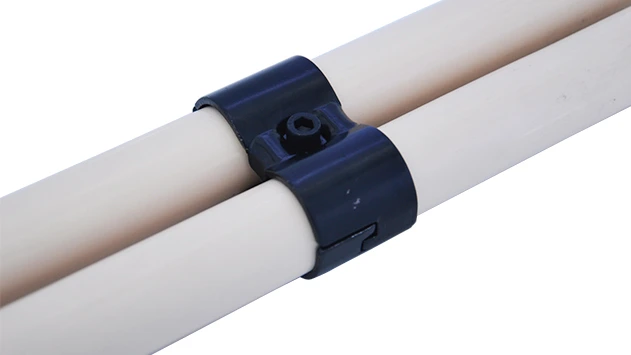
Parallel Lean Pipe Joint
Parallel lean pipe joint used for 2 pcs 28MM lean pipe connection in parallel direction to enhance frame structure, usually for heavy payload requirement for workbench. flow rack, hand trolley.
In the fast-paced world of manufacturing, where change is the only constant, the ability to adapt has become more than a competitive advantage—it's a survival skill. For decades, lean manufacturing has been the north star for businesses aiming to eliminate waste, boost efficiency, and stay agile. But as production lines evolve to meet shifting consumer demands, the tools that support lean principles must evolve too. Enter the One Side Rotatory Chrome Parallel Lean Pipe Joint —a small but mighty innovation that's quietly revolutionizing how factories design, build, and reconfigure their workspaces. This isn't just about a new piece of hardware; it's about reimagining what lean manufacturing can be in an era where flexibility isn't optional.
From Rigidity to Resilience: The Evolution of Lean Tools
Lean manufacturing, born from the Toyota Production System in the mid-20th century, was built on the idea of "just-in-time" production and minimizing waste. Early lean tools, like basic steel pipes and fixed joints, were designed for stability—critical for repetitive, high-volume workflows. But as industries shift toward smaller batches, custom products, and rapid design changes, those once-reliable tools have become a bottleneck. Imagine a electronics manufacturer that used to produce 10,000 identical circuit boards a day now needing to switch between 50 different models weekly. Their old, bolted-down workbenches and rigid material racks? Suddenly, they're not assets—they're obstacles.
Traditional lean pipe joints, often made of basic steel or plastic, were never meant for constant reconfiguration. Adjusting a workstation meant wrestling with wrenches, cutting pipes to length, and replacing components that wore out from frequent disassembly. The result? Downtime measured in hours, not minutes, and a workforce frustrated by tools that fought against, rather than for, their productivity. It's a scenario that's played out in factories worldwide, from automotive plants to medical device labs: the need for flexibility is growing, but the tools haven't kept up.
Meet the Game-Changer: One Side Rotatory Chrome Parallel Lean Pipe Joint
Enter the One Side Rotatory Chrome Parallel Lean Pipe Joint . At first glance, it might look like just another metal connector—but that's where its genius lies. Unlike traditional fixed joints, this innovation combines durability with dynamic movement, allowing pipes to rotate smoothly on one axis while staying parallel on the other. Think of it as a hinge that doesn't just bend but adapts, letting workers reposition sections of a workstation, adjust the angle of a material rack, or reconfigure a flow line in minutes, not hours.
Let's break down what makes this joint special. First, the chrome plating isn't just for shine—it's a shield. Chrome adds a layer of corrosion resistance, making the joint ideal for factories where moisture, oils, or chemicals are present (we're looking at you, automotive and aerospace industries). It also reduces friction, ensuring that the rotational mechanism stays smooth even after months of heavy use. Then there's the one-side rotatory design : one end of the joint locks firmly into place, while the other rotates up to 180 degrees, allowing for precise angle adjustments without compromising stability. And the parallel alignment feature ? That ensures that when you rotate a pipe, it stays level with its counterpart, preventing the wobbly, uneven structures that plague DIY reconfigurations with traditional joints.
But perhaps the most user-centric feature is its simplicity. No special tools, no complicated instructions. A worker can loosen a thumb screw, rotate the pipe to the desired angle, and tighten it back down—all in under a minute. For someone who's spent hours wrestling with nuts and bolts to adjust a workstation, this isn't just convenient; it's transformative. It turns "we can't change that" into "we can change that before lunch."

Beyond the Joint: Building a Lean Ecosystem with Aluminum Profile and Roller Track
A great joint is only as good as the system it's part of. To truly unlock flexibility, the One Side Rotatory Chrome Parallel Lean Pipe Joint doesn't work alone—it teams up with other modern lean components, like Aluminum Profile and Roller Track , to create ecosystems that adapt as quickly as your production needs do.
Aluminum Profile: The Backbone of Flexible Structures
Aluminum has long been a favorite in manufacturing for its strength-to-weight ratio, but modern Aluminum Profile takes it a step further. With T-slot grooves running along its length, it's like a modular building block that lets you attach everything from shelves to tools to lighting—no drilling or welding required. When paired with the rotatory joint, Aluminum Profile becomes the backbone of structures that can evolve. Need a taller workbench for a new assembly process? Swap out the vertical profiles and use the rotatory joint to adjust the angle of the top shelf. Want to add a side rack for tools? Slide a bracket into the T-slot and secure it with a bolt. It's construction without the commitment, and it's changing how factories think about "permanent" infrastructure.
Roller Track: Keeping Materials Moving, Even When Lines Change
Material flow is the lifeblood of lean manufacturing, and Roller Track systems are the veins that keep it flowing. Traditional roller tracks are fixed in place, designed for a single, unchanging path. But when production lines need to pivot—say, rerouting components to a new assembly station—the old tracks become dead weight. Enter the rotatory joint: by connecting Roller Track sections with these joints, you can adjust the track's angle, create gentle curves, or even split a single line into two, all without replacing the entire system. It's like having a railway that can rearrange its tracks on the fly, ensuring materials get where they need to go, no matter how the workflow shifts.
Case Study: The Lean Pipe Workbench That Adapted to 50 Product Changes
Let's put this into context with a real-world example. Consider a mid-sized electronics manufacturer that produces custom circuit boards for IoT devices. Their challenge? Each client order is unique, with different board sizes, component layouts, and assembly steps—sometimes requiring 50+ product changes a month. Their old setup? Fixed Lean Pipe Workbenches with bolted joints and static Roller Tracks. Changing a workstation for a new product meant shutting down the line for 4 hours, cutting pipes, and rebuilding from scratch. Downtime was costing them tens of thousands of dollars annually, and employee morale was sinking under the frustration of constant rework.
Then they switched to a system built around the One Side Rotatory Chrome Parallel Lean Pipe Joint , Aluminum Profile , and adjustable Roller Track . Here's what happened: When a new order came in, workers loosened the rotatory joints to adjust the workbench height and angle, slid Aluminum Profile brackets into T-slots to add or remove tool holders, and rotated Roller Track sections to reroute components. What used to take 4 hours now took 30 minutes. Downtime dropped by 90%, and employees went from dreading product changes to embracing them—after all, who wouldn't prefer a 30-minute tweak over a half-day rebuild?

The ESD Workstation: Protecting Sensitive Electronics While Staying Flexible
In industries like electronics manufacturing, flexibility can't come at the cost of protection. ESD Workstations —designed to prevent electrostatic discharge that can fry sensitive components—have traditionally been some of the most rigid setups in factories. Their metal frames and grounded surfaces are non-negotiable for safety, but that used to mean they were also non-adjustable. Not anymore.
The One Side Rotatory Chrome Parallel Lean Pipe Joint is changing the game for ESD workstations. By using chrome-plated steel (a conductive material) and pairing it with grounded Aluminum Profile, the joint ensures that electrostatic charges are safely dissipated—no compromise on protection. But now, that protection comes with flexibility. Need to angle the workstation's top surface to reduce glare for inspectors? Rotate the joint. Add a second level for component bins? Slide an Aluminum Profile shelf into place. Even grounding wires can be routed through the T-slots of the Aluminum Profile, keeping them organized and out of the way. It's the best of both worlds: a workstation that protects your most sensitive products and adapts to how you build them.
Traditional vs. Rotatory: A Head-to-Head Comparison
Still on the fence about whether the One Side Rotatory Chrome Parallel Lean Pipe Joint is worth the switch? Let's stack it up against traditional lean pipe joints in the table below:
| Feature | Traditional Lean Pipe Joint | One Side Rotatory Chrome Parallel Lean Pipe Joint |
|---|---|---|
| Adjustability | Fixed angle; requires cutting/replacing pipes to reconfigure | 180° rotation on one axis; parallel alignment maintained |
| Assembly/Reconfiguration Time | 30–60 minutes per adjustment (tools required) | 2–5 minutes per adjustment (tool-free) |
| Durability | Basic steel/plastic; prone to corrosion and wear | Chrome-plated steel; corrosion-resistant and low-friction |
| Compatibility | Works with basic steel pipes only | Compatible with Aluminum Profile, Roller Track, and ESD components |
| Best For | Static, high-volume production lines with rare changes | Dynamic, low-batch production; custom manufacturing; ESD-sensitive environments |
Sustainability: Lean Manufacturing That's Kind to the Planet
Lean manufacturing has always been about eliminating waste, but today's factories are taking that a step further—eliminating environmental waste, too. The One Side Rotatory Chrome Parallel Lean Pipe Joint isn't just good for your bottom line; it's good for the planet. Here's how:
- Less Material Waste : Traditional joints often require cutting pipes to specific lengths, leading to scraps that end up in landfills. With rotatory joints, you can reuse the same pipes across multiple configurations—no cutting needed. A single pipe might start as part of a workbench, then become a shelf, then a material rack, extending its lifecycle indefinitely.
- Reduced Energy Use : Reconfiguring with traditional joints means more downtime, which means more energy wasted on idle machines and lighting. The rotatory joint cuts reconfiguration time by up to 95%, slashing energy consumption during transitions.
- Recyclable Materials : Chrome-plated steel and Aluminum Profile are both highly recyclable. When a component finally reaches the end of its life, it can be melted down and repurposed—unlike plastic joints, which often end up as permanent waste.
It's a small contribution, but multiplied across thousands of factories worldwide, it adds up. Lean manufacturing was never just about profit—it was about respect for people and planet, too. The rotatory joint honors that legacy.
The Future of Lean: Where Do We Go From Here?
The One Side Rotatory Chrome Parallel Lean Pipe Joint is more than a tool—it's a glimpse into the future of lean manufacturing. As Industry 4.0 takes hold, with smart factories, IoT sensors, and AI-driven production planning, the physical infrastructure of manufacturing will need to keep pace. We're already seeing early innovations: joints with built-in sensors that alert maintenance teams when they're starting to wear out, or Aluminum Profile with embedded RFID tags that track which components are used where. But at the core of it all will be flexibility—the ability to adapt not just to what we know today, but to what we can't even imagine tomorrow.
Imagine a factory where workstations reconfigure themselves overnight based on AI predictions of the next day's orders. Or where a single production line can switch from building medical devices in the morning to consumer electronics in the afternoon, with no human intervention needed. It sounds like science fiction, but it starts with tools like the rotatory joint—small, adaptable components that turn rigid factories into living, breathing systems.
Final Thoughts: Lean Isn't Just a Process—It's a Mindset
At the end of the day, lean manufacturing isn't about tools or systems or even waste reduction. It's about a mindset—a belief that there's always a better way, and that change is an opportunity, not a burden. The One Side Rotatory Chrome Parallel Lean Pipe Joint embodies that mindset. It's a reminder that even the smallest components can have the biggest impact, and that flexibility isn't just about keeping up with the competition—it's about leading the way.
So, to the factory managers, the production supervisors, and the frontline workers who keep the world running: The future of lean is here. It's in the joints that rotate, the profiles that adapt, and the tracks that flow. It's in the ability to say, "We can do that," and mean it. And it's just getting started.