- Company Articles
- Products and Technology
- Technology Sharing
- The Future of Lean Manufacturing: Turning Angle Code 2020 and Smart Factory Integration

The Future of Lean Manufacturing: Turning Angle Code 2020 and Smart Factory Integration
Related Product
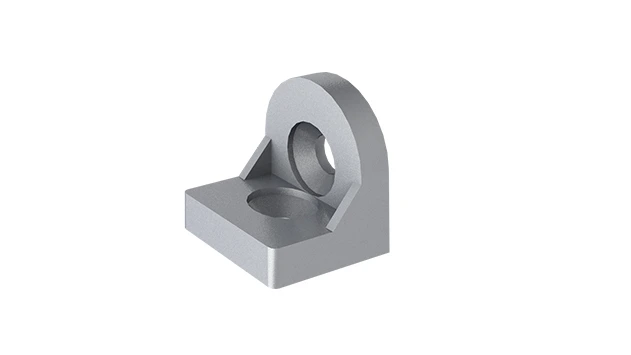
Urning Angle Code 2020
The turning angle aluminum profile connector provides a 90 degree hidden corner connection. 2020 it is means this size is used for 20 series aluminum profile.The corner code comes with set screws that allow for quick, easy connections.
Walk into any modern manufacturing plant today, and you'll likely notice a quiet revolution unfolding. The hum of conveyor belts still fills the air, but now it's paired with the soft glow of digital dashboards. Workers aren't just assembling parts—they're collaborating with robots, and production lines that once took weeks to reconfigure now adapt in hours. At the heart of this shift? A new breed of lean manufacturing tools, where old principles meet cutting-edge flexibility. And if there's one unsung hero in this story, it might just be something as simple as the Turning Angle Code 2020.
Lean manufacturing has always been about flow —eliminating waste, streamlining processes, and making every action count. But for decades, even the best lean systems hit a wall: rigidity. Traditional setups, built with fixed steel pipes and bolted joints, couldn't keep up with markets that demand constant change. Enter the smart factory, where adaptability isn't just a nice-to-have; it's survival. And in this world, the tools that build our production lines need to be as smart as the data driving them. Let's dive into how components like the Turning Angle Code 2020, aluminum profiles, and modern roller tracks are rewriting the rules of lean—one adjustable joint at a time.
From Assembly Lines to Smart Cells: The Evolution of Lean
To understand where we're going, it helps to look back. Lean manufacturing as we know it began in the 1950s with Toyota's TPS (Toyota Production System) . Back then, the goal was straightforward: stop wasting time, materials, and effort. Think of the classic example: a worker walking 10 extra steps to grab a tool is waste. A machine sitting idle while parts pile up? Waste. Toyota's solution? Standardize workflows, empower workers to stop the line when they spot issues, and focus on kaizen —continuous improvement.
But here's the thing: Toyota's early systems were built for stability. They thrived when producing the same car model for years. Fast forward to 2025, and manufacturers face a different reality. Customers want personalized products—laptops with custom specs, smartphones in limited-edition colors, medical devices tailored to specific clinics. A production line that takes a month to retool for a new product is a liability. That's where the "smart" in smart lean comes in. Today's lean systems don't just reduce waste—they predict it, using IoT sensors and real-time data. But none of that works if the physical infrastructure can't keep pace.
Imagine a electronics plant that makes both smartwatches and fitness trackers. One week, demand spikes for trackers; the next, it shifts to watches. In a traditional lean setup, switching between assembly lines might mean disassembling workbenches, rerouting conveyor belts, and reconfiguring material racks—days of downtime. In a smart lean setup? Workers grab a few aluminum profiles, snap on a Turning Angle Code 2020 joint, and adjust the roller track to feed parts to the new watch line. Done in hours. That's the difference flexibility makes.
Turning Angle Code 2020: The Little Joint That Could
Let's talk about that Turning Angle Code 2020. At first glance, it's easy to dismiss as "just another bracket." But in reality, it's the linchpin of modular lean systems. Traditional lean setups relied on welded steel pipes or fixed joints that required wrenches, drills, and sometimes even a team of engineers to adjust. The Turning Angle Code 2020? It's a lightweight aluminum joint designed for one thing: quick, tool-free reconfiguration. Slide it onto an aluminum profile, twist the locking mechanism, and you've got a rock-solid connection that can be undone in seconds.
Why does this matter? In a smart factory, change is the only constant. Let's say a production manager notices a bottleneck on the assembly line. Data from IoT sensors shows parts are piling up at the testing station because the workbench is too low—workers are bending, slowing down. With traditional steel workbenches, fixing that might mean ordering a new bench or hiring a welder to cut and reattach legs. With a workbench built using aluminum profiles and Turning Angle Code 2020 joints? The team loosens the joints, adjusts the height, locks them back in, and the line is moving again in 15 minutes. No downtime, no extra labor—just problem-solving, the lean way.
But the Turning Angle Code 2020 isn't just about speed. It's about precision . Smart factories run on data, and data needs consistency. These joints are engineered to hold their position under heavy loads, so a workbench adjusted to 90cm today stays at 90cm tomorrow, even with daily use. That stability is critical when you're integrating automated tools—like robotic arms that need to align perfectly with a roller track feeding parts. In short, it's the bridge between the physical and digital worlds of manufacturing.

Aluminum Profiles: The Backbone of Flexible Lean Systems
If the Turning Angle Code 2020 is the joint, then aluminum profiles are the bones of modern lean setups. Walk through any advanced manufacturing facility, and you'll see them everywhere: sleek, silver rails forming workbenches, material racks, and even entire production cells. But why aluminum? Why not stick with steel, the tried-and-true material of old?
Steel is strong, no doubt—but it's heavy, corrosive (unless stainless), and a nightmare to modify. Aluminum profiles, on the other hand, are lightweight (about 1/3 the weight of steel), rust-resistant, and—most importantly— modular . Their T-slot design (a groove running along the length) lets you snap on accessories like brackets, roller tracks, or tool holders without drilling. Pair that with joints like the Turning Angle Code 2020, and you've got a system that can be built, taken apart, and rebuilt in endless configurations.
Take material handling, for example. A traditional material rack might be a steel shelf bolted to the floor, holding 3 rows of parts. If you need to add a fourth row? You're looking at cutting new steel, welding, and repainting. With an aluminum profile rack (say, Material Rack B, a 3-row, 3-floor design), you can simply add another aluminum beam using a few Turning Angle Code 2020 joints and extra brackets. The T-slots mean you don't have to drill new holes—just slide the brackets into place and lock them. It's lean design at its best: using the same base components to solve new problems.
And let's not forget cost. Aluminum profiles might have a higher upfront price than steel pipes, but their longevity and reusability more than make up for it. A steel rack that gets scrapped when a product line ends vs. an aluminum rack that's disassembled and rebuilt into a workbench for the next project? The math speaks for itself. Smart lean isn't just about saving time—it's about saving resources, too.

Roller Tracks: Making Flow Visible (and Data-Driven)
If lean is about flow, then roller tracks are the rivers that carry it. Traditional conveyor belts are great for moving heavy loads, but they're often one-trick ponies—fixed paths, hard to adjust, and blind to what's actually happening on the line. Modern roller tracks, though? They're more like smart highways, and they're changing how we think about material flow.
Let's start with the basics: plastic roller track guide rails, available in yellow or grey, paired with steel or aluminum rollers. These tracks are designed to let parts glide smoothly from one station to the next, using gravity or gentle motorized assistance. But the real magic is in how they integrate with data. Many modern roller tracks come with built-in sensors that track when a part passes through, how long it takes to move from Point A to Point B, and even if it's stuck (thanks to pressure sensors on the rollers). That data feeds into the factory's dashboard, letting managers spot bottlenecks before they become problems.
Take a simple example: a line producing circuit boards. Each board needs to move from soldering to testing to packaging. If the roller track between soldering and testing is angled too steeply, boards might slide too fast, causing jams. Too shallow, and they slow down, backing up the line. With sensor-equipped roller tracks, the system can automatically adjust the angle (using motorized hinges) to keep flow steady. Or, if a batch of boards is thicker than usual, the track can alert the operator to switch to a wider roller spacing—all without stopping production.
And just like aluminum profiles, these roller tracks are built for flexibility. Need to add a detour for quality checks? Use roller track placon mounts to connect new sections in minutes. Want to split a track into two to feed two workstations? Swap out a straight connector for a Y-joint. Traditional conveyor systems required custom fabrication for even small changes; today's roller tracks are like building blocks, designed to adapt as your needs do. It's lean flow, reimagined for a world where change is constant.
Workbenches and ESD Workstations: Where Humans and Machines Collaborate
At the end of every production line, there's a human being. And in smart factories, that human is often working side-by-side with robots, scanners, and sensitive electronic tools. That's where workbenches and ESD workstations come in—not just as tables, but as hubs of human-machine collaboration.
A standard workbench E (single deck, without casters) might seem basic, but when built with aluminum profiles and Turning Angle Code 2020 joints, it becomes a chameleon. Need to add a shelf for tools? Snap on brackets. Want to mount a monitor for digital work instructions? Use T-slot accessories to attach it at eye level. Workers can adjust the height to their comfort, reducing strain and boosting productivity. And when the product line changes, the workbench changes with it—no need to buy a new one.
But in industries like electronics or medical device manufacturing, there's an added layer of complexity: static electricity. A single electrostatic discharge (ESD) can fry a microchip or ruin a pacemaker component. That's where ESD workstations shine. These aren't just regular workbenches—they're grounded, with anti-static surfaces and wrist straps that connect to the factory's ESD monitoring system. Walk into a semiconductor plant, and you'll see ESD workstations with real-time displays showing static levels; if something's off, the system alerts the operator before a part is damaged.
What makes modern ESD workstations "smart"? Integration. Many now come with USB ports for charging tools, cable management channels to reduce clutter (and tripping hazards), and even built-in scales to track material usage. Pair that with a roller track feeding parts directly to the workstation, and you've got a setup where waste—whether it's time, motion, or defective parts—is minimized at every step. It's lean manufacturing, but with a safety net built in.
Traditional vs. Smart Lean: A Quick Comparison
| Feature | Traditional Lean Systems | Smart Lean Systems (2025) |
|---|---|---|
| Reconfiguration Time | Weeks (requires tools, welding, custom parts) | Hours (tool-free joints like Turning Angle Code 2020) |
| Data Integration | Manual tracking (clipboards, spreadsheets) | Real-time sensors (roller tracks, ESD monitors, IoT dashboards) |
| Flexibility | Fixed setups (built for one product line) | Modular (aluminum profiles, reconfigurable roller tracks) |
| Waste Reduction | Reactive (fixing waste after it happens) | Proactive (predicting bottlenecks via data) |
| Cost Over Time | Higher (scrapped equipment, downtime) | Lower (reusable components, less downtime) |
Challenges on the Path to Smart Lean
Of course, integrating these new tools into existing lean systems isn't without hurdles. The biggest? Legacy infrastructure. Many factories still run on decades-old steel pipe setups, and replacing them all at once is costly. The solution? Phased adoption. Start with high-impact areas—like a problematic assembly line or a workstation that's constantly reconfigured—and expand from there. A manufacturer in Michigan, for example, started by replacing their old steel material racks with aluminum profile racks (using Turning Angle Code 2020 joints) and saw a 40% reduction in time spent restocking parts. Within a year, they'd rolled out the change.
Another challenge: training. Workers used to fixed systems might be hesitant to adopt new tools, fearing complexity. But most modern lean components are designed to be intuitive. The Turning Angle Code 2020, for instance, has color-coded locks to show "locked" vs. "unlocked" positions, and many suppliers offer hands-on workshops. One plant in Texas reported that after a 2-hour training session, their line workers were reconfiguring workbenches on their own—no engineers needed.
Finally, data overload. Smart lean systems generate a lot of data, and without the right tools to analyze it, it's just noise. The key is to focus on actionable metrics: How long does it take to reconfigure a workstation? How often do roller tracks jam? What's the ESD failure rate? By zeroing in on metrics that drive decisions, factories can avoid drowning in data and stay focused on what matters—flow.
The Road Ahead: Lean 4.0
So, what does the future hold? If the last decade is any indication, smart lean will only get smarter. We're already seeing experiments with AI-driven reconfiguration—systems that use machine learning to predict which workstation setups will be most efficient for a new product, then automatically adjust aluminum profiles and roller tracks using robotic arms. Imagine a factory that, overnight, rebuilds its own production line based on an order forecast. It sounds like science fiction, but with components like the Turning Angle Code 2020 and aluminum profiles, it's closer than you think.
We'll also see more focus on sustainability. Aluminum profiles are recyclable, and many roller tracks now use recycled plastic for guide rails. Smart lean isn't just about reducing waste in production—it's about reducing the environmental footprint of the tools themselves. A lean system that saves time and cuts carbon emissions? That's the future we're building.
At the end of the day, lean manufacturing has always been about people. It's about giving workers the tools they need to do their jobs better, faster, and with more pride. The Turning Angle Code 2020, aluminum profiles, and smart roller tracks aren't replacing humans—they're empowering them. They're turning production lines into playgrounds for problem-solvers, where every adjustment, every improvement, is a step toward a more efficient, more adaptable, and more human factory.
So the next time you walk through a manufacturing plant, take a closer look at the workbenches, the roller tracks, the joints holding it all together. You might just be looking at the future of lean—and it's a future built on flexibility, one Turning Angle Code 2020 at a time.