- Company Articles
- Products and Technology
- Product knowledge
- The Future of Lean Pipe Fixed Clamps: Innovations in Lean Manufacturing

The Future of Lean Pipe Fixed Clamps: Innovations in Lean Manufacturing
Related Product
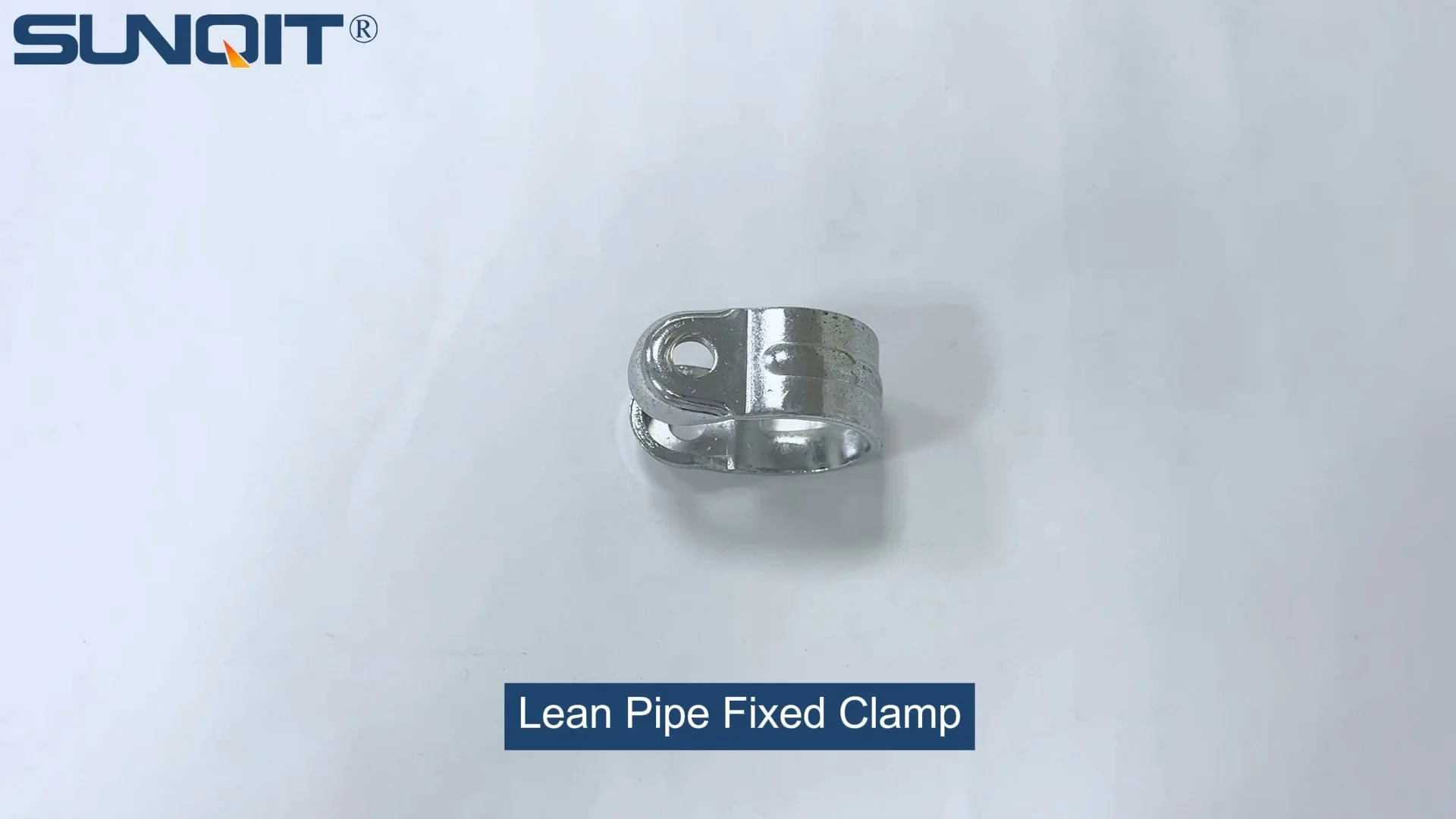
Lean Pipe Fixed Clamp
Lean pipe fixed clamp is used for pipe connector fixing the correct position during workbench flow rack hand trolley assemble work.
In the fast-paced world of manufacturing, where every second counts and waste is the enemy, lean manufacturing has long been the guiding philosophy for businesses striving to do more with less. At its core, lean is about streamlining processes, eliminating inefficiencies, and empowering teams to work smarter—not harder. But behind the buzzwords and methodologies lies a critical truth: lean manufacturing doesn't just happen. It's built on the back of tools and systems designed to adapt, evolve, and support the humans using them. Among these tools, one component often flies under the radar, yet holds the entire operation together: the lean pipe fixed clamp.
Think about it: every workbench, every flow rack, every conveyor system in a lean setup relies on these unassuming clamps to keep pipes, frames, and components securely fastened. They're the silent stabilizers, the connectors that turn raw materials into functional workspaces. But as manufacturing demands grow more complex—with the rise of automation, custom production runs, and sustainability goals—the humble fixed clamp is undergoing a revolution of its own. Today, we're diving into how innovations in lean pipe fixed clamps are reshaping the future of lean manufacturing, and why forward-thinking brands are partnering with agile lean system suppliers to stay ahead of the curve.
The Unsung Hero: What Are Lean Pipe Fixed Clamps, Anyway?
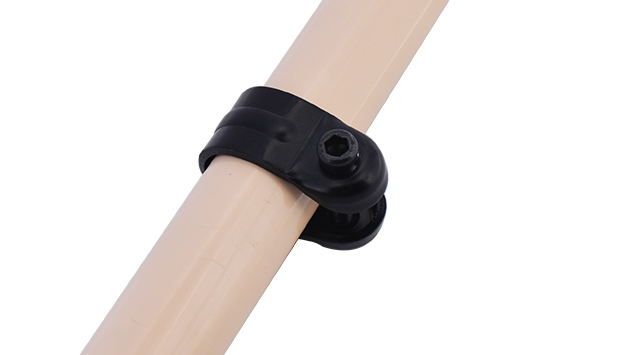
Before we talk about the future, let's ground ourselves in the present. Lean pipe fixed clamps are exactly what they sound like: specialized fasteners designed to connect lean pipes (often steel, aluminum, or stainless steel) into rigid, modular structures. Unlike their adjustable counterparts, fixed clamps are engineered for stability—they lock pipes into place, ensuring that workbenches don't wobble, flow racks don't shift, and conveyor systems maintain alignment even under heavy loads.
In traditional setups, these clamps were often basic, made of cast iron or plain steel, and required tools like wrenches or screwdrivers to tighten. They did the job, but not without trade-offs: they were prone to rust in humid environments, time-consuming to assemble, and rigid to the point of limiting reconfiguration. For a lean system built on flexibility, this was a silent bottleneck.
Consider a typical electronics manufacturing plant, where ESD workstations are critical to preventing static damage to sensitive components. A single loose clamp on a workbench could disrupt the entire line, leading to costly delays or defective products. Or a automotive assembly floor, where a misaligned roller track—held together by worn-out clamps—might cause parts to jam, halting production. In these scenarios, the fixed clamp isn't just a part; it's a guardian of efficiency.
The Breaking Point: Why Traditional Clamps Are Falling Short
As manufacturers push for faster production cycles, greater customization, and greener operations, traditional fixed clamps are struggling to keep up. Let's break down the key pain points:
- Material Limitations: Traditional steel clamps are durable but heavy, adding unnecessary weight to mobile setups like turnover trolleys. They also corrode easily in damp or chemical-heavy environments, requiring frequent replacements—a hidden cost in both time and money.
- Assembly Friction: Old-school clamps often need multiple tools and precise torque to secure, slowing down the setup of new workstations or reconfiguration of existing ones. In a lean system where adaptability is key, this "friction" becomes a form of waste (muda, in lean terms).
- Compatibility Gaps: With the shift toward lighter, more versatile materials like aluminum profile, many traditional clamps don't play well with modern setups. Aluminum pipes have different diameters and surface finishes, making older clamps either too loose (risking instability) or too tight (damaging the pipe).
- Wear and Tear: Repeated assembly and disassembly—common in dynamic manufacturing environments—wear down traditional clamp threads, leading to loosening over time. This isn't just a maintenance issue; it's a safety risk for workers operating near unstable structures.
For a lean system supplier, these challenges aren't just theoretical. They're what clients complain about in every consultation: "Our clamps keep rusting," "We need to re-tighten them weekly," "We can't swap out steel pipes for aluminum because the clamps don't fit." The message is clear: the future of lean manufacturing demands a better clamp.
Innovations Redefining the Game: What's New in Fixed Clamp Design?
Thankfully, the industry is listening. Today's leading lean system suppliers are partnering with engineers to reinvent the fixed clamp from the ground up. Here are the innovations driving the next generation:
1. Material Makeovers: Aluminum, Stainless Steel, and Beyond
The first leap forward is in materials. Enter aluminum lean pipe clamps—lightweight, corrosion-resistant, and perfectly matched to the aluminum profile systems taking over factories. Aluminum's natural oxide layer acts as a barrier against rust, making these clamps ideal for food processing, pharmaceuticals, or cleanroom environments where hygiene is non-negotiable. For ESD-sensitive industries, stainless steel clamps with conductive coatings are emerging, ensuring that static charges dissipate safely—critical for protecting microchips or circuit boards on an ESD workbench.
But it's not just about swapping metals. Some suppliers are experimenting with reinforced polymers for low-load applications, cutting weight by up to 40% without sacrificing strength. Imagine a lightweight roller track guide rail supported by polymer clamps—easy to move, cheap to replace, and gentle on the environment.
2. Tool-Free, Click-and-Go Design
Remember the frustration of hunting for a wrench to tighten a clamp? Those days are numbered. Modern fixed clamps feature quick-connect mechanisms—think cam levers, push-button locks, or twist-to-secure joints—that allow workers to assemble a workstation in minutes, not hours. One leading lean system supplier reports that their new tool-free clamps have reduced setup time by 60% in client facilities, freeing up teams to focus on value-adding tasks instead of wrestling with hardware.
These designs also reduce human error. With traditional clamps, over-tightening could strip threads, while under-tightening risked instability. Quick-connect clamps have built-in "click" indicators or torque limits, ensuring consistent, secure fastening every time—no guesswork required.
3. Smart Clamps: IoT-Ready for Predictive Maintenance
The future of manufacturing is smart, and clamps are getting in on the action. Some cutting-edge fixed clamps now come embedded with micro-sensors that monitor vibration, temperature, and torque in real time. If a clamp starts to loosen (detected by a drop in torque), an alert is sent to the maintenance team's dashboard—preventing downtime before it happens. For high-stakes lines, like those producing medical devices, this predictive maintenance is a game-changer, reducing unplanned stoppages by up to 35%, according to early adopters.
These "smart" clamps also collect data on usage patterns, helping manufacturers optimize their lean systems. For example, if a particular clamp on a material rack B (3 row and 3 floor) loosens more frequently than others, it might signal that the rack is carrying heavier loads than designed—prompting a redesign or load redistribution.
4. Sustainability: Clamps That Keep Up with Green Goals
Sustainability isn't just a buzzword—it's a business imperative. Modern clamp design reflects this, with suppliers prioritizing recyclable materials, reduced packaging, and longer lifespans. Aluminum clamps, for instance, are 100% recyclable, and their corrosion resistance means they last 3–5 times longer than traditional steel versions, cutting down on waste from replacements. Some suppliers even offer take-back programs for old clamps, melting them down to make new ones—a closed-loop system that aligns with circular economy principles.
| Feature | Traditional Clamps | Innovative Clamps (2025) |
|---|---|---|
| Primary Material | Mild steel, cast iron | Aluminum, stainless steel, reinforced polymer |
| Assembly Time | 10–15 minutes per clamp (with tools) | 30 seconds–2 minutes (tool-free) |
| Lifespan | 1–2 years (with corrosion/wear) | 5–7 years (corrosion-resistant, wear-proof) |
| Compatibility | Limited to steel pipes | Aluminum profile, stainless steel, plastic pipes |
| Sustainability | Low recyclability, high replacement rate | 100% recyclable, minimal waste |

From Clamps to Ecosystems: How Suppliers Are Building Holistic Solutions
The best innovations don't exist in a vacuum. Today's top lean system suppliers aren't just selling clamps—they're offering end-to-end ecosystems where clamps, aluminum profile, roller track, and workbench systems work in harmony. For example, a supplier might design a custom workbench E (single deck, without caster) using aluminum pipe with tray holders, secured by their new quick-connect clamps, and pair it with a material rack B (3 row and 3 floor) fitted with plastic roller track guide rails. The result? A seamless flow of materials from rack to workbench, with every component optimized for speed, safety, and flexibility.
Take the example of a consumer electronics manufacturer we worked with last year. They were struggling with bottlenecks in their assembly line: workers had to walk 15 feet to retrieve parts from a distant material rack, and their old steel workbenches were too heavy to reposition for new product lines. We replaced their traditional setup with aluminum profile workstations, secured with tool-free clamps, and added a gravity-fed roller track connecting the material rack directly to the workbench. The result? A 40% reduction in walking time, a 25% boost in daily output, and workers reported less fatigue—all because the clamps and supporting components were designed to work as a team.

Looking Ahead: What's Next for Lean Pipe Fixed Clamps?
The future of lean pipe fixed clamps is bright—and full of possibilities. Here's what we can expect to see in the next 5–10 years:
- 3D-Printed Custom Clamps: As 3D printing becomes more affordable, suppliers will offer on-demand, custom clamps tailored to unique client needs—whether it's a specialized joint for a curved aluminum guide rail or a miniaturized clamp for tight spaces in medical device assembly.
- AI-Driven Design: Machine learning algorithms will analyze usage data (from smart clamps) to predict failure points and suggest design tweaks—like adding extra reinforcement to clamps on high-vibration roller tracks.
- Self-Healing Materials: Research into polymers that "heal" small cracks when exposed to heat or light could lead to clamps that repair themselves, further extending lifespans and reducing maintenance.
- Biodegradable Options: For low-load, temporary setups (like event pop-ups or seasonal production lines), biodegradable clamps made from plant-based plastics could offer a zero-waste alternative.
Conclusion: The Clamp as a Catalyst for Lean Excellence
At the end of the day, lean manufacturing isn't just about processes—it's about people, products, and progress. The innovations in lean pipe fixed clamps we've explored today are more than just upgrades to a tool; they're enablers of a more efficient, sustainable, and human-centric way of working. They're the difference between a factory stuck in outdated routines and one that adapts, thrives, and leads in its industry.
For businesses looking to stay competitive, the message is clear: don't overlook the small components that hold your operation together. Partner with a lean system supplier who understands that innovation starts at the ground level—with the clamps, the pipes, and the passion to build something better. After all, in lean manufacturing, even the quietest heroes can make the loudest impact.
So, the next time you walk through a factory floor, take a moment to look at the workbenches, the flow racks, the conveyor systems. Notice the clamps holding them together. They might not be flashy, but they're building the future—one secure connection at a time.