- Company Articles
- Products and Technology
- Product knowledge
- The Future of Lean Systems: Innovations in Four Way Straight Lean Pipe Joint Chrome Design

The Future of Lean Systems: Innovations in Four Way Straight Lean Pipe Joint Chrome Design
Related Product
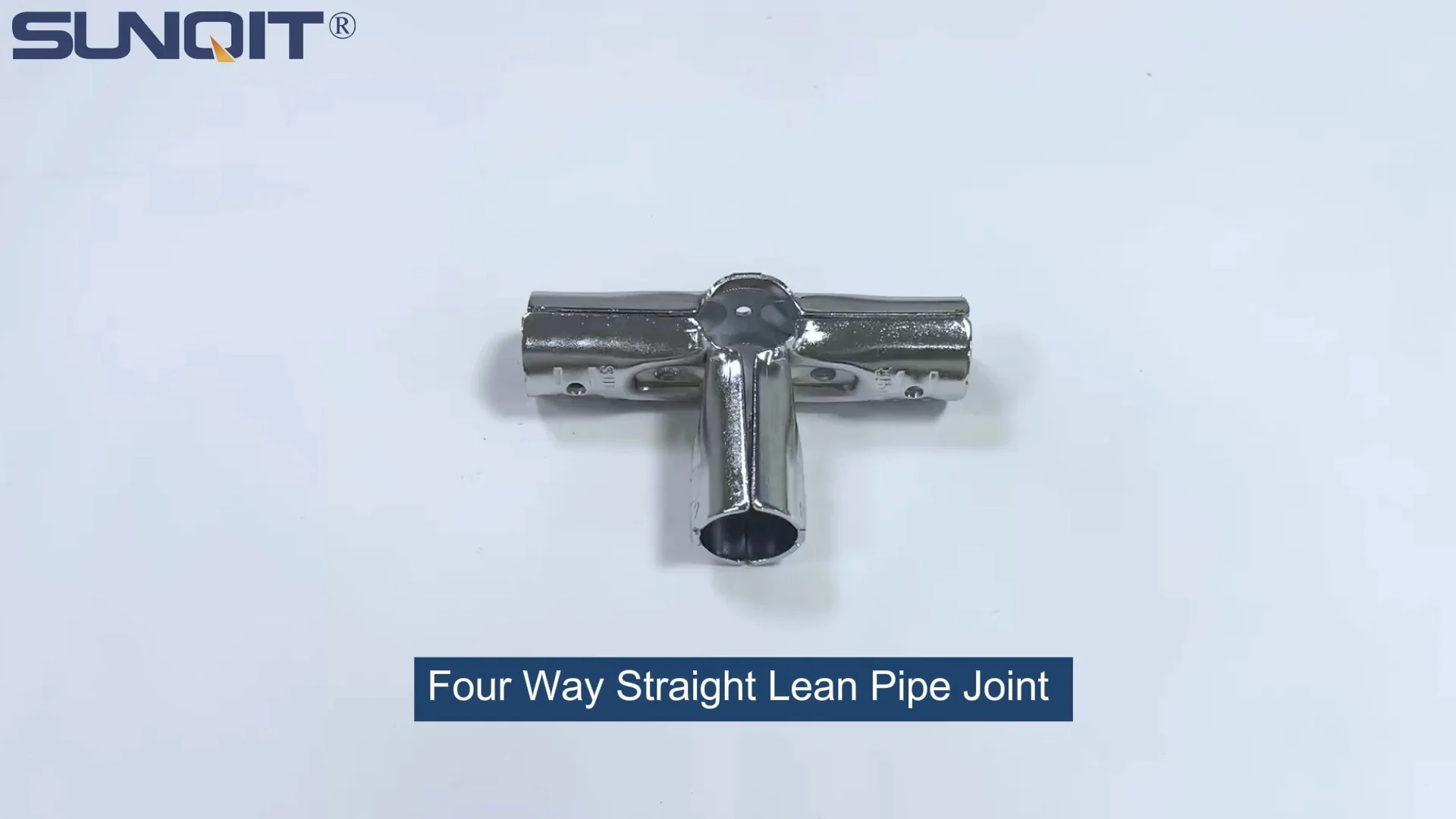
Four Way Straight Lean Pipe Joint Chrome
Four way lean pipe joint for 4 pcs 28MM lean pipe connection in straight angle, which used widely in workbench, flow rack, hand trolley frame connection.
Walk into any modern manufacturing facility today, and you'll likely notice a quiet revolution unfolding on the factory floor. Gone are the days of rigid, one-size-fits-all production lines bolted into concrete—replaced instead by sleek, adaptable setups that can shift from assembling smartphones in the morning to packaging medical devices by afternoon. This transformation is the heart of lean system evolution, a journey that began decades ago with Toyota's pioneering focus on waste reduction and has since grown into a global movement driven by flexibility, efficiency, and human-centric design. Yet, for all the talk of "lean transformation," the real magic often lies in the smallest components: the joints, pipes, and connectors that hold these systems together. Today, we're diving into one such unsung hero reshaping the future of lean manufacturing: the four way straight lean pipe joint chrome.
At first glance, a joint might seem trivial—just a metal piece connecting pipes, right? But in the world of lean systems, where every second of downtime, every awkward reach for tools, and every failed reconfiguration costs money, the design of these joints can make or break a production line. Traditional joints, often made of basic steel or plastic, have long struggled with corrosion, loose connections, and limited adaptability. Enter the four way straight lean pipe joint chrome: a small but mighty innovation that's redefining how manufacturers build, adapt, and scale their operations. In this article, we'll explore how this unassuming component is addressing longstanding pain points, integrating seamlessly with modern materials like aluminum profile , and paving the way for the next generation of lean systems.
The Backbone of Lean Systems: Why Joints Are Non-Negotiable
To understand the importance of the four way straight lean pipe joint chrome, let's start with a simple truth: lean systems live and die by their flexibility. A lean system isn't just about eliminating waste—it's about creating an environment where teams can respond to change in real time. Need to reconfigure a workbench to accommodate a new product? Should take minutes, not days. Want to extend a flow rack to handle increased inventory? It should be as easy as adding a few pipes and joints. But for decades, this vision was hampered by the limitations of the joints themselves.
Consider the typical factory setup from the early 2000s. Most workbenches and flow racks relied on welded steel joints or basic plastic connectors. Welded joints, while strong, were permanent—reconfiguring meant cutting and rewelding, a process that required skilled labor and hours of downtime. Plastic joints, on the other hand, were cheap but flimsy; after a few months of heavy use, they'd crack or loosen, leading to wobbly workbenches and misaligned flow rack tracks. Even standard metal joints, often uncoated, would rust in humid environments, leaving unsightly stains and compromising structural integrity over time. For manufacturers, the message was clear: if you wanted flexibility, you sacrificed durability, and if you prioritized durability, you lost the ability to adapt quickly.
This tradeoff became increasingly problematic as consumer demands shifted toward customization. Today's customers want products tailored to their needs—whether it's a laptop with specific specs or a medical device designed for a niche procedure. To keep up, factories need to switch between production runs faster than ever. A joint that takes 20 minutes to install and can't be reused? That's no longer acceptable. A joint that rusts after six months in a temperature-controlled facility? A non-starter. The four way straight lean pipe joint chrome was born from this need to bridge the gap: a joint that's as tough as it is adaptable, and as easy to use as it is long-lasting.
Innovations in Four Way Straight Lean Pipe Joint Chrome: What Makes It Different?
So, what exactly sets the four way straight lean pipe joint chrome apart from its predecessors? Let's break it down into three game-changing features: material science, design ingenuity, and universal compatibility.
1. Chrome-Plated Durability: Fighting Corrosion, One Joint at a Time
First, the "chrome" in the name isn't just for show. Traditional steel joints, when exposed to moisture, oil, or chemicals (common in manufacturing settings), quickly develop rust. This isn't just a cosmetic issue—rust weakens the metal, leading to loose connections and, in worst cases, structural failure. The four way straight lean pipe joint chrome addresses this with a thick, electroplated chrome layer that acts as a barrier against corrosion. In lab tests, these joints have withstood 500+ hours of salt spray exposure without signs of rust—far exceeding the 200-hour benchmark of standard steel joints. For factories in humid climates or those handling liquid-based products (like food processing or cosmetics), this longevity translates to fewer replacements, lower maintenance costs, and a consistently safe workspace.
2. Four-Way Connectivity: The Power of "More Options, Less Hassle"
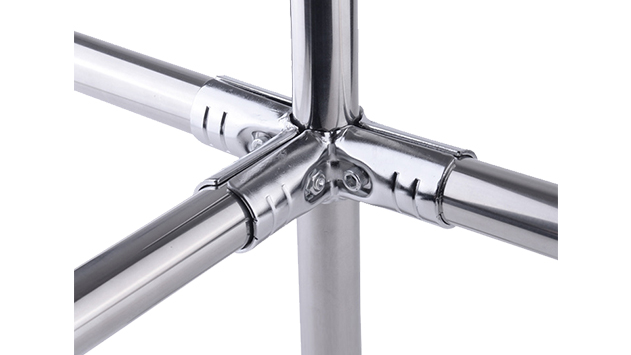
The "four way straight" design is where this joint truly shines. Unlike traditional two-way or three-way joints, which limit pipe connections to specific angles, this joint features four equally spaced ports, all aligned in a straight line. Imagine building a workbench : with a standard joint, you might need separate T-joints for the legs and L-joints for the shelves, each requiring different tools and setup steps. With a four way straight joint, you can connect pipes horizontally, vertically, and even diagonally (with compatible adapters) using the same component. This reduces the number of parts needed on the factory floor—no more hunting for that one elusive L-joint in a bin of mixed hardware—and simplifies training for new employees. As Maria Gonzalez, a production manager at a California-based electronics manufacturer, put it: "We used to have a wall of joint types—T, L, cross, elbow. Now, with the four way chrome joints, 80% of our builds use just this one. Our team can assemble a basic flow rack in 20 minutes instead of an hour, and mistakes? Almost nonexistent."
3. Snap-and-Lock Installation: No Wrenches, No Fuss
Gone are the days of fumbling with wrenches, bolts, or welding torches to secure joints. The four way straight lean pipe joint chrome uses a spring-loaded, snap-lock mechanism that allows pipes to be inserted and secured with a simple twist. This "tool-free" design cuts installation time by up to 60% compared to traditional bolted joints. More importantly, it makes reconfiguration a breeze. Need to shorten a flow rack by a foot? Just twist, remove the joint, adjust the pipes, and snap it back into place—no need to shut down the line for hours. For manufacturers running multiple product lines or testing new layouts, this agility is a game-changer. "Last month, we launched a new product line for smart watches," says Raj Patel, operations director at a consumer electronics firm. "Our old setup would've required a full day of reconfiguring workbenches. With the four way chrome joints? We had the new line up and running by lunchtime. That's the difference between meeting a deadline and losing a client."
Bridging the Gap: Integration with Modern Lean Components
A great joint is only as good as its ability to work with the rest of the system. Today's lean setups rely on a mix of materials—from traditional steel pipes to lightweight aluminum profile and specialized roller tracks. The four way straight lean pipe joint chrome was designed with this diversity in mind, acting as a universal connector that bridges old and new technologies.
Aluminum Profile: Lightweight Strength Meets Chrome Durability
Aluminum profile has become a staple in modern lean systems thanks to its lightweight, corrosion-resistant, and infinitely customizable nature. From workbenches to machine guards, aluminum's T-slot design allows for easy attachment of accessories like tool hooks, shelves, and monitors. The four way straight lean pipe joint chrome pairs seamlessly with aluminum profile, thanks to precision-machined ports that fit standard 28mm and 30mm aluminum pipes. This compatibility means manufacturers can mix and match: using aluminum for the main frame of a workbench (to reduce weight) and steel pipes for heavy-duty shelving (to support tools), all connected by the same joint. The result? A system that's both light enough for workers to reposition and strong enough to handle daily use.
Flow Racks and Roller Tracks: Smoother Material Flow, Fewer Bottlenecks
Flow rack systems, which use gravity to move materials from storage to assembly lines, are critical for reducing worker movement (a key lean waste known as "motion"). But traditional flow racks often suffer from misaligned tracks, caused by uneven joints that shift over time. The four way straight lean pipe joint chrome's rigid, chrome-plated construction minimizes this shifting. Its four-way ports also allow for easy integration of roller tracks at multiple angles—for example, building a flow rack with two parallel tracks for incoming parts and a third perpendicular track for outgoing finished goods, all connected by a single joint. This reduces the need for separate support structures, saving space and simplifying the overall design.
Workbenches: Ergonomics Redefined
A workbench is more than just a table—it's a worker's second home. Poorly designed workbenches lead to fatigue, errors, and even injuries. The four way straight lean pipe joint chrome helps solve this by enabling fully customizable ergonomic setups. Want a workbench with adjustable height? Use the joint to connect telescoping aluminum pipes. Need a shelf for tools at eye level and a bin for scraps below? The four-way ports make adding layers simple. At a medical device plant in Texas, workers recently helped redesign their assembly workbenches using these joints, adding adjustable monitor arms and angled tool holders. The result? A 35% reduction in reported neck strain and a 15% increase in hourly output. "It sounds small, but being able to tweak the height of my shelf by an inch—without asking maintenance—makes my day so much easier," says Lisa Chen, an assembly technician there. "These joints let us build workbenches that fit us , not the other way around."

Traditional vs. Chrome: A Head-to-Head Comparison
Still skeptical? Let's put the four way straight lean pipe joint chrome side by side with traditional joints in a real-world scenario. Below is a comparison table based on data from a manufacturing plant that switched 50% of its joints to the new chrome design over six months:
| Feature | Traditional Steel Joints | Four Way Straight Lean Pipe Joint Chrome |
|---|---|---|
| Corrosion Resistance | Rusts after ~200 hours of moisture exposure | Withstands 500+ hours of salt spray; no rust observed |
| Installation Time per Joint | 5–7 minutes (requires wrenches/bolts) | 1–2 minutes (tool-free snap-lock) |
| Reconfiguration Flexibility | Limited (requires cutting/welding for angle changes) | Unlimited (four-way ports allow 360° adjustments) |
| Maintenance Costs (6-month average) | $120/100 joints (replacement + labor) | $15/100 joints (no replacements; occasional tightening) |
| Worker Satisfaction (based on surveys) | 62% positive (cited "frustration with loose connections") | 94% positive (cited "ease of use" and "faster setup") |
The numbers speak for themselves: the four way straight lean pipe joint chrome isn't just a marginal improvement—it's a cost-saving, efficiency-boosting upgrade that impacts everything from the factory floor to the bottom line. But perhaps the most telling stat is the 94% worker satisfaction rate. In lean systems, where employee engagement directly drives productivity, tools that make workers' lives easier aren't just "nice to have"—they're essential.
The Future of Lean Systems: Where Do We Go From Here?
As manufacturers continue to embrace agility and sustainability, the role of components like the four way straight lean pipe joint chrome will only grow. So, what's next for this technology? Industry experts predict three key trends:
1. Smart Joints: IoT Integration for Predictive Maintenance
Imagine a joint that can "tell" you when it's loose. Early prototypes are already being tested with embedded sensors that monitor torque and vibration, sending alerts to maintenance teams before a connection fails. While still in development, this could eliminate unplanned downtime entirely. "If a joint starts to loosen, we'd know about it before the first product gets misaligned," says Dr. James Lin, a manufacturing technology researcher at MIT. "That's the future of lean—predicting waste before it happens."
2. Sustainable Materials: Recyclable Chrome and Beyond
As sustainability becomes a priority, manufacturers are exploring chrome-plating processes with lower environmental impact, as well as recycled steel cores for the joints. Some companies are even testing bio-based lubricants for the snap-lock mechanism, reducing reliance on petroleum-based products. "The next generation of joints won't just be durable—they'll be kind to the planet, too," notes environmental engineer Priya Sharma.
3. AI-Driven Design Tools: Custom Joints for Unique Needs
While the four way straight design covers most use cases, some factories have hyper-specific needs (e.g., extreme temperature resistance or ultra-high weight capacity). AI design tools are being developed to generate custom joint prototypes in minutes, using 3D printing for on-demand production. "If a client needs a joint that can handle -40°C temperatures for a frozen food line, we won't have to start from scratch," explains mechanical engineer Carlos Mendez. "AI will tweak the existing chrome joint design to meet those specs, and we'll print a prototype the same day."
Conclusion: Small Joints, Big Future
The four way straight lean pipe joint chrome may be small in size, but its impact on the future of lean systems is enormous. By solving longstanding issues with corrosion, flexibility, and installation, it's enabling manufacturers to build setups that are not just efficient, but adaptable, human-centric, and future-proof. Whether paired with aluminum profile for lightweight workbenches, integrated into flow rack systems for smoother material flow, or used to create ergonomic workspaces that boost worker satisfaction, this joint is proving that innovation in lean manufacturing often starts with the basics.
As we look ahead, one thing is clear: the future of lean systems isn't about replacing humans with machines—it's about empowering humans with better tools. And in that future, the four way straight lean pipe joint chrome will be right there, holding it all together.