- Company Articles
- Products and Technology
- Technology Sharing
- The Future of Parallel Lean Pipe Joints: Smart Manufacturing Integration

The Future of Parallel Lean Pipe Joints: Smart Manufacturing Integration
Related Product
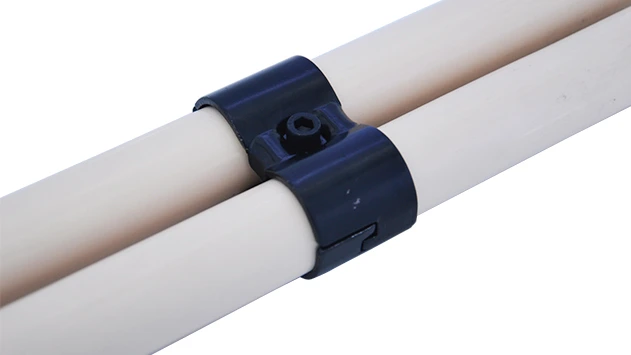
Parallel Lean Pipe Joint
Parallel lean pipe joint used for 2 pcs 28MM lean pipe connection in parallel direction to enhance frame structure, usually for heavy payload requirement for workbench. flow rack, hand trolley.
In the humming heart of modern factories, where robots dance alongside human workers and data flows as freely as assembly lines, there's a quiet revolution happening—one built not on flashy AI or high-tech sensors, but on small, unassuming components that hold everything together. Enter the parallel lean pipe joint : a humble yet mighty piece of hardware that's quietly redefining how smart manufacturing systems adapt, evolve, and thrive. While terms like "Industry 4.0" and "digital twin" dominate headlines, it's these unsung heroes of flexibility that turn rigid production lines into living, breathing ecosystems capable of keeping pace with our fast-changing world.
Gone are the days when factories were locked into fixed layouts, designed for a single product and destined for obsolescence when trends shifted. Today's manufacturers demand agility— the ability to reconfigure a workbench in hours, not weeks; to repurpose a roller track from assembling smartphones to packaging medical devices; to scale up or down without tearing down walls. And at the center of this demand? Parallel lean pipe joints. These unassuming connectors, often made from durable aluminum or stainless steel, are the reason a factory floor can transform from producing 100 units a day to 1,000, or shift from batch production to continuous flow, all while minimizing waste and maximizing efficiency. They're the backbone of the lean system reimagined for the digital age.
From Rigid to Responsive: The Evolution of Lean Pipe Joints
To appreciate the impact of parallel lean pipe joints, it helps to take a step back. Traditional lean systems, born from the Toyota Production System, relied on basic steel or PE-coated lean pipes and fixed joints. These systems were revolutionary in their time, reducing waste by streamlining workflows, but they had a flaw: rigidity. A joint that could only lock at 90 degrees or 45 degrees left little room for creativity. If a factory needed to adjust a material rack to fit a new component size, or angle a workbench to reduce operator strain, it often meant disassembling and rebuilding from scratch—wasting time, labor, and resources.
Enter parallel lean pipe joints, designed with one question in mind: What if a joint could do more than just connect two pipes? What if it could rotate, pivot, and lock in multiple positions, all without specialized tools? Early iterations focused on basic adjustability, but modern versions are a marvel of engineering. Many feature internal rotary mechanisms, allowing pipes to swivel 180 degrees or more, while others integrate with aluminum profiles —lightweight, corrosion-resistant, and infinitely customizable. Suddenly, a single joint could turn a static workbench into an adjustable station, or transform a straight roller track into a zigzagging path that optimized material flow.
Consider the story of a mid-sized electronics manufacturer in Ohio. A few years back, they produced a single line of circuit boards, using fixed steel workbenches and rigid material racks. When demand spiked for smaller, more complex boards, their production line ground to a halt. The old steel joints couldn't accommodate the tighter angles needed for new component trays, and rebuilding the entire line would take months. Then they switched to parallel lean pipe joints with aluminum profiles. Overnight, workers adjusted the height of workbenches to fit ergonomic requirements, reangled roller tracks to feed components directly to assembly stations, and even added modular shelves using the same joints. What would have been a $200,000 overhaul became a $15,000 tweak—and they were back to full production in three days. That's the power of flexibility.
How Parallel Lean Pipe Joints Enable Smart Manufacturing's Core Principles
Smart manufacturing isn't just about technology—it's about aligning processes with the principles of lean, agility, and sustainability. Parallel lean pipe joints excel in all three areas, making them indispensable in the factories of tomorrow.
1. Waste Reduction: The Lean Promise, Delivered
At its core, lean manufacturing is about eliminating waste—whether that's time, materials, or unnecessary movement. Parallel lean pipe joints tackle waste head-on by enabling "right-sized" systems. Instead of building oversized structures to accommodate future needs (a common source of waste), manufacturers can start small and expand incrementally. Need an extra shelf on a material rack? Add a few pipes and joints. Want to shorten a roller track to fit a new machine? Unlock a joint, adjust, and relock. No cutting, welding, or throwing away perfectly good materials. Even better, many joints are reusable—when a production line is retired, the joints can be stripped, cleaned, and repurposed elsewhere, reducing landfill waste and lowering costs.
2. Agility: Keeping Pace with Consumer Demands
Today's consumers want products that are personalized, innovative, and delivered yesterday. That means factories must switch between product lines quickly—sometimes daily. Parallel lean pipe joints make this possible. Imagine a cosmetics manufacturer that produces lipstick tubes in 50 shades. With traditional fixed racks, each shade might require its own dedicated storage area. With parallel joints and aluminum profiles, a single material rack can be reconfigured in minutes: adjust the angle of the roller track to feed red lipstick tubes to Station A in the morning, then pivot the joints to feed blue tubes to Station B in the afternoon. No downtime, no extra space, just seamless transitions.
3. Sustainability: Building for a Circular Economy
Sustainability isn't just a buzzword—it's a business imperative. Factories are under pressure to reduce their carbon footprint, and parallel lean pipe joints are rising to the challenge. Many are made from recycled aluminum or stainless steel, and their modular design means less raw material is needed overall. Unlike welded steel structures, which often end up in landfills when outdated, these joints can be disassembled and reused indefinitely. Even the accessories—casters, end caps, connectors—are designed for longevity, with replaceable parts that extend the life of the entire system. It's manufacturing with a conscience, one joint at a time.

Beyond the Joint: Integrating with Aluminum Profiles and Roller Tracks
Parallel lean pipe joints don't work in isolation—they're part of a larger ecosystem of components that together create smart, flexible systems. Two of their closest partners? Aluminum profiles and roller tracks. Let's break down how this trio works in harmony.
Aluminum profiles are the "bones" of modern lean systems. Lightweight yet incredibly strong, they come in a variety of shapes and sizes (think T-slots, channels, and angles) that make them perfect for building everything from workbenches to material racks. When paired with parallel lean pipe joints, the possibilities are endless. For example, a T-slot aluminum profile can act as a base for a workbench, with joints connecting vertical pipes that support shelves or tool holders. Since the joints can rotate, the shelves can be tilted for easier access, or adjusted in height to suit different operators. It's customization without compromise.
Roller tracks, on the other hand, are the "veins" that keep materials flowing. Whether it's plastic rollers for lightweight components or steel rollers for heavy parts, these tracks rely on parallel joints to stay aligned and adaptable. A typical roller track might use joints to connect sections at slight angles, ensuring materials glide smoothly from one workstation to the next. If a bottleneck forms, operators can quickly adjust the joints to reangle the track, redistributing the flow. In high-tech settings, roller tracks with ESD (electrostatic discharge) wheels—often paired with ESD workbenches—protect sensitive electronics from static damage, all while maintaining the flexibility that parallel joints provide.
| Feature | Traditional Steel Joints + Steel Pipes | Parallel Lean Pipe Joints + Aluminum Profiles |
|---|---|---|
| Weight | Heavy (hard to move/reconfigure) | Lightweight (easily adjustable by hand) |
| Assembly Time | 2–4 hours (requires tools/welding) | 30–60 minutes (tool-free adjustments) |
| Reconfiguration Ease | Difficult (often requires disassembly) | Simple (rotate/lock joints; no disassembly) |
| Compatibility | Limited (works only with steel pipes) | High (integrates with roller tracks, casters, ESD components) |
| Lifespan/Cost Over Time | 5–7 years (high replacement costs) | 10–15 years (reusable; low maintenance) |
Real-World Impact: A Day in the Life of a Flexible Factory
Let's paint a picture of how these components work together in a real factory. Meet GreenTech Electronics, a manufacturer of solar panel inverters. Their production line runs 24/7, and they recently landed a contract to produce a new, smaller inverter model alongside their existing one. Here's how parallel lean pipe joints, aluminum profiles, and roller tracks made the transition seamless:
- Workbench Reconfiguration: GreenTech's existing workbenches, built with aluminum profiles and parallel joints, were originally designed for the larger inverter. To fit the smaller model, operators unlocked the joints connecting the side panels, rotated them inward by 30 degrees, and relocked them. This narrowed the workbench surface by 12 inches—no tools, no downtime.
- Material Rack Adjustment: The new inverter uses smaller circuit boards, so their material racks (3 rows, 3 floors) needed shallower shelves. Using parallel joints, workers tilted the shelves from horizontal to a 15-degree angle, creating more vertical space for additional circuit board trays. The aluminum profiles' T-slots allowed them to add dividers using just a few screws, keeping components organized.
- Roller Track Rerouting: To avoid mixing old and new components, GreenTech needed a separate roller track for the new inverter parts. They used parallel joints to split their existing track into two: one section feeding the original line, the other diverting to the new workstation. The joints' swivel capability let them angle the new track at 45 degrees, ensuring components glided smoothly without jamming.
In total, the reconfiguration took 4 hours—far less than the 2 weeks it would have taken with traditional steel joints. And when the contract ends, GreenTech can easily revert the changes, or repurpose the adjusted components for another project. That's the flexibility parallel lean pipe joints deliver.

The Future: Where Parallel Lean Pipe Joints Meet IoT and Automation
As smart manufacturing evolves, so too will parallel lean pipe joints. The next generation of these components won't just connect pipes—they'll connect to the Internet of Things (IoT), communicate with robots, and even predict when they need maintenance. Here's a glimpse of what's to come:
Smart Joints with Built-In Sensors
Imagine a parallel lean pipe joint embedded with tiny sensors that monitor temperature, vibration, and stress. These sensors could send real-time data to a factory's management system, alerting operators if a joint is loosening, or if a roller track is under too much strain (a sign of a potential jam). For example, if a joint on a high-speed roller track starts vibrating excessively, the system could automatically slow the track down before a component is damaged. It's predictive maintenance at the component level—saving time, money, and headaches.
Robot-Friendly Design
Collaborative robots (cobots) are becoming common in factories, working alongside humans to perform repetitive tasks. Future parallel lean pipe joints could be designed with cobots in mind—featuring smooth surfaces that won't catch on robot arms, or built-in QR codes that help cobots "see" and navigate around structures. Some joints might even have magnetic locks that cobots can engage or disengage, allowing them to reconfigure small sections of a production line autonomously during night shifts.
Sustainable Materials and 3D Printing
Sustainability will continue to drive innovation, with manufacturers exploring bio-based plastics or recycled composites for joint construction. 3D printing could also play a role, allowing factories to print custom joints on demand—no more waiting for shipments. Need a joint with a unique angle for a prototype line? Download the design, print it in-house, and install it the same day. It's manufacturing on-demand, at the component level.
Conclusion: The Little Joints That Could (and Do)
In the grand scheme of smart manufacturing, parallel lean pipe joints might seem. They don't have screens, they don't run algorithms, and they won't make headlines. But they are the foundation upon which agile, efficient, and sustainable factories are built. They turn the abstract promise of Industry 4.0 into tangible results: shorter lead times, lower costs, happier workers, and products that get to market faster.
As we look to the future, one thing is clear: the factories that thrive will be those that can adapt. And adaptation starts with the smallest components—the parallel lean pipe joints, aluminum profiles, and roller tracks that together create systems as dynamic as the world they serve. So the next time you walk through a factory, take a moment to notice these quiet heroes. They may not be glamorous, but they're changing the way we make things—one joint at a time.