- Company Articles
- Products and Technology
- Technology Sharing
- The Future of Parallel Rotatory Lean Pipe Joint Technology

The Future of Parallel Rotatory Lean Pipe Joint Technology
Related Product
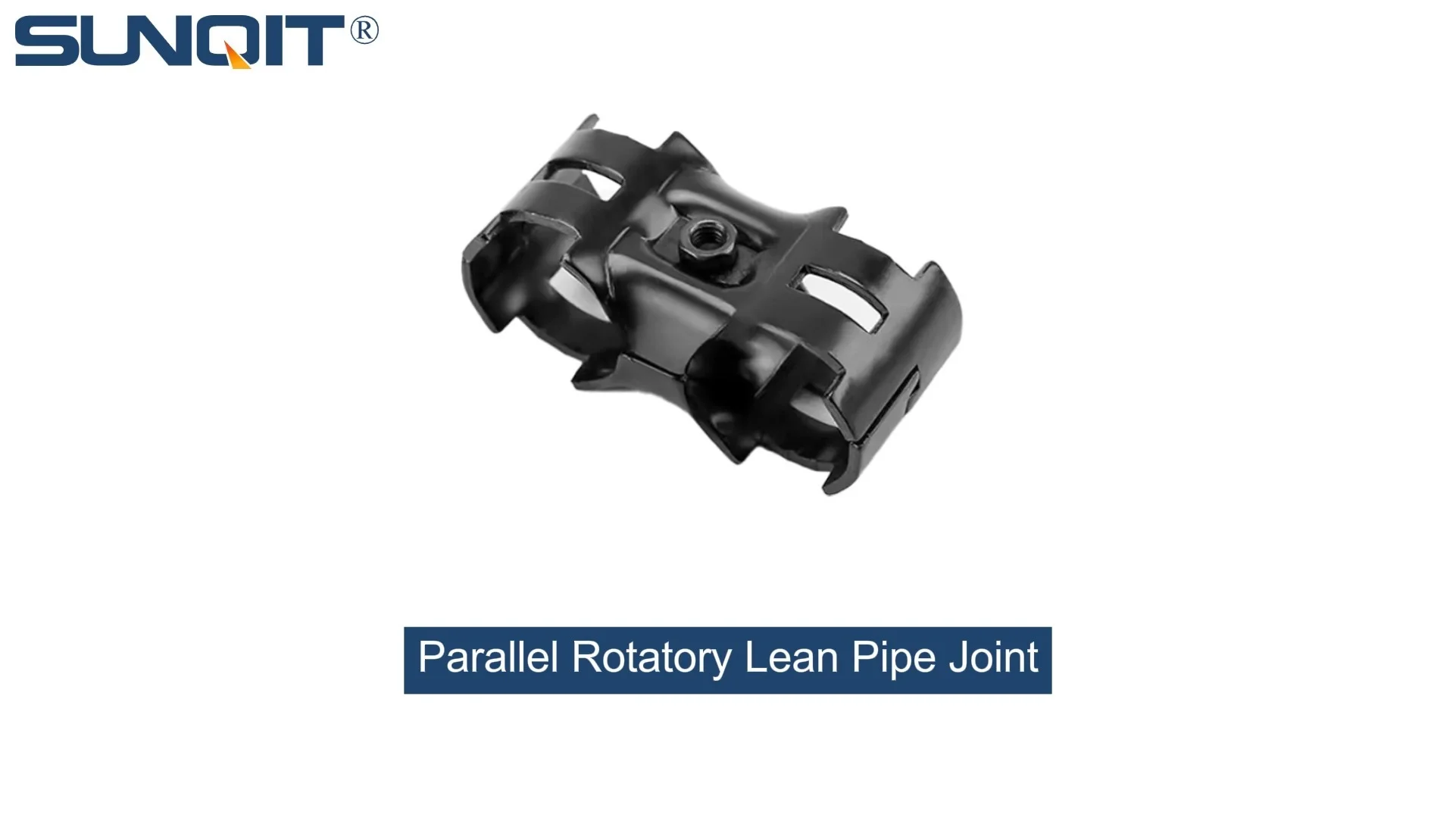
Parallel Rotatory Lean Pipe Joint
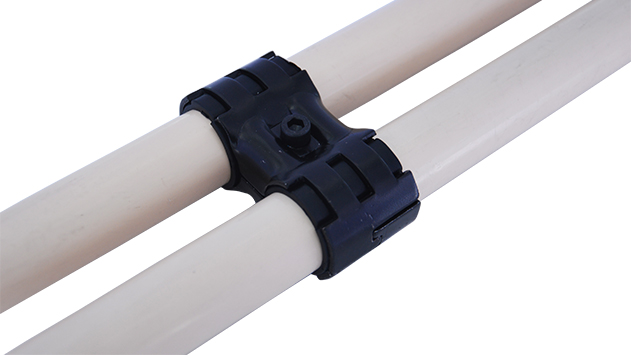
Parallel rotatory lean pipe joint, for 2 pcs pipe conenction in parallel direction with rotatory function.
In the fast-paced world of modern manufacturing, where change is the only constant, the ability to adapt, innovate, and streamline operations isn't just a competitive advantage—it's a survival skill. Every day, factory floors, assembly lines, and warehouses buzz with the pressure to do more with less: less time, less space, less waste. Enter lean systems—the unsung heroes of efficiency that have redefined how we think about workflow design. At the heart of these systems lies a humble yet critical component: the lean pipe. But today, we're not here to talk about just any lean pipe. We're here to explore a game-changing innovation that's quietly revolutionizing flexibility on the factory floor: the parallel rotatory lean pipe joint.
The Backbone of Lean Systems: Understanding Lean Pipes and Joints
Before diving into the future, let's ground ourselves in the present. Lean pipes, often called "flexible pipes" or "kitchen pipes" in their early days, were originally developed to support just-in-time (JIT) manufacturing principles. Traditional lean pipes are typically made of steel with a plastic coating, designed to be lightweight, durable, and easy to assemble. They're the building blocks of everything from workbenches and material racks to conveyor systems and turnover trolleys—essential tools for organizing spaces and optimizing workflows.
But lean pipes alone are just tubes. Their true power lies in the joints that connect them. Joints are the "glue" of lean systems, determining how pipes can be arranged, adjusted, and repurposed. For decades, most lean pipe joints were fixed: think 90-degree elbows, T-joints, or straight connectors that locked pipes into rigid, unchanging angles. While these served their purpose in static environments, they fell short when manufacturers needed to reconfigure lines for new products, scale up production, or adapt to shifting demand.
This rigidity became a bottleneck. Imagine a small electronics manufacturer that suddenly lands a contract for a new gadget. Their existing assembly workbench, built with fixed joints, is tailored for their old product. To accommodate the new design, they'd need to disassemble the entire structure, buy new joints, and rebuild—wasting hours (or days) of valuable production time. This is where the parallel rotatory lean pipe joint steps in, and it's not just an upgrade; it's a paradigm shift.
The Game-Changer: Parallel Rotatory Lean Pipe Joints
So, what exactly is a parallel rotatory lean pipe joint? In simple terms, it's a connector that allows two parallel lean pipes to rotate relative to each other around a central axis, all while maintaining structural stability. Unlike fixed joints, which lock pipes into a single position, these joints offer 360-degree rotational movement (or a wide range of motion, depending on the design), letting users adjust angles, heights, and configurations on the fly—no disassembly required.
Picture this: a workbench built with parallel rotatory joints. A worker assembling a large component needs more space, so they simply rotate the side rail upward, clearing the surface in seconds. Later, when switching to a smaller part, they rotate it back down to hold tools. No bolts to unscrew, no new parts to order—just a quick, smooth adjustment. That's the flexibility we're talking about.
But the magic isn't just in rotation. These joints are engineered to balance movement with strength. Most are made from high-grade aluminum or steel, with precision bearings or internal mechanisms that ensure smooth rotation without sacrificing load capacity. Some can support hundreds of kilograms while still allowing for easy adjustments, making them suitable for heavy-duty applications like material racks or conveyor systems.
A Closer Look: How Parallel Rotatory Joints Transform Workflows
To truly appreciate the impact of parallel rotatory lean pipe joints, let's walk through a typical day in a factory that's adopted this technology. Meet Maria, a production supervisor at a mid-sized automotive parts plant. Last month, her team was assembling door handles; this month, they're switching to dashboard components, which are bulkier and require different tool placement.
In the old days, Maria would have scheduled a half-day shutdown. Her team would disassemble the workbench, swap out fixed T-joints for elbow joints, and rebuild the structure to accommodate the new parts. Today, with parallel rotatory joints, the process takes 15 minutes. The team loosens the locking knobs on the joints, rotates the upper shelves to a 45-degree angle to create more vertical space, tightens the knobs, and they're back to work. "It's like going from a flip phone to a smartphone," Maria laughs. "I used to dread changeovers; now, I barely notice them."
This isn't just about saving time. It's about empowering workers. When employees can adjust their own workstations to fit their needs—raising a shelf to avoid bending, rotating a tool rack for easier access—ergonomics improve, reducing fatigue and injury rates. And in a world where employee retention is as critical as production output, small wins like this add up to a happier, more productive team.
| Feature | Traditional Fixed Joints | Parallel Rotatory Lean Pipe Joints |
|---|---|---|
| Flexibility | Limited to fixed angles (90°, 45°, straight) | 360° rotational movement; adjustable angles on demand |
| Changeover Time | Hours to days (requires disassembly/reassembly) | Minutes (tool-free adjustments) |
| Load Capacity | High (but rigid) | High (maintains strength while rotating) |
| Ergonomic Benefits | Minimal (static setup) | Significant (adjustable for worker comfort) |
| Long-Term Cost | Higher (replacement parts for reconfigurations) | Lower (reusable; no need for new joints) |

The Aluminum Advantage: Pairing Parallel Rotatory Joints with Aluminum Lean Pipes
While parallel rotatory joints are impressive on their own, their potential is amplified when paired with another modern innovation: aluminum lean pipes. Traditional steel lean pipes are strong but heavy; aluminum pipes, by contrast, are lightweight (up to 40% lighter than steel) and corrosion-resistant, making them ideal for cleanrooms, food processing facilities, or environments where moisture is a concern.
Aluminum lean pipes also offer superior precision. Their smooth, uniform surfaces and tight tolerances ensure a snug fit with parallel rotatory joints, reducing wobble and improving stability during rotation. And because aluminum is inherently more malleable than steel, manufacturers can design sleeker, more compact joints without sacrificing durability. Take the internal rotary aluminum joint, for example—a sleek connector that fits inside aluminum pipes, minimizing bulk and creating a cleaner, more professional look than bulky external steel joints.
Sustainability is another key factor. Aluminum is 100% recyclable, with no loss of quality during recycling. As companies race to meet net-zero goals, switching to aluminum lean pipes and joints isn't just a practical choice—it's an eco-conscious one. "We used to throw away old steel joints when we reconfigured lines," says Raj, a sustainability manager at a consumer goods plant. "Now, with aluminum and rotatory joints, we reuse everything. Our waste from lean system upgrades has dropped by 70%."

The Future: Where Parallel Rotatory Technology is Headed
So, what's next for parallel rotatory lean pipe joints? The future is bright—and surprisingly high-tech. Engineers are already experimenting with "smart joints" embedded with sensors that monitor load capacity, rotation frequency, and wear and tear. Imagine a joint that sends an alert to your phone when it's approaching its weight limit, or predicts when it needs lubrication. This isn't science fiction; it's the Internet of Things (IoT) meeting lean manufacturing, and it's closer than you think.
Material science is also pushing boundaries. Researchers are developing composite joints that combine the strength of steel, the lightness of aluminum, and the flexibility of plastic, creating connectors that can handle heavier loads while rotating more smoothly. And 3D printing is opening doors to custom joint designs—no more one-size-fits-all. A small bakery that needs a joint shaped to hold a specific mixing bowl? A 3D-printed parallel rotatory joint can be designed, printed, and installed in a day.
We're also seeing integration with automation. Imagine a conveyor system where parallel rotatory joints adjust in real time based on the size of products moving along the line—narrowing the track for small boxes, widening it for larger ones—all controlled by AI. This "self-optimizing" workflow isn't just efficient; it's adaptive, turning rigid production lines into dynamic ecosystems that respond to data in real time.
Challenges and Considerations
Of course, no innovation is without its hurdles. Parallel rotatory joints, while versatile, aren't always the cheapest option upfront. Their engineering and premium materials (like aluminum or high-grade steel) can cost 20-30% more than basic fixed joints. But as Maria, the production supervisor, points out: "You pay more once, but you save ten times over in changeover costs and downtime. It's an investment, not an expense."
Another consideration is training. While most parallel rotatory joints are designed for tool-free adjustment, workers still need to learn how to properly lock/unlock them, understand weight limits, and troubleshoot minor issues. But this is a small price to pay for the benefits, and many suppliers now offer on-site training or video tutorials to ease the transition.
Conclusion: The Future is Flexible
As we stand on the cusp of Industry 4.0, where smart factories and digitalization are reshaping manufacturing, the parallel rotatory lean pipe joint may seem like a small piece of the puzzle. But great revolutions often start with small innovations. Just as the wheel transformed transportation or the transistor transformed computing, the ability to rotate a joint on a lean pipe is transforming how we build, adapt, and thrive in a world of constant change.
So, what does this mean for you? Whether you're a factory manager staring down a production deadline, a small business owner looking to scale, or an engineer designing the next generation of workspaces, parallel rotatory lean pipe joints offer a simple truth: flexibility isn't optional anymore. It's the foundation of efficiency, the key to innovation, and the bridge between today's challenges and tomorrow's solutions.
The future of manufacturing isn't just about machines—it's about movement. And with parallel rotatory lean pipe joints, that movement is finally in your control.