- Company Articles
- Products and Technology
- Technology Sharing
- The Future of Roller Track Placon Mount Joints: Smart Manufacturing Integration

The Future of Roller Track Placon Mount Joints: Smart Manufacturing Integration
Related Product
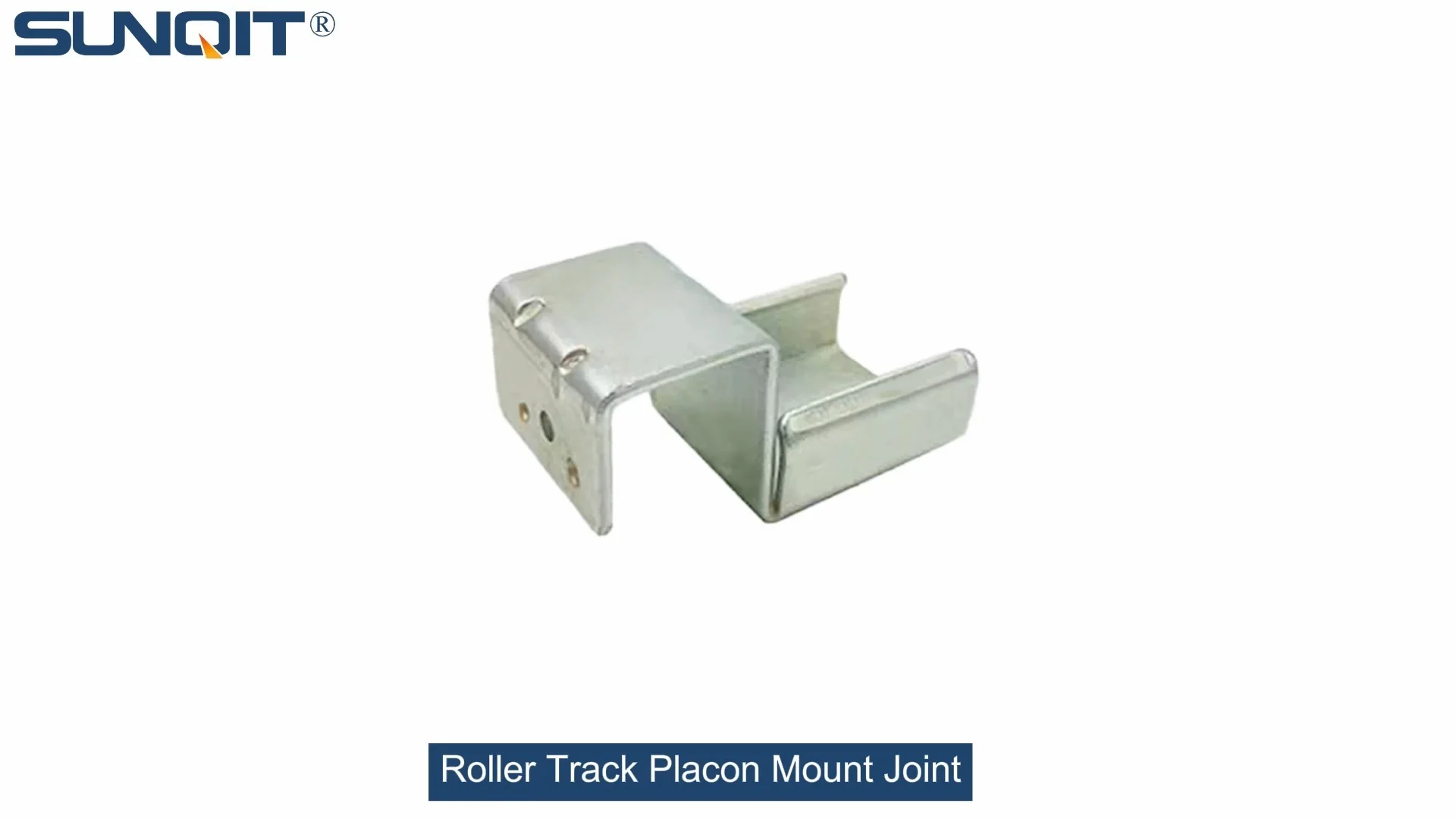
Roller Track Placon Mount Joint
Roller track placon mount work as a connector for roller track and pipe or aluminum profile in rack syetem, it is a necessary parts in rack system which widely used in industrial plant and logistic,warehouse storage.
In the fast-paced world of manufacturing, where every second counts and adaptability is key, the unsung heroes often lie in the smallest components. Take, for instance, the roller track placon mount joint —a seemingly modest part that holds the power to transform how products move, assemble, and reach the hands of consumers. As smart manufacturing reshapes factories from rigid lines to dynamic ecosystems, these joints are no longer just connectors; they're the backbone of flexible, efficient, and future-ready production.
Today, we're diving into how roller track placon mount joints are evolving to meet the demands of Industry 4.0, why aluminum profile integration is game-changing, and how the right lean solution can turn your production floor into a hub of innovation. Whether you're in 3C assembly, medical device manufacturing, or (warehousing and logistics), this isn't just about parts—it's about building a manufacturing system that grows with you.
The Current Landscape: Challenges in Traditional Manufacturing
Walk into a typical factory today, and you might still see production lines held together by rigid, one-size-fits-all components. Fixed joints, heavy steel structures, and inflexible conveyor systems—these were the norms not long ago. But as consumer demands shift faster than ever, and product lifecycles shrink from years to months, these old systems are showing their cracks.
Consider a scenario: A electronics manufacturer needs to switch from assembling smartphones to tablets overnight. With traditional steel roller tracks and fixed joints, reconfiguring the line could take days—disrupting production, increasing downtime, and eating into profits. Or think about a medical device plant, where precision and cleanliness are non-negotiable. Welded steel joints collect dust, require frequent maintenance, and can't be easily sanitized—posing risks to compliance and product quality.
The problem? Traditional joints lack three critical qualities: flexibility, durability, and intelligence. They're built for stability, not change. And in an era where "adapt or fall behind" is the mantra, that's a costly limitation.
Roller Track Placon Mount Joints: From Static to Dynamic
Enter the roller track placon mount joint—a component designed with lean principles at its core. Unlike fixed welded joints, these are modular, adjustable, and built to integrate seamlessly with modern manufacturing needs. Let's break down why they're becoming indispensable:
| Traditional Joints | Modern Roller Track Placon Mount Joints |
|---|---|
| Rigid, fixed angles; hard to reposition | Multi-angle adjustability; rotate and lock in seconds |
| Heavy steel construction; hard to transport | Lightweight aluminum profile compatibility; easy to handle |
| Prone to rust and wear; high maintenance | Corrosion-resistant materials; long lifespan with minimal upkeep |
| No integration with smart systems | Design-ready for sensors and IoT connectivity |
| Welded or bolted permanently; not reusable | Tool-free assembly; fully reusable across projects |
The magic lies in their design. Roller track placon mount joints are engineered to connect roller tracks, conveyors, and workbenches with precision—whether you need a 40° incline for a flow rack or a 90° turn for a conveyor line. And when paired with aluminum profiles, they become even more versatile. Aluminum's strength-to-weight ratio means you get durability without the bulk, making it easy to reconfigure lines without heavy machinery or specialized labor.

The Future: 3 Key Trends Shaping Roller Track Placon Mount Joints
As smart manufacturing takes hold, roller track placon mount joints are evolving beyond "flexible" to "intelligent." Here are the trends driving their future:
1. Smart Sensing for Predictive Maintenance
Imagine a joint that can "talk" to your system. Future roller track placon mount joints will come embedded with sensors that monitor vibration, temperature, and wear in real time. If a joint starts to loosen or a roller bearing wears thin, the system alerts maintenance before a breakdown occurs. This isn't just about reducing downtime—it's about turning reactive fixes into proactive prevention.
2. Aluminum Profile Integration: Lightweight, Strong, and Sustainable
Aluminum isn't just a material choice; it's a sustainability statement. Unlike steel, aluminum is 100% recyclable, requires less energy to produce, and resists corrosion—critical for industries like food processing or medical manufacturing where hygiene is paramount. When roller track placon mount joints are designed to fit standard aluminum profiles, factories can mix, match, and reuse components across lines, cutting waste and lowering long-term costs.
For example, a 3C manufacturer using aluminum profile-based roller tracks and joints can disassemble a smartphone assembly line in hours, then reassemble it as a tablet line the next day—all with the same parts. No new steel, no welding, no waste.
3. Lean Solution Ecosystems: Beyond Components, Toward Systems
The future isn't about selling joints in isolation—it's about selling lean solution ecosystems. Manufacturers need more than parts; they need partners who understand their unique challenges. A truly future-ready roller track placon mount joint isn't just a product; it's part of a holistic system that includes flow racks , conveyors, workbenches, and even software to optimize material flow.
Take a medical device plant producing surgical tools. A lean solution here might combine ESD-safe roller tracks (to protect sensitive electronics), aluminum profile workstations (easy to sanitize), and placon mount joints that allow for quick height adjustments—ensuring workers can stand or sit, reducing fatigue, and boosting productivity. It's about creating a line that adapts to people, not the other way around.
Real-World Impact: How a 3C Manufacturer Transformed Production with Placon Mount Joints
Let's look at a tangible example. A leading 3C assembly company in China was struggling with frequent line reconfigurations. Their old steel roller tracks and fixed joints required 48 hours of downtime every time they switched product models—costing them $100,000 in lost production monthly.
They partnered with a supplier specializing in lean solutions, swapping out steel for aluminum profiles and traditional joints for roller track placon mount joints. The results? Reconfiguring a line now takes 2 hours instead of 48. The aluminum profiles reduced line weight by 40%, making manual adjustments possible without forklifts. And because the joints are reusable, they've cut material costs by 30% in just six months.
"It's like night and day," said the plant manager. "We used to dread product launches because of the downtime. Now, we can test new models, tweak the line, and be back to full production before lunch. The joints aren't just parts—they're our secret to staying competitive."

Choosing the Right Partner: More Than Just a Supplier
As roller track placon mount joints become central to smart manufacturing, choosing the right supplier matters more than ever. It's not just about buying a component; it's about investing in a partner who understands your industry, your challenges, and your vision for the future.
Look for suppliers who offer:
- Customization : Every factory is unique. A one-size-fits-all joint won't cut it. Whether you need ESD-safe materials for electronics or corrosion-resistant coatings for food processing, your supplier should tailor solutions to your needs.
- Aluminum Profile Expertise : The best joints are designed to work seamlessly with aluminum profiles. Ask about their profile range, compatibility, and how they ensure a perfect fit—no gaps, no wobbles, no compromises on safety.
- Lean Principles in Action : A supplier that preaches lean should practice it too. Do they offer modular designs that reduce waste? Can they help you optimize your line layout for maximum efficiency? The right partner doesn't just sell parts—they help you build a leaner, smarter operation.
- Future-Proofing : Smart manufacturing is evolving fast. Choose a supplier investing in R&D—one that's already exploring sensor integration, IoT connectivity, and sustainable materials. Your joints today should be ready for the factory of tomorrow.

Conclusion: The Future is Flexible, Intelligent, and Built to Last
Roller track placon mount joints may be small, but their impact is enormous. As smart manufacturing continues to redefine what's possible, these components will be at the center of the action—connecting not just roller tracks and conveyors, but people, processes, and possibilities.
From 3C assembly lines that adapt in hours to medical facilities that prioritize cleanliness and compliance, the future belongs to factories that build with flexibility in mind. And at the heart of that flexibility? The humble yet powerful roller track placon mount joint—paired with aluminum profiles, backed by a lean solution, and ready to take on whatever the future of manufacturing brings.
Ready to build a production line that grows with you? It starts with the right components. It starts with joints that don't just connect—they innovate.