- Company Articles
- Products and Technology
- Product knowledge
- The Future of T-Slot Rubber Seal Covers: Innovations in Material Science and Design

The Future of T-Slot Rubber Seal Covers: Innovations in Material Science and Design
Related Product
T-slot Rubber Seal Cover
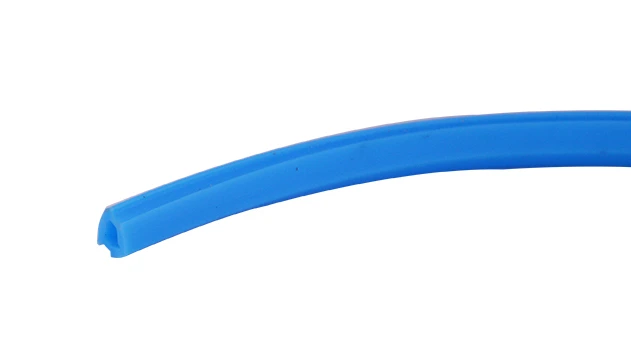
The rubber T-slot seal cover prevents dust and debris buildup, covers wires in the T-slot channel, and adds an extra layer of protection to applications. It rolls into the T-slot, making it easy to assemble.
In the bustling world of manufacturing and industrial design, it's often the smallest components that hold the power to transform efficiency, safety, and durability. Take a walk through any factory floor, and you'll see aluminum extrusion profiles forming the backbone of workbenches, roller tracks guiding materials from one station to the next, and countless aluminum profile accessories holding it all together. But if you lean in closer—past the whir of machinery and the hum of productivity—you might notice something even more unassuming: the T-slot rubber seal covers snuggly fitted into the grooves of those aluminum profiles. These tiny, often overlooked strips of rubber are the unsung heroes of industrial setups, sealing gaps, protecting internal components, and ensuring smooth operation. As material science advances and design thinking evolves, the future of T-slot rubber seal covers is poised to be far more innovative than we might imagine—blending sustainability, functionality, and adaptability in ways that redefine their role in modern manufacturing.
Why T-Slot Rubber Seal Covers Matter: More Than Just a "Gap Filler"
Before diving into the future, let's ground ourselves in the present. T-slot rubber seal covers are designed to fit into the T-shaped grooves (or "T-slots") found in aluminum extrusion profiles—the modular building blocks of everything from assembly lines to laboratory workstations. These profiles, known for their versatility and strength, rely on T-slots to connect accessories, mount tools, or route cables. But left uncovered, these slots can collect dust, debris, or moisture, which over time can corrode the aluminum, jam moving parts, or compromise the integrity of the entire structure. That's where seal covers come in: they act as a barrier, keeping out contaminants while also cushioning the edges of the T-slot to prevent scratches or snags during maintenance or reconfiguration.
For workers on the floor, this translates to fewer hours spent cleaning out gunk from T-slots, fewer delays due to equipment malfunctions, and a safer environment where sharp edges are softened. For plant managers, it means longer lifespans for expensive aluminum extrusion profiles, reduced replacement costs, and smoother workflows. In short, T-slot rubber seal covers might not grab headlines, but they're a critical part of the "lean" mindset that drives modern manufacturing—eliminating waste, minimizing downtime, and maximizing value.
Material Science: From Basic Rubber to High-Performance Polymers
The most exciting advancements in T-slot rubber seal covers are happening at the molecular level. Traditional seal covers were often made from basic natural rubber or low-grade synthetic rubber, which worked for simple applications but fell short in harsh industrial environments. Exposed to chemicals, extreme temperatures, or constant friction, these materials would crack, harden, or degrade, requiring frequent replacement. Today, material scientists are pushing the boundaries of what's possible, developing blends and composites that can withstand the toughest conditions while staying flexible and easy to install.
1. Thermoplastic Elastomers (TPEs): The Best of Both Worlds
One of the most promising materials in this space is thermoplastic elastomers (TPEs)—a class of polymers that combine the elasticity of rubber with the processability of plastic. Unlike traditional rubber, which is cured (vulcanized) in a one-time chemical process, TPEs can be melted and reshaped multiple times, making them easier to manufacture and recycle. For T-slot seal covers, this means greater design flexibility: TPEs can be molded into custom shapes, colored to match workplace aesthetics, or even blended with additives to enhance specific properties.
Imagine a T-slot seal cover designed for a food processing plant, where hygiene is non-negotiable. A TPE blend infused with antimicrobial agents could prevent the growth of bacteria in hard-to-reach T-slots, reducing the risk of contamination. Or consider a seal cover for a automotive assembly line, where exposure to oils and solvents is constant: a TPE with high chemical resistance could outlast traditional rubber by years, cutting down on replacement cycles. The versatility of TPEs is opening doors to applications where seal covers weren't feasible before—from cleanrooms to outdoor construction sites.
2. Bio-Based Polymers: Sustainability Meets Performance
As industries worldwide pivot toward sustainability, material science is following suit. Enter bio-based polymers: materials derived from renewable resources like plant starches, vegetable oils, or even algae. While early bio-based rubbers struggled with durability, recent breakthroughs have yielded options that match—or exceed—the performance of petroleum-based alternatives. For T-slot rubber seal covers, this means a reduced carbon footprint without sacrificing function.
Take, for example, a manufacturer using bio-based elastomers sourced from sugarcane. Not only does this reduce reliance on fossil fuels, but the material itself is often biodegradable at the end of its lifecycle, aligning with circular economy goals. In facilities focused on "green manufacturing," such as those certified by LEED or ISO 14001, bio-based T-slot seal covers could become a selling point—proof that sustainability extends to even the smallest components. And as production scales, the cost of these materials is dropping, making them increasingly accessible for mainstream use.
3. Smart Materials: When Seal Covers "Talk Back"
If TPEs and bio-based polymers are the "present" of material science, smart materials are undoubtedly the future. Imagine a T-slot rubber seal cover embedded with micro sensors that can detect wear, temperature changes, or chemical exposure in real time. These sensors could wirelessly transmit data to a central dashboard, alerting maintenance teams when a seal cover is nearing the end of its lifespan or when a spill has compromised its integrity. No more guesswork, no more reactive repairs—just proactive, data-driven maintenance.
Another emerging trend is self-healing materials. Researchers are developing elastomers that can "heal" small cracks or tears when exposed to heat, light, or even a gentle pressure. For a T-slot seal cover, this could mean surviving accidental scrapes from tools or heavy equipment, extending its lifespan by months or even years. Picture a scenario where a worker accidentally drags a metal tool along a seal cover, leaving a small gash. Instead of replacing the entire cover, the material would slowly seal itself shut overnight, ready for action the next morning. It sounds like science fiction, but lab tests are already showing promising results.

Design Evolution: From "One-Size-Fits-All" to "Tailor-Made for Every T-Slot"
Material innovation is only half the story. The design of T-slot rubber seal covers is also undergoing a revolution, driven by the need for greater customization, ease of use, and integration with modern aluminum extrusion profiles. Gone are the days of generic, rigid seal strips that required brute force to install and often didn't fit quite right. Today's designs prioritize user-centricity—making life easier for the workers who install, remove, and replace these covers daily.
1. Modular and Snap-Fit Designs: No Tools Required
Anyone who's ever struggled to pry a stubborn rubber seal cover out of an aluminum profile knows the frustration of dealing with "permanent" solutions. Traditional covers often relied on friction or adhesive, making them difficult to remove without damaging the profile or the cover itself. The future, however, belongs to modular, snap-fit designs that can be installed or replaced in seconds—no tools, no hassle.
Imagine a seal cover with a flexible, ribbed edge that snaps into the T-slot with a satisfying "click." To remove it, you simply pinch the edges and pull—no prying, no scraping. This not only saves time during maintenance but also reduces the risk of damaging the aluminum extrusion profile, which can be costly to replace. For facilities that frequently reconfigure their workstations (a common practice in agile manufacturing), this modularity is a game-changer: workers can quickly swap out seal covers when repurposing a profile, ensuring it's always protected, regardless of its new use.
2. Ergonomic Edges and Color-Coding: Safety First
Design isn't just about function—it's about people. Modern T-slot seal covers are being reimagined with ergonomics in mind, focusing on reducing strain and enhancing safety for workers. For example, rounded edges instead of sharp corners minimize the risk of cuts during installation. Textured surfaces provide better grip, making the covers easier to handle even with gloves on. And color-coding is becoming a popular tool for organization: red seal covers for high-voltage areas, blue for clean zones, or yellow for areas with heavy foot traffic. This visual cue helps workers quickly identify hazards or zones, reducing human error.
Consider a busy warehouse where aluminum extrusion profiles are used for both shelving and conveyor supports. A yellow T-slot rubber seal cover on the conveyor supports could signal "keep clear," while a green cover on the shelving indicates "safe to access." Small touches like this might seem minor, but they add up to a safer, more intuitive workspace—one where workers can focus on their tasks instead of deciphering complex labels.
3. Integration with Aluminum Profile Accessories
T-slot rubber seal covers don't exist in isolation—they're part of a larger ecosystem of aluminum profile accessories, from brackets and connectors to roller tracks and cable management systems. The future of seal cover design lies in seamless integration with these accessories, creating a "plug-and-play" experience for manufacturers.
For instance, imagine a seal cover with pre-cut notches that perfectly align with the mounting points of a roller track connector. When installing the roller track, the seal cover stays in place, no need to remove and reattach it. Or a seal cover with a built-in channel for routing small cables, eliminating the need for separate cable ties or clips. These design tweaks might seem incremental, but they reduce installation time, minimize errors, and ensure that all components work together harmoniously.

A Closer Look: Traditional vs. Next-Gen T-Slot Rubber Seal Covers
| Feature | Traditional T-Slot Rubber Seal Covers | Next-Gen T-Slot Rubber Seal Covers |
|---|---|---|
| Material | Petroleum-based rubber, limited chemical resistance | TPEs, bio-based polymers, smart materials with sensors/self-healing properties |
| Installation | Friction-fit or adhesive; often requires tools to remove | Snap-fit, modular design; tool-free installation/removal |
| Sustainability | Non-biodegradable; petroleum-derived | Bio-based options, recyclable TPEs, reduced carbon footprint |
| Customization | Limited colors/sizes; one-size-fits-all approach | Custom shapes, color-coding, additive integration (antimicrobial, conductive) |
| Integration | Standalone component; may conflict with accessories | Designed for compatibility with aluminum profile accessories (e.g., roller track connectors) |
Real-World Impact: How Innovations in Seal Covers Drive Efficiency
To understand the practical benefits of these innovations, let's step into the shoes of a production manager at a mid-sized electronics manufacturer. The facility uses aluminum extrusion profiles to build workbenches, and roller tracks to move circuit boards between assembly stations. For years, the team struggled with two recurring issues: T-slots on the workbenches collecting solder flux and dust, leading to corrosion, and debris getting stuck in the roller tracks, causing jams that halted production.
After switching to next-gen T-slot rubber seal covers made from TPE with antimicrobial additives, the first problem vanished. The seal covers kept flux and dust out of the T-slots, reducing corrosion-related maintenance by 60%. For the roller tracks, the team opted for seal covers with a low-friction surface and pre-cut notches that aligned with the roller track connectors. This prevented debris from lodging in the tracks, cutting down on jams by 75%. The result? Less downtime, happier workers, and a 15% boost in overall productivity—all from upgrading a component that cost just a few dollars per linear foot.
This isn't an isolated case. Across industries, from automotive to aerospace, manufacturers are realizing that investing in high-quality T-slot rubber seal covers pays dividends. It's a classic example of "small change, big impact"—proof that innovation doesn't always require reinventing the wheel, but rather reimagining the parts that make the wheel turn.
The Road Ahead: What's Next for T-Slot Rubber Seal Covers?
As we look to the future, the trajectory of T-slot rubber seal covers is clear: they will become smarter, more sustainable, and more integrated into the fabric of industrial design. Here are three trends to watch:
1. Smart Sensors and IoT Integration
The rise of Industry 4.0 (the fourth industrial revolution) is bringing connectivity to every corner of the factory floor—and T-slot seal covers are no exception. In the next decade, we can expect to see seal covers embedded with RFID tags or Bluetooth-enabled sensors that track usage, monitor wear, and even communicate with other smart devices. For example, a seal cover on a workbench could detect when the bench is reconfigured and automatically update the facility's digital twin (a virtual replica of the factory) to reflect the change. Or a seal cover on a roller track could send an alert to a worker's smartwatch if it detects an vibration, signaling a potential jam before it happens.
2. Adaptive Materials for Extreme Environments
As manufacturing expands into new frontiers—think deep-sea construction, space exploration, or Arctic resource extraction—T-slot rubber seal covers will need to perform in extreme conditions. Material scientists are already experimenting with "shape-memory" polymers that can adjust their flexibility based on temperature, or "super-elastic" alloys that can withstand crushing pressure. For example, a seal cover used in a subsea aluminum profile structure could harden in cold water to prevent brittleness, then soften when brought back to the surface for maintenance. These adaptive materials will open up new applications for aluminum extrusion profiles and their accessories, pushing the boundaries of what's possible.
3. Circular Design: From Cradle to Cradle
Sustainability will continue to be a driving force, with a focus on "cradle-to-cradle" design—ensuring that seal covers can be reused, recycled, or composted at the end of their life. Manufacturers may start offering take-back programs for old seal covers, grinding them down to create new material. Or we might see seal covers designed with "disassembly in mind," making it easy to separate components (e.g., sensors from rubber) for recycling. In the most ambitious scenarios, seal covers could even be designed to serve a second purpose after retirement—say, as mulch for factory green spaces or as raw material for 3D-printed prototypes.
Conclusion: The Future is in the Details
In a world obsessed with big ideas and groundbreaking technologies, it's easy to overlook the small stuff. But as we've explored, T-slot rubber seal covers are far more than "small stuff"—they're critical components that keep industrial operations running smoothly, safely, and sustainably. With advancements in material science (TPEs, bio-based polymers, smart materials) and design (modularity, ergonomics, integration with aluminum profile accessories), the future of these unassuming components is bright.
So the next time you walk through a factory, take a moment to appreciate the T-slot rubber seal covers. They may not be flashy, but they're a testament to human ingenuity—the idea that even the smallest part can be reimagined, improved, and turned into a catalyst for progress. And as we move forward, that's a mindset we can all get behind: innovating not just for the sake of innovation, but for the workers, the planet, and the endless possibilities of what comes next.