- Company Articles
- Products and Technology
- Product knowledge
- The Future of Turning Angle Code 4040: Lightweight Design Trends

The Future of Turning Angle Code 4040: Lightweight Design Trends
Related Product
Turning Angle Code 4040
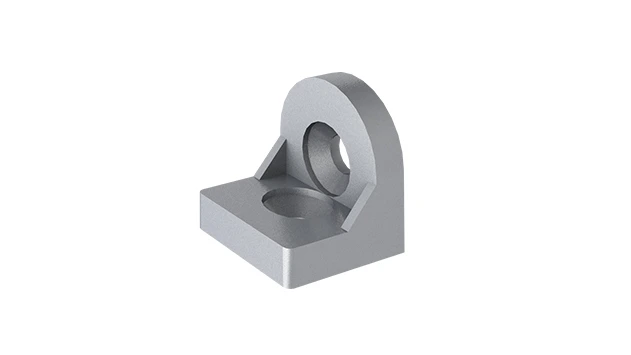
The turning angle aluminum profile connector provides a 90 degree hidden corner connection. 4040 it is means this size is used for 40 series aluminum profile.The corner code comes with set screws that allow for quick, easy connections.
In the bustling world of manufacturing, warehouses, and industrial setups, there's a quiet hero that often goes unnoticed: the humble components that hold everything together. From the workbench where an assembler crafts intricate parts to the lean system that streamlines a production line, these components—small, unassuming, yet critical—are the backbone of operational efficiency. Among them, the turning angle code 4040 stands out as a workhorse, a connector that bridges aluminum profiles, reinforces structures, and ensures stability in everything from material racks to assembly stations. But as industries evolve, so too must the tools that power them. Today, we're diving into the future of this unsung component, focusing on a trend that's reshaping industrial design from the ground up: lightweight innovation.
Lightweight design isn't just a buzzword; it's a response to the demands of modern manufacturing: faster setup times, greater flexibility, reduced costs, and a growing commitment to sustainability. For the turning angle code 4040—a staple in aluminum profile systems—this shift isn't just about trimming ounces. It's about reimagining what a "strong" component looks like, how it integrates with other parts, and how it empowers businesses to do more with less. Let's unpack why this matters, how it's happening, and what it means for the factories, warehouses, and workers of tomorrow.
First Things First: What Is a Turning Angle Code 4040?
If you've ever walked through a workshop or a production floor, you've probably seen aluminum profiles—those sleek, modular metal rails that form the frames of workbenches, shelving units, and conveyor systems. They're popular because they're strong, easy to customize, and infinitely adaptable. But aluminum profiles alone can't create a stable structure. That's where angle codes come in. Think of them as the "elbows" and "joints" of the industrial world: small brackets that fasten two profiles together at (you guessed it) a 90-degree angle, ensuring the structure doesn't wobble, bend, or collapse under load.
The turning angle code 4040 is a specific type of angle code designed for 40mm x 40mm aluminum profiles—the workhorses of the aluminum extrusion profile family. These profiles are everywhere: in lean systems that optimize workflow, in workbenches where precision matters, and in material racks that store everything from raw materials to finished products. The 4040 code is engineered to fit snugly into the T-slots of these profiles, creating a secure connection that can handle the daily wear and tear of industrial use. Traditionally, these codes were made of steel or heavy-duty plastic, prioritizing raw strength over weight. But as industries start to value agility as much as durability, that balance is shifting.
The Problem with "Heavy Duty": Current Design Hurdles
For decades, the mindset around industrial components was simple: stronger = better. If a turning angle code 4040 could withstand a sledgehammer hit (not that it ever would), that was a win. But this "over-engineering" came with trade-offs—trade-offs that are becoming harder to ignore in today's fast-paced, cost-conscious world.
First, weight adds up. A single steel turning angle code 4040 might weigh 150 grams. Multiply that by the dozens (or hundreds) used in a single workbench or lean system, and suddenly you're looking at extra pounds that make the structure harder to move, harder to assemble, and more expensive to ship. For workers tasked with reconfiguring a production line or setting up a new workbench, those extra grams translate to fatigue and slower setup times. In a factory where every minute counts, that's a tangible hit to productivity.
Then there's cost. Steel is durable, but it's also pricey—both in raw material costs and in the energy required to mine, refine, and shape it. Heavier components also mean higher shipping fees, as logistics companies charge by weight. For small and medium-sized businesses (SMBs) that rely on aluminum profile systems to stay competitive, these costs can eat into already tight margins.
Sustainability is another growing concern. Steel production is energy-intensive, and heavier components mean more fuel burned during transportation. As companies race to meet net-zero goals, the "heavy is better" approach is increasingly at odds with their environmental commitments. There's a clear need for a new kind of turning angle code 4040—one that's strong enough to do the job but light enough to keep up with the demands of modern industry.

Lightweight Design Trends: Rethinking the Turning Angle Code 4040
So, what does the future hold for the turning angle code 4040? It's all about lightweight innovation—reimagining materials, manufacturing, and design to cut weight without sacrificing strength. Let's break down the key trends driving this shift.
1. Material Science: Aluminum Alloys Take Center Stage
The most obvious (and impactful) trend is the move from steel to high-strength aluminum alloys. Aluminum is already the star of the aluminum profile world, prized for its light weight and corrosion resistance. Now, it's making its way into angle codes, too. Modern aluminum alloys—like 6061 or 7075—offer a winning combo: they're 30-50% lighter than steel but just as strong, thanks to heat treatment and alloying with elements like magnesium and silicon.
Take, for example, a lightweight turning angle code 4040 made from 6061-T6 aluminum. At just 80 grams, it's nearly half the weight of its steel counterpart but can still handle the same load (up to 500 kg per connection, in many cases). That's a game-changer for applications where mobility matters, like portable workbenches or lean systems that need to be reconfigured regularly. And because aluminum is infinitely recyclable, it aligns with the sustainability goals that more and more companies are prioritizing.
2. Precision Manufacturing: Less Material, More Strength
Lightweight design isn't just about swapping materials—it's about using those materials smarter. Advanced manufacturing techniques like CNC machining, die casting, and even 3D printing are allowing engineers to strip away "dead weight" from the turning angle code 4040, leaving only the material needed for strength.
For instance, traditional steel angle codes often have thick, uniform walls. But with CNC machining, designers can create "ribbed" or "hollowed" structures in aluminum angle codes—think of the way bird bones are light but strong. These designs reduce weight by up to 20% while maintaining (or even increasing) structural integrity. 3D printing takes this a step further, allowing for complex geometries that would be impossible with traditional manufacturing. Imagine a turning angle code 4040 with a lattice-like internal structure, optimized by AI to distribute stress evenly. It's lighter, stronger, and tailored to the exact load it needs to bear.
3. Integration with Modern Aluminum Profiles
The turning angle code 4040 doesn't exist in a vacuum—it's part of a larger ecosystem, specifically the aluminum extrusion profile system. As aluminum profiles themselves become more advanced (think thinner walls, stronger alloys, and smarter T-slot designs), angle codes need to evolve to match. Lightweight angle codes are being engineered to work seamlessly with these next-gen profiles, creating a system that's greater than the sum of its parts.
One example is the shift to "low-profile" angle codes. Traditional codes often protrude from the aluminum profile, adding unnecessary bulk. New lightweight designs sit flush with the profile's surface, reducing wind resistance (important for conveyor systems) and making the structure easier to clean and maintain. They also integrate better with accessories like plastic roller track guide rails or caster wheels, ensuring the entire system—from the angle code to the workbench—works together to minimize weight and maximize efficiency.
Traditional vs. Lightweight Turning Angle Code 4040: A Side-by-Side Look
| Feature | Traditional Steel Turning Angle Code 4040 | Lightweight Aluminum Alloy Turning Angle Code 4040 |
|---|---|---|
| Material | Mild steel | 6061-T6 aluminum alloy |
| Weight (per unit) | 150-180 grams | 70-90 grams |
| Tensile Strength | 370-450 MPa | 310-380 MPa (comparable for industrial loads) |
| Corrosion Resistance | Low (prone to rust without coating) | High (naturally corrosion-resistant) |
| Assembly Time | Longer (heavier, harder to maneuver) | Shorter (lighter, easier to align with profiles) |
| Shipping Cost (per 100 units) | Higher (due to weight) | 30-40% lower |
| Sustainability | High energy use in production; limited recyclability | Low energy use; 100% recyclable |
| Best For | Extreme heavy-load applications (rare in most industries) | General manufacturing, lean systems, workbenches, material racks |

Why Lightweight Matters: The Benefits of the New Design
At this point, you might be thinking: "Sure, lightweight angle codes sound nice, but do they really make that big of a difference?" The short answer: yes. The benefits of lightweight turning angle code 4040 designs ripple through every level of an operation, from the factory floor to the bottom line.
Cost Savings: Less Weight = Less Money
Let's start with the most tangible benefit: cost. Lightweight aluminum angle codes are often cheaper to produce than steel ones, thanks to lower raw material costs and less energy-intensive manufacturing. But the savings don't stop there. Shipping 100 lightweight angle codes costs 30-40% less than shipping 100 steel ones—a big deal for companies that order components in bulk. And when those angle codes are used to build workbenches or lean systems, the lighter overall structure reduces transportation costs for the finished product, too. Over time, these savings add up, freeing up budget for other investments like worker training or new technology.
Productivity: Faster Setup, Happier Workers
Anyone who's ever assembled furniture knows: heavy parts are a hassle. The same goes for industrial setups. A workbench built with lightweight angle codes is easier to move, adjust, and reconfigure. Workers spend less time wrestling with heavy components and more time getting the job done. In one case study, a electronics manufacturer switched to lightweight turning angle code 4040 in their assembly line workbenches and saw setup times drop by 25%—that's hours saved every week. Happier, less fatigued workers are also more productive and less likely to get injured, reducing downtime and workers' compensation costs.
Sustainability: Greener Manufacturing, One Angle Code at a Time
Sustainability isn't just a corporate buzzword anymore; it's a business imperative. Lightweight aluminum angle codes are a win for the planet in two big ways. First, aluminum is 100% recyclable, and recycling it uses 95% less energy than producing new aluminum. Second, lighter components mean less fuel burned during shipping, cutting down on carbon emissions. For companies aiming to meet ESG (Environmental, Social, Governance) goals, switching to lightweight angle codes is a simple, measurable step forward.
Flexibility: Adapting to Changing Needs
Modern manufacturing isn't static. Factories need to pivot quickly—whether it's switching from producing one product to another or scaling up (or down) production based on demand. Lightweight turning angle code 4040 makes this flexibility possible. A lean system built with lightweight components can be reconfigured in hours, not days, allowing businesses to respond to market changes faster. It also makes it easier to experiment with new layouts or workflows, fostering innovation on the factory floor.
Real-World Impact: How Lightweight Angle Codes Are Transforming Workbenches
To see these benefits in action, let's look at a real-world example: a mid-sized automotive parts manufacturer that recently upgraded its assembly workbenches to use lightweight turning angle code 4040 and aluminum profiles. Before the upgrade, their workbenches were built with steel angle codes and heavy wooden tops. They were sturdy, but they weighed over 200 kg each—making them nearly impossible to move without a forklift. Setup times for new product lines took 8 hours, and shipping the workbenches to satellite facilities cost a small fortune.
The manufacturer switched to lightweight aluminum alloy turning angle code 4040, paired with aluminum extrusion profiles and aluminum honeycomb panels for the workbench tops. The result? Workbenches that weighed just 80 kg—light enough for two workers to move by hand. Setup times dropped to 2 hours, and shipping costs fell by 40%. Perhaps most importantly, the new workbenches were just as strong as the old ones, handling the daily wear and tear of assembling car parts without a hitch. The manufacturer estimates the upgrade paid for itself in less than a year, thanks to saved time and reduced costs.
This isn't an isolated case. From small workshops to large-scale factories, lightweight turning angle code 4040 is proving that you don't have to choose between strength and agility. You can have both.
What's Next? The Future of Lightweight Turning Angle Code 4040
So, we've covered the present—but what does the future hold for the turning angle code 4040? If current trends are any indication, the best is yet to come. Here are a few innovations on the horizon:
Smart Materials: Self-Healing and Self-Cleaning Angle Codes?
Researchers are experimenting with "smart" aluminum alloys that can self-heal small cracks or resist bacteria growth—perfect for food processing or medical device manufacturing. Imagine a turning angle code 4040 that automatically repairs minor damage from daily use, extending its lifespan even further. While this tech is still in the lab, it's not as far-fetched as it sounds; self-healing metals are already being tested in aerospace applications.
AI-Driven Design: Custom Angle Codes for Every Job
Artificial intelligence is revolutionizing industrial design, and angle codes are no exception. AI tools can analyze a specific application—say, a workbench that needs to support 50 kg of tools—and design a custom turning angle code 4040 optimized for that exact load. The result? Angle codes that are lighter, stronger, and tailored to the job, rather than a one-size-fits-all solution. This could lead to even more weight savings and efficiency gains in the years ahead.
Integration with IoT: Angle Codes That "Talk"
The Internet of Things (IoT) is connecting every corner of the factory, and angle codes might soon join the network. Imagine a turning angle code 4040 embedded with a tiny sensor that monitors stress, temperature, or vibration. If a connection is starting to weaken, the sensor sends an alert to maintenance, preventing a breakdown before it happens. This "predictive maintenance" could save factories millions in downtime and repair costs.
Final Thoughts: The Turning Angle Code 4040—Small Component, Big Impact
The turning angle code 4040 might not be the most glamorous component in the industrial world, but its evolution tells a bigger story: the future of manufacturing is lightweight, efficient, and sustainable. By reimagining this humble connector—swapping steel for aluminum alloys, embracing precision manufacturing, and integrating with modern aluminum profiles—we're building a foundation for factories that are faster, cheaper, and greener than ever before.
Whether you're a small business owner setting up your first workbench or a plant manager looking to optimize a lean system, the message is clear: don't overlook the small stuff. The right angle code can make all the difference. And as lightweight design trends continue to accelerate, the turning angle code 4040 will only become more critical—proving that sometimes, the smallest components have the biggest impact on the future of industry.