- Company Articles
- Products and Technology
- Product knowledge
- The Impact of Chrome Coating Thickness on Three Way Lean Pipe Joint Performance

The Impact of Chrome Coating Thickness on Three Way Lean Pipe Joint Performance
Related Product
Three Way Lean Pipe Joint
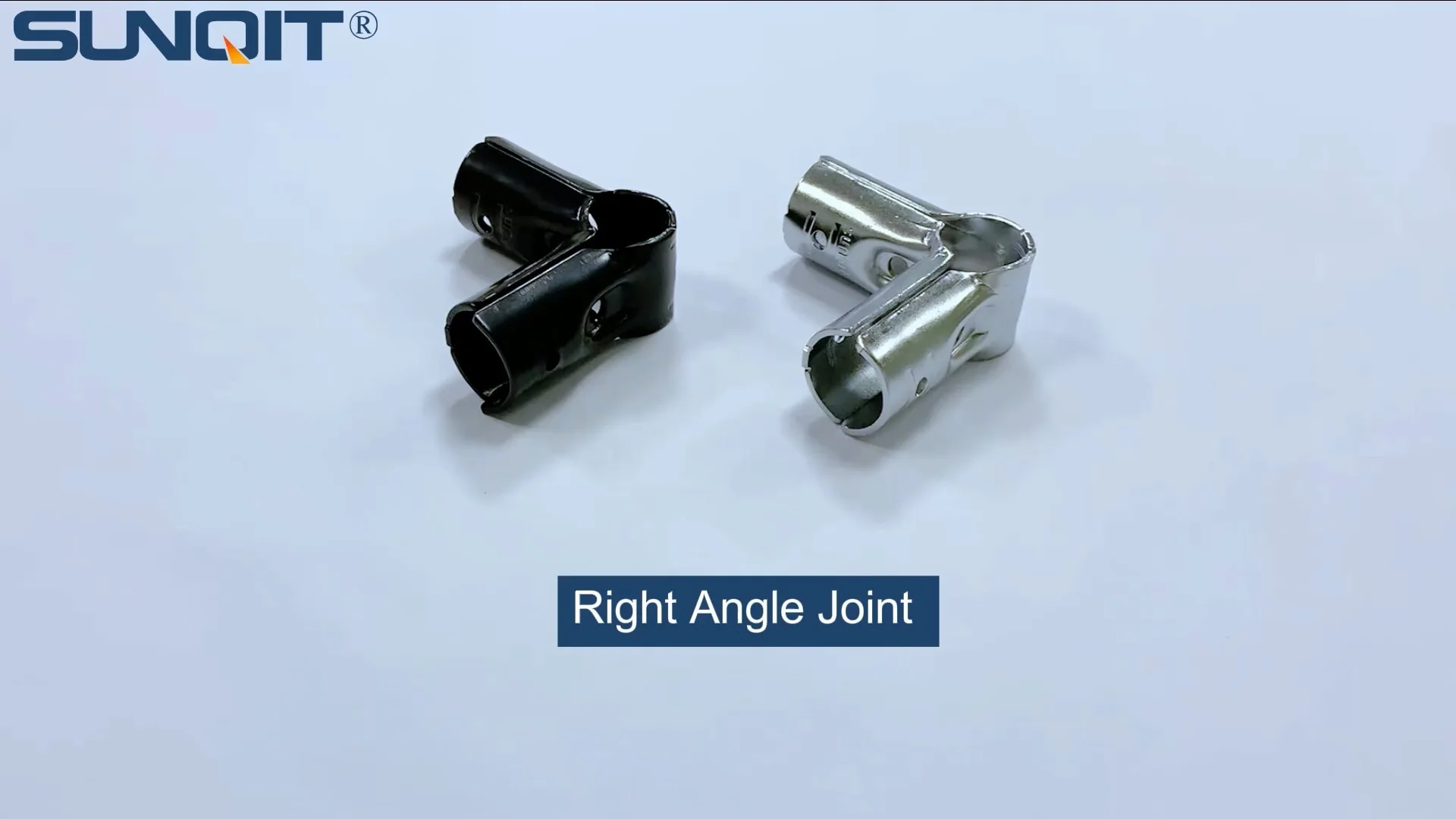
Three way lean pipe joint for 3 pcs 28MM lean pipe connection in straight angle, which used widely in workbench, flow rack, hand trolley frame connection.
In the fast-paced world of manufacturing, where efficiency and reliability are the cornerstones of success, every component in a production line plays a silent yet critical role. Lean pipe systems—those versatile, modular structures used to build workbenches, material racks, and assembly stations—are no exception. At the heart of these systems lie the unsung heroes: lean pipe joints . These small, unassuming connectors are what hold the entire framework together, ensuring stability, flexibility, and longevity. Among the various types of lean pipe joints, the three way lean pipe joint stands out for its ability to connect three pipes at a single intersection, making it indispensable in creating multi-directional structures like corner workbenches or tiered material racks.
But what makes a three way lean pipe joint truly reliable? Beyond its design and material, the protective coatings applied to its surface play a pivotal role. Chrome coating, in particular, is widely used in the industry for its exceptional corrosion resistance, wear protection, and smooth finish. However, not all chrome coatings are created equal. The thickness of this coating—measured in microns—can dramatically impact how well the joint performs over time. A coating that's too thin might fail to protect against rust in humid environments, while one that's too thick could compromise the joint's fit with pipes or even crack under stress. For manufacturers and facility managers, understanding this balance is key to building lean systems that stand the test of time.
In this article, we'll dive deep into the world of chrome-coated three way lean pipe joints. We'll explore what chrome coating is, why thickness matters, and how different thicknesses affect critical performance metrics like corrosion resistance, wear durability, and assembly precision. Whether you're a lean pipe supplier advising clients on the best components or a plant manager looking to optimize your production line, this guide will help you make informed decisions about a component that's far more important than it might seem at first glance.
What Are Three Way Lean Pipe Joints, and Why Do They Matter?
Before we delve into chrome coating thickness, let's first clarify what a three way lean pipe joint is and why it's such a vital part of lean pipe systems. Lean pipe systems, often called "flexible lean tubes" or "kitchen tube systems," are built using lightweight metal pipes (typically steel or aluminum) and modular joints. These systems are prized for their adaptability—they can be easily reconfigured, extended, or disassembled as production needs change. Think of them as the industrial equivalent of building blocks for adults.
A three way lean pipe joint, as the name suggests, is a connector designed to join three pipes at a single point. Unlike two-way joints, which form straight lines or 90-degree angles, three-way joints enable the creation of more complex structures: a lean pipe workbench with a side shelf, a material rack with vertical and horizontal supports, or a turnover trolley with multi-directional handles. Their design typically features three openings (ports) for inserting pipes, secured by set screws or friction fit, allowing for quick assembly without welding.
The reliability of these joints directly impacts the safety and efficiency of the entire lean system. A loose or failing joint can cause a workbench to wobble, a material rack to collapse, or a trolley to tip—risks that no manufacturer can afford. This is where protective coatings like chrome come into play. In high-traffic industrial environments, joints are subjected to constant stress: pipes shift during assembly, vibrations from machinery loosen connections, and exposure to moisture, oil, or chemicals can lead to rust. Chrome coating acts as a shield, protecting the joint's metal surface from these threats and ensuring it maintains its grip and structural integrity over time.
Chrome Coating 101: What It Is and How It's Applied
Chrome coating, or chromium plating, is a process that deposits a thin layer of chromium onto a metal surface. It's used in countless industrial applications, from automotive parts to kitchen fixtures, for its aesthetic appeal and functional benefits. For lean pipe joints, the primary goal of chrome coating is protection, not just shine—though a smooth, reflective finish is a nice bonus.
There are two main types of chrome plating relevant to lean pipe joints: decorative chrome and hard chrome. Decorative chrome is thinner (typically 0.25 to 1 micron) and used for appearance, while hard chrome (also called industrial chrome) is thicker (2 to 25 microns) and designed for durability. Three way lean pipe joints almost always use hard chrome plating, as their role demands resilience over looks.
The plating process itself involves submerging the joint (usually made of low-carbon steel) in a chromic acid solution and passing an electric current through it—a technique known as electroplating. The current causes chromium ions in the solution to bond to the joint's surface, forming a hard, adherent layer. The thickness of this layer is controlled by adjusting the plating time, current density, and solution concentration. Once plated, the joint may undergo additional treatments like polishing to ensure a smooth finish that won't scratch pipes during assembly.
So, how thick is "thick enough"? Industry standards for hard chrome plating on lean pipe joints typically range from 5 to 20 microns (μm). To put that in perspective, a human hair is about 50 to 100 microns thick—so even the thickest chrome coatings on joints are thinner than a strand of hair. Yet, within this tiny range, the difference between 5μm and 20μm can mean the difference between a joint that lasts 6 months and one that lasts 5 years in a harsh factory environment.

The Critical Impact of Chrome Coating Thickness on Performance
Now, let's get to the heart of the matter: how does chrome coating thickness affect the performance of three way lean pipe joints? To answer this, we'll break down the key performance metrics and examine how they change with coating thickness.
1. Corrosion Resistance: Thicker Coatings = Longer Protection
Corrosion is the arch-nemesis of metal components in industrial settings. Whether it's from humidity in a warehouse, spilled coolants on a factory floor, or cleaning chemicals in a food processing plant, moisture and chemicals can eat away at unprotected steel, leading to rust, pitting, and eventually, joint failure. Chrome plating acts as a barrier, preventing these corrosive agents from reaching the underlying metal.
But not all barriers are equally effective. Thinner coatings (5–8 microns) may have pinholes or gaps—tiny imperfections in the plating that allow moisture to seep through. Over time, these pinholes become entry points for corrosion, leading to rust spots that weaken the joint's structure. In contrast, thicker coatings (12–20 microns) are more likely to form a continuous, impermeable layer. Think of it as comparing a thin plastic sheet to a thick tarp: both block water, but the tarp is far less likely to tear or have holes.
To test this, manufacturers often use salt spray tests (ASTM B117), where coated joints are exposed to a mist of saltwater for extended periods. A joint with an 8μm coating might start showing rust after 240 hours, while a 15μm coating could withstand 1000+ hours—more than four times longer. For facilities in coastal areas or humid climates, this extra protection can be the difference between replacing joints annually and replacing them every five years.
2. Wear Resistance: Thicker Coatings Stand Up to Abrasion
Three way lean pipe joints don't just sit still—they're subjected to constant wear and tear. During assembly, pipes are inserted and tightened into the joint's ports, causing friction. Over time, as the lean system is reconfigured or moved (like a turnover trolley being wheeled across the factory floor), the joint may rub against pipes or other components. Even minor vibrations from nearby machinery can lead to micro-movements that abrade the coating.
Chrome is naturally hard—harder than steel, in fact—but its wear resistance depends on thickness. A thin coating (5–10 microns) may wear through in high-friction areas, exposing the base metal to both abrasion and corrosion. Thicker coatings (15–20 microns) provide a deeper "wear layer," allowing the joint to withstand repeated assembly/disassembly cycles or long-term vibration without degradation. This is especially important for lean pipe workbench setups in high-production environments, where tools and materials are constantly being placed and removed, causing the structure to flex and stress the joints.
Industry tests measure wear resistance using methods like the Taber Abrasion Test, where a rotating wheel rubs against the coated surface under controlled pressure. A 10μm coating might lose 5mg of material after 1000 cycles, while a 20μm coating loses only 2mg—half the wear, doubling the joint's service life.
3. Mechanical Strength: Balancing Thickness and Adhesion
While thicker coatings offer better corrosion and wear resistance, there's a point where "more" becomes "too much." Chrome plating, when applied too thickly (over 25 microns), can become brittle. This brittleness increases the risk of cracking or flaking, especially under mechanical stress—like when a pipe is tightened into the joint with excessive force. A cracked coating not only loses its protective properties but can also create sharp edges that scratch pipes or injure workers during assembly.
Another concern is adhesion: how well the chrome coating bonds to the base metal. Thicker coatings require longer plating times, which can lead to uneven deposition if the plating bath isn't properly maintained. Poor adhesion causes the coating to peel away from the joint, leaving patches of unprotected steel. To avoid this, reputable suppliers carefully control the plating process, ensuring that even thick coatings (15–20 microns) adhere uniformly. They may also use pre-plating treatments like acid etching to roughen the joint's surface, giving the chrome a better "grip."
Mechanical strength is also tested through bend or impact tests. A joint with a 20μm coating should flex slightly without cracking, while one with a 30μm coating might chip under the same stress. This is why most lean pipe suppliers cap their chrome coatings at 20 microns—balancing protection with structural integrity.
4. Assembly Precision: When Thickness Affects Fit
Lean pipe systems rely on tight, precise fits between pipes and joints. If a three way joint's ports are too narrow, pipes won't insert easily; if too wide, the connection will be loose. Chrome coating adds a tiny amount of thickness to the joint's inner port walls. While this is intentional (it helps create a snug fit), excessive thickness can throw off tolerances.
For example, a joint designed to fit a 28mm diameter pipe might have ports with an inner diameter of 28.2mm. A 5μm chrome coating adds 0.01mm to the inner diameter (since the coating is applied to both sides), resulting in a final diameter of 28.22mm—still within tolerance. But a 20μm coating adds 0.04mm, making the inner diameter 28.24mm. In most cases, this is still acceptable, but if the coating is uneven (thicker in one port than another), the joint might fit tightly on one pipe and loosely on another. This is why quality control is critical: reputable suppliers measure coating thickness at multiple points on each joint to ensure uniformity.
Assembly ease is also affected by the coating's smoothness. Thicker coatings, if not properly polished, can have rough edges that make pipe insertion harder. Conversely, a thin, smooth coating allows pipes to slide into place with minimal effort, reducing assembly time and worker fatigue.

Comparing Chrome Coating Thicknesses: A Performance Breakdown
To make it easier to compare how different chrome coating thicknesses stack up, let's look at a table summarizing key performance metrics for three common thickness ranges used in the industry. This data is based on industry standards and testing results from leading lean pipe suppliers.
| Chrome Coating Thickness | Corrosion Resistance (Salt Spray Test) | Wear Resistance (Taber Abrasion Loss) | Assembly Ease | Ideal Application |
|---|---|---|---|---|
| 5–8 μm (Thin) | 240–480 hours (rust appears) | 5–7 mg loss/1000 cycles | Excellent (minimal thickness, easy insertion) | Dry, low-humidity environments; temporary or low-use structures (e.g., event displays) |
| 10–15 μm (Medium) | 720–1000 hours (rust appears) | 3–5 mg loss/1000 cycles | Very Good (slight thickness, still easy to assemble) | General factory use; standard lean pipe workbench ; material racks in moderate humidity |
| 15–20 μm (Thick) | 1000+ hours (minimal rust) | 2–3 mg loss/1000 cycles | Good (may require slight force for insertion; tight fit) | Humid environments, food processing, chemical plants; heavy-duty structures (e.g., turnover trolleys for heavy loads) |
| >20 μm (Excessively Thick) | 1000+ hours (but prone to cracking) | 1–2 mg loss/1000 cycles (but coating may flake) | Poor (tight tolerances; may not fit standard pipes) | Rarely recommended; high risk of brittleness and assembly issues |
As the table shows, there's no one-size-fits-all thickness. The "right" choice depends on the environment and how the lean system will be used. For most manufacturers, the medium range (10–15 μm) strikes the best balance between protection, assembly ease, and cost—a fact that most lean pipe supplier teams will confirm when advising clients.

Real-World Applications: How Coating Thickness Impacts End Users
To bring this discussion to life, let's look at two real-world scenarios where chrome coating thickness made a tangible difference for manufacturers.
Case Study 1: Automotive Plant in a Humid Climate
A large automotive manufacturer in the southeastern United States was experiencing frequent failures with their three way lean pipe joints. Their assembly line workbenches, built using joints with 8μm chrome coatings, were rusting within 6 months of installation. The humid, subtropical climate combined with occasional coolant spills was accelerating corrosion, leading to loose joints and wobbly workbenches—a safety hazard for workers.
After consulting with their lean pipe supplier , the manufacturer switched to joints with 15μm chrome coatings. The result? Rust formation was delayed to over 18 months, and joint failures dropped by 70%. The slightly thicker coating provided the extra barrier needed to withstand the humid environment, while still allowing easy assembly and reconfiguration of the workbenches. The supplier also recommended adding plastic end caps to the pipes to prevent moisture from seeping into the joints—a simple fix that further extended longevity.
Case Study 2: Electronics Manufacturer with Frequent Reconfigurations
An electronics plant producing smartphones needed lean pipe systems that could be reconfigured weekly to accommodate new product models. Their initial choice was joints with 20μm chrome coatings, assuming thicker was better. However, they soon encountered issues: pipes were difficult to insert and remove, and repeated assembly/disassembly led to chipping in the thick coating, exposing the base metal to corrosion.
The solution? Switching to 12μm coatings. The thinner (but still durable) coating reduced friction during assembly, making reconfigurations faster and easier for workers. The coating also proved more flexible, resisting chipping during pipe insertion. By pairing the 12μm joints with regular cleaning (to remove dust and debris that cause abrasion), the plant saw a 50% reduction in joint replacement costs and a 30% improvement in reconfiguration efficiency.
How to Choose the Right Chrome Coating Thickness for Your Needs
Selecting the optimal chrome coating thickness for your three way lean pipe joints doesn't have to be guesswork. Here are four key questions to ask yourself (or your supplier) to make the right choice:
- What's the environment like? Humid, wet, or chemical-exposed areas need thicker coatings (15–20 μm). Dry, clean environments can get by with thinner coatings (5–10 μm).
- How often will the system be reconfigured? Frequent assembly/disassembly calls for thinner, more flexible coatings (10–15 μm) to resist chipping. Static systems (rarely reconfigured) can use thicker coatings for long-term protection.
- What's the load capacity? Heavy loads (e.g., material racks holding 500+ lbs) stress joints more, requiring thicker coatings (15–20 μm) to withstand wear. Light loads (e.g., small parts bins) can use thinner coatings.
- What's your budget? Thicker coatings cost more to produce. If your system is temporary or low-use, a thinner coating may be more cost-effective. For permanent, critical systems, the extra cost of thicker coatings is often worth the longer lifespan.
When in doubt, consult your lean pipe supplier . Reputable suppliers will have data on how their coatings perform in different environments and can recommend thicknesses based on your specific needs. They may even provide samples for testing—for example, sending you joints with 10μm and 15μm coatings to see which assembles more easily in your facility.
Conclusion: The Invisible Metric That Shapes Lean System Reliability
Chrome coating thickness may seem like a minor detail, but as we've explored, it's a critical factor in determining the performance, longevity, and cost-effectiveness of three way lean pipe joints. From corrosion resistance in humid factories to wear durability in high-traffic workbenches, the right thickness can transform a system from a frequent headache into a long-term asset.
Remember: there's no universal "best" thickness. The optimal choice depends on your environment, usage patterns, and budget. Whether you're building a simple lean pipe workbench or a complex material handling system, taking the time to consider chrome coating thickness—and consulting with a knowledgeable lean pipe supplier —will ensure your lean system delivers the efficiency, flexibility, and reliability your operation demands.
In the end, the true measure of a lean pipe joint isn't just how well it connects pipes today, but how well it continues to connect them tomorrow, next month, and next year. And when it comes to that long-term reliability, chrome coating thickness is one metric you can't afford to overlook.