- Company Articles
- Products and Technology
- Product knowledge
- The Impact of Three Way Aluminum Pipe Joints on Production Line Flexibility

The Impact of Three Way Aluminum Pipe Joints on Production Line Flexibility
Related Product
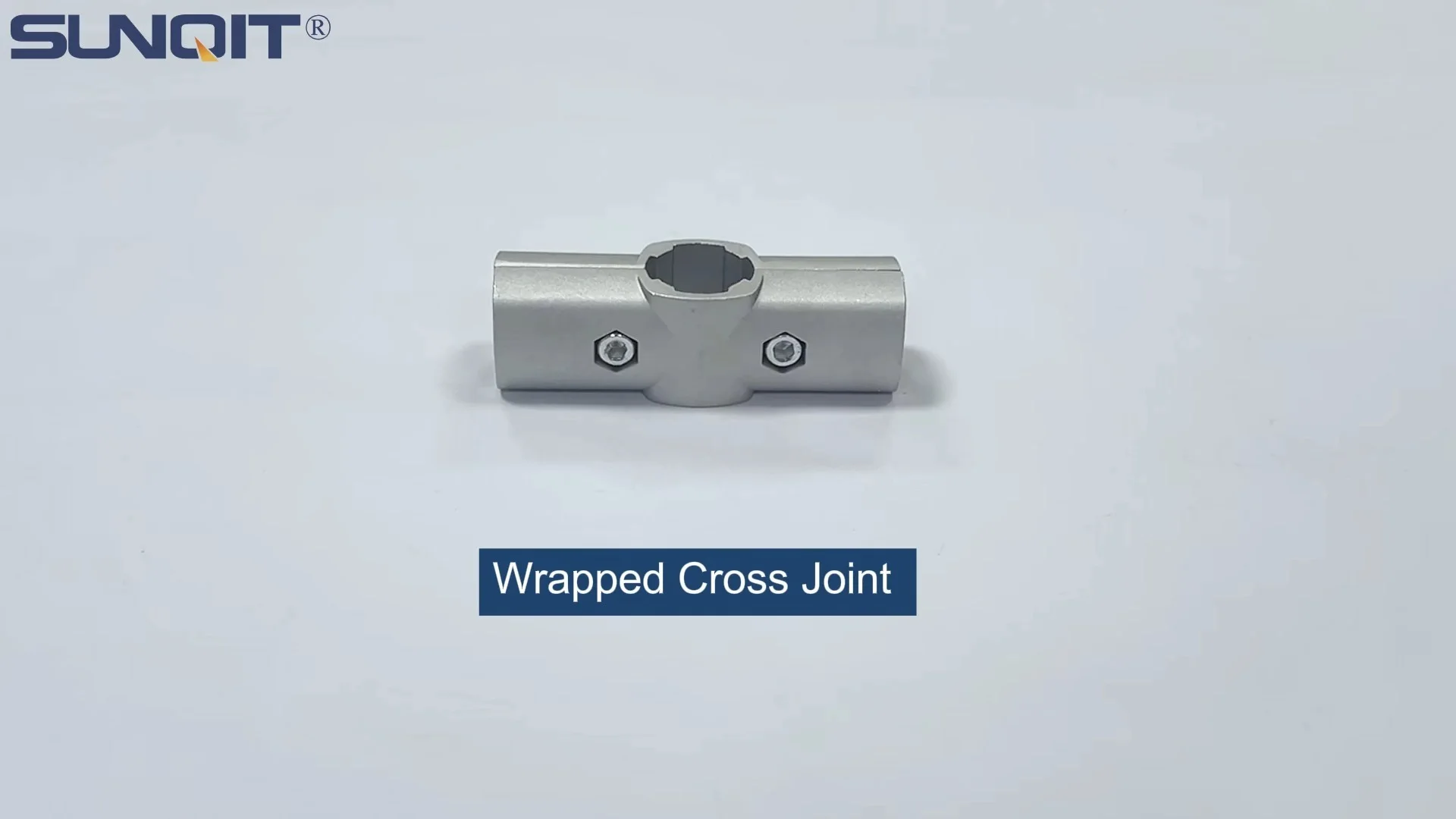
Three Way Aluminum Pipe Joint
Aluminum 3 way pipe joint for 28mm aluminum pipe connection in 3 direction.
Walk into any modern manufacturing facility, and you'll likely notice a common challenge: the pressure to stay agile. Whether it's a sudden shift in consumer demand, a new product launch, or the need to scale production up (or down) overnight, rigidity in production lines can quickly become a bottleneck. For decades, factories relied on fixed steel structures—welded workbenches, immovable material racks, and inflexible conveyors—that worked well for static workflows but crumbled when asked to adapt. Today, a quiet revolution is unfolding, driven by modular systems built around components like the three way aluminum pipe joint. These small, unassuming connectors are redefining what it means to have a "flexible" production line, turning once-static spaces into dynamic environments that grow, change, and evolve with the needs of the business.
What Does "Production Line Flexibility" Really Mean?
Before diving into the role of three way aluminum pipe joints, let's clarify what "production line flexibility" entails. At its core, it's the ability to adjust workflows, layouts, and processes quickly and cost-effectively without sacrificing efficiency or safety. This includes:
- Rapid reconfiguration: Rearranging workstations, material racks, or conveyor paths in hours or days, not weeks.
- Scalability: Adding or removing components (shelves, work surfaces, storage) to match production volume.
- Customization: Tailoring tools and structures to fit unique product dimensions or team workflows.
- Portability: Moving heavy equipment or workstations without disassembly (think mobile workbenches or rolling material racks).
In an era of short product lifecycles and mass customization—where a factory might produce 100 different SKUs in a single shift—flexibility isn't just a nice-to-have; it's a competitive advantage. And at the heart of this flexibility lies the modularity of components like aluminum profiles, aluminum pipe accessories, and, critically, the three way aluminum pipe joint.
The Three Way Aluminum Pipe Joint: A Small Component with a Big Role
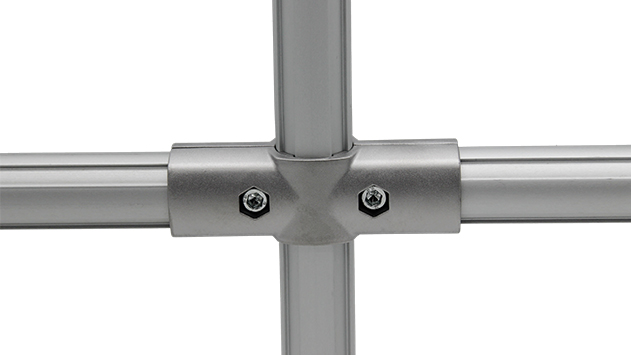
Three way aluminum pipe joints are exactly what their name suggests: connectors designed to join three aluminum pipes or profiles at once, typically in perpendicular or angled configurations. Made from lightweight, corrosion-resistant aluminum extrusion profile, these joints are engineered for simplicity and durability. Unlike traditional steel joints, which often require welding, drilling, or specialized tools, three way aluminum joints use a friction-fit or bolt-on design that allows anyone on the factory floor to assemble or disassemble them with basic hand tools.
What makes these joints so powerful is their versatility. They're not just "connectors"—they're the building blocks of a modular ecosystem. Pair them with aluminum profiles (hollow, T-slot, or round), aluminum pipe accessories (clamps, end caps, or brackets), and you have a system that can be reimagined endlessly. Need a taller material rack? Add a few extra pipes and joints. Want to extend a conveyor? Connect new roller tracks to the existing frame with a three way joint. The possibilities are limited only by the team's creativity.
Key Features of Three Way Aluminum Pipe Joints That Drive Flexibility
1. Tool-Free (or Minimal-Tool) Assembly
Traditional steel joints often require welding torches, drills, or heavy machinery to assemble. This isn't just time-consuming—it also means that once a structure is built, it's effectively permanent. Three way aluminum pipe joints, by contrast, are designed for quick assembly. Many use a simple bolt-and-nut system or snap-fit design that can be tightened with a standard wrench or even by hand. For example, internal thread designs allow pipes to screw directly into the joint, while external flanges let users secure connections with a few turns of a hex key. This "plug-and-play" approach cuts assembly time by 70% compared to welded steel, making reconfiguration feasible even for small teams.
2. Compatibility with a Wide Range of Aluminum Components
A joint is only as useful as the system it connects. Three way aluminum pipe joints shine here because they're engineered to work seamlessly with other aluminum-based components. Whether you're using basic aluminum tubes (1.2mm or 1.5mm wall thickness), aluminum extrusion profiles (like 2020, 3030, or 4040 series), or specialized parts (roller track connectors, caster wheels, or workbench surfaces), these joints act as the "universal translator" of the modular world. For instance, a single three way joint can connect a vertical aluminum profile (for structure), a horizontal pipe (for shelving), and a diagonal brace (for stability)—all without adapters or custom machining.
3. Reusability and Durability
Unlike plastic joints (which crack under heavy loads) or steel joints (which rust and seize over time), aluminum joints are built to last. Aluminum's natural corrosion resistance means they hold up in harsh factory environments—think humidity, oil, or chemical exposure. Even better, they're fully reusable. Disassemble a workbench on Monday, repurpose the joints to build a material rack on Tuesday, and then break that down to build a conveyor guard on Wednesday. There's no waste, no need to buy new parts, and no degradation in performance after multiple reconfigurations. This not only saves money but aligns with sustainability goals, a growing priority for manufacturers worldwide.
4. Lightweight Strength
Aluminum is 30% lighter than steel, but it's surprisingly strong—especially when used in modular structures. A three way aluminum pipe joint can support hundreds of pounds of weight (depending on the pipe diameter and wall thickness) while remaining easy to handle. This lightweight nature is a game-changer for portability. For example, a workbench built with aluminum pipes and three way joints can be fitted with caster wheels and moved across the factory floor by two people, whereas a steel equivalent would require a forklift. This mobility adds another layer of flexibility: teams can rearrange layouts in real time to optimize workflow or accommodate temporary projects.

Real-World Applications: How Three Way Joints Transform Production Lines
To understand the impact of three way aluminum pipe joints, let's look at three common production line components and how these joints make them more flexible.
Case 1: Workbenches – From Static to Customizable
Workbenches are the backbone of assembly lines, but one size rarely fits all. A team assembling small electronics needs a different setup than one building automotive parts. With traditional wooden or steel workbenches, customization means ordering a new bench (and waiting weeks for delivery). With three way aluminum pipe joints, customization is in the team's hands.
Take the "Workbench E (single deck-without caster)" from many modular system catalogs. At first glance, it's a simple structure: a flat work surface supported by four vertical pipes. But with three way joints, teams can add:
- Adjustable shelves (using horizontal pipes connected via three way joints at 12-inch intervals).
- Tool hangers (diagonal pipes extending from the back of the bench, connected with joints).
- LED light bars (mounted to overhead pipes secured by joints).
- ESD protection (by swapping standard aluminum pipes for conductive versions, with joints ensuring a grounded connection).
When the product line changes—say, from assembling smartwatches to laptops—the team can remove the lower shelves, raise the work surface, and add a keyboard tray, all using the same joints and pipes. No new bench, no downtime.
Case 2: Material Racks – Adapting to Inventory Needs
Material racks are another area where rigidity causes headaches. A "Material Rack B (3 row and 3 floor)" might work perfectly for storing small components, but what if the factory switches to larger parts? With welded steel racks, you'd need to buy a new rack. With aluminum systems and three way joints, you simply reconfigure.
Three way joints allow teams to adjust shelf height, add or remove rows, or even convert a vertical rack into a horizontal flow rack (by adding roller tracks). For example, if a batch of oversized parts arrives, users can loosen the joints, slide the horizontal pipes up to create 18-inch gaps (instead of 12-inch), and retighten—all in 20 minutes. During peak seasons, they might add a fourth floor by connecting extra vertical pipes to the top of the rack with three way joints, doubling storage capacity without expanding the rack's footprint.
Case 3: Conveyor Systems – Rerouting Workflows on the Fly
Conveyors are the arteries of production lines, but their fixed paths can become liabilities when workflows change. Three way aluminum pipe joints solve this by turning conveyor frames into modular systems. For instance, a straight roller conveyor can be bent into an L-shape by adding a three way joint at the corner, connecting the existing track to a new section. Need to add a side branch for quality control inspections? Attach a short roller track to the main frame using a three way joint, and suddenly products can be diverted without stopping the line.
Even specialized conveyors benefit. Plastic roller track guide rails (yellow or grey) can be mounted to aluminum frames using joints, while swivel roller balls (1 inch or 0.5 inch) can be added to workbench edges to create manual "mini-conveyors" for parts transfer. The key is that the frame—built with three way joints—can adapt to any conveyor configuration, from straight lines to spirals, without welding or cutting.

Three Way Aluminum Pipe Joints vs. Traditional Steel Joints: A Flexibility Showdown
| Feature | Three Way Aluminum Pipe Joints | Traditional Steel Joints |
|---|---|---|
| Reconfiguration Time | 2–4 hours (for a full workstation) | 1–2 weeks (requires welding/drilling) |
| Reusability | Unlimited (joints can be reused indefinitely) | Low (welded joints are permanent; cutting damages components) |
| Weight (per joint) | 0.2–0.5 lbs (light enough for manual handling) | 1.5–3 lbs (requires lifting equipment for large structures) |
| Cost Over Time | Lower (one-time purchase, reusable across projects) | Higher (frequent replacement of welded structures) |
| Corrosion Resistance | High (aluminum oxidizes to form a protective layer) | Low (prone to rust; requires painting/coating) |
The Future of Flexibility: Where Three Way Aluminum Pipe Joints Fit into Smart Factories
As factories move toward Industry 4.0 and smart manufacturing, the demand for flexibility will only grow. Three way aluminum pipe joints are poised to play a starring role here, too. Imagine a production line where IoT sensors (for tracking inventory or monitoring equipment) are mounted to aluminum profiles using these joints, or where collaborative robots (cobots) are positioned on mobile workbenches (built with joints) that follow workers around the floor. Even digital twin technology—where virtual models of production lines are tested before physical changes—will rely on modular structures that can be recreated in the real world using joints and aluminum components.
Sustainability is another key trend. Aluminum is 100% recyclable, and modular systems reduce waste by eliminating the need for custom-cut steel or disposable packaging. Factories using three way aluminum pipe joints report 30% lower material waste and 25% lower energy use (thanks to reduced transportation of heavy steel structures). As eco-conscious manufacturing becomes a competitive differentiator, these joints will become even more valuable.
Conclusion: The Joint That Powers the Future of Manufacturing
Three way aluminum pipe joints may seem like small components, but their impact on production line flexibility is enormous. By enabling rapid reconfiguration, reducing assembly time, and working seamlessly with a universe of aluminum parts, they're not just tools—they're enablers of innovation. In a world where change is the only constant, these joints give factories the agility to thrive, turning disruptions into opportunities and static lines into dynamic ecosystems.
Whether you're a small workshop looking to adapt to seasonal demand or a large manufacturer aiming to stay ahead in Industry 4.0, the message is clear: flexibility starts with the right building blocks. And in today's manufacturing landscape, few building blocks are as powerful as the three way aluminum pipe joint.