- Company Articles
- Products and Technology
- Product knowledge
- The Importance of Adjustable Leveling Feet in Preventing Workbench Vibration (3C Assembly)

The Importance of Adjustable Leveling Feet in Preventing Workbench Vibration (3C Assembly)
Related Product
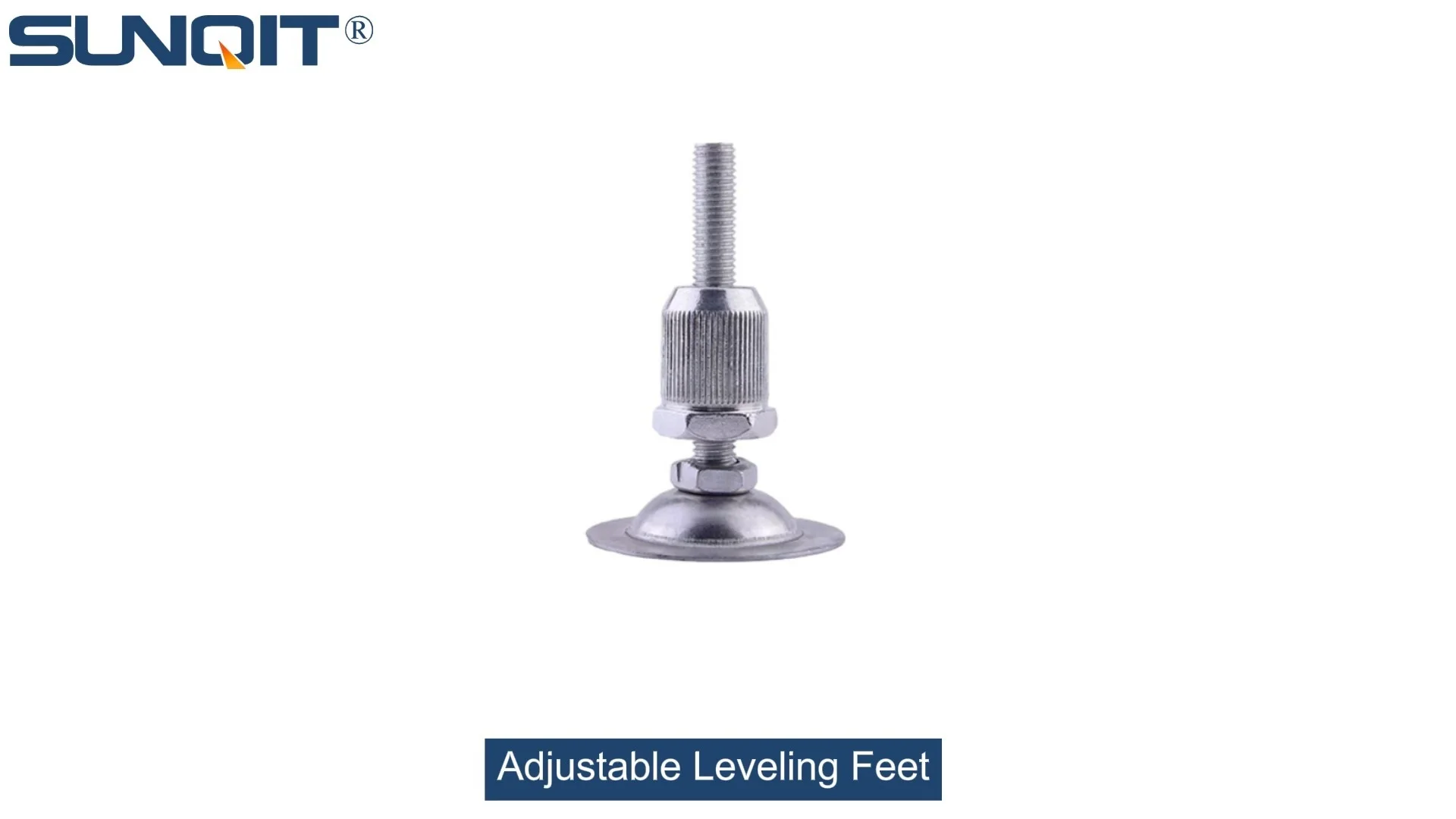
Adjustable Leveling Feet
Adjustable leveling feet are designed to keep machines level when placed on uneven or sloped ground. Otherwise known as adjustable equipment feet, they are available to order in a wide variety of size and load capacity combinations.
It's 9:30 AM on the third floor of a 3C manufacturing plant, and Maria, a technician on the smartphone camera module assembly line, lets out a quiet sigh. For the third time this week, a batch of 50 units has been flagged for rework—tiny misalignments in the lens holder, invisible to the naked eye but caught by the automated inspection camera. "Again?" she mutters, adjusting her anti-static wristband. "The bench feels wobblier than usual today."
Across the aisle, Raj, the floor supervisor, overhears and frowns. He's been tracking a 12% uptick in rework rates on Line 4 over the past month, and the numbers aren't adding up. The tools are calibrated, the workers are trained, and the components are within spec. So what's causing these micro-misalignments? Later that afternoon, he kneels beside Maria's workbench and places a level on the surface. The bubble tilts ever so slightly to the left. "Ah," he thinks. "We've been overlooking the basics."
In the high-stakes world of 3C assembly—where components as small as 0.5mm dictate product quality—stability isn't just a convenience; it's the backbone of precision. And at the heart of that stability? Often, a humble component that gets far less attention than it deserves: adjustable leveling feet. Let's dive into why these unassuming parts matter, how they keep workbenches steady, and why they might just be the unsung heroes of your assembly line.
Why "Rock-Solid" Isn't Just a Metaphor in 3C Assembly
3C products—smartphones, laptops, wearables, and the like—are marvels of miniaturization. A modern smartphone camera module, for example, packs over 20 components into a space smaller than a postage stamp: lenses, sensors, actuators, and flex cables, all needing to align within micrometers. Even a vibration of 0.1mm can throw off a lens's position, leading to blurry photos or autofocus failures. For consumers, that means a defective product; for manufacturers, it means rework costs, delayed shipments, and eroded trust.
But it's not just product quality at stake. Unstable workbenches create a ripple effect: workers compensate by leaning awkwardly, straining their shoulders and wrists to steady their hands. Tools slide across surfaces, increasing the risk of dropped components (and the $500 price tag that comes with a single damaged sensor). Over time, even minor vibrations can loosen screws on fixtures or jostle calibration tools, turning a small issue into a major headache.
So why do workbenches wobble in the first place? Let's break it down.
The Culprits Behind Workbench Vibration: It's Rarely "Just the Floor"
When Raj first noticed the wobbly bench, his initial thought was, "The building's settling—old factory floors are never perfectly level." He wasn't wrong: concrete floors in manufacturing facilities often develop slight slopes or unevenness over time, thanks to heavy machinery, temperature changes, or even poor initial pouring. But uneven floors are just one piece of the puzzle.
Dynamic loads play a bigger role than most managers realize. Every time a worker leans on the edge of a workbench to reach for a component, every time a turnover trolley rumbles past, every time a nearby conveyor belt starts up—these actions send tiny shockwaves through the floor. If the workbench isn't anchored properly, it acts like a tuning fork, amplifying those vibrations. A lean pipe workbench , for example, with its modular aluminum frame, is designed for flexibility, but that flexibility can become a liability if the base isn't stable. The pipes and joints that make it easy to reconfigure also allow for subtle movement if the legs aren't firmly planted.
Then there's the workbench itself. Over time, bolts loosen, casters wear unevenly, and feet get scuffed or compressed. A workbench that was perfectly level on installation might, after six months of daily use, develop a slight "rock" as its supports degrade. And in 3C assembly, where workbenches are often loaded with heavy equipment—microscopes, torque tools, or automated pick-and-place machines—even a small imbalance can turn into a big problem.

Adjustable Leveling Feet: The "Fine-Tuner" of Workbench Stability
So, what exactly are adjustable leveling feet? Think of them as the "feet" of your workbench, but with a superpower: they can grow or shrink on demand. Most designs consist of three parts: a threaded stem (the "leg"), a base (the part that touches the floor), and a locking nut (to keep the height fixed once adjusted). Twist the stem clockwise, and the foot extends; twist counterclockwise, and it retracts. Simple, right? But that simplicity is what makes them so effective.
Here's how they solve the vibration puzzle: First, they compensate for uneven floors. If your workbench has four legs, and the floor dips by 3mm under the left-front leg, you can extend that leveling foot by 3mm to keep the surface perfectly horizontal. No more tilting, no more "rocking" when you press down on a corner.
Second, they dampen dynamic vibrations. A good leveling foot's base—often made of rubber, polyurethane, or anti-slip plastic—acts like a mini shock absorber. When a trolley rumbles by, the base flexes slightly, absorbing the impact instead of transferring it up into the workbench. This is especially critical for workbench setups near high-traffic areas or heavy machinery.
Third, they adapt to changing loads. If you add a 50kg microscope to one end of the bench, the legs might compress unevenly. With adjustable feet, you can tweak the height to rebalance the surface, ensuring the added weight doesn't create a new tilt.
But not all leveling feet are created equal. In 3C environments—where floors are often smooth concrete or epoxy, and static control is a priority—one variant stands out: anti-slip adjustable leveling feet . These feature bases with textured surfaces or rubber grips that "bite" into the floor, preventing the workbench from sliding even when subjected to lateral forces (like a worker pulling a heavy bin under the bench). In ESD-sensitive areas, some models even come with conductive rubber bases to dissipate static charges—killing two birds with one stone.

From Wobbly to Rock-Solid: A Real-World Turnaround
Let's circle back to Raj and Maria's plant. After noticing the tilted level, Raj ordered a set of anti-slip adjustable leveling feet for all 12 workbenches on Line 4. The installation took two hours—each leg was unscrewed, the new feet were threaded on, and the bench was leveled with a precision tool. "It felt like overkill at first," admits Raj. "I mean, these are just… feet."
Three weeks later, the results spoke for themselves. Rework rates dropped from 12% to 4.5%, and the automated inspection camera flagged only 3 misaligned modules in 1,000 units—down from 18. "The bench doesn't 'bounce' anymore when I set down a component tray," Maria says, smiling as she assembles a camera module without pausing. "I can focus on the part, not on steadying my hands."
This isn't an isolated case. A 2023 study by the Manufacturing Excellence Institute found that plants using adjustable leveling feet on 3C assembly workbenches reported a 28% average reduction in vibration-related defects, along with a 15% boost in worker productivity (thanks to less time spent reworking and more time assembling). For a mid-sized plant producing 50,000 smartphone modules monthly, that translates to roughly $300,000 in annual savings—from a component that costs less than $10 per foot.

Choosing the Right Adjustable Leveling Feet: It's Not One-Size-Fits-All
So, you're convinced—adjustable leveling feet are worth investing in. But how do you pick the right ones for your lean pipe workbench or aluminum profile setup? Let's break down the key factors:
Load Capacity: Workbenches in 3C assembly can carry anywhere from 50kg (basic manual stations) to 500kg (stations with heavy machinery). Check the leveling foot's load rating—each foot should support at least 25% of the total weight (to account for uneven distribution). A 200kg workbench, for example, needs feet rated for 50kg each.
Floor Type: Smooth concrete? Go for rubber or polyurethane bases for grip. Uneven or rough floors? Look for larger, wider bases (at least 60mm in diameter) to distribute weight and avoid sinking.
Environmental Needs: In ESD zones, choose conductive bases. In cleanrooms, opt for non-marking materials (no black rubber that leaves scuffs). In humid areas, stainless steel stems prevent rust.
To make it easier, here's a quick comparison of common types:
| Type of Leveling Foot | Best For | Anti-Slip? | Load Capacity (Per Foot) | Key Benefit |
|---|---|---|---|---|
| Standard Adjustable (Plastic Base) | Light-duty workbenches (up to 100kg) | Basic | 30-50kg | Budget-friendly, easy to replace |
| Anti-Slip Adjustable (Rubber Base) | Medium-duty stations, smooth floors | Excellent | 50-150kg | Prevents sliding, dampens vibrations |
| Heavy-Duty (Metal Base with Rubber Pad) | Workbenches with machinery (150kg+) | Good | 200-500kg | High load capacity, durable for industrial use |
| ESD-Safe (Conductive Rubber) | Static-sensitive areas (circuit board assembly) | Yes | 50-150kg | Dissipates static, prevents component damage |
Installing and Maintaining: Keeping Your Feet (and Workbench) Happy
Installing adjustable leveling feet is straightforward, but a few best practices will ensure they work long-term. Start by cleaning the workbench legs—debris or rust on the threads can make adjustment tough. Then, remove the old feet (if replacing) and thread on the new ones by hand until they're snug. Next, place a precision level (digital is best for 3C work) on the workbench surface, and adjust each foot until the bubble is centered. Finally, tighten the locking nut against the leg to prevent the foot from unscrewing over time.
Maintenance is equally simple. Every month, give the feet a quick check: Are the locking nuts tight? Is the base cracked or worn? If the anti-slip pad is smooth (no texture left), replace it—grip is critical. In high-traffic areas, check leveling quarterly; floors can shift slowly, and a 1mm tilt can creep back over time.
Pro tip: If you're using a lean pipe workbench with aluminum profile legs, look for leveling feet with compatible thread sizes (most lean pipe systems use M10 or M12 threads). Mixing and matching threads can lead to stripped stems—annoying, and avoidable.
Beyond Leveling Feet: Building a Stability-First Workstation
Adjustable leveling feet are powerful, but they're most effective when paired with a well-designed workbench. Start with a rigid frame—aluminum profiles or steel pipes are better than plastic for minimizing flex. Add cross-bracing between legs to reduce side-to-side movement. And if you're using casters (for mobile workbenches), choose models with locking mechanisms that also have leveling feet built-in—so you can roll the bench into place, lock the casters, then tweak the feet for stability.
Remember, stability is a system, not a single part. A wobbly workbench might be due to leveling feet, but it could also be a loose joint in the frame, a damaged caster, or even a warped tabletop. The key is to approach it like Raj did: start with the basics, check the obvious, and don't overlook the small components that hold everything together.
Final Thoughts: Stability as a Foundation for Excellence
Back on Line 4, Maria finishes assembling a camera module and sets it gently in the inspection tray. The automated camera hums to life, scans the component, and displays a green "PASS" on the screen. She grins, glancing down at the workbench's feet—unassuming, black, and steady as a rock. "Who knew feet could make such a difference?" she thinks.
In 3C assembly, where the line between "perfect" and "defective" is measured in micrometers, adjustable leveling feet aren't just parts—they're precision tools. They turn wobbly workbenches into platforms of reliability, reduce rework, and let workers focus on what they do best: building products that delight customers. So, the next time you walk your factory floor, take a knee and check those feet. You might just find the solution to your quality puzzle staring back at you—small, simple, and ready to work.