- Company Articles
- Products and Technology
- Product knowledge
- The Importance of Anti-Slip Adjustable Leveling Feet in Lean Manufacturing

The Importance of Anti-Slip Adjustable Leveling Feet in Lean Manufacturing
Related Product
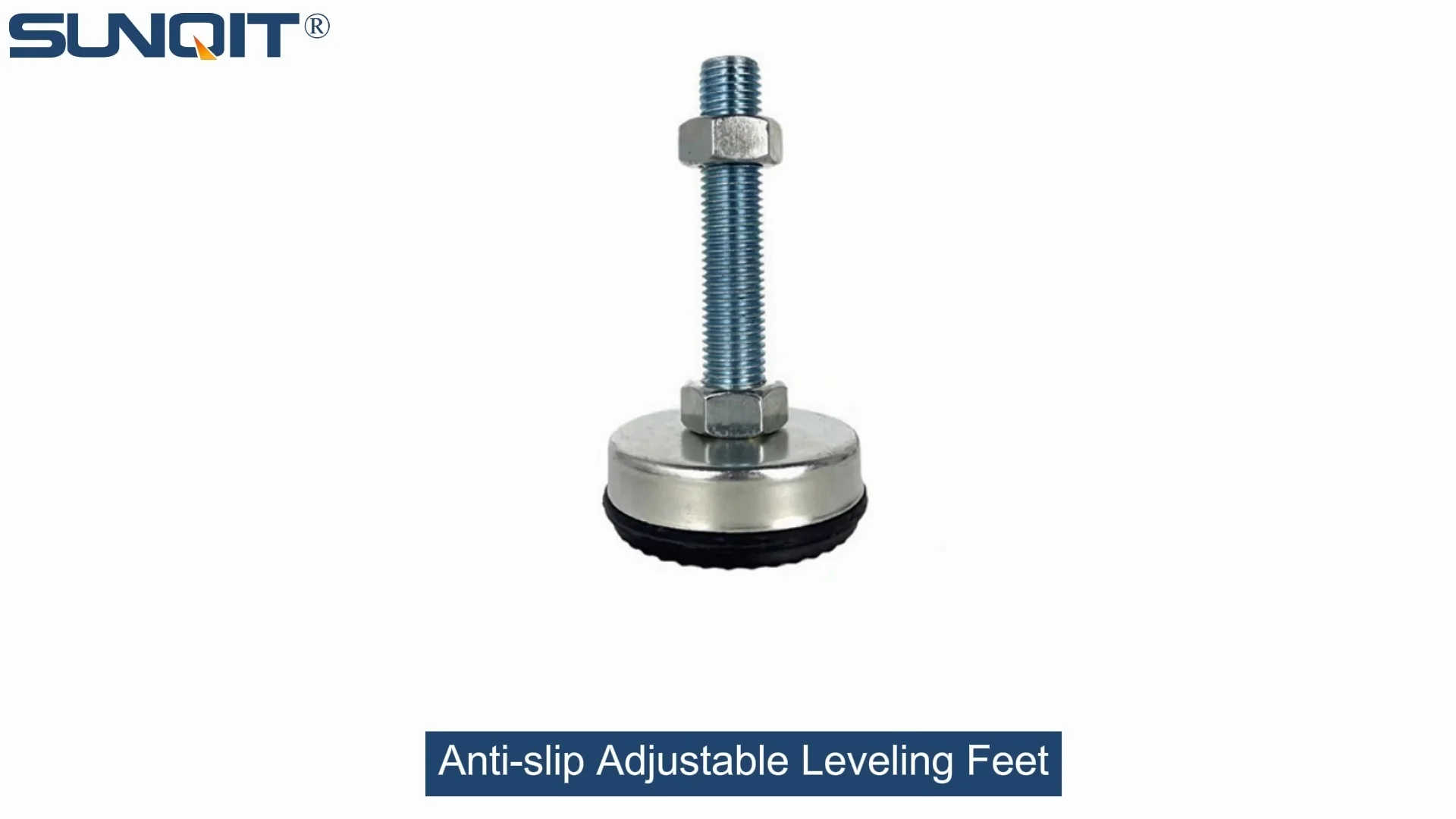
Anti-slip Adjustable Leveling Feet
Anti-slip Adjustable Leveling Feet are designed to keep machines level when placed on uneven or sloped ground, the rubber base will prevent product slip during work.
The Importance of Anti-Slip Adjustable Leveling Feet in Lean Manufacturing
In the fast-paced world of manufacturing, where every second counts and efficiency is the cornerstone of success, lean manufacturing stands as a guiding philosophy. It's about stripping away waste, streamlining processes, and creating systems that work
with
your team, not against them. But here's the thing: lean systems aren't just about big-picture strategies or high-tech machinery. Often, the smallest components hold the power to make or break that seamless flow we all strive for. Today, let's zoom in on one such unsung hero: the anti-slip adjustable leveling foot. It might not grab headlines, but in the day-to-day grind of a lean facility, it's the quiet problem-solver that keeps operations steady, safe, and efficient.
What Are Anti-Slip Adjustable Leveling Feet, Anyway?
Let's start with the basics. Anti-slip adjustable leveling feet are exactly what their name suggests: small, often unassuming components attached to the base of equipment—think workbenches, material racks, conveyors, or turnover trolleys—to do two critical jobs. First, they
adjust
: their threaded stems let you tweak their height, ensuring the equipment sits perfectly level even on uneven floors. Second, they
grip
: their bases are made from materials like rubber or polyurethane that resist slipping, even when floors are oily, dusty, or wet. Combine these two features, and you've got a component that doesn't just support equipment—it stabilizes it, protects it, and keeps your workflow from hitting unnecessary snags.
You might be thinking, "Leveling feet? Isn't that a minor detail?" But in lean manufacturing, where precision and consistency are everything, minor details add up. Imagine an assembly line workbench that wobbles slightly because the floor dips in one corner. A worker trying to fit small electronics parts might misalign a component, leading to rework. Or a flow rack holding delicate components that tilts, causing boxes to slide and products to get damaged. These aren't just inconveniences—they're waste. And waste, in lean terms, is the enemy of efficiency.
Why "Anti-Slip" and "Adjustable" Matter in Lean Systems
Lean systems thrive on predictability. Every step should be repeatable, every process should flow without interruption, and every piece of equipment should do exactly what it's supposed to—no surprises. Let's break down why these two features are non-negotiable in that context.
Adjustability: Taming Uneven Floors, One Turn at a Time
Most manufacturing facilities aren't built on perfectly level ground. Old factories might have floors that've settled over decades; new ones might have slight imperfections from construction. Even a 1/4-inch dip in the floor can throw off a conveyor belt, making products jam or slow down. Adjustable leveling feet turn that problem into a 30-second fix: twist the stem, raise or lower the foot, and suddenly your conveyor is aligned, your workbench is steady, and your material rack isn't leaning.
This adjustability also future-proofs your equipment. When you rearrange your production line (a common lean practice to optimize flow), you might move a workbench from a smooth section of floor to one that's a bit bumpy. Instead of buying a new workbench or struggling with shims, you just adjust the feet. It's flexibility that saves time, money, and frustration.
Anti-Slip: Safety and Stability in Every Shift
Slips and slides aren't just about equipment—they're about people, too. A material trolley that drifts when a worker pushes it could cause a collision. A workbench that shifts under pressure might lead to a tool falling and injuring someone. Anti-slip bases create friction between the equipment and the floor, even in messy environments. Oils from machinery, water from cleaning, or dust from production—none of these stand a chance against a high-quality anti-slip foot. It's not just about preventing damage to products; it's about keeping your team safe, which is the foundation of any successful lean operation.
And let's not forget vibration. Many manufacturing processes involve moving parts—conveyors, drills, assembly tools—that create vibrations. Over time, these vibrations can loosen equipment, making it shift or even "walk" across the floor. Anti-slip feet dampen that movement, keeping equipment anchored and reducing wear and tear. Less wear means longer equipment life, which means lower replacement costs—a win for your bottom line.
Real-World Impact: How These Feet Transform Workflows
To really understand the value of anti-slip adjustable leveling feet, let's look at how they perform in common lean manufacturing setups. We'll focus on three key areas: workbenches, material racks, and conveyors—all staples in production environments.
Workbenches: Precision Starts with Stability
A workbench is where the magic happens—assembly, inspection, packaging. If it's not stable, neither is the work. Take an electronics plant assembling circuit boards: a technician needs to solder tiny components onto a board with millimeter precision. If the workbench wobbles, even slightly, the solder joint might be weak, leading to product failures down the line. Reworking those boards takes time, wastes materials, and delays orders.
Now, add anti-slip adjustable leveling feet. The technician can level the bench perfectly, even if the floor near the window dips from years of foot traffic. The anti-slip base keeps the bench from sliding when the technician leans into the work or moves tools around. Suddenly, solder joints are consistent, rework drops, and the team hits their production targets faster. It's a small change with a ripple effect on quality and efficiency.
Material Racks and Flow Racks: Protecting Products, Reducing Waste
Material racks and flow racks hold the components and products that keep your line running. A tilted rack can turn into a disaster: boxes slide off, parts get scratched or broken, and workers waste time restacking instead of building. In a lean system, damaged products are "defect waste," and time spent fixing avoidable issues is "motion waste." Both eat into your profits.
Anti-slip adjustable feet solve this by keeping racks upright and stable, even when loaded with heavy boxes. For example, a flow rack using roller tracks relies on gravity to move products smoothly to the picker. If the rack isn't level, products might get stuck halfway, requiring a worker to manually push them—another form of waste. With adjustable feet, you set the perfect angle for gravity flow, and anti-slip bases ensure the rack doesn't shift as products move. The result? Products flow consistently, damage drops, and your team spends less time troubleshooting and more time adding value.
Conveyors: Alignment = Uninterrupted Flow
Conveyors are the arteries of a production line, moving products from one station to the next. If a conveyor isn't level, products can veer off course, jam between rollers, or slow down. A single jam can stop the entire line, leading to "waiting waste" as workers stand idle. Over time, misalignment also wears out conveyor belts or roller tracks, increasing maintenance costs.
Anti-slip adjustable leveling feet keep conveyors aligned. Whether it's a small roller conveyor or a long belt conveyor, adjusting the feet ensures the track stays straight, products move smoothly, and jams become rare. The anti-slip feature also prevents the conveyor from "walking" due to the vibration of moving parts, so you don't have to realign it every week. Less downtime, less maintenance, more production—exactly what lean manufacturing aims for.
Comparing Leveling Feet: Not All Are Created Equal
Not every leveling foot will deliver the benefits we've discussed. To truly support a lean system, you need to choose the right type. Let's compare common options to see why anti-slip adjustable feet stand out.
| Feature | Anti-Slip Adjustable Leveling Feet | Standard Fixed Feet | Basic Adjustable (No Anti-Slip) |
|---|---|---|---|
| Adjustability | Yes—threaded stem allows height tweaks for uneven floors | No—fixed height; can't adapt to uneven surfaces | Yes, but base is often smooth plastic/metal (no grip) |
| Anti-Slip Design | Rubber/polyurethane base; high friction even on wet/oily floors | No—smooth base; risk of slipping on uneven or messy floors | No—smooth base; adjusts height but still slips easily |
| Best For | Workbenches, material racks, conveyors, trolleys—any equipment needing stability and adaptability | Light, stationary equipment on perfectly level, clean floors | Temporary setups on dry, smooth floors with minimal vibration |
| Lean Benefit | Reduces waste (rework, damage, downtime); improves safety and precision | Risk of waste (uneven work, product damage, slips); limited adaptability | Reduces height-related waste but still risks slipping/vibration issues |
The table says it all: anti-slip adjustable leveling feet are the most versatile and effective choice for lean environments. They adapt to real-world conditions—uneven floors, messy workspaces, varying loads—and turn potential waste into smooth, consistent operations.
Choosing the Right Supplier: What to Look For
Not all anti-slip adjustable leveling feet are created equal, and neither are the suppliers who make them. To ensure you're getting a product that truly supports your lean system, keep these factors in mind:
Material Quality
The stem should be made from durable metal (like steel or aluminum) to handle heavy loads without bending. The anti-slip base should be a high-quality rubber or polyurethane that resists wear and doesn't degrade when exposed to oils, chemicals, or extreme temperatures. A cheap plastic base might work for a month, but it'll crack or lose grip quickly—costing you more in replacements down the line.
Range of Sizes and Load Capacities
Your needs will vary: a small workbench might need feet that support 200 lbs, while a heavy-duty material rack could require 1,000 lbs or more. A good supplier offers feet in different sizes and load capacities, so you can pick exactly what you need—no overbuying (wasting money) or underbuying (risking failure).
Compatibility with Your Equipment
If you're using aluminum profiles or lean pipes to build custom workbenches or racks (a common lean practice), make sure the leveling feet are compatible with those systems. Look for feet with mounting plates or stems that fit standard aluminum profile slots or lean pipe joints. This saves time during installation and ensures a secure fit.
Customer Support
A supplier who understands lean manufacturing can be a valuable partner. They should be able to help you choose the right feet for your specific application, answer technical questions, and offer fast shipping to avoid production delays. Avoid suppliers who treat you like just another order—look for ones who take the time to understand your workflow.
The Bottom Line: Small Component, Big Lean Win
In lean manufacturing, we often talk about "kaizen"—continuous improvement. It's about finding small, incremental changes that add up to big results. Anti-slip adjustable leveling feet embody that spirit. They're not flashy, but they solve real, everyday problems that eat into efficiency, quality, and safety.
Think about it: stable workbenches reduce rework. Secure material racks cut down on damaged products. Aligned conveyors minimize downtime. All of these lead to lower costs, faster production, and a safer workplace. And isn't that what lean is all about? Creating a system where every part—no matter how small—works together to deliver value.
So the next time you walk through your facility, take a look at the bases of your equipment. Are they level? Are they slipping? If the answer is "no" to either, it might be time to upgrade to anti-slip adjustable leveling feet. Your team, your products, and your bottom line will thank you.