- Company Articles
- Products and Technology
- Product knowledge
- The Importance of Color-Coded Plastic Pipe End Caps in Production Line Organization

The Importance of Color-Coded Plastic Pipe End Caps in Production Line Organization
Related Product
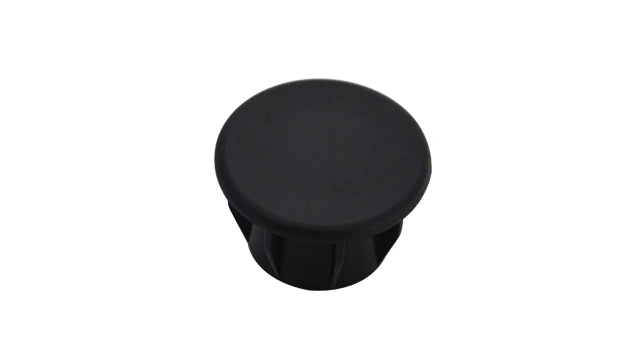
Plastic pipe end cap
Plastic pipe cover, used for 28mm two end cover and protection, to avoid any scratch from sharp metal surface.
Picture this: It's a busy Monday morning on your production floor. Maria, a line operator with ten years of experience, pauses mid-assembly, squinting at a jumble of pipes and tubes stacked near her workbench. She needs a 1.5mm stainless steel pipe for the next step, but the unmarked ends of the pipes all look the same. She rummages through the pile, picking up one after another, checking the diameter with a caliper—a task that should take 10 seconds but ends up eating two minutes. By the time she finds the right one, the line has slowed, and her supervisor is glancing over, concerned about meeting the morning quota. Sound familiar? For many manufacturers, disorganized pipes and tubes are a silent productivity killer. But what if there was a simple, low-cost solution to turn that chaos into clarity? Enter color-coded plastic pipe end caps.
At first glance, plastic pipe end caps might seem like accessories—little more than protective covers for the ends of pipes. But in the context of a well-oiled production line, they're so much more. When color-coded, these small caps become powerful visual tools that transform how teams identify, organize, and utilize pipes, tubes, and profiles. From reducing search time to minimizing errors and enhancing safety, color-coded end caps are a cornerstone of lean system principles, proving that sometimes the smallest changes yield the biggest results. In this article, we'll dive into why these unassuming caps matter, how they integrate with modern production workflows, and how they can turn disorganization into a competitive advantage.
What Are Color-Coded Plastic Pipe End Caps?
Before we explore their impact, let's start with the basics. Plastic pipe end caps are exactly what they sound like: small, durable covers designed to fit snugly over the open ends of pipes, tubes, or profiles. They're typically made from high-density polyethylene (HDPE), polypropylene, or PVC—materials chosen for their resistance to impact, chemicals, and temperature fluctuations, which are common in factory environments. Their primary function? To protect pipe ends from dust, debris, and damage during storage or transport. But when infused with color, they take on a second, equally critical role: communication.
Color-coded versions come in a spectrum of hues, each assigned a specific meaning. Unlike plain caps, which only protect, these caps act as visual labels, instantly conveying information about the pipe's purpose, material, size, or hazard level. For example, a red cap might signal a pipe carrying compressed air, while a blue cap could indicate a water line. A yellow cap might mark a 1.2mm pe coated lean pipe used in assembly, and a green cap could denote a 3030 aluminum profile for shelving. The key is consistency—once a color code is established, every worker on the floor can recognize it at a glance, eliminating guesswork and confusion.
The Hidden Costs of Disorganized Pipes
To understand why color-coded end caps matter, let's first unpack the costs of disorganized pipe storage and identification. These costs aren't always obvious—they're the "silent leaks" in your production budget, draining time, money, and morale without anyone noticing until the numbers add up.
Time Wasted on Searching
Every minute a worker spends hunting for the right pipe is a minute they're not adding value to the product. Let's crunch the numbers: Suppose an average line operator earns $25 per hour, and they spend just 5 minutes per shift searching for pipes (a conservative estimate). Over a 260-day work year, that's 5 minutes x 260 = 1,300 minutes, or 21.6 hours, per worker. For a team of 50 operators, that's 1,080 hours lost annually—equivalent to 27 full workweeks. At $25/hour, that's $27,000 in wages spent on non-productive tasks. Multiply that by multiple shifts or larger teams, and the cost balloons into the six figures.
Increased Errors and Rework
When pipes aren't clearly identified, the risk of using the wrong one skyrockets. A 1.5mm stainless steel pipe might look identical to a 1.2mm stainless steel pipe to the untrained eye, but using the thinner one in a high-stress application could lead to leaks, malfunctions, or even equipment failure. The result? Rework. Rework isn't just about the time to fix the mistake—it also wastes materials, disrupts downstream processes, and erodes customer trust. A study by the Manufacturing Institute found that rework costs manufacturers an average of 2-5% of total revenue. For a company with $10 million in annual sales, that's $200,000-$500,000 lost to errors that could have been prevented with clearer identification.
Safety Risks
Disorganized pipes aren't just inefficient—they're dangerous. Uncapped pipes can collect debris, leading to clogs or contamination when put into use. Loose, unlabeled pipes are also trip hazards, especially in high-traffic areas near roller track systems or workbenches. Worse, misidentifying a pipe's contents (e.g., confusing a gas line with a water line) can lead to accidents, injuries, or even explosions. OSHA reports that 20% of workplace injuries in manufacturing are caused by "inadequate labeling or identification," and the average cost of a single workplace injury is $42,000. When you consider that a single mislabeled pipe could trigger such an incident, the stakes become clear.

How Color-Coding Transforms Production Lines
Now, let's shift to the solution: color-coded plastic pipe end caps. These small tools act as a visual language that everyone on the floor can speak, turning chaos into order and inefficiency into productivity. Here's how they make a difference:
Instant Identification, Zero Guesswork
The most obvious benefit is speed. With color-coded caps, identifying a pipe takes seconds, not minutes. A worker assembling a hand trolley doesn't need to measure or inspect—they just look for the purple cap that denotes a 2020 aluminum profile. A maintenance technician fixing a conveyor belt can spot the orange-capped pipes (signaling electrical lines) and avoid drilling into them. This speed adds up: if color-coding cuts search time from 5 minutes to 10 seconds per pipe, that's a 97% reduction in wasted time. For our earlier example of 50 workers, that's 1,050 hours saved annually—enough to produce 2,100 more units (assuming 30 minutes per unit) or give employees back 21 hours of their year.
Enhanced Safety and Compliance
Color-coding also acts as a safety net. By assigning colors to hazards—red for high voltage, black for oil lines, white for clean air—you create a visual barrier against accidents. New employees, who might not know the intricacies of every pipe, can quickly recognize risks and take precautions. This isn't just about avoiding injuries; it's also about compliance. OSHA requires "effective labeling" of hazardous materials and systems, and color-coded caps are a simple way to meet that requirement. In audits, clear color codes demonstrate a commitment to safety, reducing the risk of fines (which can reach $136,532 per violation for serious offenses).
Streamlined Inventory Management
Inventory control becomes easier, too. When pipes are color-coded by size or material, stock checks take less time. A warehouse manager can scan a shelf and immediately see if there are enough yellow-capped 1.5mm pe coated lean pipes for tomorrow's production run, or if the blue-capped 4040 aluminum profiles are running low. This visibility prevents stockouts and overstocking, keeping inventory costs in check. For example, a manufacturer we worked with reduced their pipe inventory carrying costs by 18% after implementing color-coding, simply by avoiding emergency orders and excess purchases.
| Color | Typical Use Case | Example Pipe/Profile |
|---|---|---|
| High-Voltage/Electrical Lines | Stainless steel pipe series (2.0mm) | |
| Water/Air Lines | Aluminum pipe (basic aluminum tube) | |
| Assembly/Production Pipes | 1.2mm pe coated lean pipe | |
| Shelving/Racking | 3030 aluminum profile | |
| Tooling/Workbench Frames | 2020 aluminum profile | |
| Oil/Grease Lines | Stainless steel pipe series (1.5mm) |

Integrating with Lean Systems: More Than Just Labels
Color-coded plastic pipe end caps aren't just a standalone tool—they're a perfect fit for lean system principles, which focus on eliminating waste and continuous improvement. Let's see how they align with key lean practices:
5S: Sort, Set in Order, Shine, Standardize, Sustain
The 5S methodology is all about creating an organized, efficient workplace, and color-coded caps support every step. "Sort" becomes easier when you can quickly separate useful pipes (with color-coded caps) from obsolete ones (unmarked). "Set in Order" is achieved by grouping pipes by color, so they're always in the right place. "Shine" (cleanliness) is simpler because capped pipes collect less dust. "Standardize" is built into the color code itself—everyone follows the same system. And "Sustain" is possible because the system is so intuitive: workers are more likely to maintain order when it takes minimal effort to do so.
Continuous Improvement (Kaizen)
Color-coding also fuels kaizen, or continuous improvement. By tracking which colors are used most often, you can identify bottlenecks. For example, if red-capped electrical pipes are frequently misplaced, maybe the storage area for electrical components needs to be relocated closer to the assembly line. Or if green-capped aluminum profiles are often returned unused, perhaps the color code for shelving needs to be adjusted to avoid confusion with similar materials. These insights turn small observations into actionable improvements, keeping your production line evolving.
Real-World Applications: From Workbenches to Roller Tracks
To make this tangible, let's look at how color-coded end caps work in three common production scenarios:
Workbench Setups
Workbenches are the heart of assembly lines, and they often rely on a mix of pipes and profiles for frames, tool holders, and material racks. A typical aluminum workbench e (single deck-without caster) might use 2020 aluminum profiles for the frame, 3030 profiles for shelving, and 1.2mm pe coated lean pipes for tool hooks. Without color-coding, workers might mix up the 2020 and 3030 profiles, leading to unstable benches or misaligned shelves. With color-coding—purple for 2020, green for 3030, yellow for lean pipes—assembly becomes foolproof. A furniture manufacturer we partnered with reported a 40% reduction in workbench assembly errors after adopting color-coded caps, and new hires were productive 30% faster because they didn't need to memorize part numbers.
Roller Track Systems
Roller tracks are critical for material flow, moving parts from one station to the next. They're made up of roller track guide rails (like plastic roller track guide rail yellow or aluminum guide rail a), connectors, and support brackets. If the rails are unmarked, installing or repairing a roller track can be a nightmare—mixing up yellow and grey guide rails might lead to jams, as they have different roller spacing. Color-coded end caps solve this: yellow caps for yellow rails, grey caps for grey rails, and black caps for connectors. A automotive parts plant used this system to cut roller track maintenance time by 55%, as technicians could now identify and replace parts in minutes instead of hours.
Aluminum Profile Assemblies
Aluminum profiles (like 4080a eu standard aluminum profile or 3060 national standard profile a) are versatile, used in everything from racks to machine guards. But with dozens of profile sizes and types, identification is tricky. A manufacturer of medical devices solved this by color-coding profiles by application: blue for cleanroom racks, orange for packaging lines, and white for inspection stations. This not only speeded up assembly but also reduced cross-contamination risks—workers never accidentally used a non-cleanroom profile in a sterile area again. The result? A 22% drop in quality control rejects related to profile mix-ups.
Implementing a Color-Coding System: 5 Steps to Success
Ready to add color-coded plastic pipe end caps to your production line? Here's how to do it right:
Step 1: Audit Your Current Pipe Inventory
Start by listing all the pipes, tubes, and profiles you use. Note their sizes, materials, purposes, and hazards. For example: "1.5mm pe coated lean pipe (assembly), 3030 aluminum profile (shelving), 2.0mm stainless steel pipe (compressed air)." This inventory will help you decide how many colors you need.
Step 2: Choose a Color Code (and Stick to It)
Pick colors that are distinct and intuitive. Avoid similar shades (e.g., light blue and sky blue) to prevent confusion. Use industry standards where possible—red for fire hazards, yellow for caution—but adapt them to your needs. Document the code in a poster and share it with all workers. Pro tip: Test the code with a small group first to see if it makes sense. If workers mix up green and teal, swap one for a brighter color like lime.
Step 3: Label Every Pipe (and Enforce It)
Apply caps consistently. Every pipe, whether in storage or in use, should have a cap. Train workers to replace caps after use—make it part of the "Shine" step in 5S. Consider using durable caps (like those made from HDPE) to withstand wear and tear; cheap caps that fade or crack will undermine the system.
Step 4: Train Your Team
Hold a short training session to explain the color code. Use visuals—posters near workbenches, roller tracks, and storage areas. Quiz new hires on the code during onboarding. The goal is to make the colors second nature: when a worker sees a red cap, they should immediately think "danger" without hesitation.
Step 5: Audit and Adjust
Check in after 30 days. Are workers using the system? Are there color conflicts? For example, if the purple cap for 2020 aluminum profiles is often mistaken for the blue cap for water lines, change one color. Continuous feedback ensures the system stays effective as your needs evolve.
Common Pitfalls to Avoid
Color-coding works—but only if done correctly. Watch out for these mistakes:
- Too Many Colors: Using 10+ colors overwhelms workers. Stick to 5-7 core colors for most applications.
- Inconsistent Application: If some pipes have caps and others don't, the system breaks down. Enforce 100% compliance.
- Poor-Quality Caps: Faded, cracked, or loose caps are worse than no caps—they spread misinformation. Invest in durable, well-fitting caps.
- Ignoring Worker Feedback: If the line operators hate the color code, they won't use it. Involve them in the design process.
The Future of Color-Coded Organization
As production lines become smarter, color-coded end caps are evolving too. Some manufacturers are adding QR codes to caps, linking to digital specs or inventory data when scanned with a phone. Others are using UV-reactive caps that glow under blacklights, making pipes easier to spot in dimly lit areas (like warehouses with low ceilings). And with the rise of automation, collaborative robots (cobots) can now recognize color codes, sorting pipes or alerting workers to missing caps. These innovations will make color-coding even more powerful, but the core principle remains the same: simplicity and clarity drive efficiency.
Conclusion: Small Caps, Big Impact
Color-coded plastic pipe end caps are the unsung heroes of organized production lines. They turn chaos into clarity, guesswork into certainty, and wasted time into productivity. Whether you're assembling a workbench, maintaining a roller track, or managing a lean system, these small tools deliver outsized returns—reducing costs, enhancing safety, and making every worker's job easier.
So, the next time you walk your production floor, take a look at your pipes. Are they a jumble of unmarked ends, costing you time and money? Or are they speaking a clear, colorful language that guides your team to success? The choice is yours—and the caps are waiting.