- Company Articles
- Products and Technology
- Product knowledge
- The Importance of Compatibility: Lean Pipe Clamps & Pipe Sizes

The Importance of Compatibility: Lean Pipe Clamps & Pipe Sizes
Related Product
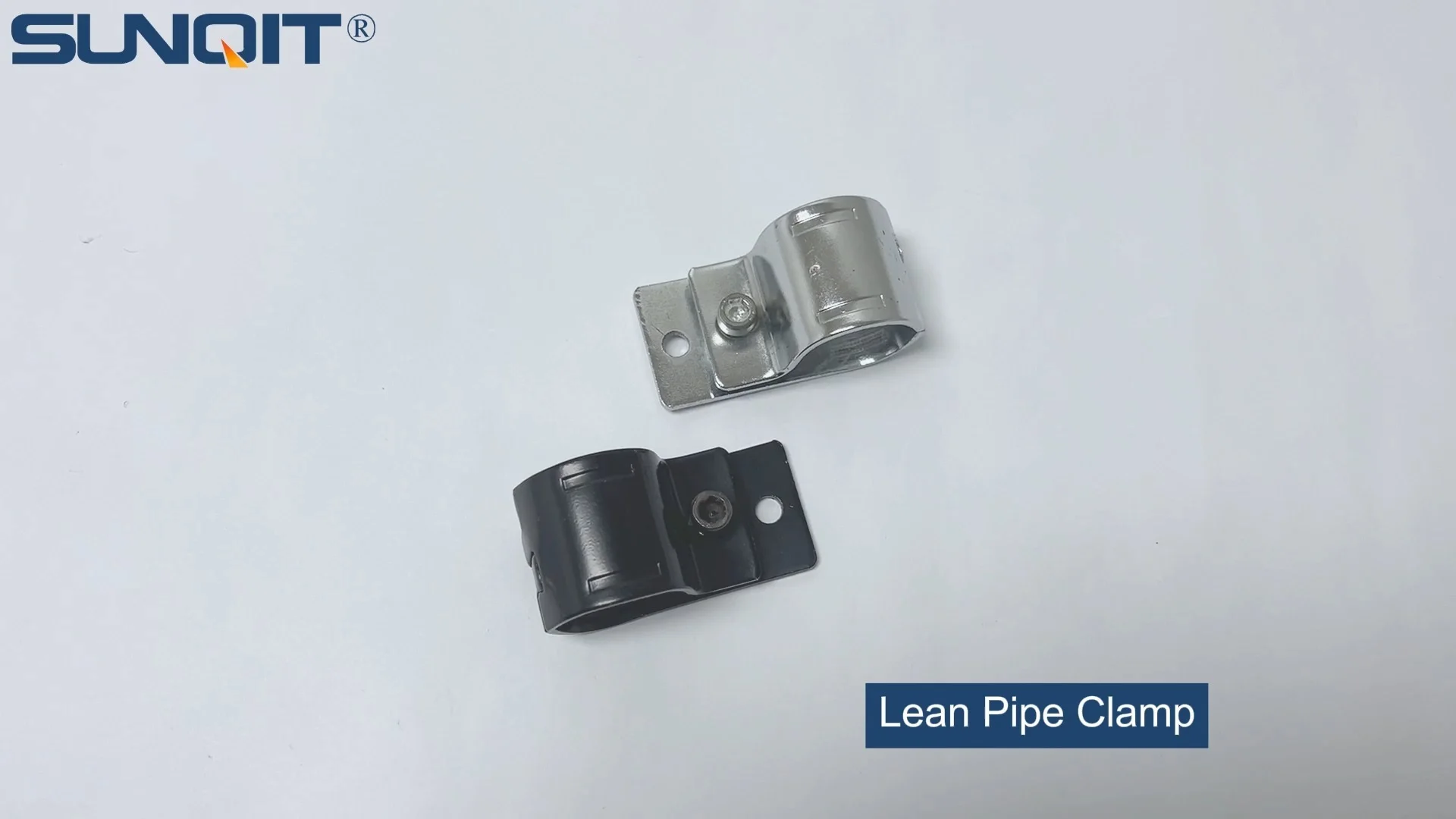
Lean Pipe Clamp
Lean pipe clamp is used for rack system hang monitor or other panel for workbenck, flowrack in production daily use.
Walk into any modern manufacturing facility, and you'll likely spot the backbone of efficient production: lean pipe systems. These unassuming structures—from workbenches where assemblers piece together components to flow racks that keep materials moving smoothly—are the silent workhorses of production assemble. But what makes these systems truly effective? It's not just the quality of the aluminum lean pipe or the durability of the stainless steel pipe series; it's the often-overlooked harmony between two critical components: lean pipe clamps and pipe sizes. In this article, we'll explore why compatibility between these two elements is the cornerstone of safe, efficient, and cost-effective lean systems, and how getting it right can transform your workflow from chaotic to seamless.
The Unsung Heroes: Lean Pipe Clamps and Joints
At first glance, a lean pipe system might look like a simple arrangement of pipes and connectors. But beneath that simplicity lies a complex dance of engineering: lean pipe clamps and joints are the "glue" that holds everything together. These small but mighty components are designed to do more than just connect pipes—they distribute weight, absorb vibrations from constant use, and allow for the flexibility that makes lean systems so adaptable. A well-designed lean pipe joint, for example, lets you reconfigure a workbench or turnover trolley in minutes, adapting to changing production needs without requiring specialized tools or lengthy downtime.
Lean pipe clamps, in particular, are engineered with precision. They come in various designs—from the parallel lean pipe joint that secures two pipes side by side to the 90° crossing lean pipe joint that forms sturdy corners—each tailored to specific structural needs. But here's the catch: a clamp is only as good as its fit with the pipe it's gripping. A clamp designed for a 2.0mm PE coated lean pipe won't perform the same on a thinner 1.0mm stainless steel pipe, just as a joint meant for aluminum profile might slip on a heavier stainless steel pipe series. This mismatch isn't just a minor inconvenience; it's a ticking time bomb for your operations.
Why Compatibility Isn't Optional: The Risks of Mismatched Parts
Imagine this: A team of assemblers is working on a critical order, rushing to meet a tight deadline. Suddenly, a section of their workbench—a key station in the production line—starts to wobble. Tools slide off, parts scatter, and the team grinds to a halt. Upon inspection, the issue is clear: the lean pipe clamp holding the aluminum lean pipe in place was never designed for that pipe's diameter. It had been a last-minute substitute, sourced from a non-specialized supplier, and over time, the constant stress of daily use caused it to loosen. This scenario isn't just fictional; it's a reality for factories that overlook compatibility. Let's break down the risks:
Safety First: When Structures Fail
The most immediate danger of incompatible clamps and pipes is safety. Lean systems often support heavy loads—think of a material rack b stacked with 3 rows and 3 floors of components, or a conveyor loaded with. A clamp that can't grip the pipe securely will eventually give way, leading to collapsed structures, falling tools, or even injured workers. In 2023, a manufacturing plant in Ohio reported a near-miss when a flow rack loaded with electronic parts collapsed, narrowly missing an operator. The root cause? A generic clamp that didn't account for the wall thickness of the aluminum lean pipe it was supposed to hold. The result: weeks of downtime for safety audits, damaged inventory, and a shaken team.
Efficiency: The Hidden Cost of Downtime
Even if a mismatched clamp doesn't lead to a catastrophic failure, it can still derail efficiency. Consider a production line where workers spend 10 minutes each shift tightening loose clamps on a wobbly workbench. Over a month, that's over 40 hours of lost productivity—time that could have been spent assembling products. Then there's the cost of rework: if a clamp slips and misaligns a roller track, materials might jam, causing delays downstream. In one case study, a automotive parts supplier found that incompatible clamps were responsible for 15% of their line stoppages, costing them over $100,000 in lost output annually. When clamps and pipes work in harmony, however, these disruptions vanish. The roller track glides smoothly, the workbench stays stable, and your team can focus on what they do best: building quality products.
The Price Tag of Wasted Resources
Incompatibility also hits your bottom line directly. Mismatched clamps and pipes mean wasted parts: that box of "universal" clamps that don't fit your aluminum profile? It's now collecting dust in the warehouse. The pipes you had to cut down to fit a clamp that was too big? They're now too short for future projects. And let's not forget the cost of expedited shipping when you have to rush-order compatible parts to fix a last-minute issue. A lean system is supposed to reduce waste, not create it. When clamps and pipes are compatible, every component serves a purpose, and your investment in lean tools—from the basic aluminum tube to the swivel roller balls—delivers maximum return.

Decoding the Language of Pipe Sizes and Clamp Specs
To understand compatibility, we first need to speak the language of pipe sizes and clamp specifications. Lean pipes come in a range of materials, each with unique dimensions: there's the lightweight aluminum lean pipe, ideal for modular workbenches; the rugged stainless steel pipe series, perfect for corrosive environments; and the versatile PE coated lean pipe, a budget-friendly option for general use. Within each material, size matters—specifically, outer diameter (OD) and wall thickness.
For example, a 2.0mm PE coated lean pipe typically has an OD of 28mm, while a basic aluminum tube might measure 30mm OD with a 1.5mm wall thickness. Clamps are engineered to match these dimensions precisely. A clamp designed for a 28mm OD pipe will have a gripping surface that hugs the pipe's curvature, applying even pressure to prevent slipping. If you pair that same clamp with a 30mm OD aluminum profile, the fit will be loose, and the clamp will never fully secure the pipe. Wall thickness plays a role too: a pipe with a thicker wall (like a 2.0mm stainless steel pipe) is stiffer, so the clamp must exert enough force to hold it without deforming the pipe, whereas a thinner-walled 1.0mm PE coated pipe requires a gentler grip to avoid cracking the coating.
Material Matters: Why Aluminum, Steel, and PE Coated Pipes Need Different Clamps
It's not just size—material composition affects compatibility too. Aluminum lean pipe, for instance, is softer than stainless steel, so clamps for aluminum often have rubberized grips to prevent marring the surface and to enhance friction. Stainless steel pipe series, on the other hand, can handle metal-to-metal contact, but clamps here need to resist corrosion to match the pipe's longevity. PE coated pipes, with their plastic outer layer, require clamps that won't slice through the coating, which could expose the metal underneath to rust. Using a stainless steel clamp with sharp edges on a PE coated pipe? You'll end up with a damaged coating and a clamp that loses its grip as the plastic wears away.

Compatible Pairings: A Practical Guide
To take the guesswork out of compatibility, we've compiled a table of common pipe types, their sizes, and the clamps that pair best with them. This isn't just a list—it's a tool to help you build structures that stand the test of time:
| Pipe Type | Outer Diameter (OD) | Wall Thickness | Recommended Clamp/Joint | Best For |
|---|---|---|---|---|
| 2.0mm PE Coated Lean Pipe | 28mm | 2.0mm | Standard Lean Pipe Clamp, 90° Straight Lean Pipe Joint | Light to medium-duty workbenches, turnover trolleys |
| Aluminum Lean Pipe (Basic Aluminum Tube) | 30mm | 1.5mm | Aluminum Pipe Clamp, Parallel Lean Pipe Joint (Rubber Grip) | Modular workbenches, lightweight flow racks |
| Stainless Steel Pipe Series (2.0mm) | 32mm | 2.0mm | Heavy-Duty Lean Pipe Clamp, 90° Crossing Lean Pipe Joint | Corrosive environments, heavy material racks |
| Aluminum Profile (4040 EU Standard) | 40mm x 40mm (Square) | 2.0mm | Aluminum Profile Connector, 90° Aluminum Profile Connector | Industrial workstations, automated conveyor systems |
| 1.0mm PE Coated Lean Pipe | 25mm | 1.0mm | Light-Duty Lean Pipe Clamp, Two-Way Lean Pipe Joint | Small parts storage, temporary workstations |
Notice the patterns here: each pipe type has a clamp designed to match its size, material, and intended use. For example, the aluminum lean pipe's rubber-grip clamp ensures a secure hold without damaging the soft metal, while the heavy-duty clamp for stainless steel pipes provides extra torque to handle the pipe's rigidity. This attention to detail is what separates a system that lasts for years from one that needs constant repairs.

Avoiding Compatibility Pitfalls: 5 Pro Tips
Even with the right information, compatibility issues can creep in. Here are five actionable tips to ensure your clamps and pipes always play well together:
- Stick to One Supplier (When Possible): Reputable lean pipe suppliers design their clamps, pipes, and joints to work in unison. If you source your aluminum lean pipe and lean pipe clamps from the same supplier, you eliminate the guesswork—they've already tested the compatibility for you.
- Check the Fine Print: Always verify the clamp's specifications before purchasing. A clamp labeled "for 28mm pipes" might seem like a match for your 28mm PE coated pipe, but double-check if it's designed for round pipes (not square aluminum profile) and if it accounts for wall thickness.
- Test Before Scaling: Before building an entire flow rack or assembly line, prototype a small section. Assemble a short segment with your chosen pipes and clamps, then apply pressure (simulate the weight of materials) to see if it holds. A 10-minute test can save hours of rework later.
- Train Your Team to Spot Mismatches: Your frontline workers are the first to notice wobbly clamps or loose pipes. Teach them to identify signs of incompatibility—like gaps between the clamp and pipe, or clamps that slip even after tightening—and empower them to report issues immediately.
- Avoid "Universal" Clamps: The term "universal" is often misleading. A clamp that claims to fit "25-30mm pipes" might work poorly on both ends of the spectrum. Invest in clamps tailored to your specific pipe size for a snug, reliable fit.
Beyond Clamps and Pipes: The Ripple Effect on Workflows
When clamps and pipes are compatible, the benefits extend far beyond stable structures. Consider the workbench: a sturdy, well-built workbench (like the Workbench E, single deck without caster) with properly secured aluminum lean pipe and clamps reduces operator fatigue. Assemblers can focus on their tasks without worrying about tools sliding off or the surface wobbling, leading to fewer errors and faster cycle times. Similarly, a flow rack with compatible roller track and clamps ensures materials glide smoothly from station to station, cutting down on the time workers spend retrieving parts.
Even small components like swivel roller balls or caster wheels depend on compatibility. A caster wheel mounted on a wobbly pipe leg will wear unevenly, leading to frequent replacements. But when the pipe, clamp, and caster are all in sync, the turnover trolley rolls effortlessly, making material transport a breeze. It's a domino effect: compatibility at the clamp-and-pipe level creates a chain reaction of efficiency that touches every corner of your production floor.
Conclusion: Compatibility as the Foundation of Lean Success
In the world of lean manufacturing, every detail counts. From the aluminum profile that forms your workstation to the swivel roller balls that keep materials moving, each component plays a role in creating a system that's efficient, safe, and adaptable. But none of it matters without the fundamental harmony between lean pipe clamps and pipe sizes. Compatibility isn't just a technical checkbox—it's the foundation upon which all other lean principles rest. It prevents accidents, reduces waste, and turns your lean system from a collection of parts into a cohesive, high-performing asset.
So the next time you're designing a workbench or upgrading a flow rack, take a moment to consider the clamps and pipes. Ask your lean pipe supplier about compatible pairings. Test, observe, and adjust. Because in the end, the strongest lean systems aren't built with the best individual parts—they're built with parts that work together . And that's the true power of compatibility.