- Company Articles
- Products and Technology
- Product knowledge
- The Importance of Edge Finishing in Aluminum Side Guards for Worker Safety

The Importance of Edge Finishing in Aluminum Side Guards for Worker Safety
Related Product
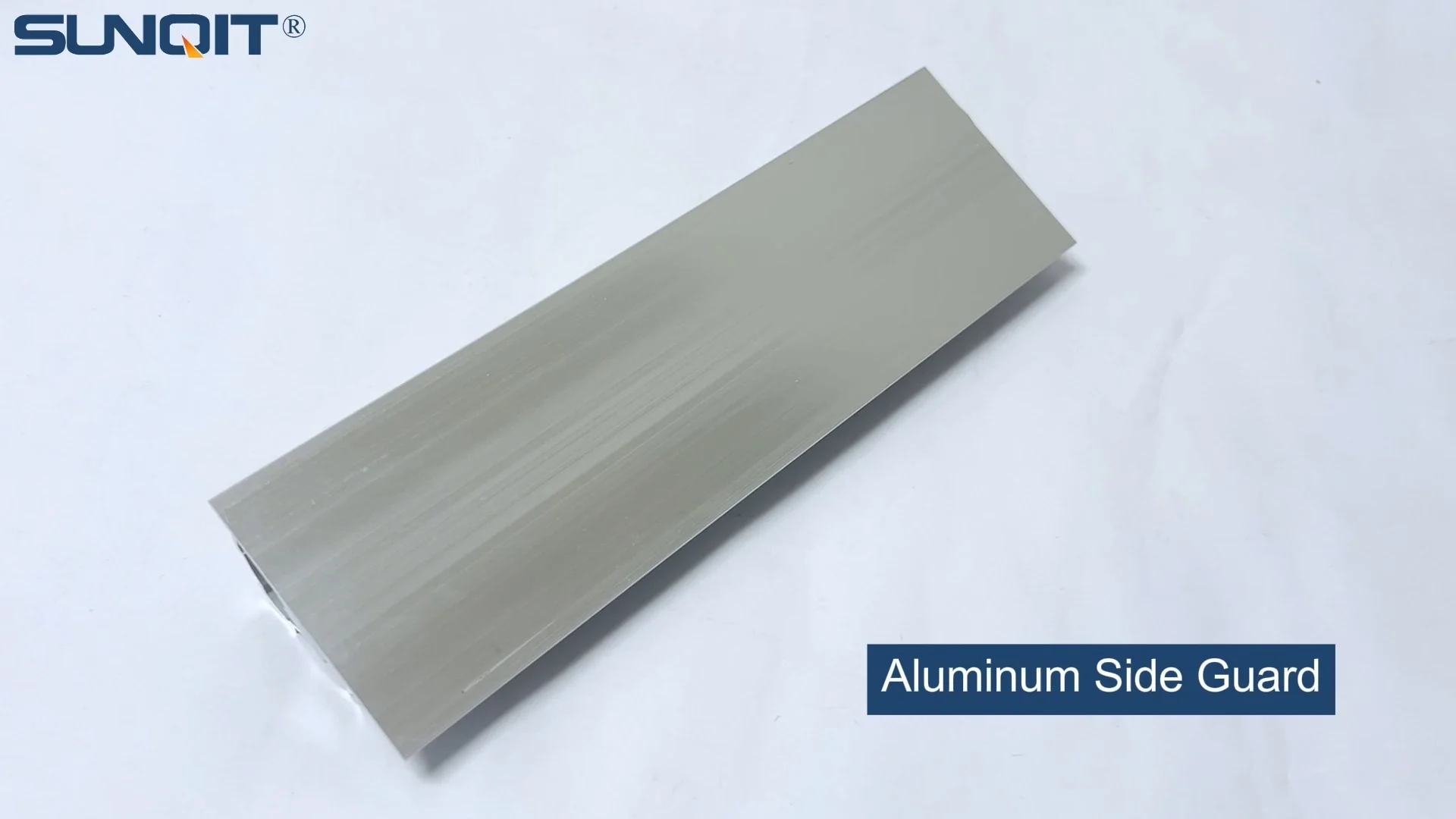
Aluminum Side Guard
Aluminum side guard, it works with a aluminum pipe or a roller track as side guard to prevent material drop,or move to wrong direction.
Introduction: The Hidden Risk of Unfinished Edges in the Workplace
In the hustle of a busy factory or workshop, where machines hum and workers move with purpose, safety often hinges on the smallest details. One such detail—often overlooked but critically important—is the quality of edge finishing on aluminum side guards. These unassuming barriers line workbenches, conveyor systems, and material racks, standing between workers and the moving parts, sharp corners, or heavy loads that define industrial environments. Yet, when their edges are rough, jagged, or poorly finished, they transform from protectors into hazards themselves.
Consider this: a production line worker reaches across a workbench to grab a tool, their arm brushing against the side guard. If that guard's edge is burr-covered or sharp, a simple movement could result in a deep laceration, leading to lost work hours, medical bills, and a damaged sense of security. According to the U.S. Bureau of Labor Statistics, over 2.8 million nonfatal workplace injuries occurred in 2023, with "contact with objects and equipment" accounting for nearly 26% of these incidents. Many of these could have been prevented with proper edge finishing on protective structures like aluminum side guards.
Aluminum, prized for its lightweight strength and corrosion resistance, has become the material of choice for side guards in modern lean systems. But its benefits are only fully realized when paired with meticulous edge finishing. In this article, we'll explore why edge finishing matters, the specific risks of cutting corners in this process, and how investing in quality finishes protects workers, enhances durability, and aligns with the core principles of lean manufacturing—efficiency, safety, and long-term value.
Aluminum Side Guards: A Foundation of Workplace Safety
Before diving into edge finishing, it's important to understand why aluminum has become indispensable in safety equipment like side guards. Unlike steel, aluminum is lightweight, making it easy to install and reconfigure—essential in dynamic lean system environments where workflows evolve. Its natural resistance to rust and corrosion ensures longevity, even in humid or chemical-exposed settings. And when alloyed with elements like magnesium or silicon, it gains strength comparable to mild steel, without the added weight.
Aluminum side guards are typically constructed from aluminum profile, a versatile material extruded into uniform shapes (channels, angles, or tubes) that form the guard's structure. These profiles are often joined using aluminum pipe accessories—connectors, brackets, and hinges—that allow for modular assembly. In some cases, aluminum lean pipe, a lighter variant, is used for guards on mobile equipment like turnover trolleys or material racks, where portability is key.
But even the best aluminum profile is only as safe as its edges. During extrusion, cutting, or welding, aluminum can develop burrs—small, sharp protrusions—or leave rough, uneven surfaces. Without proper finishing, these edges become ticking time bombs. A 2022 study by the National Institute for Occupational Safety and Health (NIOSH) found that 12% of workplace lacerations in manufacturing settings were caused by contact with "improperly finished metal components," including side guards, machine enclosures, and tooling fixtures.

What Is Edge Finishing, and Why Does It Matter?
Edge finishing refers to the process of smoothing, treating, or coating the edges of a material to eliminate defects and enhance performance. For aluminum side guards, this involves removing burrs, rounding sharp corners, and applying protective coatings to prevent corrosion and maintain smoothness over time. The goal is simple: create edges that are safe to touch, resistant to wear, and compliant with safety standards.
The consequences of skipping or skimping on edge finishing are stark. Sharp edges can cause immediate injuries: cuts, scrapes, or even amputations if a worker's clothing or skin gets caught. Burrs, though small, can snag gloves, sleeves, or hair, leading to falls or entanglement with moving parts. Over time, unprotected edges may corrode, weakening the guard's structure and compromising its ability to withstand impacts—for example, if a heavy object bumps into the guard, a corroded edge could crack, causing the guard to fail.
Key Statistic: The Occupational Safety and Health Administration (OSHA) estimates that employers save $4-$6 for every $1 invested in injury prevention measures like proper edge finishing. This includes reduced workers' compensation costs, lower turnover, and fewer productivity disruptions.
Beyond safety, edge finishing impacts usability. A side guard with smooth, rounded edges is easier to clean, reducing the risk of bacteria buildup in food processing or pharmaceutical settings. It also improves aesthetics—a factor that, while secondary to safety, can boost worker morale and reflect positively on a company's commitment to quality.

Common Edge Finishing Techniques for Aluminum Side Guards
Not all edge finishes are created equal. The right technique depends on the guard's intended use, environment, and budget. Below are the most common methods used for aluminum side guards, along with their benefits and ideal applications:
| Finishing Technique | Process | Safety Benefits | Best For |
|---|---|---|---|
| Deburring | Mechanical removal of burrs using tools like files, sandpaper, or abrasive wheels. | Eliminates sharp protrusions; creates smooth, touch-safe edges. | Basic guards in low-wear environments (e.g., static workbench guards). |
| Anodizing | Electrochemical process that forms a protective oxide layer on aluminum. | Enhances corrosion resistance; maintains smooth edges long-term; adds color for visibility. | Guards in humid or chemical-exposed areas (e.g., food processing, marine facilities). |
| Powder Coating | Application of dry powder (polyester, epoxy) electrostatically, then cured under heat to form a hard coating. | Adds a thick, impact-resistant layer; rounds edges and hides minor imperfections. | High-traffic areas (e.g., conveyor guards, material handling zones) where guards are frequently bumped. |
| Edge Rounding | Mechanical or CNC machining to round sharp corners to a specified radius (typically 1-3mm). | Prevents "pinch points" and reduces severity of cuts if contact occurs. | Guards near rotating equipment or where workers lean against them (e.g., assembly line workbench edges). |
| Polishing | Abrasive buffing to create a smooth, shiny surface. | Eliminates micro-burrs; reduces friction, preventing snagging. | Cleanrooms or pharmaceutical settings where hygiene and low particle generation are critical. |
Many manufacturers combine techniques for optimal results. For example, a guard might first undergo edge rounding to eliminate sharp corners, then deburring to remove burrs, followed by anodizing to protect against corrosion. This multi-step approach ensures all bases are covered: immediate safety (smooth edges), long-term durability (corrosion resistance), and functional performance (impact resistance).
Compliance: Meeting Safety Standards with Proper Finishing
Edge finishing isn't just a best practice—it's often a legal requirement. Regulatory bodies like OSHA (U.S.), EU-OSHA (Europe), and ISO (international) set strict standards for workplace safety, including specifications for protective structures like side guards.
OSHA's General Industry Standard (29 CFR 1910) mandates that "all machine guards shall be constructed of durable material… and shall be free from sharp edges, burrs, or projecting parts that could cause injury." Similarly, ISO 12100, which outlines safety requirements for machinery, states that "access to hazardous areas shall be prevented by guards with surfaces that are non-injurious when contacted."
Failure to comply can result in fines, legal liability, or shutdowns. In 2021, a U.S. automotive parts manufacturer was fined $147,000 by OSHA after an inspection revealed 17 instances of "unfinished aluminum side guards with sharp edges" on assembly line workbenches. The citation followed a worker's injury that required 12 stitches and three days of lost work.
Compliance isn't just about avoiding penalties, though. It's about building a culture of safety. When workers see that their employer invests in details like edge finishing, they feel valued—and are more likely to follow safety protocols themselves. This creates a positive feedback loop: safer workers are more productive, and productive workers are more engaged.
Case Study: How Proper Edge Finishing Reduced Injuries at a Electronics Assembly Plant
In 2020, a mid-sized electronics manufacturer in Ohio was struggling with a high rate of hand lacerations. An investigation revealed that 80% of these injuries occurred when workers interacted with aluminum side guards on their surface-mount technology (SMT) workbenches. The guards, made from standard aluminum profile, had been cut to size but not deburred or rounded, leaving sharp edges along the top and bottom rails.
The plant's safety manager partnered with their aluminum profile supplier to implement a new finishing process: all guard edges would be rounded to a 2mm radius, deburred using a vibratory tumbler, and coated with a clear anodized finish. The change cost approximately $0.50 per guard but yielded immediate results. Within six months, hand lacerations dropped by 92%. Workers reported feeling more comfortable moving around the workbenches, and productivity increased by 5% as time spent on injury-related breaks decreased.
The plant's operations director noted: "We thought we were saving money by skipping the extra finishing steps. But when we added up the cost of medical claims, lost work, and retraining, it was clear that cutting corners was costing us far more. Now, edge finishing is non-negotiable in our guard specifications."
Choosing the Right Edge Finish: Tips for Buyers and Manufacturers
For manufacturers of aluminum side guards, and the buyers who specify them, selecting the right edge finish requires balancing safety, budget, and environment. Here are key factors to consider:
1. Assess the Work Environment
Humid or corrosive environments (e.g., food processing, chemical plants) demand corrosion-resistant finishes like anodizing or powder coating. Dry, clean environments (e.g., electronics assembly) may prioritize smoothness over corrosion resistance, making polishing or edge rounding sufficient.
2. Identify Worker Interactions
Guards that workers frequently touch or lean against (e.g., workbench edges) need rounded edges and durable coatings to withstand repeated contact. Guards in low-traffic areas (e.g., upper conveyor rails) may require minimal finishing, but still must be free of burrs.
3. Review Safety Standards
Always reference OSHA, ISO, or industry-specific standards (e.g., FDA for food contact) to ensure compliance. For example, medical device manufacturers must meet ISO 13485, which requires "non-toxic, smooth surfaces" on all equipment, including guards.
4. Partner with a Reputable Supplier
Choose an aluminum profile supplier with expertise in safety-critical applications. Ask for samples of finished edges, and inquire about their quality control processes (e.g., do they inspect 100% of guards for burrs before shipping?). A good supplier will help you select the right finish for your needs, not just sell you the cheapest option.
Conclusion: Edge Finishing—A Small Detail with a Big Impact
In the world of workplace safety, it's easy to focus on grand solutions: heavy machinery guards, automated safety systems, or complex training programs. But as we've explored, sometimes the most critical safety measures are the smallest ones. Edge finishing on aluminum side guards is a perfect example—a process that costs little, takes minimal time, and yet can mean the difference between a safe workday and a life-altering injury.
Aluminum profile, with its strength, light weight, and versatility, will continue to be a cornerstone of lean system design. But to fully harness its benefits, we must prioritize the details. By investing in proper edge finishing—deburring, rounding, coating—manufacturers and employers send a clear message: worker safety is non-negotiable. And in doing so, they build not just safer workplaces, but more productive, engaged, and resilient teams.
So the next time you walk through a factory or workshop, take a moment to look at the side guards. Run your hand along their edges. If they're smooth, rounded, and free of burrs, you're seeing a workplace that gets it—a place where safety isn't an afterthought, but a foundation.