- Company Articles
- Products and Technology
- Product knowledge
- The Importance of End Support for Roller Track Placon Mount with Stop in Preventing Load Slippage

The Importance of End Support for Roller Track Placon Mount with Stop in Preventing Load Slippage
Related Product
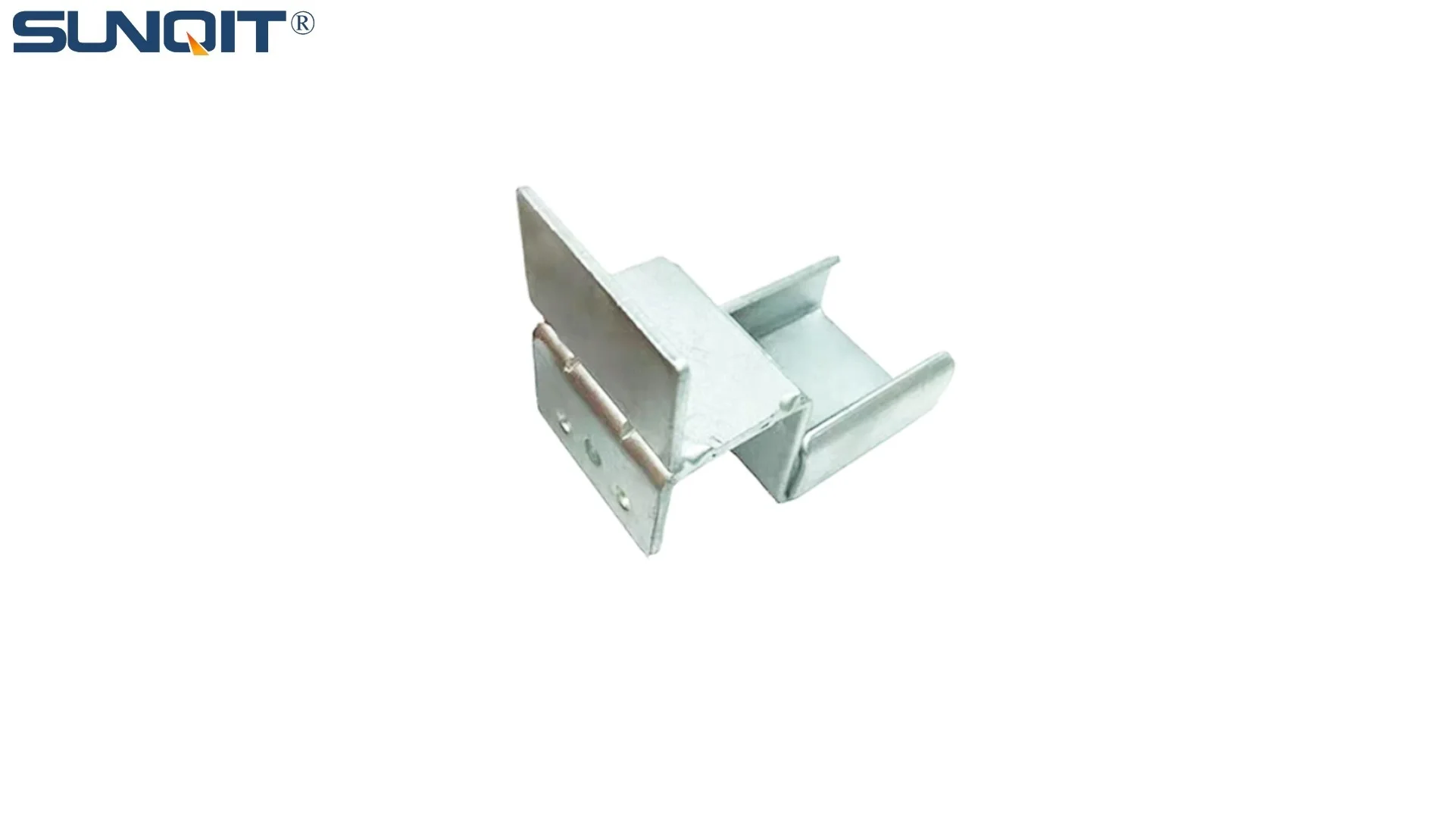
End Support for Roller Track Placon Mount with Stop
Roller track placon mount work as a connector for roller track and pipe or aluminum profile in rack syetem, it is a necessary parts in rack system which widely used in industrial plant and logistic,warehouse storage.
In the fast-paced world of manufacturing, every second counts. Production lines hum with activity, parts move from station to station, and teams rely on seamless workflows to meet tight deadlines. But what happens when a single misstep disrupts this harmony? More often than not, it's the small, overlooked components that cause the biggest headaches. Today, we're shining a spotlight on one such unsung hero: the end support for roller track placon mount with stop . This unassuming part plays a critical role in keeping your materials on track—literally—and preventing costly, dangerous load slippage. Let's dive into why it matters, how it works, and why choosing the right design can transform your production efficiency.
The Hidden Cost of Load Slippage in Manufacturing
Before we explore the solution, let's understand the problem. Load slippage—when parts, components, or finished products slide off conveyor systems, roller tracks, or workbenches—is more than just an annoyance. It's a silent productivity killer. Imagine a consumer electronics plant assembling smartphones: a tiny circuit board slips off a roller track, falls to the floor, and gets damaged. Suddenly, the entire line pauses. Technicians scramble to retrieve the part, inspect for defects, and restart the process. Multiply this by a few incidents a day, and you're looking at hours of lost production, increased scrap rates, and frustrated teams.
But the costs don't stop there. Slippage can also compromise safety. A heavy component sliding off a high rack could injure workers below. In industries like medical device manufacturing, even a minor slip can contaminate sterile parts, leading to compliance issues and product recalls. And in lean manufacturing environments—where every action is optimized for waste reduction—slippage directly contradicts the core principle of lean solution : eliminating inefficiencies.
So, what's the common culprit behind these incidents? All too often, it's the lack of proper end support on roller tracks. Roller tracks are the backbone of material handling, used to transport everything from small widgets to bulky assemblies. They rely on a series of rollers to glide loads smoothly, but without a secure end support—especially one with a built-in stop—materials can easily overshoot their intended path. That's where the end support for roller track placon mount with stop comes in.
What Is an End Support for Roller Track Placon Mount with Stop?
Let's break it down. A roller track is a system of parallel rollers mounted on a frame, designed to move materials with minimal friction. Placon mounts are the brackets that attach these roller tracks to other structures—like aluminum profiles, workbenches, or conveyor frames. They ensure the track stays stable, aligned, and at the right height. Now, the end support is the component that secures the track's final section, preventing it from sagging or shifting under load. Add a "stop" to that support, and you've got a built-in barrier that gently but firmly halts materials at the end of the track, keeping them from sliding off.
Think of it as the guardrail on a highway. Without it, cars (or in this case, your materials) might veer off course. With it, you have a reliable boundary that guides and protects. But not all end supports are created equal. The best designs are engineered to work seamlessly with your existing lean pipe system , adapting to different load weights, material sizes, and production speeds.

Key Design Features That Make a Difference
What sets a high-quality end support with stop apart from a generic one? Let's look at the details that matter in real-world applications:
- Material Strength: Most end supports are made from durable aluminum or steel, chosen for their lightweight yet robust properties. Aluminum, in particular, is ideal for environments where corrosion resistance matters—like food processing or medical device facilities. For heavier loads, steel reinforcements ensure the support won't bend or warp over time.
- Adjustable Stop Height: Not all materials are the same. A small electronic component needs a low-profile stop to avoid getting stuck, while a larger assembly might require a taller barrier. The best end supports let you adjust the stop height, ensuring a snug fit for every load.
- Secure Mounting: Placon mounts need to lock tightly to aluminum profiles or workbench frames. Look for designs with precise threading, quick-connect mechanisms, or bolt-on stability to prevent wobbling—even during high-speed operation.
- Compatibility: Your roller track doesn't work in isolation. It's part of a larger ecosystem that includes conveyor systems, workbenches, and material racks. A well-designed end support should integrate smoothly with these components, creating a continuous, gap-free path for materials.

Real-World Impact: Case Studies from the Field
To truly appreciate the value of end support with stop, let's look at how it performs in different industries. These examples come from our work with clients across manufacturing sectors—proof that small components drive big results.
Case 1: 3C Assembly (Consumer Electronics)
A leading smartphone manufacturer approached us with a recurring problem: during final assembly, battery packs were slipping off their roller tracks when transitioning to the testing station. The tracks were part of a custom workbench setup, and the existing end supports lacked a stop mechanism. As a result, 2-3 battery packs were damaged daily, costing the company over $10,000 in scrap and downtime monthly.
Our solution? We retrofitted their roller tracks with end supports featuring adjustable, low-profile stops. The stops were calibrated to the exact height of the battery packs, ensuring they glided smoothly until reaching the end, where the stop gently halted them. Within a week, slippage incidents dropped to zero. The team reported faster throughput, fewer interruptions, and a noticeable boost in morale—all from upgrading a single component.
Case 2: Medical Device Manufacturing
A medical equipment producer specializing in surgical tools faced a unique challenge: their sterile instrument trays were sliding off roller tracks in cleanroom environments. The tracks were mounted on aluminum profiles, and standard end supports weren't designed for the ultra-smooth, low-friction trays. Even a slight incline caused trays to slip, risking contamination and violating FDA guidelines.
We designed a custom end support with a rubberized stop to add just enough friction to hold the trays in place without scratching their sterile surfaces. The support was also made from anodized aluminum to resist corrosion and meet cleanroom material standards. Post-installation, the client saw a 100% reduction in slippage, passed their next FDA audit with zero findings, and extended the lifespan of their roller track system by avoiding unnecessary replacements.
Case 3: Automotive Parts Distribution
An automotive parts distributor was struggling with heavy plastic component bins sliding off roller tracks in their warehouse. The bins, filled with door handles and interior trim pieces, weighed up to 50 lbs each. Their existing end supports were bending under the load, causing bins to tip and spill contents.
We recommended upgrading to heavy-duty steel end supports with reinforced stops and extra-wide mounting plates. The new supports distributed the weight evenly across the aluminum profile frame, preventing bending. The stops were angled slightly upward to "cradle" the bins, even during sudden starts or stops of the conveyor system. After installation, the client reported a 95% reduction in spills, lower workers' compensation claims, and faster order fulfillment times.

How End Support with Stop Fits Into Your Lean Pipe System
At this point, you might be thinking: "End support with stop sounds great, but how does it fit into my existing setup?" The answer lies in the flexibility of lean pipe system design. Lean pipe systems—built from aluminum pipes, joints, and accessories—are all about adaptability. They let you customize workstations, roller tracks, and conveyor paths to fit your unique needs. End support with stop is a natural extension of this philosophy: it's a modular component that you can add, adjust, or replace as your production requirements change.
For example, if you're expanding your production line to handle larger parts, you can swap out a standard end support for a heavy-duty version without replacing the entire roller track. If you're shifting to smaller components, you can lower the stop height or switch to a slimmer design. This modularity aligns with the lean principle of "sustainable improvement"—your system grows and evolves with your business, avoiding the waste of "rip and replace" overhauls.
What's more, end support with stop works hand-in-hand with other lean components. Pair it with a roller track placon mount for aluminum profile flat, and you get a rock-solid foundation for your track. Combine it with a conveyor system, and you create a seamless flow from storage to assembly. Even on a basic workbench, adding an end support ensures materials stay within arm's reach, reducing the need for workers to bend, stretch, or walk—another win for ergonomics and efficiency.
The Data Speaks: Quantifying the Benefits
Still not convinced? Let's look at the numbers. The table below compares production metrics before and after installing end support with stop in a mid-sized automotive parts plant. The results are clear: small investments in component design lead to significant returns.
| Metric | Before End Support with Stop | After End Support with Stop | Improvement |
|---|---|---|---|
| Daily Slippage Incidents | 4-5 | 0-1 | 80-100% |
| Production Downtime (per day) | 45-60 minutes | 5-10 minutes | 83-92% |
| Scrap Rate (due to damage) | 2.3% | 0.4% | 83% |
| Worker-reported Frustration (1-10 scale) | 7.2 | 3.5 | 51% |
Why Choose Our End Support with Stop? Customization, Quality, and Expertise
Now that you understand the "why," let's talk about the "how." At our core, we're more than just a supplier—we're a partner in your lean journey. Our end support for roller track placon mount with stop isn't a one-size-fits-all product; it's a tailored solution designed to meet your specific challenges. Here's what sets us apart:
- Engineered for Your Loads: We start by asking questions: What materials are you moving? How much do they weigh? What's your production speed? Using this data, we design end supports with the right material, stop height, and mounting style for your needs.
- Built to Last: We use high-grade aluminum, steel, and composite materials to ensure durability. Our parts undergo rigorous testing—vibration, weight, and corrosion resistance—to handle the toughest factory environments.
- Seamless Integration: Whether you're building a new lean pipe system or upgrading an existing one, our end supports work with standard aluminum profiles, roller tracks, and workbenches. No need to redesign your entire setup.
- Lean by Design: Every component we offer aligns with lean principles. Our end supports are reusable, recyclable, and easy to reconfigure—so as your production needs change, your system can change with you.
Final Thoughts: Small Components, Big Impact
In manufacturing, success lies in the details. The end support for roller track placon mount with stop might not grab headlines, but it's the kind of component that separates good production lines from great ones. It prevents slippage, boosts efficiency, enhances safety, and aligns with the lean mission of continuous improvement.
If you're tired of dealing with the costs of load slippage—whether in time, money, or morale—it's time to take a closer look at your roller track system. Sometimes, the solution is simpler than you think. A well-designed end support with stop could be the missing piece in your lean puzzle.
Ready to see the difference for yourself? Reach out to our team today. We'll walk you through your options, answer your questions, and help you build a system that works as hard as you do. After all, in manufacturing, the best results come from focusing on what matters most—every part, every process, every detail.