- Company Articles
- Products and Technology
- Product knowledge
- The Importance of Flat Adjustable Swivel Castor Wheels in Modular Workstations

The Importance of Flat Adjustable Swivel Castor Wheels in Modular Workstations
Related Product
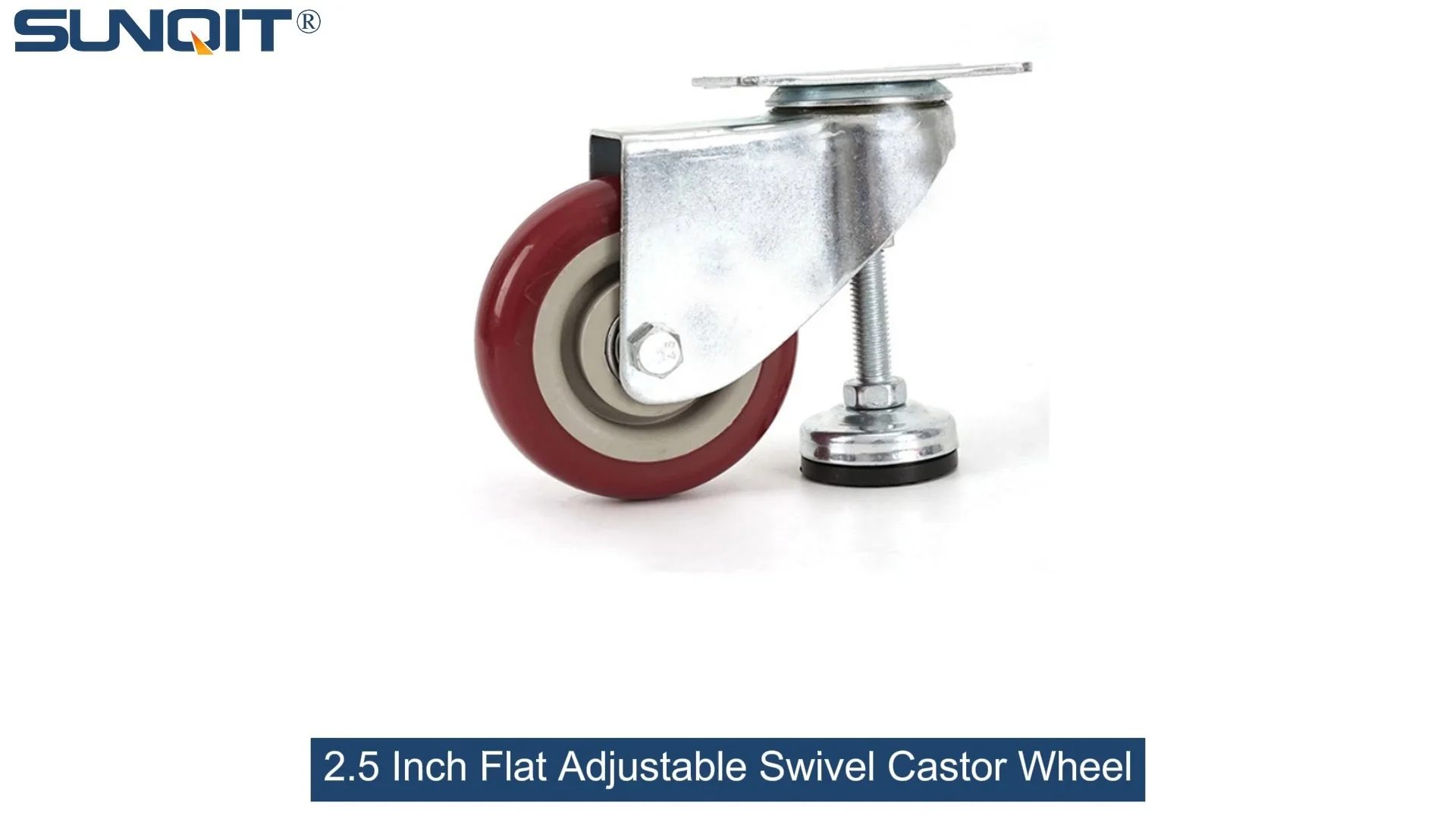
Flat Adjustable Swivel Castor Wheel
Swivel Chair Casters Ball Bearing Wheels Rubber Base with adjustable height function. Resistant to abrasion, impact and corrosion. Heavy payload can hold 80Kgs per pcs,which can make it works at a stable and smooth status.
In the fast-paced world of modern manufacturing, warehousing, and workshop management, flexibility isn't just a buzzword—it's the backbone of operational success. As businesses strive to adapt to changing production demands, seasonal peaks, and evolving workflows, the tools and equipment that power these spaces must keep up. Enter modular workstations: versatile, customizable setups that can be reconfigured, expanded, or repurposed with minimal effort. But what truly brings these workstations to life, turning static structures into dynamic hubs of productivity? Often overlooked, yet indispensable, are the components that enable mobility and adaptability. Among these, the flat adjustable swivel castor wheel stands out as a quiet hero, quietly enhancing efficiency, safety, and ergonomics in workplaces worldwide.
Imagine a busy electronics assembly line where a workbench needs to shift from one corner of the factory to another to align with a new production sequence. Or a warehouse where a material rack must glide smoothly across uneven concrete to restock a picking station during a morning rush. In these scenarios, the difference between a seamless transition and a frustrating bottleneck often comes down to the quality of the castors beneath the equipment. Flat adjustable swivel castor wheels, with their unique design and functionality, are engineered to meet these challenges head-on. They're not just "wheels on a stick"—they're precision tools that bridge the gap between rigidity and adaptability, making modular workstations truly live up to their name.
In this article, we'll dive deep into the world of flat adjustable swivel castor wheels, exploring why they matter in modular workstation design, how they integrate with key workspace elements like workbench setups and turnover trolley and rack systems, and the ways they enhance everyday operations. Whether you're a facility manager looking to optimize your workspace, a small business owner building a custom workshop, or simply curious about the mechanics behind efficient work environments, understanding the role of these castors will give you a new appreciation for the "little things" that drive big results.
The Evolution of Modular Workstations: Why Mobility Matters
To understand the importance of flat adjustable swivel castor wheels, it helps to first look at how workstations have evolved over time. Not long ago, most industrial and workshop spaces relied on fixed, permanent structures: heavy wooden or metal workbenches bolted to the floor, static shelving units, and immovable material racks. These setups were sturdy, but they came with a major downside: inflexibility. If a business needed to scale production, introduce a new product line, or rearrange workflows to improve efficiency, it often meant costly renovations, downtime, and even replacing entire systems.
The rise of lean manufacturing principles in the late 20th century changed everything. Lean methodologies emphasized eliminating waste, streamlining processes, and responding quickly to customer needs—all of which demanded more adaptable workspaces. Enter modular workstations: systems built from interchangeable components like lean pipe workbench frames, aluminum profiles, and adjustable shelving, which could be assembled, disassembled, and reconfigured in hours rather than weeks. Suddenly, a single workspace could shift from assembling small electronics to packing bulk orders, or from quality control inspections to maintenance repairs, with minimal disruption.
But modularity alone isn't enough. A workstation might be easy to take apart and rebuild, but if moving its components requires a team of workers or a forklift, much of the efficiency gain is lost. This is where mobility becomes critical. The ability to move entire workbenches, material racks, or trolleys with minimal effort transforms a static floor plan into a dynamic ecosystem. It allows for on-the-fly adjustments: repositioning a workbench to reduce travel time between stations, shifting a turnover trolley to where materials are needed most, or even creating temporary assembly lines during peak periods. In short, mobility turns modular workstations into "living" systems that can evolve with the needs of the business.
And at the heart of this mobility revolution? Castor wheels. But not just any castors. As workstations became more specialized—supporting heavier loads, navigating tighter spaces, and requiring precise positioning—the demand for higher-performance castors grew. Flat adjustable swivel castor wheels emerged as a solution to these evolving needs, combining the best of mobility, stability, and adaptability in a single component.
Understanding Flat Adjustable Swivel Castor Wheels: Design and Functionality
Let's start with the basics: what exactly is a flat adjustable swivel castor wheel? At first glance, it might look similar to other castors, but a closer inspection reveals key differences that set it apart. Let's break down its components and how they work together to deliver superior performance.
Core Components: More Than Just a Wheel
A typical flat adjustable swivel castor wheel consists of five main parts, each playing a critical role in its functionality:
- Wheel: The contact point with the floor, usually made from materials like polyurethane, rubber, or nylon. The choice of material depends on the application—polyurethane, for example, offers excellent grip and shock absorption, making it ideal for smooth concrete floors, while rubber is better for uneven surfaces or environments where noise reduction is key.
- Swivel Head: The mechanism that allows the wheel to rotate 360 degrees. It typically contains ball bearings or a raceway that enables smooth, friction-free movement, so the castor can turn without jerking, even under heavy loads.
- Mounting Plate: The flat, metal plate that attaches the castor to the bottom of the workstation, trolley, or rack. Unlike some castors with cylindrical stems, the "flat" design of this plate distributes weight evenly, reducing stress on the workstation frame and improving stability.
- Adjustment Mechanism: The defining feature of "adjustable" castors. This can be a threaded rod, a lever, or a screw that allows the height of the castor to be (fine-tuned) by a few millimeters or centimeters. This is crucial for leveling workbenches on uneven floors or aligning multiple workstations to the same height.
- Locking Mechanism: Many models include a brake or lock that immobilizes the wheel, preventing unintended movement when the workstation is in use. Some advanced designs lock both the wheel rotation and the swivel head, ensuring maximum stability during tasks that require precision, like assembly work or heavy lifting.
How They Work: The Science of Smooth Movement
The magic of flat adjustable swivel castor wheels lies in their ability to balance three key properties: mobility, stability, and adjustability. Let's walk through a typical scenario to see how these properties come into play. Imagine a lean pipe workbench in a automotive parts workshop, loaded with tools, components, and a half-assembled engine part. The workbench needs to be moved from the assembly area to the testing station, which is 50 feet away and has a slight slope in the floor.
First, the swivel head allows the operator to easily maneuver the workbench around corners and obstacles—no need to lift or pivot the entire structure. The ball bearings in the swivel head reduce friction, so even with a heavy load, the workbench glides smoothly with minimal effort. When the operator reaches the testing station, they notice the floor is uneven; one corner of the workbench is slightly higher than the others, causing the engine part to wobble. This is where the adjustment mechanism shines: by turning a screw on the castor's mounting plate, they can lower that corner by a few millimeters, leveling the workbench and stabilizing the load. Finally, they engage the locking mechanism, which locks both the wheel and swivel head, ensuring the workbench stays put during testing.
This combination of movement, adjustability, and stability is what makes flat adjustable swivel castor wheels indispensable in modular environments. They don't just "move" equipment—they enable precise control over how that equipment interacts with the space around it.

Why Flat Adjustable Swivel Castor Wheels Matter in Modular Workstations
Now that we understand how these castors work, let's explore why they're so critical to modular workstation design. Their impact extends far beyond "making things roll"—they directly influence efficiency, safety, ergonomics, and even employee satisfaction. Here are four key reasons they matter:
1. Adaptability: Keeping Pace with Changing Workflows
Modular workstations are all about adaptability, and flat adjustable swivel castor wheels are the enablers of that adaptability. In a factory that produces multiple product lines, for example, a single workbench might be used for assembling smartphones in the morning and tablets in the afternoon. With fixed castors or no castors at all, reconfiguring the workstation would require disassembling and reassembling it, wasting valuable time. With flat adjustable swivel castors, however, the workbench can be rolled to a new location, leveled in minutes, and locked into place—ready for the next task.
This adaptability also extends to seasonal or temporary needs. During peak holiday seasons, a warehouse might need to set up additional packing stations quickly. Flat adjustable castor wheels allow turnover trolley and rack systems to be moved into place, adjusted to match existing workbench heights, and integrated into the workflow without disrupting operations. When the peak ends, the equipment can be just as easily moved back into storage, freeing up floor space.
2. Ergonomics: Putting Employee Well-Being First
Ergonomics—the science of designing workspaces to fit the human body—has become a top priority in modern workplaces, and for good reason: ergonomic setups reduce fatigue, lower the risk of injury, and boost productivity. Flat adjustable swivel castor wheels play a key role here by allowing workstations to be customized to individual workers' needs.
Consider a scenario where two employees share a lean pipe workbench: one is 5'4" and the other is 6'2". Without adjustable castors, the workbench would have to be set to a "compromise" height, forcing one employee to hunch over and the other to stoop. With flat adjustable castors, each corner of the workbench can be (fine-tuned) to the ideal height for the current user, reducing strain on the back, neck, and shoulders. Similarly, in environments where materials need to be moved frequently—like a hospital supply room—castors that roll smoothly reduce the force required to push trolleys, lowering the risk of repetitive strain injuries.
Even small adjustments can make a big difference. A study by the Occupational Safety and Health Administration (OSHA) found that workstations adjusted to proper height reduced reported back pain by 35% among assembly line workers. Flat adjustable swivel castor wheels make these adjustments possible, turning generic workspaces into personalized, employee-centric environments.
3. Safety: Preventing Accidents Before They Happen
In any workplace, safety is non-negotiable—and castors are a critical safety component. Poorly designed or low-quality castors can lead to accidents: a workbench that rolls unexpectedly, a trolley that tips over due to uneven weight distribution, or a wheel that gets stuck, causing a worker to strain their back while pushing. Flat adjustable swivel castor wheels mitigate these risks through several design features:
- Stable Base: The flat mounting plate distributes weight evenly across the workstation frame, reducing the risk of tipping, even when loads are placed off-center.
- Locking Mechanisms: High-quality castors come with robust locks that prevent movement during use. Some models even have "total lock" features that lock both the wheel and swivel head, ensuring the workstation can't shift, twist, or roll—even on sloped floors.
- Shock Absorption: Wheels made from materials like polyurethane absorb vibrations, reducing the risk of items falling off the workstation during movement. This is especially important in environments with fragile components, like electronics manufacturing.
- Floor Protection: Soft wheel materials (like rubber or polyurethane) are gentle on floors, reducing the risk of scratches or damage that could create tripping hazards over time.
In short, flat adjustable swivel castor wheels don't just make workstations mobile—they make them safely mobile, giving workers peace of mind and reducing the likelihood of costly accidents.
4. Efficiency: Reducing Downtime, Increasing Output
At the end of the day, businesses care about results—and flat adjustable swivel castor wheels deliver results by reducing downtime and increasing output. Let's break this down with a real-world example: a small manufacturing facility that produces custom metal parts. Before upgrading to flat adjustable swivel castors, their workbenches were fixed to the floor, and materials were moved using manual carts without adjustable wheels. Each time a new order came in, workers spent 30–45 minutes disassembling and reassembling workbenches to accommodate the new part dimensions. Material carts often got stuck on uneven floors, leading to delays as workers struggled to free them. On average, the facility lost 2–3 hours of production time per day to these inefficiencies.
After switching to lean pipe workbenches equipped with flat adjustable swivel castor wheels and upgrading their turnover trolley and rack systems with the same castors, the transformation was dramatic. Workbench reconfiguration time dropped to 5–10 minutes, as workers could simply roll the benches into place and level them. Material carts glided smoothly across the floor, even with heavy loads, reducing delays. Over the course of a month, the facility regained over 50 hours of production time—translating to hundreds of additional parts produced and higher revenue.
This example isn't an anomaly. In industries where time is money, even small efficiency gains add up quickly. Flat adjustable swivel castor wheels eliminate the "friction" in workflow—literally and figuratively—allowing teams to focus on what they do best: creating, building, and delivering.

Integration with Key Workspace Elements: Workbenches, Trolleys, and More
Flat adjustable swivel castor wheels don't operate in a vacuum—they're part of a larger ecosystem of workspace components. Let's explore how they integrate with two critical elements: workbenches (with a focus on lean pipe workbenches) and turnover trolley and rack systems. Understanding these integrations will help you see how castors tie the entire workspace together.
Lean Pipe Workbenches: The Perfect Pair
Lean pipe workbenches are a staple of modular workspaces, prized for their flexibility, durability, and cost-effectiveness. Built from lightweight yet strong lean pipes and joints, they can be customized with shelves, tool holders, and lighting to fit specific tasks. But without the right castors, even the most well-designed lean pipe workbench remains a static structure. Flat adjustable swivel castor wheels unlock its full potential.
One of the key benefits of lean pipe systems is their modularity—pipes and joints can be added or removed to change the bench's shape or size. Flat adjustable castors complement this by allowing the entire structure to be repositioned without disassembly. For example, a lean pipe workbench used for packaging might start as a standalone unit but, during peak season, be rolled next to a conveyor belt to create a continuous workflow. The castors' adjustment mechanism ensures the bench aligns perfectly with the conveyor's height, preventing jams or spills.
Another advantage is weight distribution. Lean pipe workbenches are often loaded with tools, materials, and equipment, which can create uneven weight loads. Flat adjustable swivel castors, with their flat mounting plates, distribute this weight evenly across the bench's frame, preventing bending or warping over time. This not only extends the bench's lifespan but also ensures it remains stable during use—critical for tasks that require precision, like electronics assembly or quality control inspections.
Turnover Trolley and Rack Systems: Mobility with Control
Turnover trolley and rack systems are the workhorses of material handling, used to transport everything from raw materials to finished products across the workspace. In busy environments, these trolleys need to be fast, maneuverable, and reliable—and flat adjustable swivel castor wheels are essential to meeting these demands.
Consider a warehouse where orders are picked and packed for shipping. Turnover trolleys loaded with boxes need to navigate narrow aisles, tight corners, and varying floor conditions (from smooth concrete to slightly uneven asphalt in loading docks). Fixed castors would make this nearly impossible, as the trolley would require constant lifting and pivoting to change direction. Swivel castors solve this by allowing 360-degree movement, but flat adjustable models take it a step further: their adjustment mechanism ensures the trolley remains level, even when loaded unevenly, preventing boxes from tipping over during transport.
In manufacturing settings, turnover racks are often used to store heavy components like engine parts or metal sheets. These racks can weigh hundreds of pounds when loaded, making mobility a challenge. Flat adjustable swivel castor wheels, with their robust construction and high weight capacities (some models can support 500+ pounds per castor), make moving these racks feasible with minimal effort. The locking mechanism is especially important here: when loading or unloading the rack, engaging the locks prevents accidental movement, protecting workers from injury and components from damage.

Caster Accessories: Enhancing Performance and Longevity
While flat adjustable swivel castor wheels are impressive on their own, their performance can be further enhanced with the right caster accessories . These add-ons address specific challenges, extend the life of the castors, and tailor them to unique workspace needs. Here are a few key accessories to consider:
- Brake Extensions: For workbenches or trolleys with high frames, brake extensions add a lever that makes engaging the castor lock easier, eliminating the need to bend down. This is a simple but effective ergonomic upgrade, especially for taller workers.
- Floor Protectors: Rubber or plastic caps that fit over the wheel, reducing noise and preventing scratches on delicate floors like hardwood or polished concrete. Ideal for workshops or offices where aesthetics matter.
- Lubrication Kits: Regular lubrication is key to keeping swivel heads and wheels moving smoothly. Kits include specialized lubricants and applicators, making maintenance quick and easy.
- Weight Plates: For applications where extra stability is needed, weight plates can be added to the castor's mounting plate, increasing traction and reducing the risk of tipping.
Investing in these accessories isn't just about "upgrading"—it's about protecting your investment in castors and ensuring they perform optimally for years to come. A little maintenance, combined with the right accessories, can extend the lifespan of flat adjustable swivel castor wheels by 50% or more, saving money on replacements in the long run.
Common Challenges and Solutions: Getting the Most Out of Your Castors
While flat adjustable swivel castor wheels are designed to solve many problems, they're not immune to challenges. Understanding these common issues and how to address them will help you maximize their performance and avoid frustration. Here are three typical challenges and their solutions:
Challenge 1: Uneven Floors Causing Instability
Even the most well-maintained facilities have uneven floors—cracks, bumps, or slight slopes that can make leveling workbenches or trolleys difficult. This is especially true in older buildings or warehouses with concrete floors that have settled over time.
Solution: The adjustable mechanism is your first line of defense here. Most flat adjustable swivel castors offer 10–20mm of height adjustment, which is usually enough to compensate for minor unevenness. For more severe cases, consider using shims under the castor's mounting plate (in combination with adjustment) to level the workstation. Additionally, choosing wheels with larger diameters (4–6 inches) can help the castor roll over small bumps more easily, reducing the impact of uneven floors on stability.
Challenge 2: Wheel Wear and Tear in High-Traffic Areas
In busy workplaces, castor wheels can take a beating—constant rolling over rough surfaces, exposure to chemicals or debris, and heavy loads can cause wheels to wear down, crack, or lose traction over time.
Solution: Start by choosing the right wheel material for your environment. Polyurethane wheels are durable and resistant to most chemicals, making them ideal for industrial settings. Rubber wheels are better for indoor use where noise reduction is key. Regular maintenance is also critical: clean wheels weekly to remove debris that can cause abrasion, and lubricate swivel heads monthly to reduce friction. If a wheel does wear out, many flat adjustable castors are designed with replaceable wheels—so you can swap out the wheel without replacing the entire castor, saving time and money.
Challenge 3: Difficulty Maneuvering Heavy Loads
Even with swivel castors, very heavy loads (500+ pounds) can be difficult to maneuver, requiring excessive force and increasing the risk of strain injuries.
Solution: First, ensure you're using castors with the correct weight capacity. Most manufacturers specify a "per castor" weight limit—for a four-castor workstation, multiply this by four to get the total capacity. Next, opt for castors with ball bearings in both the wheel and swivel head, as these reduce friction and make movement smoother. Finally, consider adding a fifth castor for extra large or uneven loads—this distributes weight more evenly and makes the workstation easier to push.
Future Trends: What's Next for Flat Adjustable Swivel Castor Wheels?
As workplaces continue to evolve, so too will the technology behind flat adjustable swivel castor wheels. Here are a few emerging trends to watch for in the coming years:
- Smart Castors: Imagine castors equipped with sensors that monitor wheel wear, weight distribution, and movement patterns. These "smart" castors could send alerts to facility managers when maintenance is needed (e.g., "Wheel 3 is showing 80% wear—replace soon") or when a workstation is being moved too frequently (indicating potential workflow inefficiencies). This data-driven approach to maintenance could further reduce downtime and extend castor lifespan.
- Eco-Friendly Materials: With sustainability becoming a priority for many businesses, we'll see more castors made from recycled or biodegradable materials. For example, wheels made from plant-based polyurethane or recycled rubber could reduce environmental impact without sacrificing performance.
- Integrated Power Assist: For extremely heavy loads, small electric motors could be integrated into castors, providing "power assist" to make movement easier. These motors would activate when the user begins pushing, reducing the force required and further lowering the risk of strain injuries.
While these innovations are still in the early stages, they highlight the ongoing importance of flat adjustable swivel castor wheels in the future of workspace design. As workplaces become more connected, sustainable, and employee-centric, the tools that enable mobility and adaptability will only grow in significance.
Conclusion: The Unsung Hero of Modular Workspaces
Flat adjustable swivel castor wheels may not be the most glamorous part of a modular workstation, but they are undoubtedly one of the most important. They bridge the gap between rigidity and adaptability, turning static structures into dynamic, responsive systems that can keep pace with the demands of modern work. From enabling quick reconfigurations and reducing downtime to enhancing safety and ergonomics, their impact is felt in every corner of the workspace.
Whether you're outfitting a new lean pipe workbench, upgrading your turnover trolley and rack systems, or simply looking to improve your existing workspace, investing in high-quality flat adjustable swivel castor wheels is a decision that pays dividends. They're not just "wheels"—they're tools that empower your team to work smarter, safer, and more efficiently. And in today's fast-paced world, that's the difference between falling behind and leading the pack.
So the next time you walk through a factory, warehouse, or workshop, take a moment to look down. Underneath those workbenches, trolleys, and racks, you'll see the quiet heroes that make it all possible: flat adjustable swivel castor wheels, rolling toward a more flexible, productive future.
| Feature | Flat Adjustable Swivel Castor Wheel | Standard Fixed Castor | Non-Adjustable Swivel Castor |
|---|---|---|---|
| Mobility | 360° swivel + adjustable height | Fixed direction (no swivel) | 360° swivel (no height adjustment) |
| Stability | High (flat mounting plate + height adjustment) | Medium (fixed direction, no leveling) | Medium (swivel may cause wobble on uneven floors) |
| Ergonomics | Excellent (adjustable height reduces strain) | Poor (fixed height, difficult to maneuver) | Good (swivel reduces pushing effort, but no height adjustment) |
| Best For | Modular workstations, lean pipe workbenches, turnover trolleys | Static equipment, low-mobility storage racks | Light-duty trolleys, temporary setups |