- Company Articles
- Products and Technology
- Product knowledge
- The Importance of M10*56 Rubber Leveling Feet for Equipment Longevity

The Importance of M10*56 Rubber Leveling Feet for Equipment Longevity
Related Product
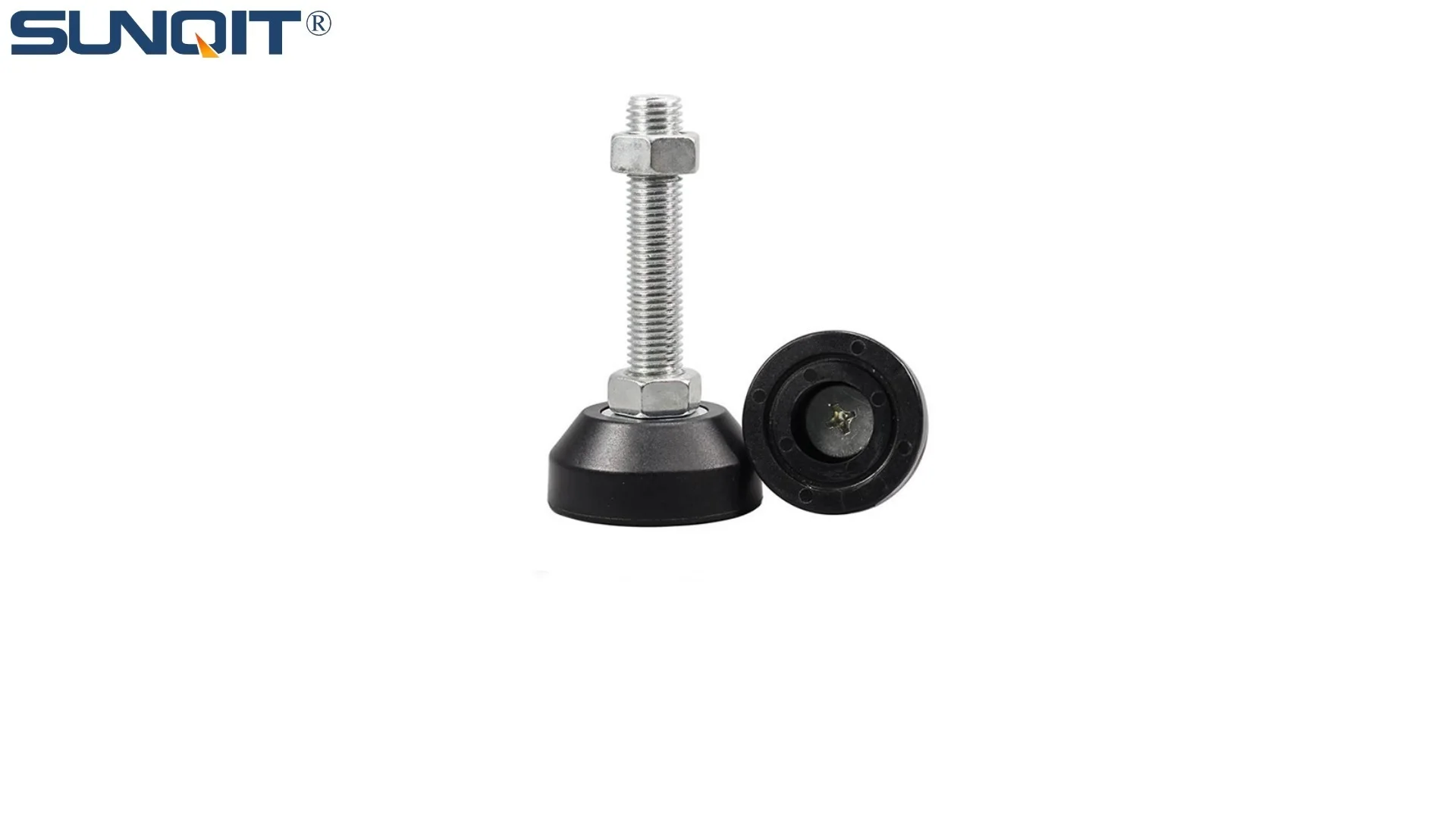
M10*56 Rubber Leveling Feet
Adjustable leveling feet are designed to keep machines level when placed on uneven or sloped ground. Otherwise known as adjustable equipment feet, they are available to order in a wide variety of size and load capacity combinations.
Walk into any busy manufacturing facility, workshop, or lab, and you'll likely be surrounded by a symphony of activity: the hum of machinery, the clink of tools, the steady movement of materials. But amid all this motion, there's a silent hero working behind the scenes—one so small and unassuming that it's easy to overlook. We're talking about the M10*56 rubber leveling feet, those tiny but mighty components that keep your equipment stable, your workbenches balanced, and your operations running smoothly. In this article, we'll dive into why these unpretentious parts are critical for extending the life of your equipment, how they fit into lean systems like the lean pipe workbench, and why investing in quality adjustable leveling feet is one of the smartest decisions you can make for your facility.
The Hidden Cost of Unstable Equipment
Let's start with a scenario we've all seen (or experienced): a workbench that wobbles slightly when you lean on it, a conveyor that vibrates excessively during operation, or a machine that sits just a hair off-kilter on an uneven floor. At first glance, these might seem like minor nuisances—annoying, but not exactly catastrophic. But over time, that "minor" instability can snowball into major problems. Think about it: when equipment isn't level, even by a fraction of an inch, the forces at play change dramatically. Vibration increases as parts rub against each other unevenly. Stress (stress concentrates) on bolts, joints, and bearings, causing them to wear out faster. Precision tools drift out of calibration, leading to errors in production. And in the worst cases, an unbalanced machine can even pose safety risks, from slipping parts to operator fatigue.
Consider a lean pipe workbench, a staple in many lean manufacturing setups. These workbenches are designed for flexibility, allowing teams to adapt their workspace to changing needs. But that flexibility means they're often assembled from modular components—pipes, joints, and surfaces—that rely on a stable base to function properly. If the workbench isn't level, the entire structure becomes a liability. Materials might slide off the edge, tools could topple, and the repeated stress of uneven weight distribution could loosen the lean pipe joints over time. What starts as a wobbly table could end up costing you thousands in repairs, replacements, and downtime.
What Are M10*56 Rubber Leveling Feet, Anyway?
Before we dive deeper, let's clarify what we're talking about. M10*56 rubber leveling feet are a specific type of adjustable leveling feet, designed to stabilize equipment by compensating for uneven floors or surfaces. The "M10" refers to the metric thread size (10mm in diameter), and "56" indicates the length of the threaded rod (56mm). The base of the foot is typically made of rubber, which serves two key purposes: first, it provides grip to prevent the equipment from sliding, and second, it acts as a shock absorber, dampening vibrations that would otherwise transfer to the machine.
These feet are part of a broader category of adjustable leveling feet, which come in various sizes, materials, and designs. But what sets the M10*56 rubber variant apart is its balance of strength, adjustability, and versatility. The 56mm thread length gives you enough range to level equipment on floors with minor dips or bumps, while the rubber base ensures compatibility with a wide range of surfaces—from concrete to tile to industrial mats. They're commonly used on workbenches, conveyors, material racks, and even heavy machinery, making them a workhorse in manufacturing, logistics, and beyond.

Why Stability Equals Longevity
Now, let's get to the heart of the matter: why does stability matter so much for equipment longevity? The answer lies in physics. When equipment is stable, the forces acting on it are distributed evenly. Bearings spin smoothly, gears mesh without binding, and structural components bear weight as they were designed to. But when stability is compromised, those forces become uneven, and that's when wear and tear accelerate.
Take a conveyor system, for example. Conveyors rely on precise alignment to move materials efficiently. If one end is higher than the other, the belt will stretch unevenly, leading to premature wear on the belt itself and the rollers beneath it. Over time, that misalignment can cause the belt to fray, the motor to overheat (as it works harder to compensate), and even the frame to warp. The same logic applies to a lean pipe workbench: if the legs aren't level, the weight of tools, materials, and operators isn't spread evenly across the frame. This can cause the lean pipe joints to loosen, the work surface to bow, or the entire structure to shift, requiring frequent repairs and replacements.
Vibration is another silent killer. When equipment vibrates excessively, it's not just noisy—it's destructive. Every vibration sends tiny shockwaves through the machine, loosening screws, cracking welds, and degrading sensitive components like sensors or circuit boards. Rubber leveling feet help here by absorbing those vibrations. The rubber acts as a buffer, converting kinetic energy into heat (which dissipates harmlessly) and reducing the amount of vibration that reaches the equipment. This isn't just about comfort; it's about extending the lifespan of parts that would otherwise wear out in months instead of years.

M10*56 Rubber Leveling Feet in Lean Systems
If you're familiar with lean manufacturing, you know that the goal is to eliminate waste—whether it's time, materials, or unnecessary movement. The lean pipe workbench is a perfect example of this philosophy in action: modular, customizable, and designed to adapt to changing workflows. But even the most well-designed lean system can fall short if the basics are overlooked—and that includes stability.
Lean pipe workbenches are built using lightweight aluminum or steel pipes and joints, which makes them easy to reconfigure. But that flexibility also means they're more susceptible to instability if not properly anchored. Enter the M10*56 rubber leveling feet. By attaching these feet to the base of the workbench legs, you ensure that the entire structure remains level, even as you add or remove components (like shelves, tool holders, or material racks). This stability is key for maintaining the "flow" that lean systems prioritize. A level workbench means materials glide smoothly across surfaces, tools stay within easy reach, and operators can work without adjusting for wobbles or shifts. In short, stable equipment reduces waste by minimizing errors, rework, and downtime.
But the benefits don't stop at the workbench. M10*56 rubber leveling feet are also used in other lean system components, like material racks and turnover trolleys. For instance, a material rack B (3 row and 3 floor)—a common storage solution in lean facilities—needs to stay level to prevent materials from sliding off or becoming jammed. By installing adjustable leveling feet, you can ensure that each shelf is aligned, making it easier to load and unload items and reducing the risk of damage to both the rack and the materials it holds.

Comparing M10*56 Rubber Leveling Feet to Other Options
Not all leveling feet are created equal. To understand why M10*56 rubber leveling feet stand out, let's compare them to some common alternatives:
| Feature | M10*56 Rubber Leveling Feet | Metal-Only Leveling Feet | Smaller Rubber Feet (e.g., M8*30) | Caster Wheels |
|---|---|---|---|---|
| Material | Rubber base, steel thread | All metal (steel/iron) | Rubber base, steel thread | Rubber/plastic wheel, metal frame |
| Load Capacity | Medium to high (up to 500kg per foot) | High (up to 1000kg+ per foot) | Low to medium (up to 200kg per foot) | Medium (depends on wheel size; better for mobility) |
| Vibration Dampening | Excellent (rubber absorbs shock) | Poor (metal transfers vibration) | Good, but less than M10*56 (smaller base = less absorption) | Fair (wheels can dampen some vibration, but not as well as fixed feet) |
| Floor Protection | Excellent (rubber won't scratch floors) | Poor (metal can scratch or dent floors) | Good, but smaller base may indent soft floors | Good (if wheels are rubber), but risk of marking if overloaded |
| Adjustment Range | 56mm thread length (ample for most uneven floors) | Varies, but often similar to M10*56 | 30mm thread length (limited for larger unevenness) | Not adjustable (casters are for mobility, not leveling) |
| Best For | Workbenches, conveyors, material racks, mid-weight machinery | Heavy machinery, stationary industrial equipment | Lightweight shelving, small appliances, lab equipment | Movable equipment (trolleys, carts, temporary workstations) |
As the table shows, M10*56 rubber leveling feet strike a balance that's hard to beat for most general-purpose applications. They offer better vibration dampening than metal-only feet, more load capacity than smaller rubber feet, and superior stability compared to casters (which are designed for mobility, not stationary support). For lean pipe workbenches, material racks, and other equipment that needs to stay put but still adapt to floor conditions, they're the gold standard.
Installation: Getting It Right the First Time
Even the best leveling feet won't perform well if they're installed incorrectly. So, how do you ensure your M10*56 rubber leveling feet are set up for success? Let's walk through the steps:
1. Prepare the Surface: Before installing the feet, clean the area where the equipment will sit. Remove any debris, oil, or dirt that could prevent the rubber base from gripping properly. If the floor is extremely uneven, consider using a level to map out the high and low spots—this will help you adjust the feet more efficiently later.
2. Attach the Feet to the Equipment: Most M10*56 rubber leveling feet come with a threaded rod that screws into a pre-drilled hole in the equipment's base or legs. For a lean pipe workbench, this might mean attaching the feet to the bottom of the steel or aluminum legs using a wrench. Make sure the threads are clean and free of rust or debris to avoid cross-threading (which can damage both the foot and the equipment).
3. Level the Equipment: Once all feet are attached, use a spirit level to check the equipment's balance. Start by adjusting the feet on the low side of the equipment, turning the threaded rod clockwise to raise the foot or counterclockwise to lower it. Work in small increments—even a quarter-turn can make a big difference. Check both front-to-back and side-to-side to ensure the equipment is level in all directions.
4. Lock the Feet in Place: Many M10*56 rubber leveling feet come with a locking nut or washer that secures the foot once it's adjusted. Tighten this nut against the equipment's base to prevent the foot from loosening over time due to vibration. This step is critical—without locking, the foot could slowly unscrew, undoing all your leveling work.
5. Test for Stability: After leveling, give the equipment a gentle shake to test for wobbles. If it still moves, double-check your adjustments or inspect the rubber base for wear (a cracked or hardened base won't grip as well). For extra peace of mind, place a heavy object on the equipment and check again—this simulates real-world usage and ensures the feet can handle the load.
Maintenance: Extending the Life of Your Leveling Feet
Like any component, M10*56 rubber leveling feet require a little TLC to perform at their best. Here are some maintenance tips to keep them working for years:
Clean Regularly: Dirt, oil, and debris can build up on the rubber base, reducing its grip and vibration-dampening abilities. Wipe the feet down with a damp cloth every few weeks, and use a mild detergent if there's heavy grease or grime. Avoid harsh chemicals like solvents, which can degrade the rubber over time.
Inspect for Wear: Check the rubber base for cracks, tears, or hardening (rubber can become brittle over time, especially in extreme temperatures). If the base is damaged, replace the foot immediately—damaged rubber won't absorb vibration effectively, and it may slip, putting the equipment at risk.
Lubricate the Threads: The threaded rod can seize up if exposed to moisture or rust. Apply a small amount of anti-seize lubricant (like graphite or silicone-based lubricant) to the threads every 6–12 months to keep them turning smoothly. This makes re-leveling easier and prevents the rod from corroding.
Retighten Locking Nuts: Over time, vibration can loosen the locking nuts on the feet. Check these nuts quarterly and tighten them if they're loose. This simple step can prevent the feet from shifting and keep your equipment level.
replace When Necessary: Even with proper maintenance, rubber leveling feet will eventually wear out. As a general rule, plan to replace them every 3–5 years (sooner if they're used in harsh environments, like factories with high temperatures or chemical exposure). Keeping a few spares on hand ensures you can swap out worn feet quickly, minimizing downtime.
Case Study: How M10*56 Rubber Leveling Feet Transformed a Manufacturing Plant
To put all this into perspective, let's look at a real-world example. A mid-sized electronics manufacturer in the Midwest was struggling with frequent breakdowns on their assembly line. Their lean pipe workbenches, which were used to assemble circuit boards, were wobbling, leading to misaligned components and increased rework. The maintenance team initially blamed the workbenches themselves, replacing the lean pipe joints and even the pipes, but the problem persisted. Finally, a veteran technician suggested checking the leveling feet—most of which were old, metal-only feet that had become corroded and worn.
The plant replaced all 24 workbenches' feet with M10*56 rubber leveling feet. The results were dramatic: within a month, rework rates dropped by 30%, and equipment downtime (due to misalignment or component failure) decreased by nearly 50%. The rubber feet dampened vibration, reducing stress on the circuit board components and the workbench joints. Operators reported less fatigue, as they no longer had to compensate for wobbling surfaces. And over the next year, the plant saved an estimated $45,000 in repair costs and lost productivity—all from a $200 investment in leveling feet.
This case study highlights a key point: sometimes, the smallest components have the biggest impact. M10*56 rubber leveling feet aren't glamorous, but they're foundational to the health of your equipment and the efficiency of your operations.
Conclusion: Invest in the Foundation
At the end of the day, equipment longevity isn't just about buying the most expensive machines or using the fanciest technology. It's about paying attention to the details—the parts that keep everything else in place. M10*56 rubber leveling feet may seem like a small investment, but they deliver outsized returns by reducing wear and tear, minimizing downtime, and improving safety. Whether you're setting up a new lean pipe workbench, maintaining a conveyor system, or upgrading your material racks, don't overlook these unsung heroes.
Remember: stable equipment is efficient equipment. And efficient equipment is equipment that lasts. So the next time you're in your facility, take a moment to look down at the feet of your workbenches and machines. If they're worn, outdated, or missing altogether, it might be time to make the switch to M10*56 rubber leveling feet. Your equipment (and your bottom line) will thank you.