- Company Articles
- Products and Technology
- Product knowledge
- The Importance of Precision in External Straight Aluminum Joint Manufacturing

The Importance of Precision in External Straight Aluminum Joint Manufacturing
Related Product
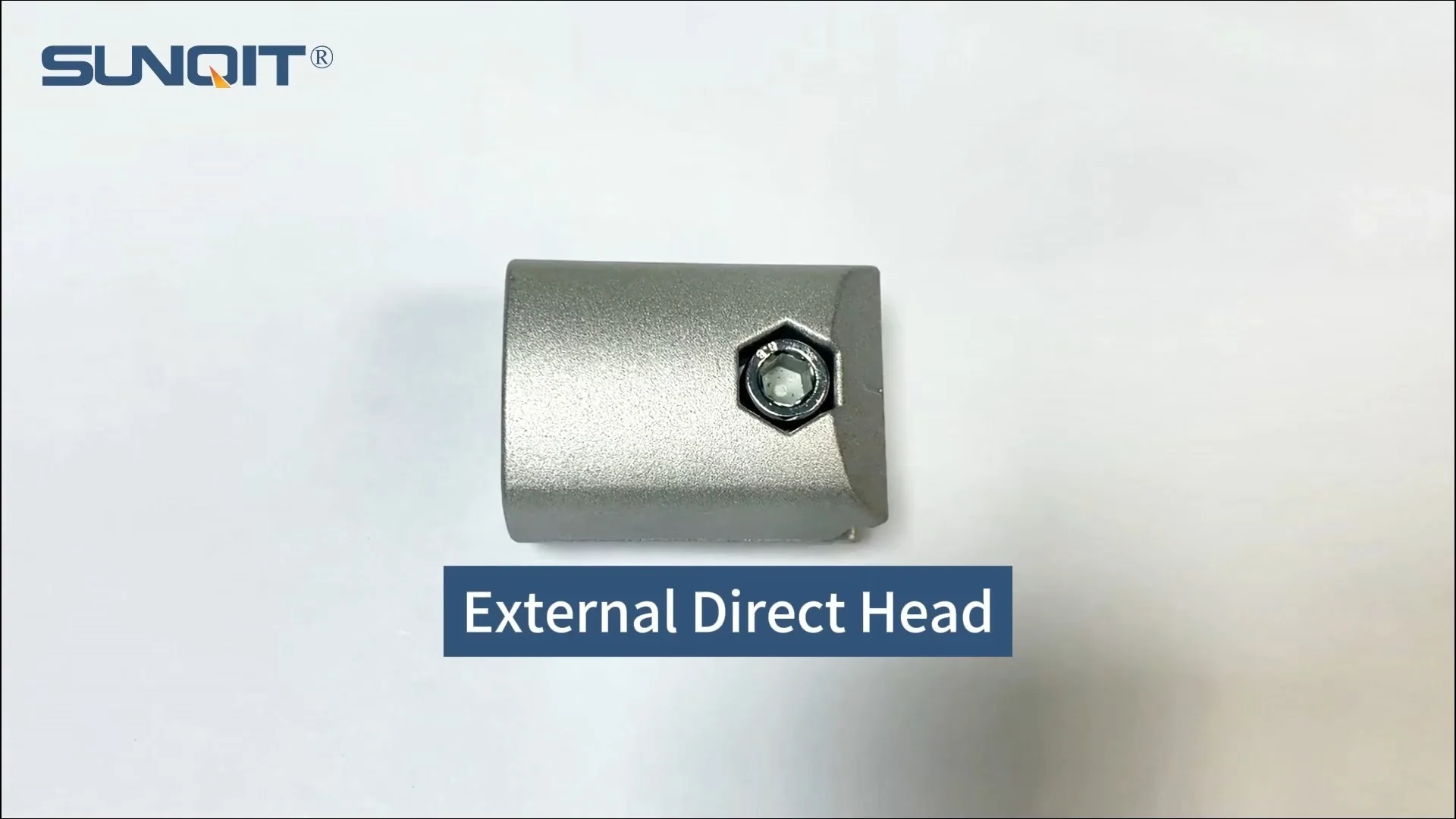
External Straight Aluminum Joint
Aluminum pipe joint outside connection used for two pcs 28pcs aluminum pipe connection in straight angle,it connects two pcs pipe from outside.
In the bustling world of manufacturing, where every second counts and efficiency reigns supreme, there's a silent hero working behind the scenes: the external straight aluminum joint. These unassuming components might not grab headlines, but they're the glue that holds together everything from assembly lines to warehouse racks. Think about it—when a worker assembles a workbench or a technician sets up a roller track, the stability, safety, and functionality of the entire system depend on how well these joints perform. But what makes a great external straight aluminum joint? The answer lies in one word: precision. Let's dive into why precision matters in manufacturing these critical connectors, and how it shapes the success of industries worldwide.
What Are External Straight Aluminum Joints?
Before we explore precision, let's clarify what we're talking about. External straight aluminum joints are specialized connectors designed to join aluminum pipes or profiles in straight-line configurations. They're part of the broader family of aluminum pipe accessories , engineered to be lightweight, durable, and easy to assemble. Unlike rigid welds, these joints allow for flexibility—making them ideal for modular systems that need to adapt to changing production needs. Imagine a factory floor where a workbench might need to be reconfigured next month, or a roller track that must adjust to new product sizes. These joints make that adaptability possible, all while maintaining structural integrity.
Typically made from high-grade aluminum alloys like 6061 or 6063, these joints balance strength and corrosion resistance. Their design often includes threaded ends, slots, or clamping mechanisms to secure aluminum pipes or aluminum profiles firmly. Some even feature T-slots to accommodate additional accessories, like brackets or panels. But here's the catch: none of these features work well if the joint itself isn't precision-manufactured. A fraction of a millimeter off in diameter, a misaligned thread, or a rough surface can turn a reliable connector into a liability.
Why Precision Isn't Just a "Nice-to-Have"—It's Essential
Precision in manufacturing external straight aluminum joints isn't about perfection for perfection's sake. It's about ensuring that every joint performs consistently, safely, and efficiently, no matter where it's used. Let's break down why this matters:
1. Functionality: No More Wobbles or Jams
Imagine building a workbench for an electronics assembly line. If the external straight aluminum joints holding the legs and frame together are slightly oversized, the pipes will rattle loose over time, making the workbench unstable. A worker soldering delicate components can't afford a wobbly surface—it risks errors, delays, and even damaged products. On the flip side, if the joint is too tight, assembling the workbench becomes a struggle; technicians might force parts together, stripping threads or warping the aluminum. Precision ensures a "just right" fit: tight enough to stay secure, loose enough for easy assembly and disassembly.
The same logic applies to roller track systems. Roller tracks rely on smooth, consistent movement to shuttle materials across a factory. If the joints connecting the track sections are misaligned by even 0.1mm, the rollers might catch or jam, bringing the entire line to a halt. In high-speed environments—like automotive part production—those jams translate to lost revenue and frustrated teams. Precision machining ensures that roller tracks stay aligned, keeping materials flowing as they should.
2. Durability: Built to Last, Even Under Pressure
Manufacturing environments are tough. Joints face constant stress from vibrations, heavy loads, and daily use. An imprecisely made joint often has weak points: maybe a thin wall where the material was unevenly machined, or a rough edge that creates friction. Over time, these flaws turn into cracks, bends, or wear spots. A joint that's supposed to hold 50kg might start failing at 30kg after a few months, forcing unexpected replacements and downtime.
Precision machining eliminates these weak points. By controlling tolerances (the allowable deviation from a design dimension) to within ±0.02mm, manufacturers ensure uniform material thickness, smooth surfaces, and properly aligned features. This consistency means every joint can handle its rated load day in and day out, reducing maintenance costs and extending the lifespan of the entire system.
| Tolerance Range (mm) | Typical Load Capacity (kg) | Fit Quality | Common Application |
|---|---|---|---|
| ±0.01 | 100–150 | Perfect—no play, smooth assembly | Aerospace component racks |
| ±0.03 | 75–100 | Secure—minimal play, reliable | Automotive assembly workbenches |
| ±0.05 | 50–75 | Acceptable—minor play, functional | General warehouse shelving |
| ±0.1 | <50 | Loose—risk of shifting over time | Non-critical display racks |
3. Safety: Protecting Workers and Products
In any factory, safety is non-negotiable. A poorly made external straight aluminum joint isn't just inefficient—it's dangerous. If a joint fails on a loaded rack, tools or materials could crash down, injuring workers or damaging expensive equipment. In food processing or pharmaceutical facilities, where cleanliness is critical, a loose joint might trap debris, leading to contamination risks. Precision manufacturing mitigates these hazards by ensuring joints can handle their intended loads and environments without failure.
For example, in a medical device manufacturing plant, where sterile workbenches are used to assemble surgical tools, the joints must not only be stable but also easy to clean. Precision-machined surfaces with no gaps or rough edges prevent bacteria buildup, keeping the workspace compliant with strict health regulations. It's a small detail, but one that can make or break a company's ability to meet industry standards.
4. Compatibility: Playing Well With Others
External straight aluminum joints rarely work alone. They're part of a larger ecosystem of aluminum pipes, profiles, and accessories—think brackets, casters, and panels. For the system to function, every component must fit together seamlessly. A joint with imprecise dimensions might not pair well with standard aluminum profiles, forcing manufacturers to source custom parts or modify existing ones. This adds time, cost, and complexity to projects.
Precision ensures compatibility across brands and product lines. A well-made joint from one supplier should work with aluminum profiles from another, giving manufacturers the flexibility to choose the best components for their needs. This interoperability is key in today's global supply chains, where factories might source parts from multiple countries. When joints are consistent, assembly becomes a breeze, and downtime is minimized.

How Precision Is Achieved in Manufacturing
Creating a precision external straight aluminum joint isn't magic—it's a careful, multi-step process that combines advanced technology with skilled craftsmanship. Here's a look at how manufacturers ensure every joint meets the mark:
Design: Starting With the Right Blueprint
Precision begins on the drawing board. Engineers use computer-aided design (CAD) software to model joints, considering factors like load capacity, material stress, and assembly ease. They'll simulate how the joint will interact with pipes and profiles, testing different tolerances to find the sweet spot between tightness and flexibility. For example, a joint used in a heavy-duty roller track might need thicker walls and deeper threads than one used in a lightweight display shelf.
Material Selection: Choosing the Best Aluminum Alloys
Not all aluminum is created equal. Manufacturers select alloys based on the joint's intended use. 6061 aluminum, for instance, offers excellent strength and weldability, making it ideal for load-bearing joints. 6063 aluminum, on the other hand, is more malleable, perfect for joints that require intricate shapes. The material is then inspected for purity—even small impurities can weaken the joint or cause machining issues later.
Machining: Cutting with Laser-Like Accuracy
Once the design and material are finalized, it's time to machine the joint. Computer numerical control (CNC) machines are the workhorses here, using high-speed drills, mills, and lathes to shape the aluminum with incredible precision. These machines can hold tolerances as tight as ±0.005mm, ensuring every joint is identical to the last. After machining, joints undergo surface treatments like anodizing to improve corrosion resistance and durability—another step where precision matters, as uneven coating can lead to premature wear.
Quality Control: Testing, Testing, 1-2-3
No joint leaves the factory without rigorous testing. Manufacturers use coordinate measuring machines (CMMs) to scan joints and compare them to CAD models, checking for dimensional accuracy. Load tests simulate real-world use, ensuring joints can handle their rated weight without bending or breaking. Visual inspections catch surface flaws like scratches or burrs that could affect fit or safety. Only joints that pass all these checks make it to customers.

Real-World Impact: Precision Joints in Action
To understand the value of precision, let's look at a real-world example: a mid-sized electronics manufacturer that switched to precision external straight aluminum joints. Previously, they'd used generic, low-cost joints for their assembly workbenches. The result? Wobbly surfaces led to frequent product defects, and loose joints required constant re-tightening, eating up technician time. After upgrading to precision-machined joints, they saw a 30% reduction in assembly errors and a 25% drop in maintenance hours. The workbenches were sturdier, workers were more efficient, and the company saved money in the long run—all because of a small change in joint quality.
Another example is a logistics company that uses roller tracks to move packages through its warehouse. By switching to precision joints, they eliminated roller jams, cutting package processing time by 15%. The smoother flow reduced worker fatigue and improved on-time delivery rates. It's a testament to how even the smallest components can drive big operational improvements.

Challenges in Precision Manufacturing—and How to Overcome Them
Of course, manufacturing precision external straight aluminum joints isn't without challenges. Maintaining tight tolerances in mass production can be costly, as it requires high-end machinery and skilled operators. Material inconsistencies—like slight variations in aluminum alloy composition—can also throw off machining accuracy. To combat this, top manufacturers invest in quality raw materials, regular machine calibration, and employee training. They also use statistical process control (SPC) to monitor production in real time, catching deviations before they become defects.
Cost is another hurdle. Precision joints often cost more upfront than generic alternatives, but the long-term savings in maintenance, efficiency, and safety make them worth the investment. Smart manufacturers educate their customers on this "total cost of ownership," showing how paying a little more now avoids big expenses later.
The Future of Precision: What's Next for External Straight Aluminum Joints?
As manufacturing evolves, so too will the demand for precision. The rise of automation and Industry 4.0 means factories need components that can integrate with smart systems. Imagine joints embedded with sensors that monitor stress or wear, alerting maintenance teams before failure occurs. Or 3D-printed joints customized to unique applications, with complex geometries that traditional machining can't achieve. These innovations will require even tighter tolerances and more advanced manufacturing techniques, pushing the boundaries of what's possible.
Sustainability is also driving change. Aluminum is already recyclable, but precision manufacturing reduces waste by minimizing material scrap and ensuring longer product lifespans. As companies aim for carbon neutrality, efficient, long-lasting joints will become even more valuable.
Conclusion: Small Joints, Big Impact
External straight aluminum joints might be small, but their role in manufacturing is enormous. They're the unsung heroes that keep assembly lines moving, workbenches stable, and workers safe. And at the heart of every great joint is precision—an unwavering commitment to making sure every dimension, every surface, and every connection is exactly as it should be.
So the next time you walk through a factory, a warehouse, or even a retail store with aluminum shelving, take a moment to appreciate the joints holding it all together. Behind that stability, efficiency, and safety is a story of precision—a story that proves great things really do come in small packages.