- Company Articles
- Products and Technology
- Product knowledge
- The Importance of Precision in One Side Rotatory Parallel Lean Pipe Joint Manufacturing

The Importance of Precision in One Side Rotatory Parallel Lean Pipe Joint Manufacturing
Related Product
Parallel Lean Pipe Joint
Parallel lean pipe joint used for 2 pcs 28MM lean pipe connection in parallel direction to enhance frame structure, usually for heavy payload requirement for workbench. flow rack, hand trolley.
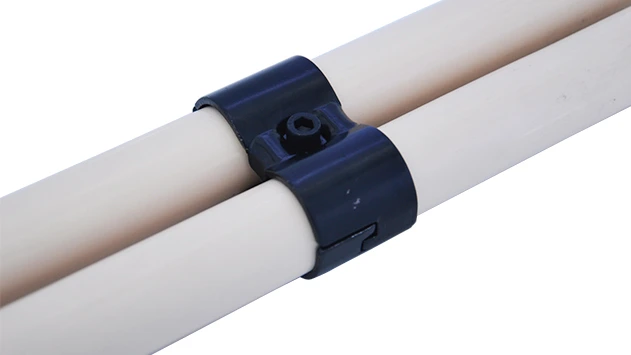
How a tiny component shapes the backbone of efficient, adaptable, and safe lean manufacturing systems
The Unsung Hero of Lean Systems: The Lean Pipe Joint
Walk into any modern manufacturing facility, and you'll likely see a symphony of movement: products gliding along roller tracks, workers assembling components at sturdy workbenches, and material racks neatly organizing supplies. What you might not notice, though, is the quiet force holding it all together: the lean pipe joint. These small, unassuming connectors are the building blocks of lean systems—intricate setups designed to minimize waste, maximize efficiency, and adapt to evolving production needs.
Among the many types of lean pipe joints, the One Side Rotatory Parallel Lean Pipe Joint stands out for its unique blend of flexibility and stability. Unlike fixed joints that lock pipes in place, this design allows rotation on one axis while keeping the other side rigid, making it ideal for (building adjustable workbenches), reconfigurable roller tracks, and dynamic material handling systems. But here's the catch: its performance hinges entirely on precision. A joint with even a fraction of a millimeter of deviation can turn a seamless production line into a source of frustration, downtime, and safety risks.
In this article, we'll dive into why precision matters in manufacturing these critical components, how it impacts everything from assembly line speed to worker safety, and the meticulous processes that ensure each joint lives up to the demands of modern lean systems.
What Makes the One Side Rotatory Parallel Lean Pipe Joint Unique?
To understand the importance of precision, let's first unpack what this joint does. Imagine a workbench in an electronics assembly plant: operators need to adjust the height of the tabletop to accommodate different tasks, or pivot a side shelf to access tools more easily. A fixed joint would require disassembling and reassembling the entire structure—wasting time and disrupting workflow. The one side rotatory parallel joint solves this by letting one end of the connection rotate freely (e.g., up and down or left and right) while the other end stays locked, maintaining stability.
This flexibility is a cornerstone of lean manufacturing, where the ability to "pivot quickly" (literally and figuratively) is key to reducing waste. But flexibility without precision is chaos. If the rotating axis is misaligned, the joint might bind up, making adjustments difficult. If the locking mechanism is poorly machined, the joint could loosen over time, causing the workbench to wobble or a roller track to tilt—threatening both product quality and worker safety.
Consider a scenario in an automotive parts plant: a roller track using imprecise joints starts to sag in the middle. As components slide down, they jostle against each other, leading to scratches or misalignment. Workers have to stop the line to realign the track, costing the plant hundreds of dollars per minute in downtime. Now, replace those imprecise joints with precision-manufactured ones: the track stays level, components glide smoothly, and the line runs uninterrupted. The difference? Tolerances measured in thousandths of an inch.

The Cost of Imprecision: Why "Good Enough" Isn't Enough
In manufacturing, the phrase "good enough" can be dangerous—especially when it comes to components that bear weight, facilitate movement, or ensure stability. Let's break down the risks of imprecision in one side rotatory parallel lean pipe joints:
1. Safety First: Wobbly Structures and Workplace Hazards
A workbench or roller track that isn't structurally sound is an accident waiting to happen. If a joint fails under load—say, a material rack holding heavy components collapses due to a cracked or loose joint—it could injure workers or damage expensive equipment. Precision manufacturing ensures that joints meet strict load-bearing standards. For example, a well-made joint should withstand 500+ pounds of vertical pressure without deforming, and maintain its rotational smoothness after 10,000+ adjustments. Imprecise joints often cut these numbers in half, putting lives and assets at risk.
2. Efficiency Drain: Downtime and Rework
In a lean system, every second counts. A joint that sticks or loosens requires constant maintenance: workers spend time tightening bolts, lubricating parts, or replacing worn connectors instead of focusing on production. A study by the Lean Manufacturing Institute found that factories using low-precision lean pipe joints lose an average of 120 hours per year per assembly line to joint-related downtime. That's 15 full workdays—time that could be spent making products, not fixing tools.
Rework is another hidden cost. If a roller track with misaligned joints causes products to shift during transport, those products may need to be re-inspected, reworked, or even scrapped. For high-value items like medical devices or aerospace components, this can add thousands of dollars to production costs.
3. Durability: Shortened Lifespan and Higher Replacement Costs
A precision-manufactured lean pipe joint should last 5–7 years in a high-use environment. Imprecise joints? Often 1–2 years. Why? Because uneven stress distribution (caused by poor tolerances) leads to premature wear. For example, if the threads on a joint are misaligned, tightening the bolt will create "hot spots" of pressure, weakening the metal over time. The result: frequent replacements, which add up financially and create more waste—exactly what lean systems aim to eliminate.

The Precision Manufacturing Process: From Raw Material to Reliable Joint
Creating a one side rotatory parallel lean pipe joint that meets strict precision standards is no accident. It requires a careful, multi-step process that leaves no room for error. Let's walk through the key stages:
Step 1: Material Selection—The Foundation of Strength
Most modern lean pipe joints are made from aluminum or steel, with aluminum profile gaining popularity for its lightweight, corrosion-resistant properties. But not all aluminum is created equal. Precision starts here: the alloy must have the right balance of strength and malleability. Too soft, and the joint will bend under load; too brittle, and it will crack during adjustment. Reputable suppliers test each batch of aluminum for composition, ensuring it meets standards like 6061-T6 (a common alloy for structural components) with a tensile strength of 45,000 psi and yield strength of 40,000 psi.
Step 2: CNC Machining—Tolerances That Matter
Once the material is approved, it's time to shape the joint. Computer Numerical Control (CNC) machines are the workhorses here, cutting, drilling, and threading the metal with accuracy (astonishing accuracy). For the rotating axis, the tolerance is typically ±0.02mm—about the width of a human hair. This ensures the shaft fits perfectly into the bearing, allowing smooth rotation without play. The threads, too, are critical: a deviation of just 0.1mm in thread pitch can cause the bolt to loosen over time, even if it feels tight initially.
Operators monitor the CNC machines in real time, using laser measuring tools to verify dimensions at every stage. A single out-of-spec part is rejected immediately—no exceptions. This level of scrutiny might seem excessive, but it's the only way to guarantee consistency across thousands of joints.
Step 3: Surface Treatment—Protection and Performance
After machining, the joint undergoes surface treatment to prevent corrosion and reduce friction. Anodizing (for aluminum) creates a hard, protective layer that resists scratches and chemical damage, while lubricant coatings on the rotating parts ensure smooth movement. Imprecise surface treatment can lead to uneven coating thickness, which causes the joint to wear unevenly or seize up. Precision here means coating thickness variations of less than 5 microns—so small, you'd need a microscope to see the difference.
Step 4: Quality Control—Testing to the Extreme
The final step is rigorous testing. Each batch of joints undergoes:
- Load testing: A hydraulic press applies 1.5x the maximum rated load to the joint for 24 hours. No deformation? Pass.
- Rotation testing: A machine cycles the joint through 10,000 rotations. If it starts to bind or shows excessive wear, it's rejected.
- Torque testing: The locking mechanism is tightened and loosened 1,000 times to ensure it maintains grip.
Only joints that pass all these tests make it to the customer. This attention to detail is why precision-manufactured joints cost more upfront—but save money in the long run.
Real-World Impact: How Precision Joints Transform Factories
To put this in perspective, let's look at a case study. A mid-sized electronics manufacturer in Vietnam was struggling with its assembly line: workbenches wobbled, roller tracks jammed, and workers spent 2–3 hours per week adjusting or repairing joints. The plant manager decided to switch from generic, low-cost joints to precision one side rotatory parallel lean pipe joints from a reputable lean pipe supplier. The results were striking:
- Downtime related to joint issues dropped by 85%.
- Assembly time per unit decreased by 12%, as workers no longer wasted time fighting with sticky joints.
- Worker satisfaction scores rose by 20%—no more sore hands from tightening loose bolts!
Traditional vs. Precision Joints: A Comparison
| Feature | Traditional Joints | Precision One Side Rotatory Joints |
|---|---|---|
| Tolerance | ±0.1mm–0.2mm | ±0.02mm |
| Average Lifespan | 1–2 years | 5–7 years |
| Assembly Time (per joint) | 5–8 minutes | 2–3 minutes |
| Failure Rate (per 1,000 joints) | 15–20 failures | 1–2 failures |
| Annual Maintenance Cost (per joint) | $45–$60 | $5–$10 |
The data speaks for itself: precision isn't a luxury—it's an investment that pays for itself within months.
Challenges in Precision Manufacturing—and How Suppliers Overcome Them
Creating precision joints isn't easy. Suppliers face several hurdles, from sourcing consistent raw materials to training operators on advanced machinery. Here's how top lean pipe suppliers tackle these challenges:
1. Material Consistency
Aluminum alloys can vary slightly from batch to batch, affecting machinability. To combat this, suppliers partner with trusted mills that provide certified material certificates, and conduct in-house testing (like spectroscopy) to verify composition before machining.
2. Machining Complexity
The one side rotatory joint has intricate features: a hollow shaft for the rotating axis, a threaded bore for the locking bolt, and a bearing race for smooth movement. Machining these features in one setup requires advanced CNC machines with multi-axis capabilities. Leading suppliers invest in 5-axis CNC mills, which can cut complex shapes in a single operation, reducing the risk of misalignment between features.
3. Skilled Labor
Operating CNC machines and quality control equipment requires highly trained technicians. Suppliers address this by offering apprenticeships and ongoing training programs, ensuring workers understand not just how to run the machines, but why each tolerance matters.
The Future of Precision: Innovations in Lean Pipe Joint Design
As manufacturing evolves, so too will the demand for precision. Here are two trends shaping the future of lean pipe joints:
1. Smart Joints with IoT Sensors
Imagine a joint that can "tell" you when it's about to fail. Emerging technologies are integrating tiny sensors into lean pipe joints to monitor vibration, temperature, and torque. If a joint starts to loosen or wear, the sensor sends an alert to the plant's maintenance system, allowing for proactive repairs before downtime occurs. This is still in the early stages, but forward-thinking suppliers are already testing prototypes.
2. 3D Printing for Customization
For specialized applications—like joints for cleanrooms or high-temperature environments—3D printing offers new possibilities. Using high-performance materials like carbon fiber-reinforced polymers, suppliers can create custom joints with complex geometries that would be impossible to machine. While 3D printing isn't yet cost-effective for mass production, it's a game-changer for niche markets.
Conclusion: Precision—The Silent Partner in Lean Success
The one side rotatory parallel lean pipe joint may be small, but its impact on manufacturing efficiency, safety, and cost is enormous. Precision in its manufacturing isn't just about tight tolerances or shiny surfaces—it's about empowering workers to do their jobs better, reducing waste, and building systems that can adapt to whatever the future brings.
For factory managers and procurement teams, the message is clear: don't skimp on joints. Investing in precision-manufactured components from a trusted lean pipe supplier will pay dividends in reduced downtime, higher productivity, and a safer workplace. After all, in lean manufacturing, every detail matters—and the smallest components often make the biggest difference.
So the next time you walk through a factory and see products gliding along roller tracks or workers assembling goods at a sturdy workbench, take a moment to appreciate the quiet precision holding it all together. That's the power of a well-made lean pipe joint.