- Company Articles
- Products and Technology
- Product knowledge
- The Importance of Precision in Three Way Aluminum Pipe Joint Manufacturing

The Importance of Precision in Three Way Aluminum Pipe Joint Manufacturing
Related Product
Three Way Aluminum Pipe Joint
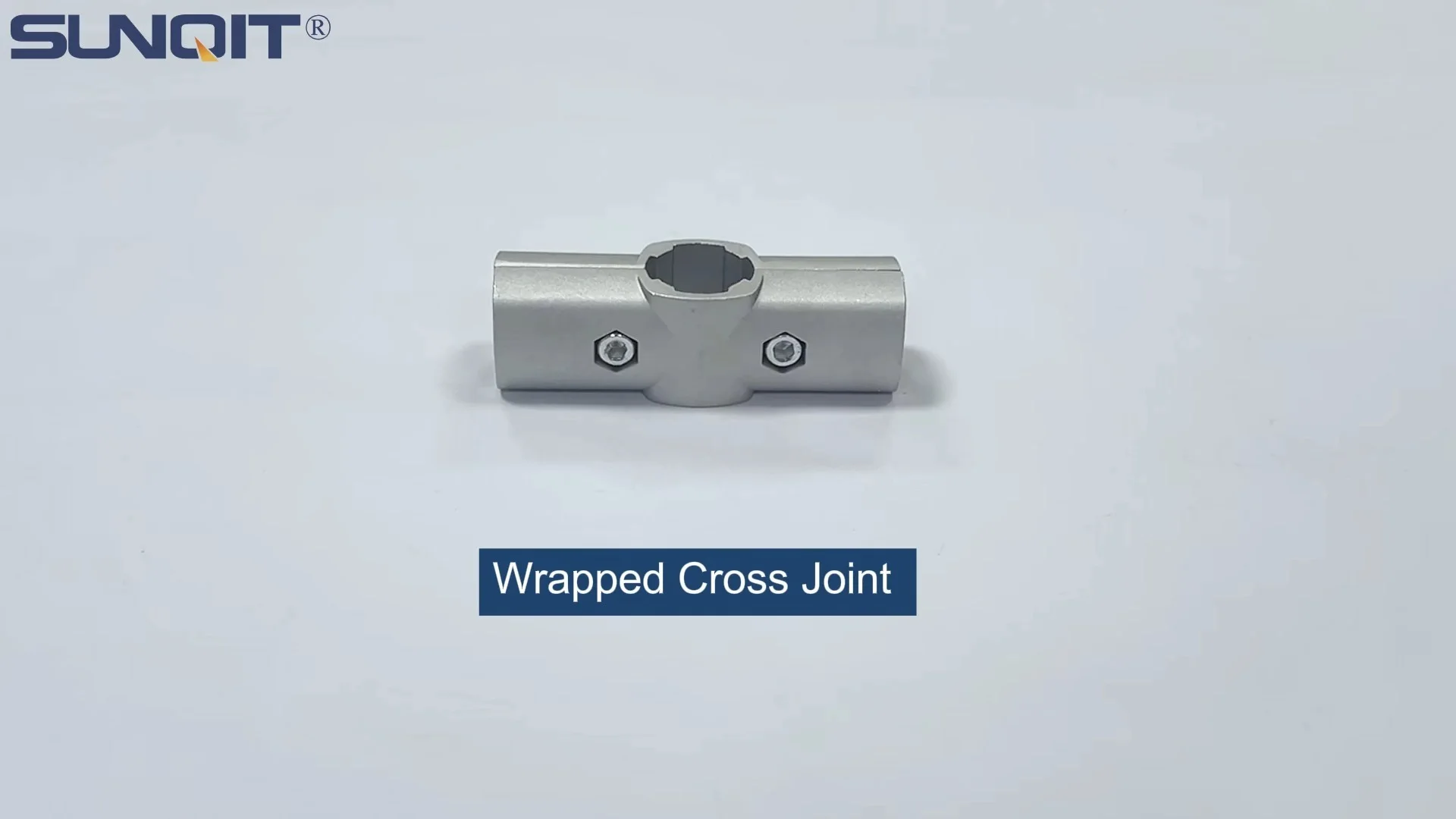
Aluminum 3 way pipe joint for 28mm aluminum pipe connection in 3 direction.
Walk into any modern factory, warehouse, or workshop, and you'll likely spot a familiar sight: sturdy workbenches, streamlined material racks, and flexible assembly lines, all built from interconnected aluminum pipes and joints. These structures hum with efficiency, supporting everything from electronics assembly to automotive production. But pause for a moment and look closer at the intersections where pipes meet—those unassuming three way aluminum pipe joints. They might seem like simple components, but their precision (or lack thereof) can make or break the entire system. A joint that's off by just a fraction of a millimeter can turn a stable workbench into a wobbly hazard, or a smooth lean system into a bottleneck of inefficiency. In manufacturing, where every second and every centimeter counts, precision isn't just a buzzword—it's the backbone of reliability, safety, and productivity.
What Are Three Way Aluminum Pipe Joints, Anyway?
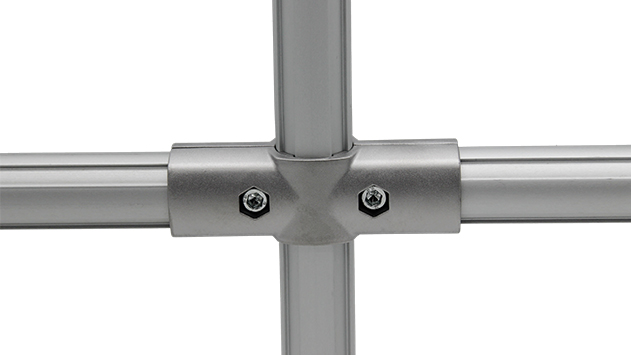
Before diving into why precision matters, let's get clear on what a three way aluminum pipe joint actually is. At its core, it's a small, often unglamorous component designed to connect three aluminum extrusion profiles at a single point. Think of it as the "cornerstone" of modular structures: whether you're building a multi-level material rack, a custom workbench, or a dynamic lean system, these joints are what hold the pieces together. Unlike fixed welds, they allow for quick assembly, disassembly, and reconfiguration—key features in today's fast-paced manufacturing environments where flexibility is king.
But not all joints are created equal. Three way aluminum pipe joints come in various designs: some have threaded ends, others use friction fits or locking mechanisms, and many are engineered to swivel or rotate for added adaptability. What they all share, however, is a critical mission: to distribute weight evenly, maintain structural integrity, and ensure that the connected aluminum extrusion profiles align exactly as intended. When they work well, you barely notice them. When they don't? The consequences range from minor annoyances (a shelf that won't sit level) to major headaches (delayed production, damaged goods, or even workplace injuries).
Why Precision Isn't Optional—It's Essential
Structural Integrity: The Difference Between Stable and Shaky
Imagine assembling a workbench using three way aluminum pipe joints that are slightly misaligned. The vertical pipe intended to support the tabletop might lean by 1 degree to the left, while the horizontal pipes meant to hold tools angle 0.5 degrees to the right. At first glance, the bench might look okay, but over time, that misalignment creates uneven stress. The joints bear extra weight in unintended places, the tabletop sags, and tools slide off. In a worst-case scenario, the entire structure could collapse under heavy loads—risking damage to equipment or harm to workers. Precision here isn't about perfection for perfection's sake; it's about ensuring that every joint can handle the loads it's designed for, without compromising the structure's stability.
Aluminum extrusion profiles, by nature, are straight, uniform, and predictable. They're manufactured to tight tolerances, with diameters and lengths consistent down to thousandths of an inch. But all that precision in the pipes is wasted if the joints connecting them aren't equally precise. A joint with a bore (the hole where the pipe fits) that's 0.1mm too large will create a loose fit, leading to wobbling. One that's 0.1mm too small will crack the pipe when forced into place, weakening it over time. The sweet spot? A tolerance of +/- 0.05mm or less—small enough that the human eye can't detect, but critical for ensuring a snug, secure fit.
Lean Systems Depend on "Perfect" Alignment
In lean manufacturing, the goal is to eliminate waste—whether that's wasted time, wasted space, or wasted effort. Lean systems thrive on modularity: structures that can be rearranged in hours, not days, to adapt to new production needs. This is where three way aluminum pipe joints shine—when they're precise. Picture a lean assembly line where components flow from one station to the next via roller tracks mounted on aluminum frames. If the joints holding those frames are misaligned, the tracks slope unevenly. Parts get stuck, workers stop to adjust, and suddenly, the "lean" system is anything but. A study by the Lean Enterprise Institute found that even minor misalignments in material handling systems can slow production by up to 15%—a significant hit when margins are tight.
Precision in joints also ensures that reconfigurations are smooth. A maintenance team shouldn't have to fight with a joint that's supposed to rotate 90 degrees but only moves 85, or a locking mechanism that jams because the threads are poorly cut. When joints work as intended, teams can retool a workstation in minutes, keeping production on track and employees focused on value-adding tasks—not wrestling with faulty components.
Cost Savings: Precision Prevents "Hidden" Expenses
It's easy to think: "Why not save money by buying cheaper, less precise joints?" But that mindset often backfires. Poorly made joints lead to a cascade of hidden costs. There's the cost of rework: if a rack collapses under a load of parts, you're replacing damaged goods and rebuilding the structure. There's downtime: every minute a line is paused because of a wobbly workbench or stuck roller track is a minute of lost productivity. There's even the cost of employee frustration—workers who struggle with unstable tools are less engaged and more likely to make mistakes.
On the flip side, investing in precision upfront pays dividends. A study by the Manufacturing Technology Insights found that companies using high-precision modular components (including three way aluminum pipe joints) reported 20% lower maintenance costs and 15% higher equipment uptime compared to those using lower-quality alternatives. When joints fit perfectly, there's less wear and tear on both the joints and the connected aluminum extrusion profiles, extending their lifespan. And because precise joints make assembly faster, you save on labor costs too—no more hammering pipes into misaligned holes or spending hours adjusting frames to level.
The Manufacturing Process: How Precision Is Built In (Or Lost)
Creating a precise three way aluminum pipe joint isn't as simple as pouring molten aluminum into a mold and calling it a day. It's a multi-step dance of design, material science, and machining—each step requiring meticulous attention to detail. Let's walk through the process to see where precision is won or lost.
Step 1: Design—Where Precision Starts on the Screen
It all begins with design. Engineers use 3D modeling software (think SolidWorks or AutoCAD) to draft the joint, specifying dimensions like bore diameter, wall thickness, and the angle between the three connection points. Even here, precision is critical. A miscalculation in the angle—say, designing a joint for 90 degrees but accidentally inputting 89.5—will throw off every structure it's used in. To avoid this, top manufacturers use computer-aided engineering (CAE) tools to simulate how the joint will perform under stress, testing factors like load distribution and fatigue resistance before a single physical prototype is made.
Step 2: Material Selection—Aluminum Extrusion Profiles and Beyond
Next comes choosing the right material. Most three way aluminum pipe joints are made from aluminum alloys, chosen for their strength-to-weight ratio, corrosion resistance, and machinability. But not all alloys are the same. 6061 aluminum, for example, is popular for its weldability and toughness, while 6063 is prized for its smooth finish and formability. The key here is consistency: if the aluminum batch has impurities or uneven grain structure, the joint may warp during machining or fail under load. Reputable suppliers test their raw materials for composition and strength, ensuring that every billet meets strict standards before it ever reaches the production line.
Step 3: Machining—The Art of Cutting to the Micrometer
Once the design is finalized and materials are approved, it's time to machine the joint. This is where precision truly comes to life (or dies). The most common methods are CNC machining and die casting, each with its own trade-offs. CNC machining uses computer-controlled tools to carve the joint from a solid block of aluminum, allowing for incredibly tight tolerances (often as low as +/- 0.01mm). Die casting, by contrast, injects molten aluminum into a steel mold, which is faster and cheaper for high-volume production but can result in slight variations due to mold wear or cooling inconsistencies.
To highlight the differences, let's compare these two methods side by side:
| Manufacturing Method | Tolerance Range | Surface Finish (Ra Value) | Material Waste | Best For |
|---|---|---|---|---|
| CNC Machining | +/- 0.01mm to +/- 0.05mm | 0.8–1.6 μm (smooth, low friction) | Higher (carves from solid block) | Custom joints, high-precision applications (e.g., medical equipment frames) |
| Die Casting | +/- 0.1mm to +/- 0.2mm | 1.6–3.2 μm (may require post-machining for smoothness) | Lower (molten aluminum fills mold) | Mass-produced joints for general manufacturing (e.g., standard workbenches) |
Whichever method is used, the machines themselves must be calibrated regularly. A CNC lathe with a worn cutting tool or a die casting mold with micro-cracks will produce joints that are out of spec, even if the design is perfect. That's why top factories invest in regular maintenance and use laser measurement tools to verify dimensions after every batch.
Step 4: Finishing—Protecting Precision (and Looks)
After machining, joints undergo finishing processes to enhance durability and appearance. Anodizing is common: it creates a protective oxide layer on the aluminum surface, preventing corrosion and giving the joint a sleek, uniform look. But even here, precision matters. The anodizing process requires controlled temperatures and chemical concentrations; if the bath is too hot, the layer may be uneven, leading to inconsistent friction (critical for joints that need to slide or lock). Similarly, powder coating—used for color-coding joints in complex systems—must be applied evenly to avoid adding extra thickness that could throw off tolerances.

The Hidden Costs of "Good Enough" Precision
You might be thinking, "Okay, precision is important, but do I really need to sweat over 0.01mm? Can't we just aim for 'good enough'?" Unfortunately, in manufacturing, "good enough" often translates to "costly later." Let's look at a real-world example: a mid-sized electronics manufacturer that switched to cheaper, lower-precision three way aluminum pipe joints to cut costs. At first, the savings seemed great—they saved 15% on each joint. But within months, problems emerged. Their assembly line workbenches, which held delicate circuit boards, wobbled so much that workers reported eye strain from trying to keep components steady. Material racks built with misaligned joints couldn't support the weight of inventory, leading to collapsed shelves and $20,000 in damaged parts. By the time they switched back to high-precision joints, the "savings" had cost them over $100,000 in repairs, downtime, and lost productivity.
Safety Risks: When Precision Becomes a Matter of Life and Limb
Beyond financial costs, poor precision can put workers at risk. A three way aluminum pipe joint that fails under load isn't just a broken part—it's a falling shelf, a collapsing workbench, or a tool that slips and injures someone. The Occupational Safety and Health Administration (OSHA) reports that over 20% of workplace injuries in manufacturing involve falling objects or unstable equipment, many of which trace back to faulty structural components. In one high-profile case, a warehouse in Texas was fined $75,000 after a leaning rack (caused by misaligned joints) fell and crushed a pallet jack operator. The root cause? A batch of joints that were manufactured with bores 0.3mm too small, causing the pipes to crack when tightened.

Quality Control: How Top Manufacturers Ensure Precision
So, how do the best three way aluminum pipe joint suppliers ensure precision? It starts with a culture of "zero defects" and ends with rigorous testing. Here's a peek behind the curtain:
In-Process Inspection: Catching Errors Early
Instead of inspecting joints only after they're fully manufactured, leading suppliers check them at every step. After machining, for example, a coordinate measuring machine (CMM) scans the joint, creating a 3D model that's compared to the original design. Any deviation beyond the tolerance limit (say, a bore diameter that's 0.06mm instead of the specified 0.05mm) triggers an alert, and the batch is quarantined for review. This "stop-at-defect" approach prevents bad parts from reaching customers and helps identify issues in the manufacturing process (like a dull cutting tool) before they snowball.
Destructive Testing: Putting Joints Through the Wringer
Some joints undergo destructive testing—deliberately overloading them until they fail—to ensure they meet safety standards. For example, a joint rated to hold 500kg might be tested with 750kg of force to see if it bends or breaks. This not only verifies strength but also helps engineers understand how the joint fails (e.g., does the bore crack first, or does the locking mechanism give way?), leading to design improvements.
Traceability: Knowing Every Joint's Story
Top suppliers assign a unique serial number to every batch of joints, tracking everything from the raw aluminum lot to the machine operator who machined them. If a customer reports an issue, the supplier can trace back to the exact production run, identify the root cause (e.g., a malfunctioning CMM that missed a tolerance error), and fix it immediately. This level of transparency isn't just for accountability—it's a sign that the manufacturer takes precision seriously.
The Future of Precision: Automation and AI
As manufacturing evolves, so too does the technology behind precision three way aluminum pipe joints. Automation is already playing a big role: robots now handle tasks like loading raw materials into CNC machines, reducing human error. AI-driven quality control systems, equipped with machine learning algorithms, can analyze thousands of joint measurements in seconds, flagging subtle patterns that human inspectors might miss (e.g., a slight increase in tolerance deviation when the factory temperature rises above 25°C). Even 3D printing is making inroads, allowing for complex joint designs that were once impossible with traditional machining—though for high-volume production, CNC and die casting still reign supreme.
Another trend is the rise of "smart joints" embedded with sensors that monitor stress, temperature, and alignment in real time. Imagine a lean system where a joint detects it's starting to loosen and sends an alert to maintenance before it fails. While still in the early stages, these innovations could revolutionize predictive maintenance, making manufacturing even more efficient and safe.
Conclusion: Precision as a Competitive Advantage
Three way aluminum pipe joints might not get the same attention as cutting-edge robots or AI-powered assembly lines, but they're the unsung heroes of modern manufacturing. Their precision is the glue that holds lean systems together, the foundation of stable workbenches, and the key to safe, efficient production. For manufacturers, investing in high-precision joints isn't just a cost—it's an investment in reliability, safety, and long-term success. For buyers, it's a reminder that the cheapest option isn't always the best; when it comes to structural components, precision pays off in ways that show up on the balance sheet and in the well-being of workers.
So the next time you walk through a factory or workshop, take a second look at those three way aluminum pipe joints. They're small, but their impact is huge. Because in manufacturing, as in life, the little things often matter most.