- Company Articles
- Products and Technology
- Product knowledge
- The Importance of Precision in Vertical Lean Pipe Joint Manufacturing

The Importance of Precision in Vertical Lean Pipe Joint Manufacturing
Related Product
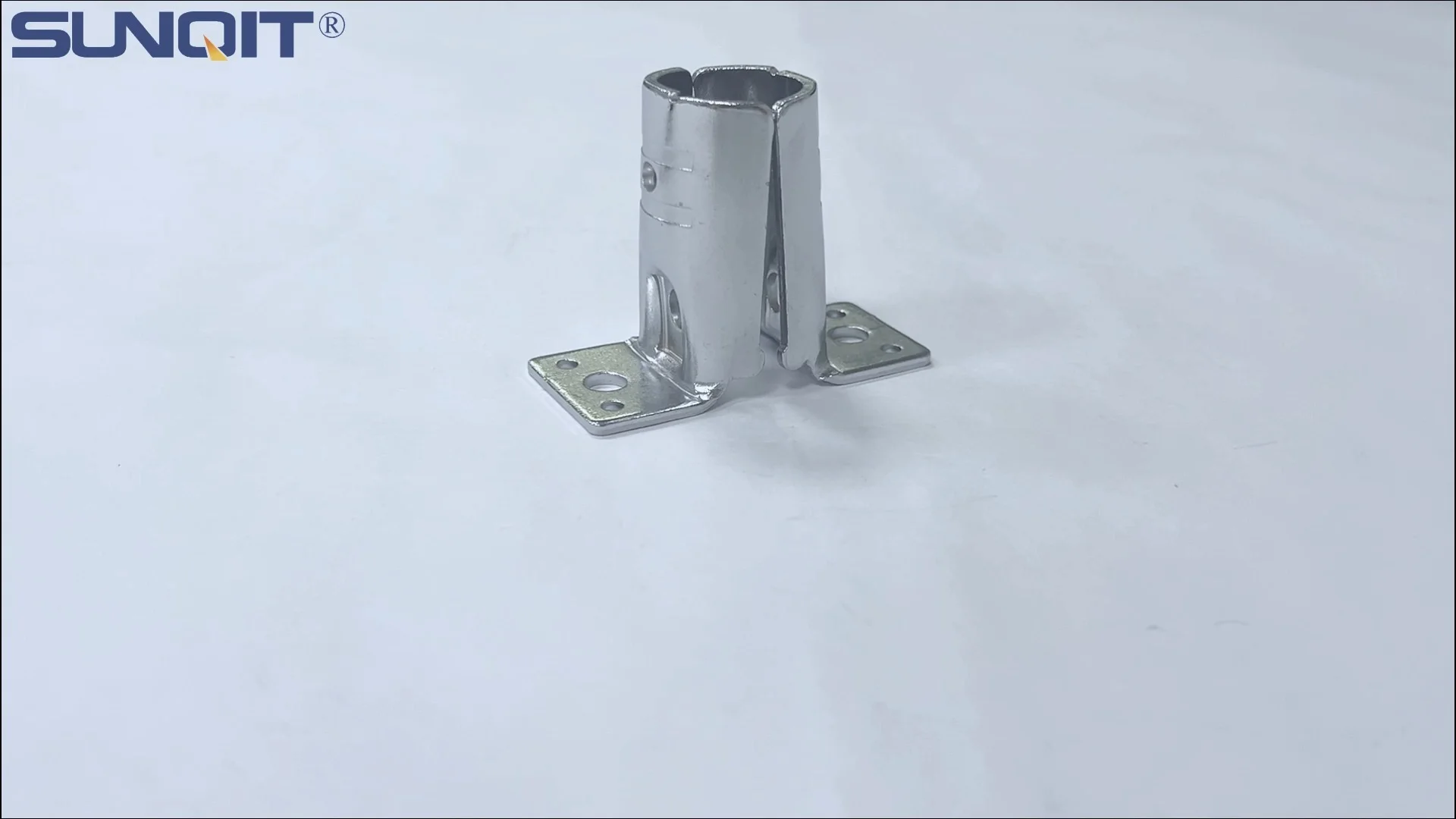
Vertical Lean Pipe Joint
Vertical lean pipe joint is used for 28mm lean pipe fixed on ground and keep it stable.
Walk into any modern manufacturing facility, and you'll likely notice the rhythm of productivity—conveyors humming, workers moving with purpose, materials gliding smoothly from one station to the next. What you might not immediately see is the unsung hero holding it all together: the vertical lean pipe joint. These small, unassuming components are the backbone of lean systems, quietly ensuring that workbenches stay stable, flow racks operate flawlessly, and the entire operation runs like a well-oiled machine. But here's the thing: their ability to perform that role hinges entirely on one critical factor—precision. In this article, we're diving deep into why precision in vertical lean pipe joint manufacturing isn't just a nice-to-have; it's the difference between a facility that thrives and one that struggles with inefficiencies, downtime, and even safety risks.
Understanding Vertical Lean Pipe Joints: The Building Blocks of Lean Systems
Before we unpack the importance of precision, let's take a moment to understand what vertical lean pipe joints are and why they matter. In the world of lean manufacturing, flexibility and modularity are king. Lean systems are designed to adapt quickly to changing production needs—whether that means reconfiguring a workbench to accommodate a new product, adjusting a flow rack to handle different material sizes, or scaling up a production line for higher demand. Vertical lean pipe joints are the connectors that make this flexibility possible. They're the pieces that link vertical pipes to horizontal beams, anchor structures to the floor, and ensure that every part of a lean setup stays securely in place.
These joints come in various materials, each tailored to specific environments. For instance, aluminum lean pipe joints are prized in industries where weight matters—like electronics manufacturing, where lighter structures reduce operator fatigue and make reconfiguration easier. Stainless steel pipe series joints, on the other hand, are go-to choices in settings where corrosion resistance is critical, such as food processing or pharmaceutical facilities, where exposure to moisture or chemicals is common. No matter the material, their core job remains the same: to create strong, reliable connections that can withstand daily use while maintaining the precision needed for seamless operation.
Think of vertical lean pipe joints as the glue of lean systems. A typical lean pipe workbench, for example, relies on dozens of these joints to hold its frame together. The vertical joints connect the tabletop to the legs, the legs to the base, and any add-ons like tool racks or material bins to the main structure. Without them, the workbench would be little more than a wobbly collection of pipes. Similarly, a flow rack—used to move materials from storage to assembly lines—depends on vertical joints to keep its shelves aligned, ensuring that products slide smoothly without jamming. Even something as simple as a turnover trolley relies on vertical joints to maintain stability, so workers can move heavy loads without worrying about tipping or shifting.
Precision in Manufacturing: Why "Close Enough" Just Isn't Enough
Now, let's talk about precision. When we say a vertical lean pipe joint is "precise," we're referring to how closely it matches its design specifications. This includes everything from the diameter of the pipe opening and the alignment of threads to the angle of the connection and the consistency of the material's thickness. To the untrained eye, a difference of 0.1mm might seem negligible—but in manufacturing, that tiny gap can have massive consequences. Let's break down why precision is non-negotiable.
First, precision ensures a tight, secure fit. Imagine trying to build a bookshelf where the screws are slightly too big for the holes—no matter how hard you try, the shelves will wobble. The same principle applies to vertical lean pipe joints. If a joint's inner diameter is even 0.2mm larger than the pipe it's meant to connect, the pipe will shift inside the joint, creating instability. Over time, that movement wears down both the joint and the pipe, leading to loosening, squeaking, and eventually, failure. On the flip side, a joint that's too small won't fit the pipe at all, forcing workers to waste time filing down the pipe or hunting for a replacement joint—both of which eat into productivity.
Second, precision directly impacts load capacity. Every vertical lean pipe joint is engineered to support a specific weight—say, 500kg for a heavy-duty workbench or 300kg for a flow rack shelf. That rating is based on precise calculations of material strength, thread depth, and connection angle. If a joint's threads are cut too shallow, or its walls are too thin due to imprecise manufacturing, it won't be able to handle the rated load. This isn't just an efficiency issue; it's a safety hazard. A joint that fails under load could cause a workbench to collapse, sending tools and materials crashing to the floor, or a flow rack to topple, risking injury to nearby workers.
Third, precision ensures compatibility across the entire lean system. Lean manufacturing relies on standardized components—meaning a vertical lean pipe joint from one supplier should work seamlessly with a lean pipe workbench from another, or a roller track from a third. If joints aren't precise, this interoperability breaks down. For example, a joint with a misaligned thread might not connect properly to a caster wheel, making it impossible to add mobility to a trolley. Or a joint with an off-kilter angle might prevent a roller track from sitting level, causing materials to get stuck or slide unevenly. In a facility with hundreds of components, these compatibility issues can turn small annoyances into major workflow disruptions.

The Ripple Effects of Imprecision: When Small Gaps Lead to Big Problems
To truly grasp the importance of precision, let's look at what happens when it's missing. Imprecise vertical lean pipe joints don't just cause isolated issues—they create a ripple effect that impacts every part of a manufacturing operation. Let's walk through a few real-world scenarios to illustrate the point.
Consider a busy automotive parts plant that relies on flow racks to feed components to its assembly line. Each flow rack is built with vertical lean pipe joints connecting its uprights to its horizontal shelves. One day, a batch of joints with slightly undersized inner diameters arrives from a new supplier. At first, the maintenance team doesn't notice—they force the pipes into the joints, figuring a little extra pressure won't hurt. But over the next week, problems start. The undersized joints create uneven pressure on the pipes, causing them to bend slightly. As a result, the flow rack shelves tilt to one side. Now, instead of gliding smoothly, plastic parts get stuck at the tilted sections. Workers have to stop what they're doing every 20 minutes to unjam the rack. By the end of the week, the line has lost 8 hours of production time—time that could have been spent manufacturing 200+ parts. The cost of those missing parts? Tens of thousands of dollars. The culprit? A 0.2mm gap in the joints.
Or take the example of a medical device manufacturer with a lean pipe workbench dedicated to assembling delicate surgical tools. The workbench uses aluminum lean pipe joints for their lightweight design, which makes it easy for workers to adjust the height. But when a shipment of joints with inconsistent wall thickness arrives, disaster strikes. Some joints are 1.2mm thick (as specified), but others are only 0.8mm. The thinner joints can't support the weight of the tools and equipment on the bench. Within a month, the workbench starts to wobble. At first, it's a minor annoyance—workers notice their hands shaking slightly as they assemble tiny components. But then, a critical error occurs: a surgeon's scalpel is assembled with a misaligned blade, requiring a recall. The root cause? The wobbly workbench, which threw off the precision of the assembly process. The cost of the recall? Hundreds of thousands of dollars, not to mention damage to the company's reputation. All because of inconsistent joint thickness.
Even something as "simple" as maintenance costs can skyrocket with imprecise joints. A facility with 100 lean workbenches, each using 8 vertical joints, has 800 joints to maintain. If those joints are imprecise, they'll loosen faster, requiring frequent tightening. Each tightening takes 5 minutes per joint—adding up to over 66 hours of maintenance per year. Multiply that by the average hourly wage of a maintenance worker, and you're looking at thousands of dollars in unnecessary labor costs. And that's before factoring in the cost of replacing joints that wear out prematurely due to imprecision.

How Precision is Achieved: The Science and Craft of Manufacturing Vertical Lean Pipe Joints
Creating a precise vertical lean pipe joint isn't luck—it's the result of careful planning, advanced technology, and rigorous quality control. Let's pull back the curtain and see how suppliers ensure these small components meet the high standards of lean manufacturing.
It all starts with material selection. The best suppliers don't just pick any aluminum or stainless steel—they choose high-grade alloys with consistent chemical compositions. For aluminum lean pipe joints, this might mean using 6063-T5 aluminum, known for its excellent extrudability and strength. For stainless steel pipe series joints, 304 or 316 stainless steel is common, offering superior corrosion resistance. These materials are sourced from reputable mills and tested for uniformity; a single batch with inconsistent hardness or thickness is rejected before it ever reaches the manufacturing floor.
Next comes manufacturing. Most precision joints are made using CNC (Computer Numerical Control) machining, which uses computerized tools to cut, drill, and shape the joint with incredible accuracy. Unlike manual machining, which relies on human skill (and is prone to variation), CNC machines follow digital blueprints to within ±0.01mm—about the width of a human hair. For example, when cutting threads into a joint, the CNC lathe will spin the joint at a precise speed while a cutting tool moves in exact increments, ensuring each thread is the same depth and spacing. This level of consistency is impossible to achieve with manual tools.
After machining, each joint undergoes a battery of tests. Quality control teams use digital calipers to measure inner and outer diameters, thread gauges to check thread pitch and depth, and laser alignment tools to verify that connection angles are exact. Some suppliers even perform load testing on sample joints—applying gradually increasing weight until the joint fails—to ensure it meets or exceeds the rated load capacity. Joints that fall even slightly outside specifications are discarded. It's a strict process, but it's the only way to guarantee that every joint that leaves the factory will perform as expected.
Suppliers also pay close attention to surface finish, which might seem cosmetic but actually impacts performance. A rough surface can cause pipes to stick in joints, making assembly harder, while a too-smooth surface might reduce friction, leading to loosening over time. Precision manufacturing ensures the surface finish is consistent—whether it's a matte texture for better grip or a polished finish for corrosion resistance in stainless steel pipe series joints.
| Feature | Precise Vertical Lean Pipe Joint | Imprecise Vertical Lean Pipe Joint |
|---|---|---|
| Load Capacity | Consistently supports rated load (e.g., 500kg) without deformation | Fails at 30-40% of rated load due to thin walls or shallow threads |
| Assembly Time | 5-10 minutes per joint; fits seamlessly with pipes and accessories | 20+ minutes per joint; requires force, filing, or replacement hunting |
| Maintenance Frequency | Once annually for inspection; minimal tightening needed | Monthly tightening or replacement due to loosening/wear |
| Safety Risk | Low; stable connections prevent structural failure | High; risk of collapse, material damage, or worker injury |
| Compatibility | Works with all standard lean components (e.g., caster wheels, roller tracks) | Incompatible with some accessories; requires custom modifications |

Real-World Impact: How Precision Joints Transform Manufacturing Floors
To truly appreciate the value of precision, let's look at how it plays out in real manufacturing environments. Take the case of a mid-sized electronics manufacturer that was struggling with high turnover and low productivity on its assembly lines. The root cause? Wobbly workbenches. Workers complained that the lean pipe workbenches shook as they soldered tiny components, leading to eye strain and mistakes. The company's maintenance team was replacing joints every 3 months, but the problem persisted. Finally, they switched to a supplier specializing in precision vertical lean pipe joints. The new joints had consistent inner diameters and thread depths, creating tight, stable connections. Within a month, worker complaints dropped by 75%. Error rates fell by 18%, and the maintenance team hasn't replaced a single joint in over a year. The result? Happier workers, higher quality products, and lower costs.
Another example comes from a food and beverage distributor that relies on flow racks to store and sort bottles. The distributor was expanding its product line to include larger, heavier bottles, but the existing flow racks—with imprecise joints—couldn't handle the weight. Bottles would tip over, causing spills and delays. The company considered replacing all the racks with a more expensive steel system, but instead opted to upgrade just the vertical lean pipe joints. The new precision joints, made from stainless steel pipe series for corrosion resistance, could support 50% more weight. Within a week, the tipping stopped. The distributor saved $100,000 by avoiding a full rack replacement and increased throughput by 25% thanks to smoother material flow.
Even small manufacturers benefit from precision. A family-owned furniture maker with just 10 employees was struggling to meet deadlines because reconfiguring their lean pipe workbenches took hours. The old joints were so imprecise that pipes would seize up, requiring two workers to pry them apart. After switching to precision aluminum lean pipe joints, reconfiguration time dropped from 3 hours to 45 minutes. The company now reconfigures workbenches daily to match production needs, increasing output by 30% and taking on new clients they couldn't previously serve.
The Future of Precision: Innovations Shaping Vertical Lean Pipe Joint Manufacturing
As manufacturing continues to evolve, so too does the demand for even more precise vertical lean pipe joints. Suppliers are already exploring new technologies to push the boundaries of what's possible. One exciting development is the use of 3D printing for custom joints. While traditional CNC machining is great for high-volume, standardized joints, 3D printing allows suppliers to create one-off or low-volume joints with complex geometries—like internal channels for wiring or custom angles—without sacrificing precision. This is a game-changer for industries with unique needs, like aerospace or medical device manufacturing.
AI-driven quality control is another area of growth. Some suppliers are using machine learning algorithms to analyze images of joints, flagging even the tiniest defects that might slip past human inspectors. These systems can process hundreds of joints per minute, ensuring faster turnaround times without compromising quality. Over time, the AI learns from past inspections, becoming even better at identifying potential issues.
Advanced materials are also on the horizon. Researchers are developing composite materials that combine the strength of steel with the lightness of aluminum, which could lead to joints that are both stronger and lighter than anything available today. Imagine a vertical lean pipe joint that weighs 30% less than aluminum but can support the same load as stainless steel—that would make lean systems even more flexible and easier to reconfigure.
Conclusion: Precision as the Foundation of Lean Success
Vertical lean pipe joints might be small, but their impact on manufacturing is enormous. They're the quiet force that keeps lean systems flexible, efficient, and safe. And at the heart of their ability to perform that role is precision—precision in material selection, manufacturing, and quality control. Imprecise joints don't just cause minor headaches; they lead to lost productivity, increased costs, and even safety risks. On the flip side, precise joints transform manufacturing floors, enabling smoother workflows, higher quality, and happier workers.
So the next time you walk through a factory and admire the efficiency of the lean system, take a moment to appreciate the vertical lean pipe joints holding it all together. They might not be glamorous, but they're proof that in manufacturing, the smallest details often make the biggest difference. And for manufacturers looking to thrive in a competitive market, investing in precision joints isn't just smart—it's essential.