- Company Articles
- Products and Technology
- Installation And Maintenance
- The Importance of Proper Castor Install Base Alignment for Trolley Maneuverability

The Importance of Proper Castor Install Base Alignment for Trolley Maneuverability
Related Product
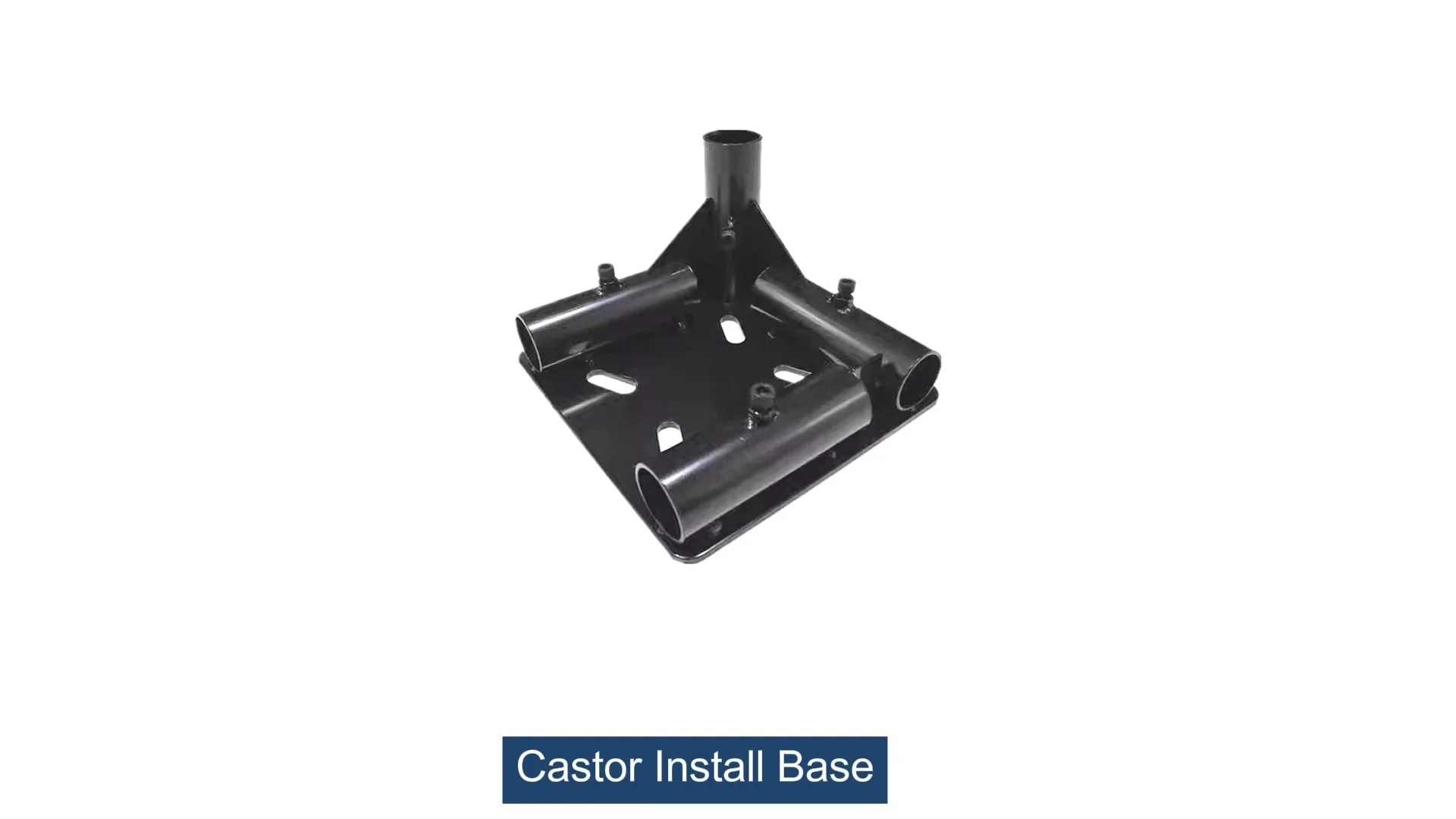
Castor Install Base
Castor install base, used for connection between pipe and castor, it can connect 4 pcs pipe by 1 pcs castor base, to make the structure strong and stable.
Introduction: The Unsung Hero of Workplace Efficiency
Walk into any busy warehouse, manufacturing plant, or distribution center, and you'll likely hear the hum of activity: workers loading and unloading goods, machines whirring, and the steady roll of trolleys moving supplies from one station to another. Trolleys—those simple, wheeled workhorses—are the backbone of daily operations, silently keeping workflows moving forward. But what happens when one of those trolleys suddenly feels "off"? Maybe it pulls to one side, requires extra muscle to push, or wobbles unpredictably. These issues aren't just minor annoyances; they're red flags pointing to a critical but often overlooked detail: castor install base alignment .
At first glance, a trolley's maneuverability might seem like a given—after all, it has wheels, so it should roll, right? But anyone who's struggled with a misaligned trolley knows better. The difference between a trolley that glides smoothly and one that fights every push can mean the difference between meeting production deadlines and falling behind, between a safe work environment and unnecessary strain on your team. And at the heart of that difference lies how well the castor install base is aligned.
In this article, we'll dive into why castor install base alignment matters, how misalignment can derail your operations, and what you can do to ensure your trolleys (and by extension, your team) perform at their best. We'll also touch on related components like caster and accessories and explore real-world scenarios where proper alignment transformed workplace efficiency. Whether you're managing a fleet of turnover trolley and rack systems or simply want to keep your daily operations running smoothly, understanding this small but mighty detail could be the key to unlocking better productivity, safety, and employee satisfaction.
What Is Castor Install Base Alignment, Anyway?
Before we can appreciate why alignment matters, let's clarify what we're talking about. When we refer to "castor install base alignment," we're describing how the caster wheel and its mounting base are positioned relative to the trolley's frame. Think of it like the wheels on a car: if they're misaligned, the car pulls to one side; if they're properly aligned, it drives straight and smooth. The same principle applies to trolleys, but with a few key differences—trolley casters are often designed to swivel, adding another layer of complexity to their alignment needs.
Let's break down the components involved. The caster wheel is the part that makes contact with the floor, but it's attached to a mounting structure called the "install base" (or "caster base"). This base is what connects the wheel to the trolley frame, and its alignment determines how the wheel interacts with the ground. If the base is tilted, off-center, or not square with the trolley's axis, the wheel won't roll true. Over time, this misalignment can cause a cascade of problems, from uneven wear on the wheel itself to increased resistance when moving the trolley.
It's also worth noting that the install base isn't a one-size-fits-all component. As part of caster and accessories , bases come in various shapes, sizes, and materials, each designed for specific trolley types and load capacities. A heavy-duty turnover trolley used to transport metal parts, for example, will require a sturdier base than a lightweight cart used for office supplies. Choosing the right base for the job is the first step toward proper alignment—even the best alignment techniques can't fix a base that's mismatched to the trolley's purpose.
So, in short: castor install base alignment is about ensuring the connection between the caster wheel, its mounting base, and the trolley frame is precise, stable, and balanced. It's the foundation (quite literally) of a trolley that moves how it should, when it should.

Why Maneuverability Matters More Than You Think
"Maneuverability" might sound like a buzzword, but in the context of trolleys, it's a make-or-break factor for your business. Let's start with the most obvious benefit: efficiency. A trolley that's easy to push, turn, and stop saves time. In a warehouse where workers move dozens of trolleys daily, even a few extra seconds per trip add up. Over a week, a month, or a year, those seconds become hours of lost productivity—time that could have been spent on more valuable tasks, like quality checks or customer service.
Then there's the human element. Pushing a misaligned trolley isn't just slow; it's physically demanding. Workers end up straining their backs, shoulders, and arms to compensate for a trolley that pulls to one side or resists turning. Over time, this can lead to fatigue, muscle soreness, and even chronic injuries like repetitive strain disorder (RSD). In fact, the Bureau of Labor Statistics reports that overexertion is one of the leading causes of workplace injuries, often linked to tasks involving manual material handling. Properly aligned trolleys reduce the force required to move them, lowering the risk of injury and keeping your team healthier and more engaged.
Safety doesn't stop with your workers, either. A wobbly or hard-to-control trolley is more likely to tip over, especially when carrying heavy or unevenly distributed loads. This puts both the goods being transported and the people nearby at risk. Imagine a turnover trolley and rack loaded with fragile electronics—if the trolley swerves unexpectedly, those products could slide off, resulting in costly damage. Or worse, a tipping trolley could injure someone standing nearby. Maneuverability isn't just about movement; it's about control, and control is the cornerstone of a safe workplace.
Finally, there's the impact on your equipment and infrastructure. Misaligned casters don't just wear out faster—they can damage your floors, too. A caster wheel that drags or scrapes against the ground (instead of rolling smoothly) can scratch concrete, chip tile, or even create ruts over time. Repairing floor damage is expensive, and replacing worn caster wheels frequently adds up in maintenance costs. Proper alignment extends the lifespan of both your trolleys and your workspace, saving you money in the long run.
In short, maneuverability is about more than convenience. It's about protecting your team, your products, your equipment, and your bottom line. And it all starts with how well your castor install base is aligned.

The Hidden Costs of Misalignment: What Can Go Wrong
Now that we understand why maneuverability matters, let's take a closer look at what happens when castor install base alignment is off. Misalignment isn't always obvious at first—sometimes it starts as a subtle pull or a slight wobble that workers brush off as "just how the trolley is." But over time, these small issues snowball into bigger, costlier problems. Here's a breakdown of the most common consequences:
1. Uneven Wear on Caster Wheels
When a castor install base is misaligned, the caster wheel doesn't bear weight evenly. Instead of the entire wheel rolling smoothly, one side or edge takes more pressure. This causes uneven tread wear—you might notice that one part of the wheel is significantly more worn down than the rest. As the wear worsens, the wheel becomes unbalanced, leading to more wobbling and even louder, more disruptive movement. Eventually, the wheel will need to be replaced long before its expected lifespan, driving up replacement costs.
2. Increased Rolling Resistance
Ever tried pushing a trolley that feels like it's "stuck" in the mud? That's rolling resistance caused by misalignment. When the caster base is tilted or off-center, the wheel doesn't rotate freely. Instead, it drags or scrubbs against the floor, creating friction. This means workers have to exert more force to move the trolley, leading to fatigue and slower workflows. In extreme cases, a heavily misaligned trolley might require two people to push instead of one—doubling the labor needed for a simple task.
3. Poor Directional Control
A properly aligned trolley should go where you push it. A misaligned one? It might veer left, right, or even in circles, making it hard to navigate tight spaces like narrow aisles or around machinery. This lack of control is dangerous in busy environments, where sudden movements can lead to collisions with walls, equipment, or other workers. It also makes precise positioning difficult—for example, lining up a trolley with a loading dock or a workbench for unloading. When you can't trust a trolley to move predictably, every task becomes a chore.
4. Stress on the Trolley Frame
Misalignment doesn't just affect the caster wheel and base—it puts extra stress on the entire trolley frame. When the wheels pull in different directions, the frame twists and bends, weakening welds, bolts, and joints over time. This can lead to structural damage, like cracks in the frame or loose components, which compromise the trolley's ability to carry loads safely. In severe cases, a weakened frame could collapse under weight, putting workers and products at risk.
5. Floor Damage
We touched on this earlier, but it's worth emphasizing: misaligned casters are hard on floors. A dragging wheel can scratch, scuff, or gouge concrete, while a wobbling wheel can chip tile or vinyl. Over time, these damages add up, requiring expensive repairs or even full floor replacements. In facilities with polished or sensitive floors (like hospitals or cleanrooms), this damage isn't just costly—it can also violate safety or hygiene standards.
To visualize just how much misalignment impacts performance, let's compare aligned and misaligned trolleys side by side:
| Aspect | Properly Aligned Trolley | Misaligned Trolley |
|---|---|---|
| Wheel Wear | Even, slow wear; full lifespan achieved | Uneven, rapid wear; frequent replacements needed |
| Rolling Effort | Low force required; glides smoothly | High force required; feels "sticky" or heavy |
| Control | Goes straight; easy to turn and stop | Pulls to one side; hard to navigate tight spaces |
| Worker Fatigue | Minimal strain; comfortable to use all day | Significant strain; leads to tiredness and potential injury |
| Maintenance Costs | Low; occasional cleaning and lubrication | High; frequent wheel replacements, frame repairs, floor fixes |
As the table shows, the costs of misalignment go far beyond a frustrating trolley. They eat into your budget, slow down your team, and create unnecessary risks. The good news? These issues are preventable—with proper alignment, you can avoid almost all of them.

How to Achieve Perfect Castor Install Base Alignment
Now that we've covered the "why" of alignment, let's get into the "how." Achieving proper castor install base alignment isn't rocket science, but it does require attention to detail and a systematic approach. Whether you're assembling a new trolley or troubleshooting an existing one, these steps will help ensure your casters are aligned for optimal maneuverability.
Step 1: Choose the Right Caster and Accessories
Alignment starts with selecting the right components. Not all casters and bases are created equal, and using the wrong ones is a recipe for misalignment. Consider the trolley's intended use: What load will it carry? Will it be used on smooth concrete, rough asphalt, or uneven floors? How often will it be moved, and how much space will it need to navigate? These factors will determine the size, material, and type of caster wheel you need, as well as the appropriate install base.
For example, a heavy-duty turnover trolley and rack used to transport metal parts will need a robust, heavy-gauge steel install base with a large, durable caster wheel. A lightweight cart for office supplies, on the other hand, might work with a plastic base and smaller wheel. Always check the manufacturer's load ratings—using a base that's too weak for the load will cause it to bend or warp over time, leading to misalignment.
Don't forget about accessories, either. Items like locking pins, washers, and bolts might seem minor, but they play a role in keeping the base secure and aligned. Using low-quality or mismatched accessories can lead to loose connections, which throw alignment off quickly.
Step 2: Prepare the Trolley Frame
Before installing the casters, inspect the trolley frame. Is it straight and level? Dents, bends, or rust can all affect how the install base sits. If the frame is warped, even the best-aligned casters won't perform well. Use a level to check that the mounting points (where the casters will attach) are flat and even. If you find damage, repair or replace the frame before proceeding—alignment is only as good as the surface it's mounted on.
Step 3: Install the Caster Base with Precision
Now it's time to mount the castor install base. Follow these tips for accuracy:
- Use a template or guide: Many trolley manufacturers provide templates for where to drill holes or attach bases. If not, measure carefully to ensure all bases are positioned symmetrically. For a four-wheeled trolley, the front and rear bases should be aligned along the same axis, and the left and right bases should be equidistant from the frame's centerline.
- Tighten bolts evenly: When attaching the base to the frame, tighten bolts in a crisscross pattern (like you would with a car tire). This ensures even pressure and prevents the base from tilting to one side. Use a torque wrench to apply the manufacturer-recommended tightness—over-tightening can warp the base, while under-tightening can lead to loosening over time.
- Check for square: After mounting one base, measure the distance from its corners to the trolley's frame to ensure it's square (i.e., at a 90-degree angle). Repeat this for all bases. If a base is even slightly askew, the caster wheel will pull in that direction.
Step 4: Test and Adjust
Once all casters are installed, it's time to test the trolley. Here's how:
- Roll it on a flat surface: Push the trolley forward gently. It should roll straight without pulling to either side. If it veers, check the alignment of the bases—one might be tilted or positioned too far forward/backward.
- Test turning: Try turning the trolley in a circle. It should pivot smoothly around its center without jerking or resistance. If turning is difficult, the swivel mechanism (if the casters swivel) might be misaligned or dirty—clean and lubricate it, then recheck the base alignment.
- Load test: Add the trolley's typical load and repeat the rolling and turning tests. Sometimes misalignment only becomes noticeable under weight, as the frame flexes and the bases shift. If the trolley behaves differently under load, you may need to reinforce the frame or adjust the base tightness.
Don't rush this step! Testing might take a few tries, but it's worth it to ensure the trolley moves perfectly. If you notice issues, don't hesitate to disassemble and readjust the bases—cutting corners here will only lead to problems later.
Step 5: Document and Maintain
Once alignment is perfect, document the process. Note the type of caster and base used, torque settings for bolts, and any adjustments made. This documentation will be invaluable for future maintenance or when assembling new trolleys. Then, schedule regular check-ins—alignment can shift over time due to wear, loose bolts, or frame damage. A quick inspection every few weeks (including checking bolt tightness and wheel wear) can catch small issues before they become big problems.
Case Study: How One Factory Fixed Their Trolley Troubles
The Problem: A Manufacturing Plant Struggles with Slow, Unsafe Trolleys
A mid-sized electronics manufacturing plant in the Midwest was facing a familiar issue: their fleet of 50+ turnover trolley and rack systems was becoming a liability. Workers complained that the trolleys were "impossible to push," especially when loaded with circuit boards and components. Production line supervisors noticed that tasks involving trolley movement were taking 20% longer than they should, and the plant's safety team had recorded three minor injuries in six months—all linked to workers straining to move misaligned trolleys.
An initial inspection revealed the root cause: most of the trolleys had misaligned castor install bases. Some bases were tilted, others were mounted off-center, and many had loose bolts that caused the casters to wobble. The caster wheels showed severe uneven wear, with some treads completely worn down on one side. The plant's maintenance team had been replacing wheels every few months, but the problem kept recurring—they were treating the symptom, not the cause.
The Solution: A Focus on Alignment
The plant's operations manager decided to take a systematic approach. First, they invested in high-quality caster and accessories , replacing all worn bases and wheels with heavy-duty, load-rated components designed for their specific trolley models. Next, they trained the maintenance team on proper alignment techniques, including using templates for mounting, torque wrenches for bolt tightness, and square checks for base positioning.
Over two weeks, the team disassembled, realigned, and reassembled each trolley. They also created a maintenance checklist: weekly inspections of bolt tightness, monthly checks of wheel wear, and quarterly alignment tests. To track progress, they measured trolley push force (using a simple force gauge) before and after the fixes.
The Results: A 30% Boost in Efficiency and Zero Injuries
The impact was immediate. Within a month, workers reported that trolleys now "glide like butter"—push force had dropped by an average of 40%, meaning one worker could easily move even fully loaded trolleys. Production times for trolley-related tasks decreased by 30%, and the plant met its monthly output targets for the first time in a year.
Safety improvements were equally impressive: there were no new trolley-related injuries in the six months following the alignment project. Wheel replacement costs dropped by 75%, as the new, properly aligned wheels wore evenly and lasted three times longer than before. Perhaps most importantly, employee morale improved—workers no longer dreaded trolley duty, and supervisors noted fewer complaints about fatigue.
This case study isn't an anomaly. It's a testament to how small, targeted improvements in castor install base alignment can have a ripple effect across an entire operation. When trolleys work as they should, everything works better.
Conclusion: Align for Success
Castor install base alignment might not be the most glamorous topic in workplace management, but it's a cornerstone of efficiency, safety, and productivity. From the warehouse floor to the assembly line, trolleys are critical tools, and their ability to move smoothly depends on how well their castor bases are aligned. Misalignment leads to worn wheels, tired workers, lost time, and unnecessary costs—but with the right approach, these issues are entirely preventable.
Remember: alignment starts with choosing the right caster and accessories , mounting bases with precision, testing thoroughly, and maintaining regularly. It's not a one-and-done task; it's an ongoing commitment to keeping your equipment (and your team) performing at their best. Whether you're managing a single workbench cart or a fleet of turnover trolley and rack systems, taking the time to get alignment right will pay off in smoother workflows, happier employees, and a healthier bottom line.
So the next time you see a trolley in your workplace, take a moment to notice how it moves. Is it gliding, or is it fighting? If it's the latter, don't ignore it. Invest in alignment, and watch how quickly those small, frustrating hurdles disappear—leaving your team free to focus on what really matters: getting the job done well.