- Company Articles
- Products and Technology
- Product knowledge
- The Importance of Turning Angle Code 2020 in Lean Manufacturing Assembly

The Importance of Turning Angle Code 2020 in Lean Manufacturing Assembly
Related Product
Urning Angle Code 2020
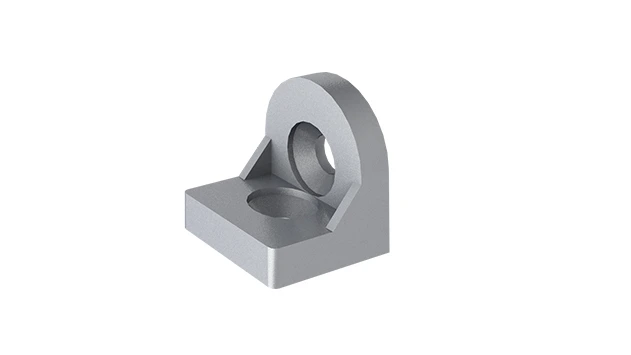
The turning angle aluminum profile connector provides a 90 degree hidden corner connection. 2020 it is means this size is used for 20 series aluminum profile.The corner code comes with set screws that allow for quick, easy connections.
In the fast-paced world of manufacturing, where efficiency and adaptability can make or break a production line, lean principles have become more than just a buzzword—they're the backbone of successful operations. At the heart of lean manufacturing lies the pursuit of eliminating waste, streamlining workflows, and creating systems that can evolve with changing demands. But even the most well-designed lean strategies rely on the smallest components to deliver big results. Today, we're shining a spotlight on one such unsung hero: the Turning Angle Code 2020 . Though it may seem like a humble piece of hardware, this unassuming aluminum profile accessory plays a pivotal role in building the flexible, durable, and efficient assembly systems that power modern lean manufacturing.
Lean manufacturing isn't just about cutting costs—it's about creating value. To do that, production lines need structures that can keep up with shifting product designs, fluctuating demand, and continuous improvement initiatives. Traditional assembly setups, often built with fixed welding or custom metalwork, fall short here. They're rigid, time-consuming to modify, and prone to becoming obsolete when processes change. This is where modular systems, built around aluminum profiles and their accessories, step in. And within this modular ecosystem, the Turning Angle Code 2020 emerges as a critical link, enabling the kind of flexibility and precision that lean systems demand.
Lean Manufacturing and the Need for Modular Assembly
Before diving into the specifics of the Turning Angle Code 2020, let's ground ourselves in why modular assembly matters for lean systems. Lean manufacturing, born from the Toyota Production System, focuses on five key principles: value, value stream, flow, pull, and perfection. At every step, the goal is to minimize "muda" (waste)—whether that's wasted time, materials, or space. For assembly lines, this translates to needing structures that are:
- Adaptable: Easily reconfigurable to accommodate new products or production volumes.
- Durable: Built to withstand the rigors of daily use without frequent replacement.
- Efficient: Quick to assemble and disassemble, reducing downtime during retooling.
- Precise: Aligned correctly to ensure smooth workflows and reduce errors.
Enter aluminum profiles —hollow, extruded beams with standardized T-slots that allow for easy attachment of accessories like brackets, shelves, and, yes, angle codes. These profiles have revolutionized lean assembly by replacing rigid, custom-built structures with modular, Lego-like systems. But a profile is only as good as the accessories that hold it together. This is where components like the Turning Angle Code 2020 come into play: they're the "glue" that turns individual profiles into functional, adaptable workspaces.
What Is the Turning Angle Code 2020?
At its core, the Turning Angle Code 2020 is a specialized bracket designed to connect two aluminum profiles at a 90-degree angle, with a focus on flexibility and precision. Part of the broader family of aluminum profile accessories , it's specifically engineered for use with 2020 aluminum profiles—a common size in modular systems, measuring 20mm in width and 20mm in height. But what sets it apart from generic angle brackets? Let's break down its design, material, and key features.
Design and Dimensions
The Turning Angle Code 2020 is compact, with a footprint tailored to fit the 2020 profile's dimensions. Its L-shaped design features two mounting surfaces, each with pre-drilled holes that align perfectly with the T-slots of 2020 profiles. This alignment isn't accidental: it ensures that when the angle code is secured with bolts or screws, the profiles are held at a precise 90-degree angle, eliminating the guesswork and misalignment that can plague DIY or generic brackets.
Most models also include a "turning" feature—a slight offset or pivot point that allows for minor adjustments during assembly. This might seem small, but in a lean system, where even a 1-degree misalignment can cause jams in material flow or uneven weight distribution, this adjustability is invaluable. It means workers can fine-tune the angle code to ensure shelves, workbenches, or racks are perfectly level, even if the underlying floor isn't.
Material and Durability
Like the 2020 aluminum profiles it connects, the Turning Angle Code 2020 is typically made from high-grade aluminum alloy (often 6063-T5, a common choice for extruded parts). This material strikes a balance between strength and weight: it's strong enough to support heavy loads (we'll get to load capacities later) but lightweight enough to make assembly and reconfiguration easy. The aluminum is also anodized, a process that creates a protective oxide layer, making it resistant to corrosion, scratches, and wear—critical for components that live on factory floors, where exposure to oils, dust, and occasional impacts is inevitable.
Compatibility
While it's designed for 2020 profiles, the Turning Angle Code 2020 isn't a one-trick pony. Its standardized hole spacing and T-slot compatibility mean it can often be used with other profile sizes, provided the T-slot dimensions match. For example, some manufacturers use it with 2040 profiles (20mm x 40mm) in applications where a smaller bracket is needed. This cross-compatibility adds to its value in lean systems, where minimizing the number of unique parts (another lean principle: reducing "inventory waste") is key.

Applications: Where the Turning Angle Code 2020 Shines
To understand why the Turning Angle Code 2020 is so important, let's look at its real-world applications. In lean manufacturing, it's the backbone of countless modular structures, from workbenches to material racks. Here are three key use cases:
1. Workbenches: The Heart of Assembly Lines
Workbenches are where the magic happens in manufacturing—where workers assemble products, inspect parts, or package goods. A well-designed workbench should be sturdy, ergonomic, and adaptable to different tasks. Enter the lean pipe workbench (or aluminum profile workbench), often built with 2020, 3030, or 4040 profiles. The Turning Angle Code 2020 is instrumental here, connecting the vertical legs to the horizontal frame, or adding shelves and tool holders to the bench.
Take the "Workbench E (single deck-without caster)" from many lean suppliers' catalogs. This simple, no-frills workbench relies on 2020 profiles for its frame, with Turning Angle Code 2020 brackets at each corner to secure the legs to the tabletop frame. The angle code ensures the legs are perpendicular to the tabletop, preventing wobbling and ensuring stability—even when workers lean on the bench or place heavy tools on it. And if the team needs to add a shelf halfway up for extra storage? The angle code makes it easy: just cut two short 2020 profiles, attach them to the legs with the angle codes, and secure a plywood or aluminum top. No welding, no custom fabrication—just a few bolts and a wrench.
2. Material Racks: Organizing Inventory Efficiently
Lean manufacturing thrives on organized inventory—"just-in-time" delivery of parts to the production line, with no excess stock taking up space. Material racks, like the "Material Rack B (3 row and 3 floor)" (a common design with three rows and three levels), are essential for this. These racks need to hold boxes, bins, or components of varying weights, all while being easy to reconfigure if part sizes change.
2020 profiles are often used for the vertical posts and horizontal supports of these racks, with Turning Angle Code 2020 brackets connecting the supports to the posts. The angle code's strength comes into play here: a single bracket can typically support loads of up to 50kg (depending on the manufacturer), meaning a three-level rack with 2020 profiles and Turning Angle Code 2020 brackets can hold hundreds of kilograms of materials without bending or failing. And if the production line switches to larger parts that need taller shelves? Simply loosen the bolts on the angle codes, slide the horizontal supports up, and retighten—no need to buy a whole new rack.
3. Turnover Trolleys: Moving Materials with Ease
Turnover trolleys (or "hand trolleys") are the workhorses of factory logistics, ferrying parts from storage to assembly lines or finished products to shipping. These trolleys need to be lightweight for easy maneuvering but strong enough to carry heavy loads. Again, 2020 profiles are a popular choice for their frame, with Turning Angle Code 2020 brackets reinforcing the corners and attaching shelves or bins.
Consider a basic hand trolley with a 2020 profile frame, caster wheels, and two shelves. The Turning Angle Code 2020 ensures the vertical posts are securely connected to the horizontal base, preventing the trolley from tipping when loaded. Its lightweight aluminum construction also keeps the trolley's overall weight down, making it easy for workers to push—even when fully loaded. And if the trolley needs to be modified (e.g., adding a third shelf for smaller parts), the angle code allows for quick adjustments without cutting or welding.

Why the Turning Angle Code 2020 Matters for Lean Systems
So, what makes the Turning Angle Code 2020 more than just another bracket? Its design and functionality align perfectly with lean principles, delivering four key benefits:
1. Flexibility: Adapt or Die in Lean Manufacturing
Lean systems thrive on adaptability. Product lifecycles are shorter than ever, and production lines need to switch from one product to another quickly. The Turning Angle Code 2020 supports this by making reconfiguration a breeze. Unlike welded brackets, which are permanent, it can be loosened, adjusted, or removed with basic tools. Need to shorten a workbench? Take off the angle codes, cut the profiles, and reattach. Want to add a shelf to a material rack? Just bolt on new angle codes and profiles. This flexibility reduces "downtime waste" and ensures the assembly line can evolve with minimal cost.
2. Durability: Built to Last, Reducing Replacement Waste
Waste isn't just about time—it's about materials, too. A bracket that breaks after a few months forces you to buy a replacement, creating "defect waste" and "inventory waste" (stocking extra brackets). The Turning Angle Code 2020, made from anodized aluminum alloy, is built to last. Its corrosion resistance means it holds up in humid or oily environments, and its robust design resists bending or cracking under load. In fact, many manufacturers warranty these brackets for years, a testament to their durability. This longevity aligns with lean's "perfection" principle—creating systems that stand the test of time.
3. Precision: Eliminating Errors in Assembly
In manufacturing, misalignment can lead to big problems. A wobbly workbench might cause parts to be assembled incorrectly; a crooked material rack could lead to bins sliding off. The Turning Angle Code 2020's design ensures precise 90-degree angles, thanks to its tight tolerances and T-slot compatibility. When you bolt it to a 2020 profile, you know the connected profiles will be perfectly perpendicular, reducing errors and improving workflow efficiency. This precision is especially critical for automated systems, where even a small misalignment can throw off robotic arms or conveyor belts.
4. Cost-Effectiveness: Saving Money in the Long Run
At first glance, a specialized bracket like the Turning Angle Code 2020 might seem more expensive than a generic steel bracket from a hardware store. But in lean manufacturing, the total cost of ownership (TCO) matters more than the upfront price. Generic brackets often require drilling custom holes, don't fit T-slots, or wear out quickly—leading to higher labor and replacement costs. The Turning Angle Code 2020, by contrast, is designed for T-slot profiles, requires no custom modification, and lasts for years. Over time, this makes it far more cost-effective, aligning with lean's focus on reducing "cost waste."
Turning Angle Code 2020 vs. Other Angle Codes: A Comparison
The Turning Angle Code 2020 isn't the only angle code on the market. There's also the Turning Angle Code 3030 (for 30mm x 30mm profiles) and Turning Angle Code 4040 (for 40mm x 40mm profiles). How does the 2020 stack up? Let's compare them in a table:
| Feature | Turning Angle Code 2020 | Turning Angle Code 3030 | Turning Angle Code 4040 |
|---|---|---|---|
| Profile Compatibility | 20mm x 20mm aluminum profiles | 30mm x 30mm aluminum profiles | 40mm x 40mm aluminum profiles |
| Material | Anodized aluminum alloy | Anodized aluminum alloy | Anodized aluminum alloy |
| Max Load Capacity (per bracket) | ~50kg | ~100kg | ~150kg |
| Weight | ~50g | ~80g | ~120g |
| Common Applications | Small workbenches, light-duty racks, trolleys | Medium workbenches, tool cabinets, material racks | Heavy-duty workbenches, industrial shelving, conveyor frames |
| Key Advantage | Lightweight, cost-effective for small-scale setups | Balanced strength and weight for most applications | High load capacity for heavy-duty use |
The table shows that each angle code has its niche. The 4040 is for heavy loads, the 3030 for mid-range applications, and the 2020 for lightweight, cost-sensitive setups. But the 2020's strength lies in its versatility: it's the go-to for small workbenches, portable trolleys, and light material racks—areas where lean systems often need the most flexibility. In many factories, you'll find all three angle codes working together: 4040 for the main production line frames, 3030 for tool storage, and 2020 for the "last mile" workbenches where final assembly happens.
Case Study: How a Electronics Manufacturer Boosted Efficiency with Turning Angle Code 2020
To bring this to life, let's look at a real-world example. A mid-sized electronics manufacturer in China was struggling with its assembly line for smartphone chargers. Their old workbenches were wooden, heavy, and impossible to reconfigure. When they introduced a new charger model with different components, they had to build entirely new workbenches—costing time and money. They turned to a lean system supplier for help, who recommended aluminum profile workbenches using 2020 profiles and Turning Angle Code 2020 brackets.
The results were striking: within a week, the manufacturer had assembled 10 new workbenches using the modular system. The Turning Angle Code 2020 made it easy to adjust the height of the benches to match workers' ergonomic needs (by adding or removing 2020 profile sections). When they needed to add small parts bins to the benches, they simply bolted on new angle codes and shelves. Six months later, when they introduced a second charger model, they reconfigured the existing workbenches in a day—no new wood, no custom cutting, just loosening and reattaching the angle codes. The manufacturer estimated they saved 40% on workbench costs and reduced retooling downtime by 70%—all thanks to the flexibility of the 2020 profile system and its angle codes.
The Future of Lean Assembly: Why Small Components Like Turning Angle Code 2020 Will Only Grow in Importance
As manufacturing continues to evolve—with trends like Industry 4.0, automation, and mass customization—lean systems will become even more critical. Factories will need to switch between product lines faster, adapt to smaller batch sizes, and integrate new technologies like IoT sensors and collaborative robots. In this environment, modular assembly components will be the foundation of agile manufacturing.
The Turning Angle Code 2020, and its siblings (3030, 4040), are perfectly positioned to support this future. Their compatibility with T-slot profiles makes them easy to integrate with smart accessories—like sensor mounts or cable management clips. Their lightweight design works with collaborative robots (cobots) that need to move workbenches or racks. And their durability ensures they can keep up with 24/7 production cycles.
Moreover, as sustainability becomes a key focus for manufacturers (another pillar of modern lean), the Turning Angle Code 2020's aluminum construction aligns with eco-friendly goals. Aluminum is 100% recyclable, and modular systems reduce waste by reusing components instead of discarding entire structures. In a world where "circular manufacturing" is gaining traction, these small brackets will play a big role in reducing environmental impact.
Conclusion: The Small Component That Powers Lean Excellence
In the grand scheme of lean manufacturing, the Turning Angle Code 2020 might seem insignificant. It's small, often overlooked, and rarely mentioned in boardroom discussions about efficiency. But as we've seen, it's the unsung hero that holds lean systems together—enabling flexible workbenches, adaptable material racks, and agile assembly lines. Its design, durability, and precision make it a cornerstone of modular assembly, aligning perfectly with lean principles of waste reduction, adaptability, and perfection.
For manufacturers looking to embrace lean, the message is clear: don't overlook the small stuff. Invest in quality aluminum profile accessories like the Turning Angle Code 2020, and you'll build a foundation that can evolve with your business, reduce costs, and drive efficiency for years to come. After all, in lean manufacturing, excellence is in the details—and the Turning Angle Code 2020 is one detail that makes all the difference.